
Request Your SAP Calculations Online Or Call 0800 917 4026
SAP calculations are typically required for new residential buildings and the conversion of existing properties.
- Newly built properties. ✅
- Conversion of a single dwelling into flats or apartments. ✅
- Extension of properties. ✅
- Conservatories are highly glazed extensions featuring a 25% glazing-to-floor ratio. ✅
- Commercial to domestic conversions. ✅
- Barn conversion ✅
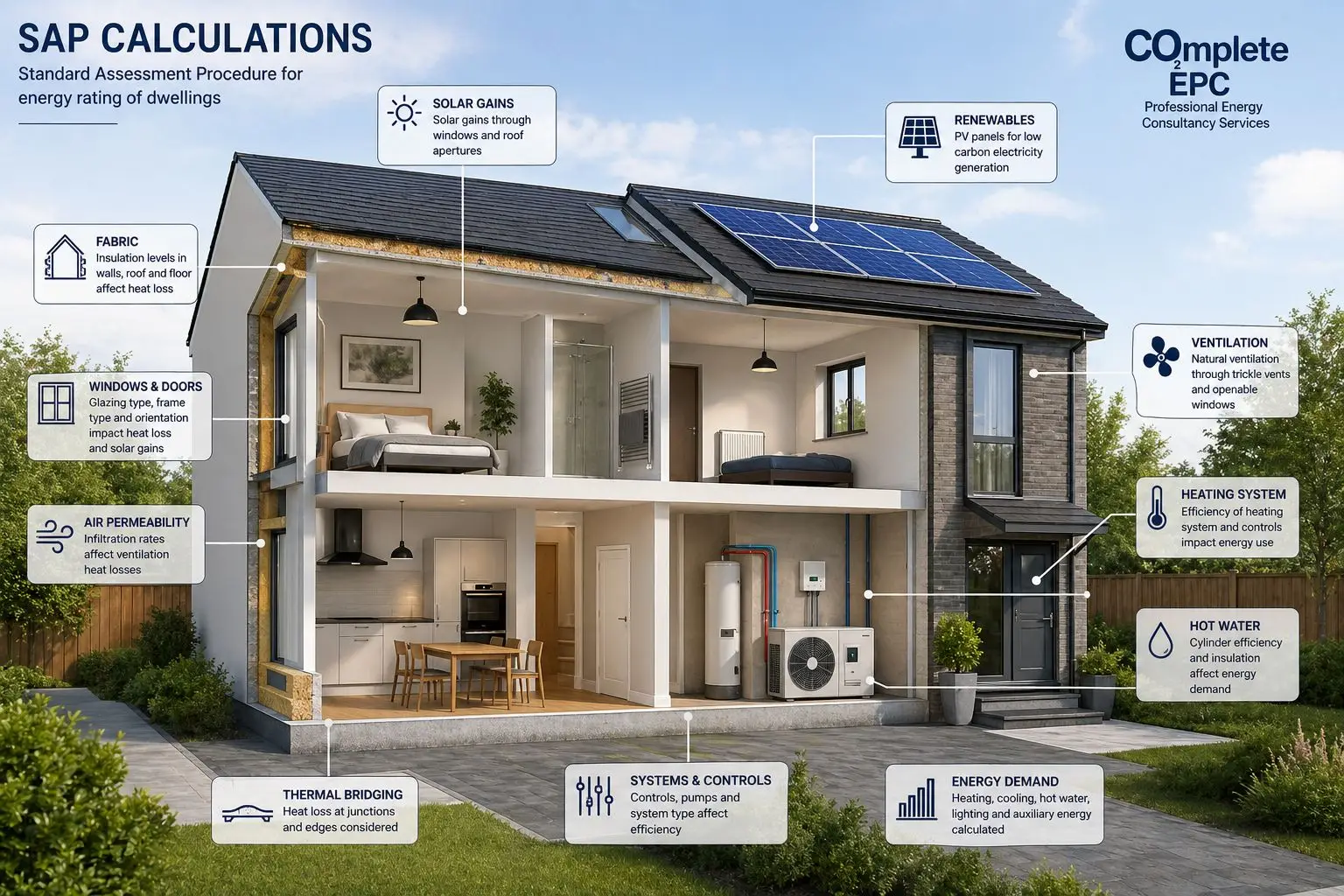
SAP calculations, short for Standard Assessment Procedure calculations, play a vital role in the planning and execution of new constructions. These calculations are necessary to ensure that any new building meets the requirements outlined in Part L of the Building Regulations in England and Wales, as well as Section 6 regulations in Scotland and Part F1 guidelines in Northern Ireland. Understanding and implementing these calculations is not just a regulatory requirement; it is also a significant step towards creating sustainable homes that are energy-efficient and environmentally friendly.
The primary purpose of SAP calculations is to assess the energy efficiency of a building. This involves analyzing various elements, including insulation, heating systems, and renewable energy sources. By ensuring that these factors are optimized, the buildings can achieve a higher energy performance rating. This rating is crucial as it directly influences the Energy Performance Certificate (EPC) that a property requires. An EPC serves as a vital document that outlines the energy efficiency of a building, indicating how much energy it consumes and suggesting potential improvements.
Obtaining an EPC is not merely a formal requirement; it is mandated by law for anyone selling or renting a property in order to promote transparency and encourage energy-efficient practices among homeowners and tenants. The increased emphasis on energy efficiency is part of the government’s broader strategy aimed at reducing carbon emissions and addressing fuel poverty across the country. By focusing on energy-efficient building practices today, we are not only complying with the current regulations but also contributing to a healthier planet for future generations.
In conclusion, SAP calculations are an integral part of the construction process that cannot be overlooked. They ensure compliance with building regulations, facilitate a better understanding of a property’s energy performance, and ultimately help in the fight against climate change and fuel poverty. Embracing these calculations will not only benefit builders and homeowners but also our environment as a whole.
It’s advisable to initiate SAP calculations during the design phase of new constructions. This allows for adjustments to be made early on if the building does not meet the required standards, saving time and expense.
The process at COMPLETE EPC for L1A SAP calculations is divided into two phases: the ‘design stage’ SAP report and the ‘as built’ SAP report. These evaluations include measuring the building’s energy performance aspects such as external fabric area and openings, construction materials, and energy consumption from heating, lighting, and ventilation systems.
The goal is to ensure compliance with Target Emissions Rates (TER), Target Fabric Energy Efficiency (TFEE), Dwelling Emission Rate (DER), and Dwelling Fabric Energy Efficiency (DFEE) standards.
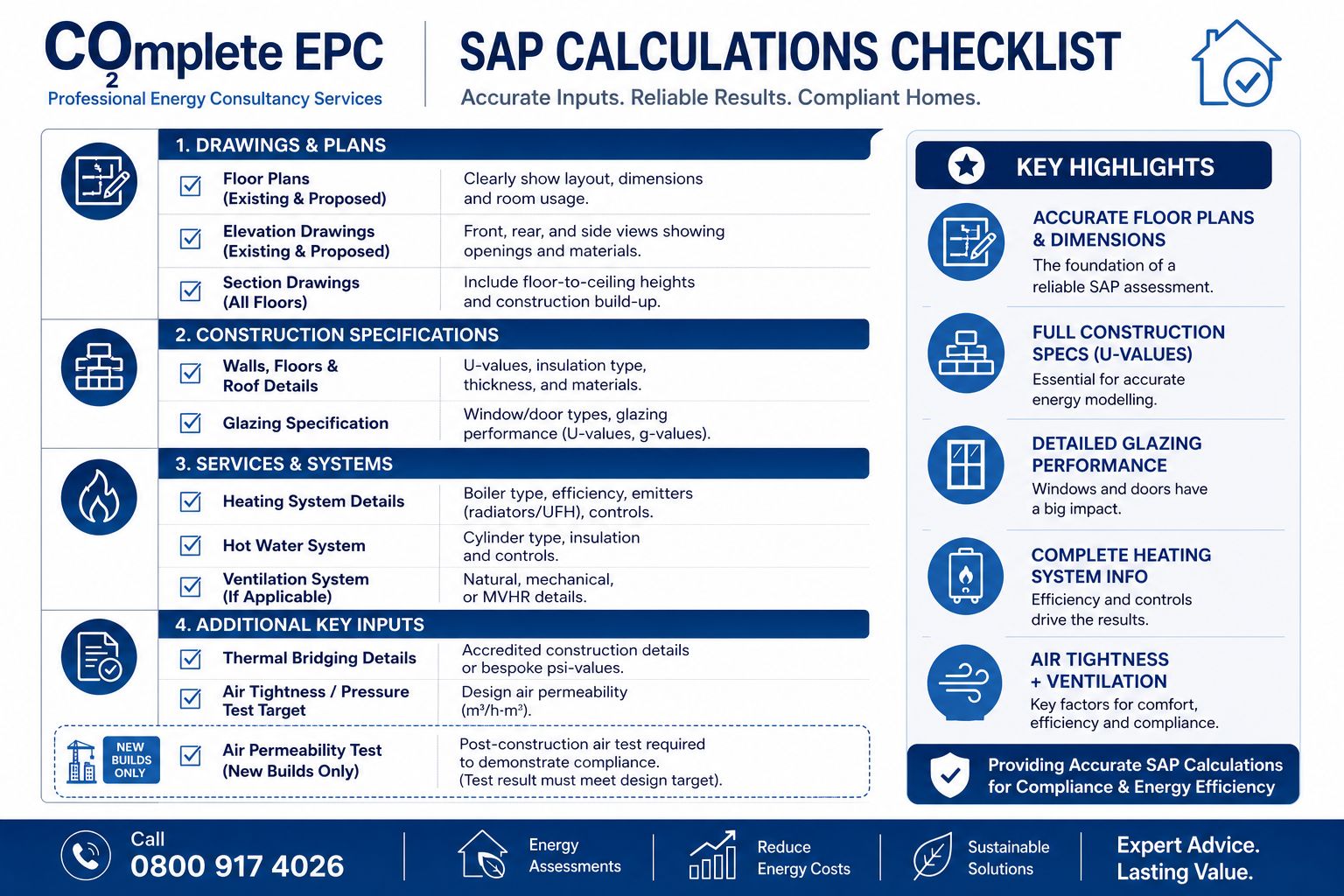
🔍 SAP Calculations Checklist ✅
Please review the checklist to ensure a smooth and enjoyable service. If you have any questions or need more information, please reach out to your Architect or Site Coordinator.
Why You Need ‘U’ Value?
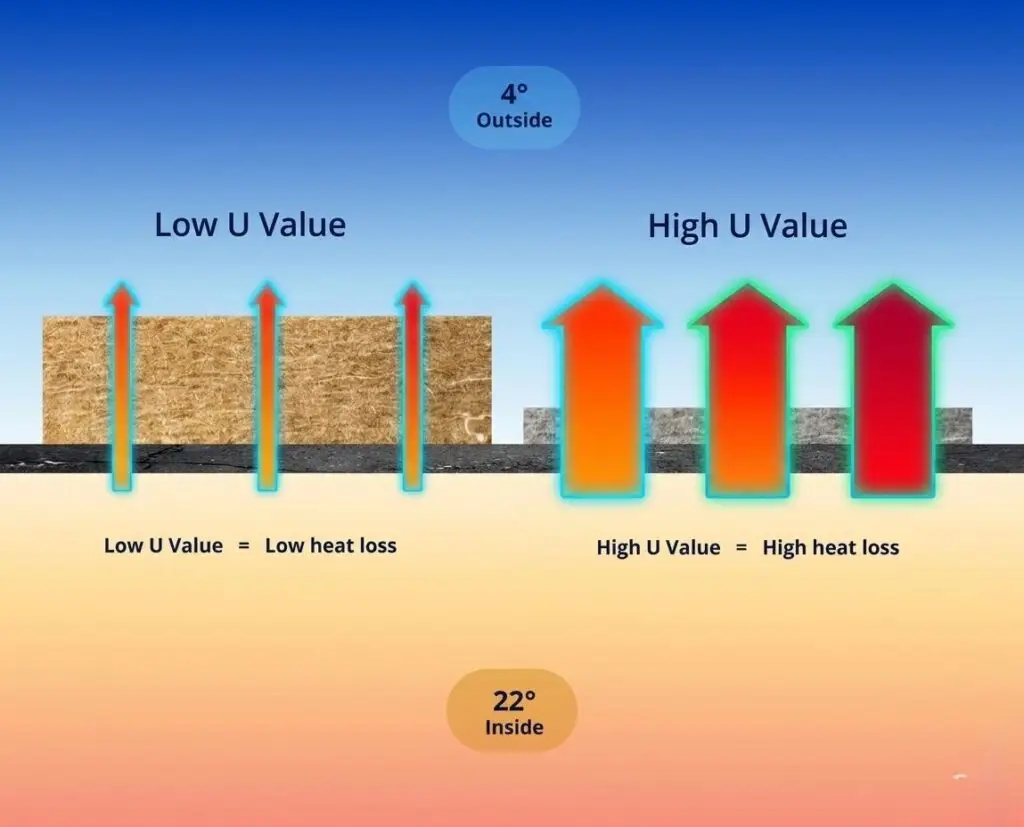
The U-Value is an important measure used in building physics, representing the rate of heat transfer through a building element, such as walls, roofs, or floors. It provides crucial insight into a building’s energy efficiency and thermal performance. Essentially, the U-Value is the reciprocal of the total thermal resistance (R-Value) of the materials that compose that element.
To calculate the U-Value of a building element, we start by determining the R-Value of each layer involved in construction. This includes not only the primary materials, such as insulation and structural components, but also any additional layers, like vapor barriers or finishes, which contribute to the overall energy efficiency. The R-Values of these various components are added together, accounting for their individual thickness and conductivity properties.
Once all the R-Values are summed, the U-Value is then calculated by taking the reciprocal of this total resistance value. A lower U-Value indicates better insulation properties, meaning less heat is lost in winter or gained in summer, providing a more comfortable living environment and often leading to lower energy bills.
Understanding and calculating U-Values is essential for architects, builders, and homeowners alike, as it helps in choosing materials wisely and designing buildings that maintain energy efficiency throughout the seasons. By prioritizing properties with favorable U-Values, we can contribute to more sustainable living spaces that not only reduce our carbon footprint but also enhance our overall quality of life.
The higher the 'U' value the greater the rate of heat loss.
Conducting SAP Calculations for Extensions with Complete EPC
When considering the SAP calculation for extensions in the UK, it’s important to understand how this process works and the factors involved. SAP, or Standard Assessment Procedure, is the methodology used to assess the energy performance of residential properties. This assessment is vital, especially when planning extensions, as it helps ensure energy efficiency and compliance with building regulations.
When an extension is added to a home, the SAP calculation will typically consider various factors including the size of the extension, the construction materials used, the heating system, and the overall design. For new extensions, the low energy standards set forth by UK law must be adhered to. This may require the use of specific insulation materials, energy-efficient windows, and sustainable heating technologies.
Before making any decisions regarding an extension, it’s beneficial to consult with professionals who specialize in energy assessments. They can provide tailored advice and help you understand how your specific project will impact the overall energy rating of your home. It’s also worth noting that improvements made during the extension process can lead to a better SAP rating, which not only benefits your home’s energy efficiency but may also increase its value.
Moreover, as part of the assessment, any existing heating systems within the home could also be evaluated for their effectiveness in conjunction with the new extension. If upgrades are necessary, the SAP calculation will help identify the most suitable options that align with current technologies and environmental goals.
Overall, obtaining a thorough SAP calculation during the planning of your extension can help create a more energy-efficient home and ensure compliance with building regulations, ultimately contributing to a sustainable living environment. Be sure to take this step seriously, as it plays a crucial role in fostering energy conservation in the UK.
Overglazed Extension (DFLEX)
SAP Calculations for the Overglazed Extension (traditionally known as DFLEX) play a significant role in enhancing both functionality and aesthetics within the realm of architectural design and construction. This component involves calculating the various parameters necessary to implement overglazed extensions effectively, which not only contribute to energy efficiency but also elevate the overall visual appeal of a building.
Understanding the specifics of this calculation involves assessing numerous factors, such as the local climate conditions, the types of materials used, and the intended usage of the space. Each of these elements influences how light and heat interact with the building, ultimately guiding the selection of appropriate glazing technologies.
Moreover, the DFLEX calculations incorporate an examination of various glazing options available, which can significantly affect energy performance and natural daylighting within the building. By focusing on these criteria, architects and engineers can determine the most effective design strategies for integrating overglazed extensions, ensuring that they complement the overall architectural vision while also fulfilling practical requirements.
In addition to aesthetic considerations, the SAP calculations also ensure compliance with current building regulations and sustainability goals. By carefully analyzing the performance of overglazed extensions, stakeholders can identify opportunities to optimize both energy consumption and overall environmental impact, paving the way for a greener future in building design.
Ultimately, engaging in thorough SAP calculations for overglazed extensions is a crucial step in the design process. It reflects a commitment to quality, sustainability, and innovation, setting the framework for creating spaces that are not only beautiful but also energy efficient and conducive to the well-being of their occupants.

Why SAP Calculations are Essential for Conversions
The SAP (Standard Assessment Procedure) calculation is an essential process used in the UK to assess the energy performance of residential buildings. This method evaluates the energy efficiency of homes in terms of their heating, lighting, and hot water systems, allowing for conversion to a standard metric. When considering conversions, such as changing a building’s use from commercial to residential or adding extensions, it’s crucial to ensure that the new design complies with current regulations and standards.
For any conversion, it begins with gathering the necessary data about the existing structure. This includes the size of the building, the type of construction materials used, and the existing heating and cooling systems. You’ll also need to consider the geographical location of the building, as climate plays a significant role in energy performance.
Once the data is gathered, the SAP calculation involves a series of steps. First, you assess the thermal insulation properties of the building fabric, such as walls, roofs, and floors, to determine how energy-efficient they are. Next, you look at the heating systems in place and their efficiency ratings. If modifications are planned, like installing new windows or changing heating sources, those changes need to be simulated in the calculations to observe their impact on overall energy efficiency.
Furthermore, you should also evaluate the renewable energy sources that could be integrated into the design, such as solar panels or heat pumps, which can significantly enhance the energy performance rating. It’s important to demonstrate that the conversion not only meets the basic requirements but can potentially excel in terms of sustainability.
Finally, after completing the SAP calculations, you receive an energy performance rating that can be reflected in an Energy Performance Certificate (EPC). This rating can influence property sales, as buyers are increasingly interested in energy-efficient homes. Meeting high standards in the SAP calculation can ultimately lead to a more sustainable, comfortable living environment while benefiting the long-term value of the property.
 Failed Air Tightness Test: The 10 Most Common Reasons


Promoting Sustainable Development through effective sap calculation
Initially developed to assess and compare the energy and environmental performance of buildings, SAP calculations are now integral in promoting sustainable development. This is particularly relevant in conversions, where older structures often need significant updates to meet modern energy efficiency standards.
SAP calculations in conversions is to update the Energy Performance Certificate (EPC).
A key reason for requiring SAP calculations in conversions is to update the Energy Performance Certificate (EPC). While commercial buildings typically have an EPC, converting these buildings for residential use demands a re-evaluation to ensure they meet the stricter criteria applicable to living spaces. An outdated EPC can’t guarantee that a converted building will be energy efficient or environmentally friendly, which is increasingly important in today’s energy-conscious market.
To ensure energy efficiency, understanding sap calculation is crucial. Proper sap calculation can significantly impact energy performance ratings.
Reducing Electricity Costs
Moreover, the government’s ongoing commitment to reduce carbon emissions and tackle fuel poverty aligns closely with the need for effective SAP calculations. These calculations not only help in planning energy-saving measures but also play a critical role in ensuring that new residents enjoy lower energy bills and a smaller carbon footprint. This is not just good for the occupants but also benefits the broader community by contributing to national environmental targets. By incorporating sap calculation into the design phase, we can ensure maximum energy efficiency.
SAP Calculation Process for Conversions with Complete EPC
The process of conducting SAP calculations for a conversion typically involves several detailed steps, starting with a ‘notional report’ based on the existing building’s features. This is followed by a ‘proposed report’ that outlines the intended changes and improvements. The key is to demonstrate through these reports that the converted building will have better energy performance than the original. This involves detailed assessments of insulation, heating systems, lighting, and other factors that influence energy consumption.
For those undertaking building conversions, starting the SAP calculations early in the project is advisable. This proactive approach allows for identifying and rectifying any potential issues that might prevent the building from meeting the required energy efficiency standards. It also provides an opportunity to make design adjustments that can significantly enhance the building’s environmental performance. The accuracy of sap calculation can greatly influence the overall energy efficiency of a building.
Documentation Required for SAP Calculations and effective sap calculation practices
For any SAP calculation process, the following documents are necessary:
- Floor plans for both the existing and proposed property.
- Elevation drawings for both the existing and proposed property.
- Section drawing showing each floor’s height.
- Specifications of proposed elements like walls, floors, roofs, and glazing.
- Details of the heating system.
These documents and assessments form the foundation of ensuring that constructions, extensions, and conversions not only meet regulatory requirements but also contribute to energy conservation and environmental protection goals.
🔴As Design Stage - Predicted Energy Assessment
The Predicted Energy Assessment for As Built (SAP) Calculation in the UK is a crucial tool used to evaluate the energy performance of new buildings once they have been constructed. This assessment is not just a formality; it plays a vital role in ensuring that the buildings meet the necessary energy efficiency standards outlined in building regulations.
Accurate SAP calculation methodologies are essential because they provide a detailed analysis of a building’s energy consumption and carbon emissions. These calculations take into account various factors, such as the building’s design, materials, insulation levels, ventilation systems, and heating and cooling methods. By using precise and reliable methodologies, stakeholders can better understand how different design choices impact energy efficiency.
Moreover, an accurate SAP assessment can lead to significant long-term benefits. It can help identify areas for improvement, encouraging designers and builders to implement energy-saving measures during the construction phase. This not only aids in reducing the overall environmental footprint of the building but can also result in cost savings for the occupants in the form of lower energy bills.
Furthermore, with growing awareness of climate change and the push towards sustainable living, having a solid energy assessment is increasingly important. It contributes to the overall goals of reducing carbon emissions and promoting energy-efficient practices within the construction industry.
In summary, the accuracy of SAP calculation methodologies is fundamental in the Predicted Energy Assessment for As Built. It ensures that buildings are not only compliant with legislation but also contribute positively to the environment and the wellbeing of their occupants.
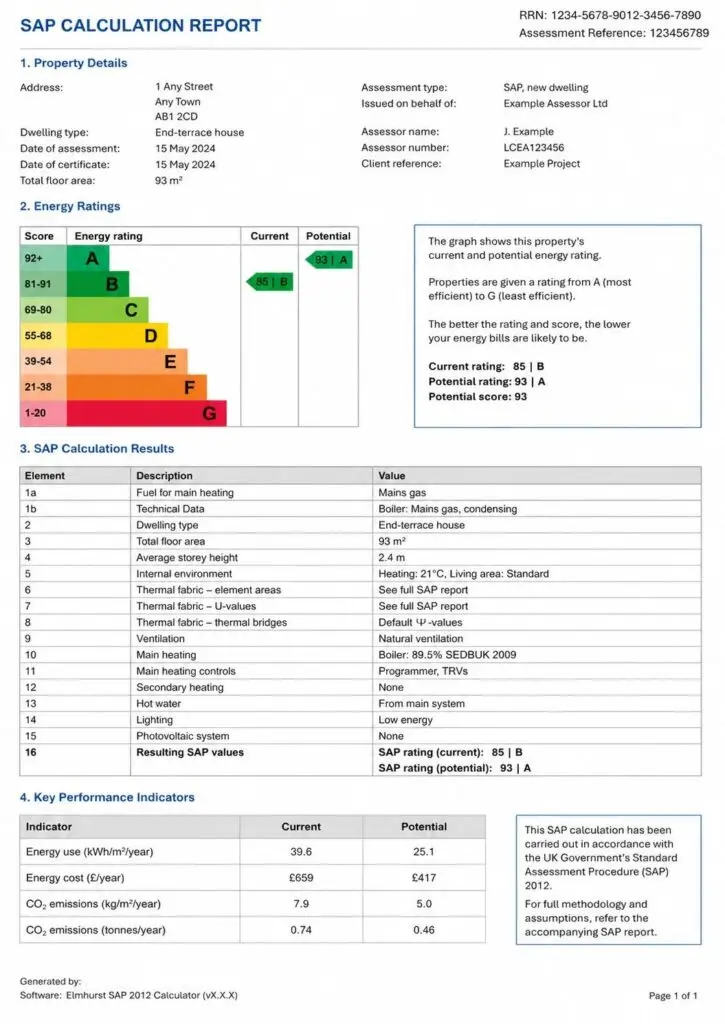
🟡As Built Stage - On Construction Energy Performance Certificate through sap calculation
An On Construction Energy Performance Certificate, often referred to as an On Construction EPC, plays a crucial role in assessing the energy efficiency of a building during its construction phase. This certification is important as it provides a clear rating that ranges from A to G, with A indicating the highest level of energy efficiency. This rating system is essential for encouraging builders and developers to create properties that minimize energy consumption and environmental impact.
The process of obtaining an On Construction EPC is conducted using the Standard Assessment Procedure, commonly known as SAP. This involves a thorough evaluation of the building plans, taking into account various factors such as insulation, heating systems, and renewable energy sources that may be incorporated into the design. By analyzing these elements, the EPC provides an estimated energy performance rating even before the building is completed.
Once the On Construction EPC has been produced, it is a requirement to present the certificate to Building Control. This step is important as it ensures that the new development complies with energy efficiency regulations, ultimately contributing to more sustainable building practices. Not only does this certification benefit the environment, but it also helps future occupants enjoy lower utility costs and a more comfortable living environment.
In summary, obtaining an On Construction EPC is a vital part of the building process, as it not only reflects the energy efficiency of the property but also promotes a commitment to environmentally responsible construction.
🟢Marketing Stage - Compliance with Building Regulations
Once the On Construction Energy Performance Certificate (EPC) has successfully passed through building control, its validity is further reinforced through a comprehensive SAP (Standard Assessment Procedure) calculation. This process is crucial because it helps ensure that the building meets the necessary energy efficiency standards required by current regulations. The SAP calculation takes a detailed look at various factors, such as the building’s insulation, heating systems, and overall design. It helps assess the energy consumption and carbon emissions, allowing us to identify any potential areas for improvement.
By performing these calculations, we can ensure that the building not only complies with legal requirements but also achieves a high level of energy efficiency. This is increasingly important in today’s climate-conscious environment, where sustainability plays a significant role in both construction and home ownership. Ultimately, having a positive EPC rating can enhance the property’s marketability and attract more environmentally aware buyers who prioritize energy efficiency and sustainability. The commitment to achieving a solid EPC through precise SAP calculations reflects our dedication to building practices that are not only responsible but also beneficial in the long run for both homeowners and the planet.

⚪Conclusion
SAP calculations are not just a formality but a fundamental part of transforming buildings for modern use. They play a crucial role in ensuring that renovations and conversions adhere to legal standards while also supporting broader environmental initiatives that ultimately contribute to the well-being of the community and the planet.
By integrating SAP calculations into the early stages of a conversion project, developers can carefully assess energy performance and identify opportunities for enhancing energy efficiency from the outset. This foresight is essential, as it allows architects and builders to make informed decisions that will lead to buildings that are not only compliant with regulations but also designed to minimize energy consumption and reduce carbon footprints. This strategic approach paves the way for environments that foster economic benefits for occupants through lower energy bills and improved comfort levels.
Moreover, focusing on sustainability goes beyond adhering to regulations; it reflects a commitment to responsible development and stewardship of resources. When developers prioritize SAP calculations early in the planning process, they set the stage for creating living spaces that are not just suitable for contemporary needs, but also resilient and adaptable for future generations. This forward-thinking mindset contributes to a construction and renovation industry that is increasingly aligned with societal demands for greener practices and sustainable living.
In essence, embracing the importance of SAP calculations is a proactive step towards building a better future. It highlights a dedication to innovation that respects both the environment and the needs of the community, marking a significant stride in construction practices that support a healthier and more sustainable world for all.

SAP Calculations Quote

"*" indicates required fields