

How to Reduce Your Energy Bill: 20 Practical Ways
Cut your gas and electricity bill with practical steps, from free daily habits to insulation and controls, ordered by what saves most and costs least.
An Energy Performance Certificate (EPC) is a document that shows the energy efficiency of a building. It is similar to the labels you see on appliances, but for buildings. It is rated from A (most efficient) to G (least efficient), with A-rated buildings being the most energy efficient and therefore the cheapest to run.
This initiative enables consumers to receive grants for the improvements suggested in their Energy Performance Certificate (EPC).
By doing so, it enhances the energy efficiency of your property and provides home-buyers with a home energy rating.
Energy Performance Certificates have been in place in England and Wales since August 1, 2007, aimed at reducing carbon emissions and addressing climate change, and they are now being rolled out across Europe as well.
Covering the entirety of London, Complete EPC guarantees its customers the lowest and most reasonable prices in the market.
Complete EPC’s modern-day practices and innovative equipment are topped with our assessors experience, knowledge, and expertise. Full EPC evaluates how energy efficient your property is.
DEA is a licensed Domestic Energy Assessor – our experts have gone through specific training in the energy performance of buildings using Reduced Data Standard Assessment Procedure (RdSAP) which allows an EPC assessor to produce a domestic (residential) EPC.
Thus, we are a leader in providing our customers with the most precise and completely qualified yet economical energy performance certificates (EPC) for both your domestic and commercial properties.

Before a building is put on the market the seller or landlord must commission an EPC for the building if no valid EPC exists already for it.
A person acting on behalf of the seller or landlord (for example, the estate or letting agent) must be satisfied that an EPC has been commissioned for the building before it is put on the market.
The seller or landlord or a person acting on their behalf must use all reasonable efforts to ensure the EPC is obtained within seven days. A further 21 days is allowed if after using all reasonable efforts the EPC cannot be obtained within seven days.
An estate or letting agent may on occasions provide a prospective buyer or tenant with a copy of the EPC. However, it remains the responsibility of the seller or landlord to make sure that a valid EPC has been purchased.
When existing buildings are sold or rented out, the seller or landlord must make available an EPC at the earliest opportunity and no later than when a person:
EPCs are required in all instances of sales or rent, except those set out in page 6 (Situations where an EPC is not required). However, not all transactions are considered to be a sale or let. These will include:
A Domestic Energy Assessor (DEA) is a qualified professional who assesses the energy performance of domestic properties in the UK.
They conduct an energy survey of the property, examining the insulation, heating systems, ventilation, and lighting to provide an Energy Performance Certificate (EPC) rating. This rating informs potential buyers or tenants of the energy efficiency of the property and how it can be improved.
A Domestic Energy Assessor (DEA) is a person who has undergone training in the energy performance of buildings using the Reduced Data Standard Assessment Procedure (RdSAP) methodology. This enables the EPC assessor to produce a domestic EPC.
It is important to note that the DEA method is mainly used for domestic houses which a complete SAP is applied to build new homes.
An EPC, or Energy Performance Certificate, is a document designed to give you a snapshot of how energy efficient a property is and how much energy it is likely to use. It typically contains several key elements to help buyers, renters, and owners understand energy performance and think about improvements.
First, you’ll usually see a widely recognized energy rating, similar to a school grade, that runs from A (very efficient) to G (very inefficient). This rating is based on a model of the building’s energy use and CO2 emissions, and it gives you a quick sense of how costly the property will be to heat and power over a year. Alongside the rating, there is often a numerical score that translates the rating into a specific estimate of energy consumption.
The certificate also provides estimated annual energy costs, which helps you compare running costs with other properties. It will usually include an estimate of current carbon dioxide emissions and, in many cases, a comparison with typical emissions for similar homes in the area. This helps you gauge the environmental impact of living in the property.
A major part of an EPC is the recommendations section. Here, the assessor lists practical and costed or indicative measures that could improve the building’s energy efficiency. Examples might include better insulation, upgrading heating systems, installing more efficient boilers or controls, improving glazing, or sealing air leaks. The document often shows potential improvements and the resulting impact on energy efficiency rating and running costs if those measures were implemented.
Other factual details on the EPC include the property’s address, type, and construction year, the certificate number, the name and accreditation body of the assessor, and the date of the assessment. It may also specify the validity period of the certificate (typically up to 10 years, though this can vary by location and circumstances). Some EPCs for commercial properties or new builds may include additional technical data, such as the energy performance of specific systems, floor areas, and assumptions used in calculations.
It’s important to remember that an EPC is a snapshot based on current building fabric and a typical usage pattern. It does not guarantee future energy bills (which can be affected by how you use the home, occupancy, and climate), it does not reflect actual metered energy consumption, and it does not prescribe mandatory improvements unless you choose to pursue them. If you’re buying or renting, the EPC gives you a useful baseline to compare properties and to plan potential energy-saving upgrades.

At Complete EPC, we provide excellent EPC services. Our skilled and accredited assessors will guarantee that your property meets all the Energy Performance Certificate (EPC) regulations and demands. We have a history of offering high-quality services and have assisted numerous property owners in reducing their carbon footprint and energy expenses.
Our prices are competitive, and we provide a flexible scheduling option to suit the requirements of our clients.
Selecting Complete EPC means choosing a professional organisation that places a high importance on customer satisfaction.
Schedule your EPC assessment today and start your journey to a more energy-efficient property.
Complete EPC assessors are adequately certified and hold a licensed Domestic Energy Assessor (DEA). This DEA allows an EPC assessor to generate a domestic EPC.
With Complete EPC, you are fully covered. We are proud of our exceptional professionalism and trusted service. Our competitive service is equally effective for estate agents, solicitors, landlords, and tenants.
The cost of an Energy Performance Certificate check varies depending on various factors such as the size and location of the property. Commercial properties, on the other hand, may have higher costs due to their larger size and complexity. It is important to note that the price of an EPC may also be influenced by additional services, such as floor plans or property assessments, that are requested alongside the certificate. Ultimately, the cost of an EPC is an investment towards improving energy efficiency and compliance with regulatory requirements.
A Domestic Energy Assessor (DEA) is a qualified professional who assesses the energy performance of domestic properties in the UK.
They conduct an energy survey of the property, examining the insulation, heating systems, ventilation, and lighting to provide an Energy Performance Certificate (EPC) rating. This rating informs potential buyers or tenants of the energy efficiency of the property and how it can be improved.
A Domestic Energy Assessor (DEA) is a person who has undergone training in the energy performance of buildings using the Reduced Data Standard Assessment Procedure (RdSAP) methodology. This enables the EPC assessor to produce a domestic EPC.
It is important to note that the DEA method is mainly used for domestic houses which a complete SAP is applied to build new homes.

An accredited Domestic Energy Assessor (DEA) begins the assessment by visiting your property for a thorough inspection, where they measure and evaluate key features. For new builds, an On-Construction Domestic Energy Assessor (OCDEA) will utilize architectural plans and relevant data instead.
The assessor will gather important information about your property, including:
To ensure accurate assessment, the assessor will take photos and measurements of various features. In cases where insulation is not visible, homeowners might need to provide supporting documentation.
Software Calculation:
The assessor inputs all gathered data into a specialized software program, which utilizes standard performance tables to calculate your property’s energy efficiency score.
Certificate Creation:
Based on this calculation, the software will generate the Energy Performance Certificate (EPC), showing both the current energy rating and a potential rating if recommended improvements are implemented.
Recommendation Report:
This program also creates a detailed recommendation report that lists possible enhancements, their payback periods, and estimated costs.
Lodging:
Once completed, the EPC is submitted to a central government register. This process generates a unique certificate reference number, which is essential for all valid EPCs.
Finally, the completed EPC will be delivered to the individual who commissioned the assessment.
This structured approach ensures a comprehensive evaluation of your property’s energy efficiency, along with actionable insights for improvement, all handled with care and expertise.
An Energy Performance Certificate (EPC) checklist helps prepare a property for assessment by focusing on important areas like insulation, heating, lighting, and glazing. To improve your rating, consider upgrading to LED lights, checking the insulation in your cavity and loft, ensuring your boiler works properly, and gathering relevant documents, such as building regulations and FENSA certificates.
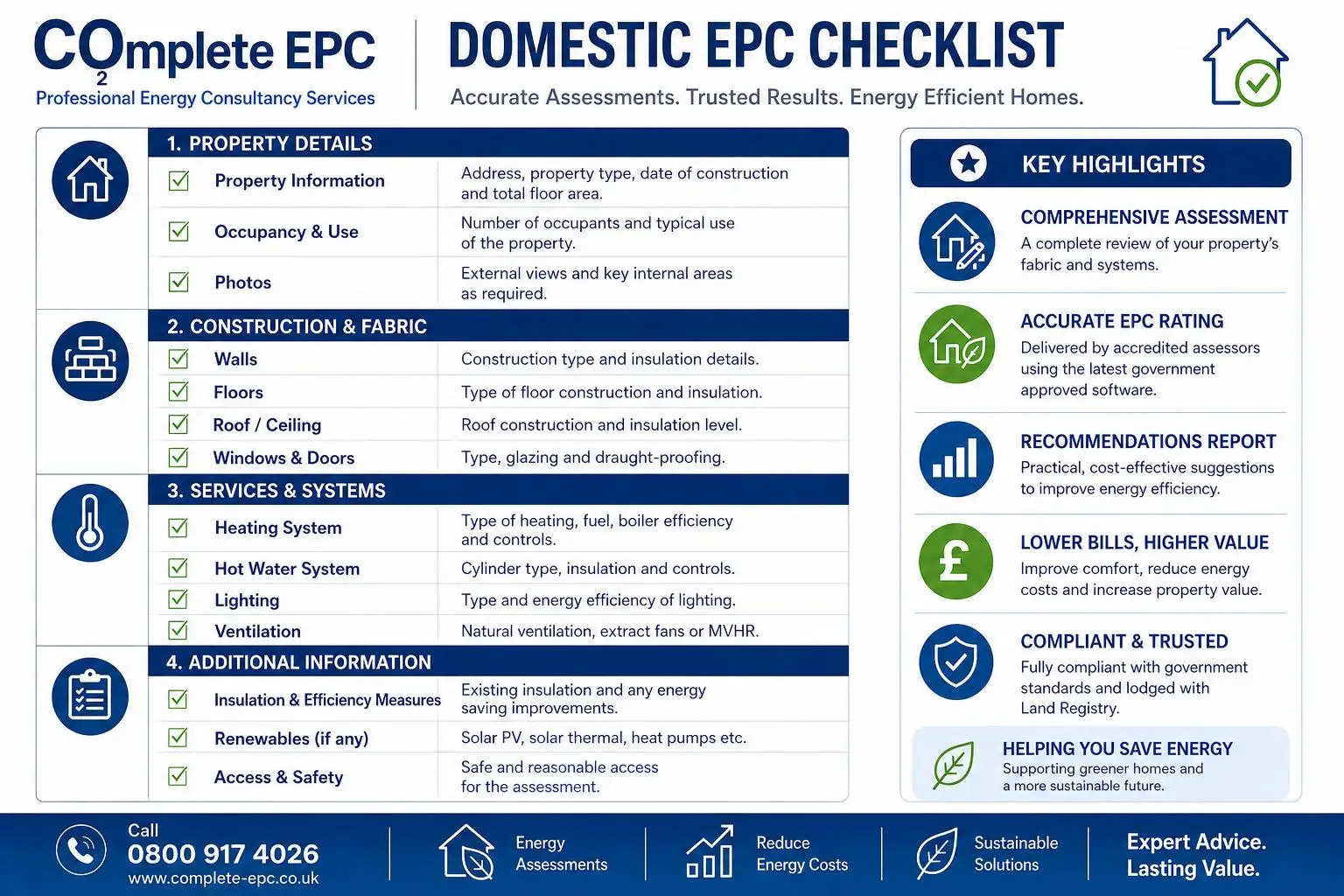
Our EPC service ensures a seamless and hassle-free process. Our team of certified assessors will conduct a thorough evaluation of your property, considering factors such as insulation, heating systems, and ventilation. The result is a detailed report that highlights the current energy performance of the property and provides recommendations on how to improve its efficiency.
Investing in an Energy Performance Certificate is a smart choice that benefits both you and the environment. It helps reduce energy consumption, lower utility bills, and contribute to the overall sustainability of our communities.
Minimum energy efficiency is a crucial aspect of sustainable living and environmental responsibility. It refers to the minimum level of energy performance that a building or appliance must meet in order to comply with energy efficiency standards. By setting a minimum standard, known as the Minimum Energy Efficiency Standards (MEES), we can ensure that energy is used more efficiently, reduce greenhouse gas emissions, and lower utility bills. Meeting MEES is not only beneficial for the environment, but it also promotes a more sustainable and cost-effective approach to energy consumption.
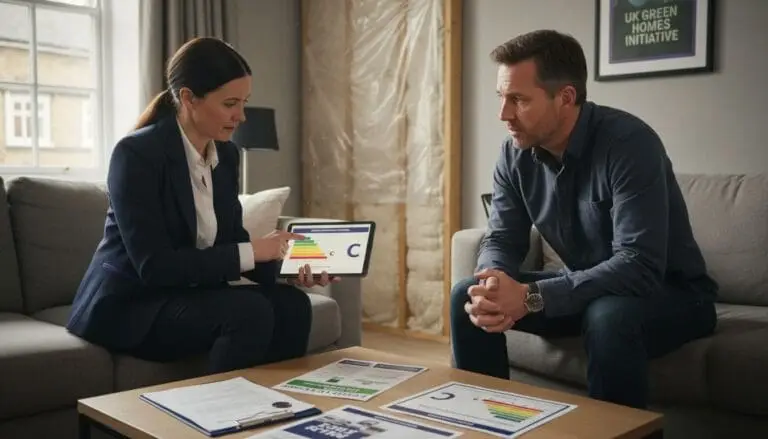
An Energy Performance Certificate (EPC) renewal refers to the process of updating or obtaining a new EPC for a property once the existing certificate has expired. An EPC is valid for 10 years and provides information about a property’s energy efficiency, including recommendations for improving energy performance.
When renewing an EPC, a qualified energy assessor must re-evaluate the property to account for any changes or improvements that may affect its energy rating. This ensures that the certificate reflects the current state of the property, which is especially important if you plan to sell or rent the property.
The renewal process is similar to obtaining an initial EPC, involving an assessment of insulation, heating systems, windows, and other energy-related features. Keeping an up-to-date EPC helps property owners stay compliant with legal requirements and provides potential buyers or tenants with accurate energy efficiency information.

An Energy Performance Certificate (EPC) provides information on the energy efficiency of a building or property. It includes a rating from A (most efficient) to G (least efficient) and offers recommendations for improving energy efficiency.
EPCs are required whenever a property is built, sold, or rented. They provide potential buyers or tenants with an insight into the energy efficiency of the property, which can influence buying or renting decisions.
An EPC is valid for 10 years. However, if you make significant changes to your property that might affect its energy efficiency, you might want to update your EPC.
EPC assessments should be carried out by accredited Domestic Energy Assessors (DEA) or Non-Domestic Energy Assessors (NDEA) who are registered with a government-approved accreditation scheme.
To improve your EPC rating, consider making energy-efficient upgrades like installing better insulation, using energy-efficient windows, switching to LED lighting, and using energy-efficient appliances. Regular maintenance of heating systems can also help. Additionally, using renewable energy sources like solar panels can boost your rating.
The cost of obtaining an EPC can vary, but it’s typically influenced by the size and type of the property. It’s best to check with local providers for specifics.
If you don’t have an EPC, you may face challenges when selling or renting your property, as it’s often a legal requirement. Additionally, potential buyers or tenants might be wary if the energy efficiency of the property isn’t clear. It’s generally a good idea to obtain one to enhance your property’s appeal.
There are several primary reasons for the downgrade under RdSAP 10. First, the evidence-based assessment approach eliminates the former practice of making assumptions based on a home’s age when insulation isn’t visible, such as behind plasterboard. Instead, it adopts more conservative defaults if no evidence is provided.
Additionally, RdSAP 10 prioritizes carbon emissions over fuel costs, which can negatively impact older gas boilers compared to heat pumps, even if the boilers are highly efficient.
The assessment of building fabric is now stricter, requiring more detailed input on insulation in 25mm increments instead of 50mm. Every window must also be individually measured, which can lead to lower scores for properties that are poorly sealed, older, draughty, or do not have double glazing.
For homes with solid brick walls, if the insulation cannot be verified, the score may be lower than in previous assessments to better represent actual energy loss.
New “age band” data has also been introduced for homes built from 2023 onwards, altering the benchmarks for existing residences.
As part of your 2026 strategy, it’s essential to gather evidence of any improvements made, such as insulation, windows, and boiler upgrades, since a lack of documentation could prevent you from achieving the highest ratings for these features.
Focus on enhancing the fabric of the building, as RdSAP 10 offers significant rewards for better insulation, draught-proofing, and double-glazed windows rather than simply upgrading the heating system.
While new Energy Performance Certificates (EPCs) may reflect lower scores, it’s worth noting that a valid existing EPC can still be used for up to 10 years. However, stricter assessments will be necessary when a new EPC is required.
If your property has undergone extensive upgrades, consider an air test. A blower door or pulse air pressure test can demonstrate low leakage, which may help improve your score.
In most cases, obtaining an Energy Performance Certificate, commonly referred to as an EPC, is a legal requirement when a property is sold, rented, or constructed.
Cut your gas and electricity bill with practical steps, from free daily habits to insulation and controls, ordered by what saves most and costs least.
Learn how a property’s energy performance is assessed in England and Wales: what assessors check, how to prepare, what the rating means, and when to book.

How to choose the right EPC assessor in London: check accreditation, match the property type, spot red flags and know what to do if a certificate is wrong.

Practical EPC assessor advice for London owners and landlords: checking accreditation, preparing for the survey, reading recommendations and fixing errors.

What sellers in England must do about an EPC: when to order it, how long it lasts, exemptions, penalties and what to do if your rating is poor.
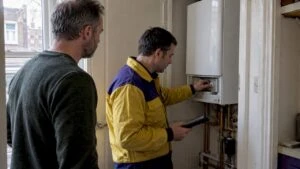
RdSAP 10, the delayed reformed EPC, the EPC C target for 2030 and the £10,000 cost cap: what has changed since 2025 and what London landlords should do.
Domestic EPC Quote

"*" indicates required fields