

Most properties in the UK cannot be sold or rented without a valid Energy Performance Certificate, making EPCs a mandatory part of the modern property market. Yet, many property owners still believe EPCs are just another paperwork chore. In reality, understanding an EPC is not only crucial for staying legally compliant but also holds the key to saving money and improving energy efficiency. This article uncovers what EPCs really mean and breaks down myths that could be costing you more than you think.
Table of Contents
- EPCs Explained: Definition And Common Myths
- Types Of EPCs For Domestic And Commercial Properties
- Legal Requirements For EPCs In The UK
- Landlord And Property Owner Obligations
- Financial Implications And Compliance Risks
Key Takeaways
| Point | Details |
|---|---|
| Mandatory Requirement | EPCs are legally required for all domestic and non-domestic properties during construction, sales, or rentals, providing key insights into energy performance. |
| EPC Ratings | The A to G rating system quantifies energy efficiency, with improvements potentially leading to significant cost savings for property owners. |
| Landlord Obligations | Landlords must obtain a valid EPC and ensure properties meet minimum energy efficiency standards, especially after regulatory updates in 2018 and 2023. |
| Financial Risks | Non-compliance can result in fines up to £5,000 and affect property marketability and tenant occupancy, emphasizing the need for proactive management. |
EPCs Explained: Definition and Common Myths
An Energy Performance Certificate (EPC) is a comprehensive document that evaluates the energy efficiency and environmental impact of a property. According to gov.uk, these certificates are mandatory for all domestic and non-domestic buildings when they are constructed, sold, or let, providing a crucial insight into a building’s energy performance.
The EPC rating system uses a standardised A to G scale, where A represents the most energy-efficient properties and G represents the least efficient. These ratings are not just arbitrary numbers. They represent a detailed assessment of various factors including insulation quality, heating systems, lighting efficiency, and potential carbon dioxide emissions. As ONS highlights, these certificates do more than rate performance – they also suggest potential improvements for property owners.
Let’s debunk some common myths about EPCs:
-
Myth 1: EPCs are just a bureaucratic requirement
Reality: These certificates provide genuine insights into energy efficiency and potential cost savings -
Myth 2: An EPC rating never changes
Reality: Property improvements can significantly upgrade your energy efficiency rating -
Myth 3: All properties have similar energy efficiency
Reality: Buildings can vary dramatically in their energy performance, with potential annual savings of hundreds of pounds
Understanding your EPC rating is more than a legal requirement – it’s a roadmap to a more sustainable and cost-effective property. Each certificate is valid for 10 years, giving property owners ample time to implement recommended energy-saving strategies.
Types of EPCs for Domestic and Commercial Properties
Energy Performance Certificates (EPCs) play a crucial role in assessing the energy efficiency of both domestic and commercial properties. According to gov.uk, these certificates are mandatory for various property transactions, ensuring that potential buyers or tenants understand the energy characteristics of a building.
For domestic properties, the EPC provides comprehensive insights into energy usage and potential improvements. gov.uk specifies that an EPC is required when selling, renting, or constructing a new home. The certificate typically includes:
- Estimated energy costs
- Current energy efficiency rating
- Potential energy efficiency rating
- Recommendations for reducing energy consumption
- Estimated carbon dioxide emissions
Commercial property EPCs differ slightly in their application. These certificates are essential for:
- Renting out commercial premises
- Selling commercial properties
- Completing new commercial construction projects
- Implementing significant property modifications
Property Types Requiring EPCs Include:
- Residential homes
- Apartments
- Office buildings
- Retail spaces
- Warehouses
- Industrial units
Different properties may have unique EPC requirements, which is why understanding the specific guidelines for commercial property EPCs becomes crucial for property owners and managers. The goal is not just compliance, but creating more energy-efficient and environmentally responsible buildings that can potentially reduce long-term operational costs.

Here’s a comparison of EPC requirements for domestic and commercial properties:
| Feature | Domestic Properties | Commercial Properties |
|---|---|---|
| When an EPC is needed | Sale Rental New build |
Sale Rental New build Major modifications |
| Key certificate contents | Energy costs Current and potential ratings CO₂ emissions |
Energy efficiency rating CO₂ emissions Recommendations |
| Typical property types | Houses Flats Apartments |
Offices Retail Warehouses Industrial units |
| Minimum EPC standards | Yes, for rental properties | Yes, minimum E for rented commercial units |
| Certificate validity | 10 years | 10 years |
Legal Requirements for EPCs in the UK
Understanding the legal landscape of Energy Performance Certificates (EPCs) is crucial for property owners and managers in the UK. According to gov.uk, the Energy Performance of Buildings Regulations 2012 establish comprehensive mandatory requirements for EPC certification across various property types.
Key Legal Obligations include obtaining an EPC in the following scenarios:
- When constructing a new property
- Prior to selling a property
- Before renting out a property
- For public buildings over 250 square meters
- For air-conditioning systems exceeding 12kW
The consequences of non-compliance can be significant. gov.uk outlines potentially substantial financial penalties, with fines ranging from £500 to £5,000 depending on the property’s rateable value. These penalties underscore the importance of obtaining a valid EPC.
Navigating these requirements can be complex, which is why understanding the 2018 MEES EPC Regulations becomes essential for property owners. Key points to remember include:
- EPCs are valid for 10 years
- Certificates must be made available to prospective buyers or tenants
- Minimum energy efficiency standards apply to rental properties
- Regular updates and inspections may be necessary
By proactively managing your property’s EPC requirements, you not only avoid potential legal issues but also contribute to broader energy efficiency and sustainability goals in the UK property market.
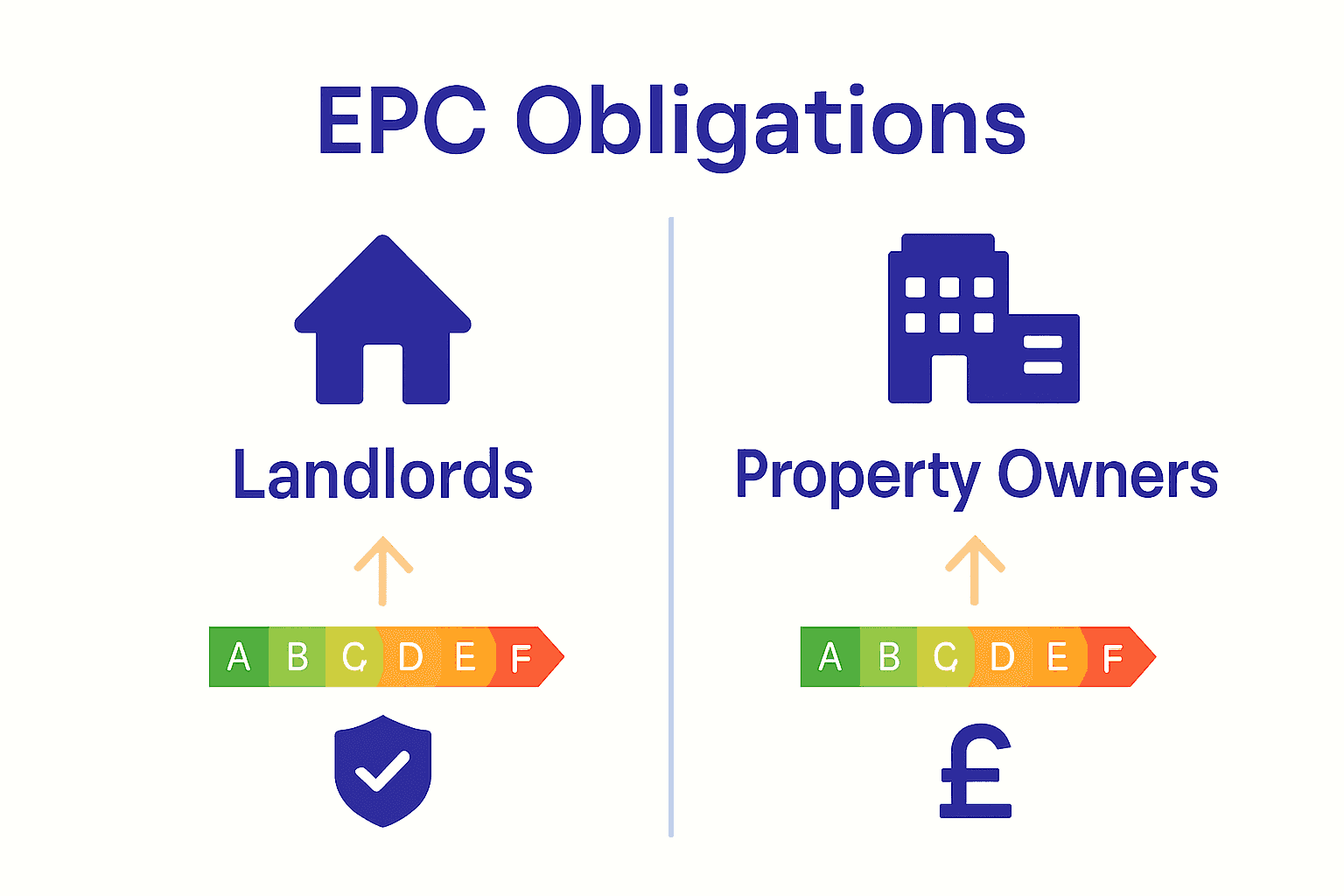
Landlord and Property Owner Obligations
Navigating the complex landscape of Energy Performance Certificate (EPC) requirements is a critical responsibility for landlords and property owners in the UK. According to gov.uk, significant regulatory changes have been implemented to ensure properties meet minimum energy efficiency standards.
Key Obligations for Landlords Include:
- Obtaining a valid EPC before marketing a property
- Ensuring properties meet minimum EPC rating requirements
- Providing the EPC to potential buyers or tenants
- Maintaining the property’s energy efficiency
A crucial milestone in EPC regulations occurred in April 2018, when new rules were introduced for non-domestic rented properties. Landlords must now ensure their properties achieve at least an EPC rating of E before granting new tenancies. Moreover, from April 2023, this requirement extends to all existing tenancies, leaving no room for non-compliance.
gov.uk provides specific guidance on certificate display, noting that in Scotland, the EPC must be prominently displayed within the property – typically in locations like the meter cupboard or near the boiler. This ensures transparency and easy access for potential tenants or buyers.
For property owners looking to stay ahead of regulatory requirements, understanding compliance tips for London property owners can be instrumental. Proactive management not only ensures legal compliance but can also:
- Reduce potential financial penalties
- Improve property marketability
- Lower energy consumption
- Increase property value
By staying informed and taking timely action, landlords can transform EPC obligations from a regulatory burden into an opportunity for property improvement and sustainability.
Financial Implications and Compliance Risks
Understanding the financial landscape of Energy Performance Certificate (EPC) compliance is crucial for property owners and managers. According to gov.uk, non-compliance can result in substantial financial penalties that vary depending on the property’s specific characteristics and rateable value.
Potential Financial Penalties Include:
- Fines ranging from £500 to £5,000
- Penalties based on building’s rateable value
- Potential legal enforcement actions
- Restrictions on renting or selling property
The severity of financial risks extends beyond immediate monetary penalties. gov.uk emphasizes that landlords failing to meet minimum EPC rating requirements may face comprehensive enforcement actions that can significantly impact property operations.
Beyond direct penalties, non-compliance can create broader financial consequences:
- Reduced property marketability
- Potential difficulty securing tenants
- Lower property valuation
- Increased energy maintenance costs
Proactive property owners can mitigate these risks by understanding the 2018 MEES EPC Regulations, which provide critical guidance on maintaining compliance. Strategic investments in energy efficiency improvements can transform potential financial risks into long-term economic advantages, ultimately protecting and potentially increasing property value.
Ensure Your Property Meets EPC Standards with Complete EPC
The journey to full energy compliance in the UK can feel overwhelming, especially when facing strict legal obligations like minimum EPC ratings and financial penalties outlined in the recent regulations. Property owners, landlords and managers often struggle with understanding complex requirements and securing reliable, affordable assessments to avoid costly fines or delays in sales or lettings. This guide has underlined how crucial it is to obtain a valid certificate and maintain energy efficiency standards not just for legal compliance but also to enhance your property’s value and reduce energy expenses.
At Complete EPC, we specialise in helping you navigate these challenges with expert energy performance assessments tailored for both domestic and commercial properties across London. Our team of qualified assessors delivers detailed reports with clear improvement recommendations, ensuring you meet the Minimum Energy Efficiency Standards (MEES) while securing compliance under the latest UK EPC regulations. Do not risk facing fines or losing tenants because of outdated or missing certificates. Act now to protect your investments, improve your property’s marketability, and support sustainable living.
Get your property fully compliant today by contacting Complete EPC for a fast, competitive, and professional service that guides you smoothly through every step of your energy certification needs.
Frequently Asked Questions
What is an Energy Performance Certificate (EPC)?
An Energy Performance Certificate (EPC) is a document that evaluates a property’s energy efficiency and environmental impact, using a rating scale from A (most efficient) to G (least efficient).
Why do I need an EPC for my property?
EPCs are mandatory when constructing, selling, or renting a property. They provide important insights into energy performance, helping both owners and potential buyers or tenants understand energy costs and efficiency improvements.
How long is an EPC valid for?
An EPC is valid for 10 years. After this period, a new assessment is required to ensure that the energy efficiency rating is up to date.
What are the consequences of not having a valid EPC?
Not having a valid EPC can result in financial penalties ranging from £500 to £5,000, depending on the property’s rateable value, and can restrict your ability to sell or rent the property.
Recommended
- 7 Essential EPC Compliance Tips for London Property Owners – Complete EPC
- EPC for Commercial Property: Complete Guide London – Complete EPC
- 5 Essential Tips for Your EPC Certificate London: Enhance Your Home’s Energy Efficiency
- EPC vs DEC Certificate: Complete UK Guide – Complete EPC
- 7 Essential Steps for a Complete Corporate Law Checklist | Ali Legal