

Selling or renting in the british property market comes with more rules than many expect. Every year, over 1 million Energy Performance Certificates are issued across the United Kingdom, making them a standard part of property transactions in London and beyond. Understanding what an EPC really means for your building can help you avoid legal trouble, secure better deals, and make your property more attractive to buyers or tenants.
Table of Contents
- Understanding EPCs In Property Transactions
- Types Of EPCs For London Properties
- Legal Requirements During Sale Or Letting
- Process Of Obtaining An Accurate EPC
- Risks, Penalties, And Cost Implications
Key Takeaways
| Point | Details |
|---|---|
| Mandatory Requirement | Energy Performance Certificates (EPCs) are legally required for all properties being sold or rented in the United Kingdom. |
| Assessment Process | A qualified energy assessor must conduct a thorough evaluation that considers various factors affecting energy efficiency. |
| Legal Compliance | Property owners face significant fines for non-compliance, ranging from £1,000 to £4,000, highlighting the importance of obtaining and maintaining a valid EPC. |
| Investment in Improvement | Understanding and improving EPC ratings can enhance a property’s market value and reduce long-term energy costs. |
Understanding EPCs in Property Transactions
In the dynamic landscape of London property transactions, Energy Performance Certificates (EPCs) play a pivotal role in providing critical insights into a property’s energy efficiency. These legally mandated documents offer potential buyers and tenants comprehensive information about a building’s energy characteristics, helping them make informed decisions about their property investments.
When selling or renting a property in the United Kingdom, obtaining an EPC legal requirements overview becomes a mandatory step. The certificate provides a detailed rating system ranging from A (most energy efficient) to G (least efficient), which gives immediate visual representation of the property’s energy performance. Property owners must understand that these certificates are not merely bureaucratic paperwork, but crucial tools that transparently communicate a building’s energy consumption and potential running costs.
The process of obtaining an EPC involves a qualified energy assessor conducting a thorough evaluation of the property. They examine multiple factors including insulation quality, heating systems, lighting efficiency, and potential heat loss areas. Importantly, an EPC is valid for 10 years, which means property owners can use a single certificate across multiple transactions during that period. The recommendations section within the certificate is particularly valuable, offering specific suggestions for improving energy efficiency and potentially increasing the property’s market value.
Key aspects of EPCs in property transactions include:
- Mandatory requirement for all properties being sold or rented
- Provides a clear energy efficiency rating from A to G
- Valid for 10 years from the date of issue
- Must be produced by an accredited energy assessor
- Offers recommendations for improving property energy performance
By understanding and proactively managing their EPC, property owners in London can not only comply with legal requirements but also demonstrate their commitment to sustainable and energy-efficient real estate practices.
Types of EPCs for London Properties
In the complex landscape of property management, Energy Performance Certificates (EPCs) are not a one-size-fits-all document. London properties require specific types of EPCs tailored to their unique characteristics and usage, ensuring comprehensive energy efficiency assessments that meet legal requirements. Understanding these variations is crucial for property owners and managers navigating the city’s diverse real estate market.
The primary categories of EPCs are distinguished by property type, with commercial and residential classifications forming the core differentiation. Domestic EPCs cover residential properties such as houses, flats, and apartments, evaluating energy performance based on residential-specific parameters like heating systems, insulation, and lighting. These certificates provide homeowners and tenants with crucial insights into potential energy costs and efficiency improvements.
Commercial EPCs, on the other hand, are designed for non-residential buildings including offices, shops, warehouses, and industrial facilities. These assessments are more complex, considering advanced factors like industrial equipment efficiency, large-scale heating and cooling systems, and specific commercial energy consumption patterns. The evaluation process for commercial properties involves more intricate measurements and takes into account the unique energy demands of business environments.
Key distinctions between domestic and commercial EPCs include:
- Assessment scope and complexity
- Specific energy performance metrics
- Detailed recommendations tailored to property type
- Varying calculation methodologies
- Different regulatory requirements for each category
Property owners in London must ensure they obtain the correct type of EPC based on their specific property classification, as using an inappropriate certificate can lead to legal complications and potential penalties. By understanding these nuanced differences, property managers can more effectively navigate energy efficiency requirements and make informed decisions about their building’s environmental performance.
Legal Requirements During Sale or Letting
Navigating the legal landscape of property transactions in London requires a comprehensive understanding of Energy Performance Certificate (EPC) obligations. Property owners and landlords must adhere to specific regulations when selling or letting their properties, with strict legal requirements governing the provision and timing of these crucial energy efficiency documents.

When marketing a property for sale or rent, owners are legally compelled to obtain and provide a valid EPC before any potential buyer or tenant views the property. The certificate must be produced by an accredited energy assessor and remain valid for the entire marketing period. Landlords face particularly stringent requirements, with potential fines ranging from £1,000 to £4,000 for non-compliance, making it essential to understand and meet these legal obligations precisely.
The duration and applicability of EPCs present unique considerations for property transactions. A single EPC remains valid for 10 years, which provides some flexibility for property owners. However, specific scenarios such as significant property modifications or changes in use can necessitate a new assessment. For rental properties, while the EPC remains valid throughout an existing tenancy, landlords must ensure a current certificate is available at the start of each new tenancy or rental agreement.
Key legal requirements include:
- Obtaining an EPC from an accredited assessor before marketing the property
- Providing the EPC free of charge to potential buyers or tenants
- Ensuring the certificate is no more than 10 years old
- Displaying the EPC’s rating prominently in property advertisements
- Maintaining compliance throughout the entire sales or letting process
Property owners must recognise that these legal requirements are not mere bureaucratic formalities, but critical mechanisms designed to promote energy efficiency, transparency, and environmental responsibility in London’s dynamic real estate market.
Process of Obtaining an Accurate EPC
Obtaining an accurate Energy Performance Certificate (EPC) requires a systematic approach that demands precision and professional expertise. Property owners in London must navigate a carefully structured process to ensure they receive a comprehensive and legally compliant energy assessment that meets all regulatory standards.
The journey begins by selecting a qualified energy assessor who is officially accredited to conduct property energy evaluations. These professional assessors typically spend approximately one hour meticulously examining various aspects of the property, including insulation quality, heating systems, lighting efficiency, and potential areas of heat loss. The assessment involves a detailed inspection that goes beyond superficial examination, requiring the assessor to carefully measure and analyse the property’s energy performance characteristics.
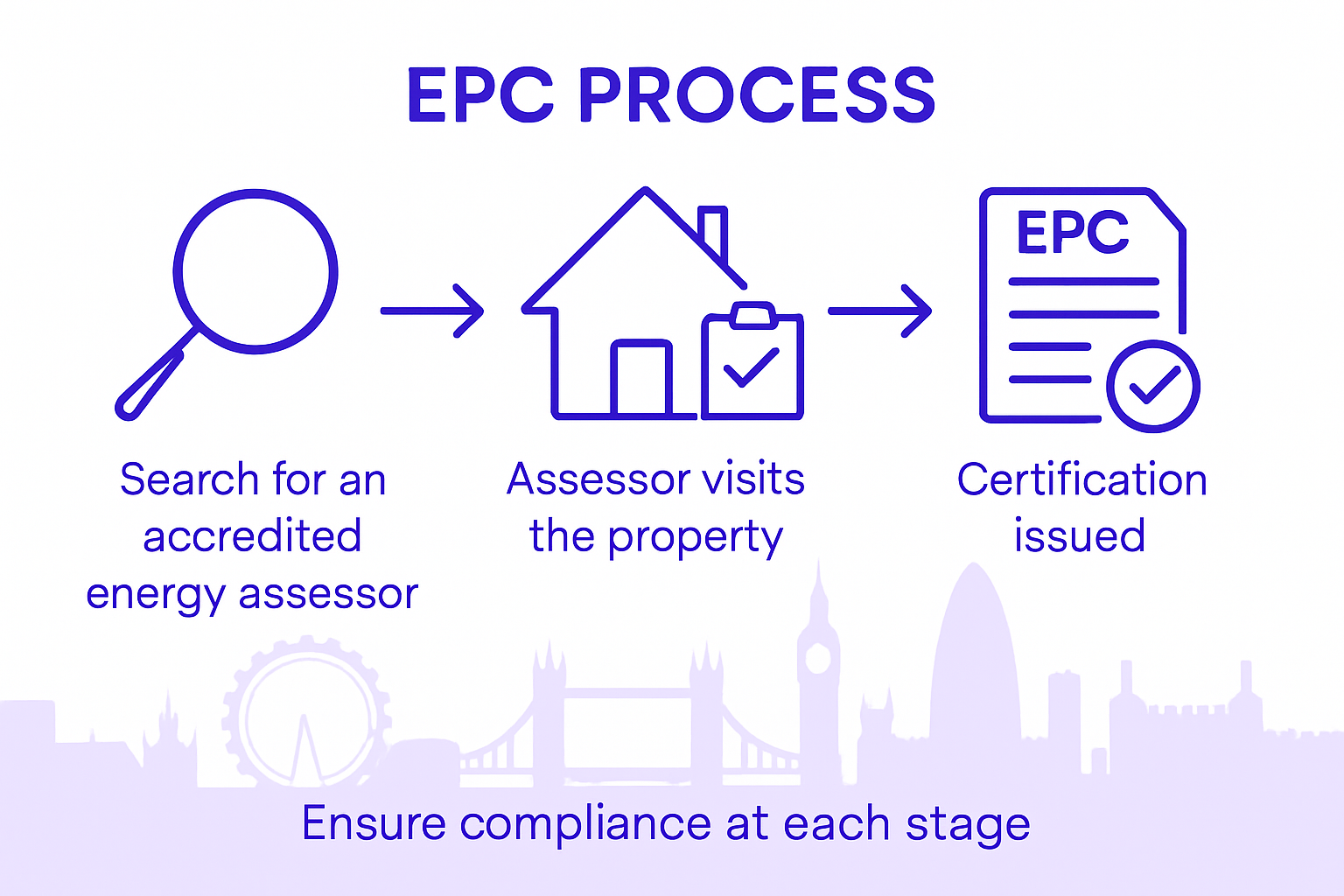
During the assessment, the energy assessor will systematically document critical elements that impact the property’s energy efficiency. They will collect data on wall construction, roof insulation, window specifications, heating mechanisms, and potential thermal bridging points. The collected information is then processed through standardised calculation methodologies to generate a precise energy efficiency rating, which provides potential buyers or tenants with transparent insights into the property’s environmental performance and potential running costs.
Key steps in the EPC assessment process include:
- Scheduling an appointment with an accredited energy assessor
- Preparing the property by ensuring access to all relevant areas
- Providing documentation about recent energy upgrades or modifications
- Allowing the assessor comprehensive access for a thorough evaluation
- Reviewing the final Energy Performance Certificate for accuracy
Property owners should recognise that obtaining an accurate EPC is more than a legal requirement—it is an opportunity to understand and potentially improve their property’s energy efficiency, potentially increasing its market value and reducing long-term energy expenditure.
Risks, Penalties, and Cost Implications
The landscape of Energy Performance Certificates (EPCs) is fraught with significant financial risks and legal consequences that property owners must carefully navigate. Understanding the potential penalties and economic implications is crucial for maintaining compliance and protecting one’s property investment in London’s competitive real estate market.
Property owners face substantial financial risks for non-compliance, with penalties potentially reaching up to £4,000 for failing to provide a valid EPC. These fines represent just the immediate monetary consequence; the long-term economic impact can be far more devastating. Properties with low energy efficiency ratings may experience reduced market value, decreased rental attractiveness, and potential challenges in securing future property transactions.
The evolving regulatory landscape presents additional complexities for property owners. Proposed energy efficiency regulations suggest that by 2030, properties falling below specific efficiency standards could face even more stringent financial penalties. The potential cumulative costs extend beyond direct fines, encompassing mandatory retrofit expenses, reduced property marketability, and potential restrictions on rental or sales capabilities.
Key financial and legal risks include:
- Immediate fines ranging from £1,000 to £4,000
- Potential reduction in property market value
- Challenges in selling or renting properties with poor energy ratings
- Increased costs for mandatory energy efficiency upgrades
- Legal restrictions on property transactions
Property owners must view EPC compliance not as a bureaucratic burden, but as a strategic investment in their property’s long-term value, marketability, and environmental sustainability.
Ensure Full EPC Compliance for Your London Property Transactions
Navigating the legal duties around Energy Performance Certificates (EPCs) can be challenging for property owners in London. With strict requirements to obtain valid EPCs before selling or letting and the risk of costly penalties, the process demands precision and expert knowledge. Key issues include understanding the difference between domestic and commercial EPCs, meeting the obligation to provide certificates ahead of marketing, and ensuring assessments are accurate and up to date.
At Complete EPC, we specialise in overcoming these challenges by delivering reliable, professional EPC services tailored to your property type. Our accredited assessors provide detailed energy efficiency evaluations and clear recommendations to help you comply with legal mandates and increase your property’s appeal. Don’t risk fines or delays in your property transactions — take control now by visiting Complete EPC to secure your certificate quickly and confidently. Learn more about the legal requirements for EPCs in property sales and lettings and discover how our expert team supports you every step of the way.
Frequently Asked Questions
What is an Energy Performance Certificate (EPC)?
An Energy Performance Certificate (EPC) is a legally required document that provides information about a property’s energy efficiency, rated from A (most efficient) to G (least efficient). It helps potential buyers and tenants understand energy consumption and costs associated with the property.
How long is an EPC valid for, and when is it required?
An EPC is valid for 10 years from the date of issue. It is required before marketing a property for sale or rent, and must be provided to potential buyers or tenants free of charge before viewing the property.
What are the legal penalties for not obtaining an EPC?
Property owners can face fines ranging from £1,000 to £4,000 for failing to provide a valid EPC when required. In addition to fines, properties with low energy ratings may experience decreased market value and challenges in selling or renting.
How do I obtain an EPC for my property?
To obtain an EPC, you must engage an accredited energy assessor who will evaluate your property. The assessment includes a thorough inspection of insulation, heating systems, and lighting. Once completed, the assessor will provide you with the EPC, typically taking about an hour for the assessment.
Recommended
- 7 Essential EPC Compliance Tips for London Property Owners – Complete EPC
- Understanding EPCs in London: Why They Matter for Property Owners – Complete EPC
- Navigating London’s Real Estate: A First-Time Buyer and Seller’s Guide to EPC Certificates – Complete EPC
- EPC Costs in London: What Should You Expect? – Complete EPC