

Over one million British landlords face mounting pressure to comply with strict energy regulations impacting every rental property. Staying ahead with updated Energy Performance Certificates is no longer optional as penalties for non-compliance can reach £5,000 or more. For British property owners, understanding these rules is vital to avoid costly mistakes and unlock advantages that can lead to higher returns, stronger tenant demand, and better long-term sustainability.
Table of Contents
- Understanding EPCs For Rental Properties
- Legal Duties And Minimum Standards For Landlords
- Financial Benefits And Market Advantages Of EPCs
- Risks Of Non-Compliance And Penalty Costs
- Improving Energy Ratings And Sustainability
Key Takeaways
| Point | Details |
|---|---|
| EPC Compliance is Mandatory | Landlords must obtain a valid Energy Performance Certificate (EPC) before renting out properties, which must display a minimum rating of E. |
| Financial Incentives for Energy Efficiency | Properties with higher EPC ratings can reduce energy costs and increase rental attractiveness, leading to potential higher income. |
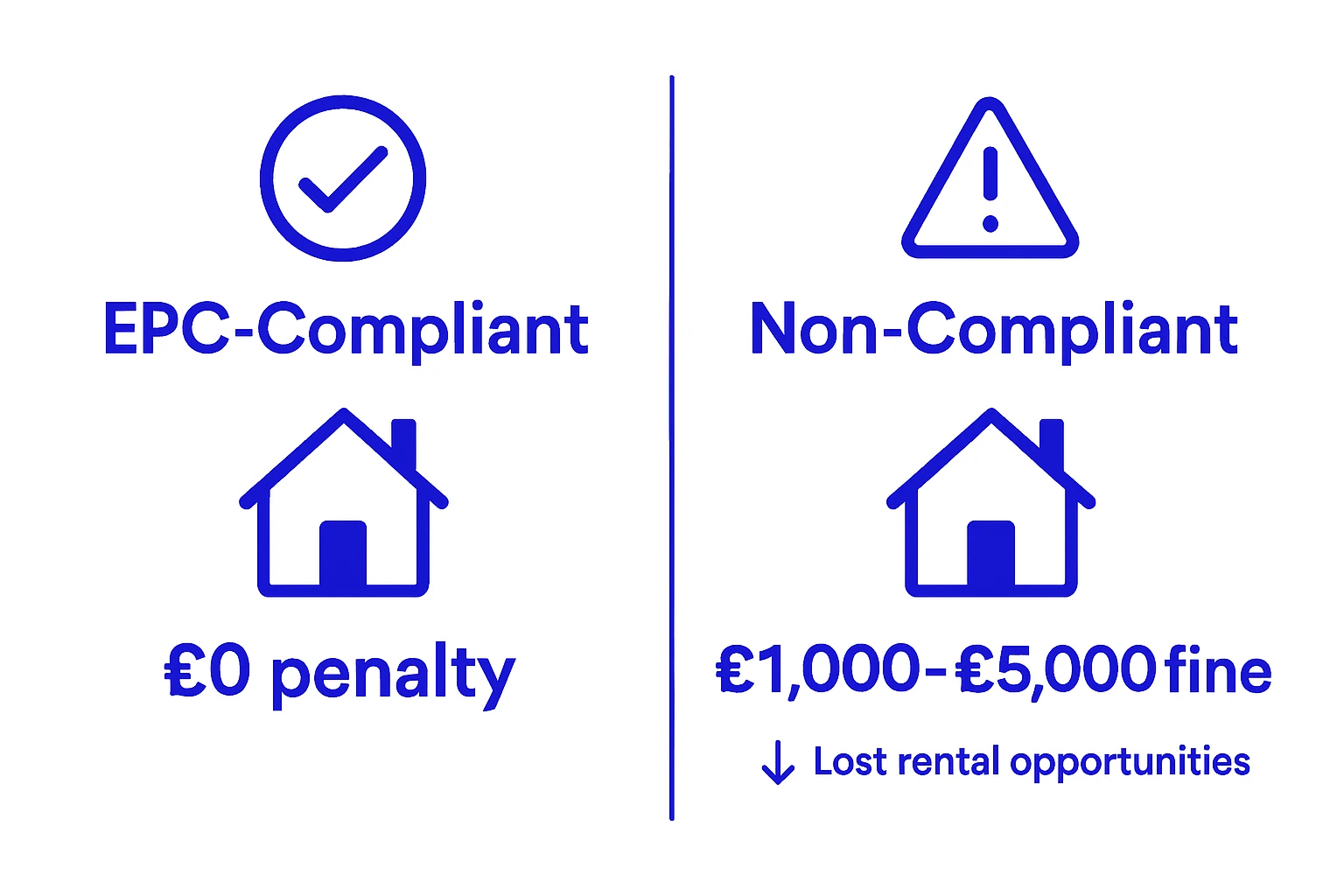
| Risks of Non-Compliance | Failing to comply with EPC regulations can result in fines between £1,000 and £5,000, and potentially more severe penalties. |
| Improvements Enhance Value | Implementing recommended energy efficiency upgrades not only improves EPC ratings but can also boost property value and appeal to eco-conscious tenants. |
Understanding EPCs for Rental Properties
Every landlord in the United Kingdom must understand Energy Performance Certificates (EPCs), which provide critical insights into a property’s energy efficiency. These mandatory documents rate property energy performance from A (most efficient) to G (least efficient), offering a comprehensive snapshot of a building’s thermal characteristics and potential energy costs.
EPCs are not merely bureaucratic paperwork – they represent a crucial legal requirement for rental properties. Landlords are legally obligated to obtain a valid EPC before marketing their property, with certificates remaining valid for a decade. The certificate must be made available to potential tenants before they sign a tenancy agreement, ensuring transparency about the property’s energy consumption and potential running costs.
The implications of EPCs extend beyond simple compliance. These documents provide actionable recommendations for improving a property’s energy efficiency, which can translate into tangible benefits for landlords. Lower energy ratings can significantly impact rental attractiveness, potentially reducing property value and tenant interest. Properties with better energy ratings often command higher rental prices and attract more environmentally conscious tenants, making EPC improvements a strategic investment for forward-thinking property owners.
- Key EPC Requirements for Landlords:
- Obtain a valid certificate before renting
- Ensure minimum energy efficiency rating of E
- Display certificate to prospective tenants
- Renew certificate every 10 years
- Implement recommended energy improvements
Failure to comply with EPC regulations can result in substantial financial penalties, with fines ranging from £1,000 to £5,000. Smart landlords view these certificates not as bureaucratic obstacles, but as opportunities to enhance property value, reduce operational costs, and demonstrate commitment to sustainable housing practices.
Legal Duties and Minimum Standards for Landlords
Navigating the complex landscape of Energy Performance Certificate (EPC) regulations is crucial for landlords in the United Kingdom. Since April 2020, landlords in England and Wales must ensure their rental properties meet a minimum EPC rating of E, representing a significant legal requirement that carries substantial implications for property management and rental operations.
The legal framework surrounding EPCs is not static, with the UK government proposing to increase the minimum EPC rating for rental properties to C by 2028. This anticipated change signals a proactive approach to improving residential energy efficiency and means landlords must strategically plan for potential property upgrades. Non-compliance could result in significant financial penalties and potentially restrict a landlord’s ability to secure buy-to-let financing.
Key legal obligations for landlords regarding EPCs include:
- Obtaining a valid EPC before marketing a property
- Ensuring the property meets the minimum E energy efficiency rating
- Displaying the EPC certificate to potential tenants
- Maintaining the property’s energy performance standards
- Implementing recommended energy efficiency improvements
Failing to meet these standards can lead to substantial fines ranging from £1,000 to £5,000, making it imperative for landlords to stay informed and proactive. Compliance is not just about avoiding penalties, but also about contributing to broader environmental goals and potentially increasing property value through energy efficiency improvements. Landlords who view these requirements as opportunities for property enhancement, rather than bureaucratic obstacles, will be best positioned to succeed in an evolving rental market.
Financial Benefits and Market Advantages of EPCs
Investing in Energy Performance Certificates (EPCs) offers substantial financial advantages for landlords beyond mere regulatory compliance. Properties with higher EPC ratings can significantly reduce annual energy expenses, with homes rated C potentially saving around £750 compared to those rated E, making energy efficiency a direct pathway to improved financial performance.

The market advantages of maintaining a strong EPC rating extend far beyond immediate energy cost savings. Energy-efficient properties are increasingly attractive to environmentally conscious tenants, potentially reducing vacancy periods and commanding premium rental rates. Research indicates that properties with superior energy performance can differentiate themselves in a competitive rental market, appealing to tenants who prioritise sustainability and lower utility costs.
Key financial benefits of maintaining a high EPC rating include:
- Reduced energy consumption and lower utility bills
- Increased property market value
- Enhanced tenant attractiveness
- Potential for higher rental income
- Lower maintenance and repair costs
Moreover, the broader environmental impact cannot be overlooked. With 26% of the United Kingdom’s greenhouse gas emissions originating from residential properties, landlords who invest in energy efficiency are not just improving their financial prospects but also contributing to critical national environmental objectives. Proactive landlords who view EPCs as strategic assets rather than regulatory burdens will be best positioned to maximise their property investments in an increasingly sustainability-focused rental market.
Risks of Non-Compliance and Penalty Costs
Non-compliance with Energy Performance Certificate (EPC) regulations represents a significant financial and legal risk for landlords in the United Kingdom. Local authorities can impose substantial fines of up to £5,000 for landlords who let properties without a valid EPC or fail to meet minimum energy efficiency standards, creating a serious potential for unexpected financial penalties.
The penalty structure for EPC non-compliance is both complex and punitive. Depending on the duration of the breach, fines can escalate dramatically, ranging from £5,000 to potentially £150,000. For breaches lasting less than three months, landlords may face fines calculated as the higher of £5,000 or 10% of the property’s rateable value, with an upper limit of £50,000. More prolonged violations can trigger even more severe penalties, potentially reaching £10,000 or 20% of the property’s rateable value, up to a maximum of £150,000.
Key risks of EPC non-compliance include:
- Significant monetary penalties
- Legal restrictions on property letting
- Potential difficulty securing future tenants
- Reputational damage to the landlord
- Potential challenges in property refinancing
Beyond immediate financial consequences, non-compliance can create long-term complications for property owners. The penalties extend beyond monetary fines, potentially impacting a landlord’s ability to rent properties, secure financing, and maintain a professional reputation in the competitive rental market. Proactive landlords who prioritise energy efficiency and maintain current EPCs will not only avoid these risks but also position themselves advantageously in an increasingly regulated and environmentally conscious property landscape.
Improving Energy Ratings and Sustainability
Energy efficiency represents a critical pathway for landlords seeking to enhance property value and environmental responsibility. Landlords can dramatically improve their property’s EPC rating by implementing targeted energy efficiency measures, with a range of strategic upgrades available within a reasonable cost framework.
The Energy Performance Certificate provides a comprehensive roadmap for property improvements, offering detailed recommendations that can transform a property’s energy performance. These upgrades not only reduce environmental impact but also create tangible financial benefits for property owners.
Key energy improvement strategies include:
- Installing loft or cavity wall insulation
- Implementing double glazing
- Upgrading boilers and heating controls
- Replacing traditional lighting with LED alternatives
- Adding renewable energy solutions like solar panels
The current regulatory framework supports landlords by implementing a cost cap of £3,500 (including VAT) for required improvements, ensuring that energy efficiency upgrades remain financially accessible. Proactive landlords who view these improvements as investments rather than expenses will position themselves advantageously in an increasingly sustainability-focused rental market, attracting environmentally conscious tenants and potentially increasing property values through enhanced energy performance.
Ensure Legal Compliance and Maximise Your Property’s Value with Expert EPC Services
The article highlights the critical challenges landlords face regarding legal obligations, financial risks, and market competitiveness linked to Energy Performance Certificates (EPCs). With the pressure to meet minimum energy efficiency standards and avoid hefty fines, navigating EPC requirements can feel overwhelming. You also want to capitalise on the financial benefits of higher EPC ratings that can enhance rental appeal and reduce energy costs.
At Complete EPC, we understand these concerns and offer professional EPC assessments tailored to your property in London. Our experienced assessors provide detailed reports with clear recommendations to improve energy efficiency while ensuring you meet all legal duties promptly. Don’t risk penalties or lose tenant interest when you can access accurate, affordable, and reliable EPC certification today. Visit Complete EPC now to secure your compliance and maximise your property’s market potential.
Frequently Asked Questions
What is an Energy Performance Certificate (EPC)?
An Energy Performance Certificate (EPC) provides a rating of a property’s energy efficiency, ranging from A (most efficient) to G (least efficient). It includes important information about the property’s thermal characteristics and potential energy costs.
What are the legal requirements for landlords regarding EPCs?
Landlords must obtain a valid EPC before marketing their rental properties, ensure a minimum energy efficiency rating of E, display the EPC to prospective tenants, and renew it every 10 years.
How can landlords improve their EPC ratings?
Landlords can improve their EPC ratings by implementing energy efficiency upgrades such as adding insulation, installing double glazing, upgrading heating systems, and using renewable energy solutions like solar panels.
What are the consequences of not complying with EPC regulations?
Failure to comply with EPC regulations can lead to significant financial penalties ranging from £1,000 to £5,000, legal restrictions on property letting, and potential difficulties in securing future tenants.
Recommended
- EPC Certificates for Rentals: Complete UK Guide – Complete EPC
- EPC Rules for Landlords: Complete Guide (UK)
- Everything London Landlords Need to Know About Commercial EPC Certificates – Complete EPC
- Complete Guide to EPC and Legal Compliance UK – Complete EPC
- Why Your California Rental Property Doesn’t Need an LLC – Law Office of Eric Ridley
- 7 Key Examples of Building Inspections Every Owner Should Know – FloridaLicensedEngineers.com