

Nearly one in three British homes are still rated below the legal minimum for energy efficiency, leaving property owners in Greater London facing real challenges when it comes to rentals and sales. Navigating Energy Performance Certificates is not just about legal compliance. Enhancing your property’s EPC rating can drive up market value and slash energy bills. This guide highlights what every property owner must know to avoid costly mistakes and unlock meaningful savings.
Table of Contents
- What Is An EPC For Homes?
- Different Types Of EPC Explained
- UK Legal Requirements For EPCs
- Financial Benefits And Cost Implications
- Common Mistakes When Obtaining An EPC
Key Takeaways
| Point | Details |
|---|---|
| EPC Overview | An Energy Performance Certificate (EPC) assesses a home’s energy efficiency, rated from A to G, providing insights into potential improvements and associated costs. |
| Legal Requirements | EPCs are mandatory for selling or renting properties in England and Wales, and must be valid and less than 10 years old. |
| Financial Benefits | High EPC ratings can enhance property value and rental rates while reducing energy costs significantly through efficiency improvements. |
| Common Mistakes | Property owners should ensure to engage accredited assessors and provide complete information to avoid invalid or inaccurate EPCs. |
What Is an EPC for Homes?
An Energy Performance Certificate (EPC) is an official document that provides a comprehensive assessment of a residential property’s energy efficiency. These certificates offer homeowners, buyers, and renters a clear picture of a building’s energy performance, ranking its efficiency from A (most efficient) to G (least efficient). Developed as part of the United Kingdom’s commitment to reducing carbon emissions, EPCs have become a critical tool in understanding and improving home energy consumption.
The primary purpose of an EPC is to transparently communicate energy ratings for residential properties. When you receive an EPC, you’ll see a detailed breakdown that includes:
- Current energy efficiency rating
- Potential energy efficiency rating after recommended improvements
- Estimated energy costs
- Specific recommendations for reducing energy consumption
- Carbon dioxide emission ratings
Legally, EPCs are mandatory when selling or renting a property in England and Wales. Landlords and homeowners must obtain a valid certificate before marketing their property, ensuring potential buyers or tenants understand the building’s energy performance. These certificates are valid for 10 years, providing a consistent benchmark for energy efficiency that can help property owners make informed decisions about potential upgrades.
Pro tip: Request a copy of your property’s EPC before selling or renting, and use its recommendations to potentially increase your property’s value and reduce energy costs.
Different Types of EPC Explained
In the United Kingdom, Energy Performance Certificates (EPCs) are categorised into two primary types: domestic and non-domestic certificates. Different property classifications require specific EPC approaches that address the unique energy characteristics of various building types.
Domestic EPCs are specifically designed for residential properties, including:
- Single-family homes
- Apartments
- Flats
- Residential units in multi-dwelling buildings
These certificates evaluate the energy efficiency of homes by assessing factors like:
- Insulation quality
- Heating systems
- Hot water infrastructure
- Windows and doors
- Overall building construction
Non-Domestic EPCs cover a broader range of buildings, including:
- Commercial offices
- Retail spaces
- Warehouses
- Public buildings
- Industrial facilities
Non-domestic certificates include additional elements like Display Energy Certificates (DECs) for public buildings and Air Conditioning Inspection Reports (ACIRs), which provide more comprehensive energy performance insights for complex commercial structures.
Both domestic and non-domestic EPCs follow the standard A to G rating system, with A representing the most energy-efficient properties and G representing the least efficient. The certificates provide not just a rating, but also detailed recommendations for improving energy performance and reducing carbon emissions.
Pro tip: Always request a specific type of EPC relevant to your property type to ensure accurate and meaningful energy performance assessment.
The following table summarises the key distinctions between Domestic and Non-Domestic EPCs in the UK:
| Aspect | Domestic EPC | Non-Domestic EPC |
|---|---|---|
| Typical Properties | Homes, flats, apartments | Offices, retail, public buildings |
| Assessment Focus | Heating, insulation, windows | Building use, technical systems |
| Regulatory Influence | Impacts home sales and lets | Affects commercial transactions |
| Additional Reports | Not required | May need DEC or ACIR |
UK Legal Requirements for EPCs
The United Kingdom has established comprehensive legal frameworks governing Energy Performance Certificates (EPCs) that property owners must carefully navigate. Specific regulations mandate EPC requirements for various property transactions and tenancy types across England and Wales.
Key Legal Obligations for property owners include:
- Obtaining an EPC before selling or renting a property
- Ensuring the certificate is valid and less than 10 years old
- Providing the EPC to potential buyers or tenants free of charge
- Displaying the EPC rating prominently when marketing the property
For rental properties, the Minimum Energy Efficiency Standards (MEES) impose additional critical requirements. Since April 2020, landlords cannot legally rent properties with an Energy Performance Certificate rating below E, with some specific exemptions. This means properties must meet a minimum energy efficiency threshold, compelling landlords to invest in energy improvements or face potential legal penalties.

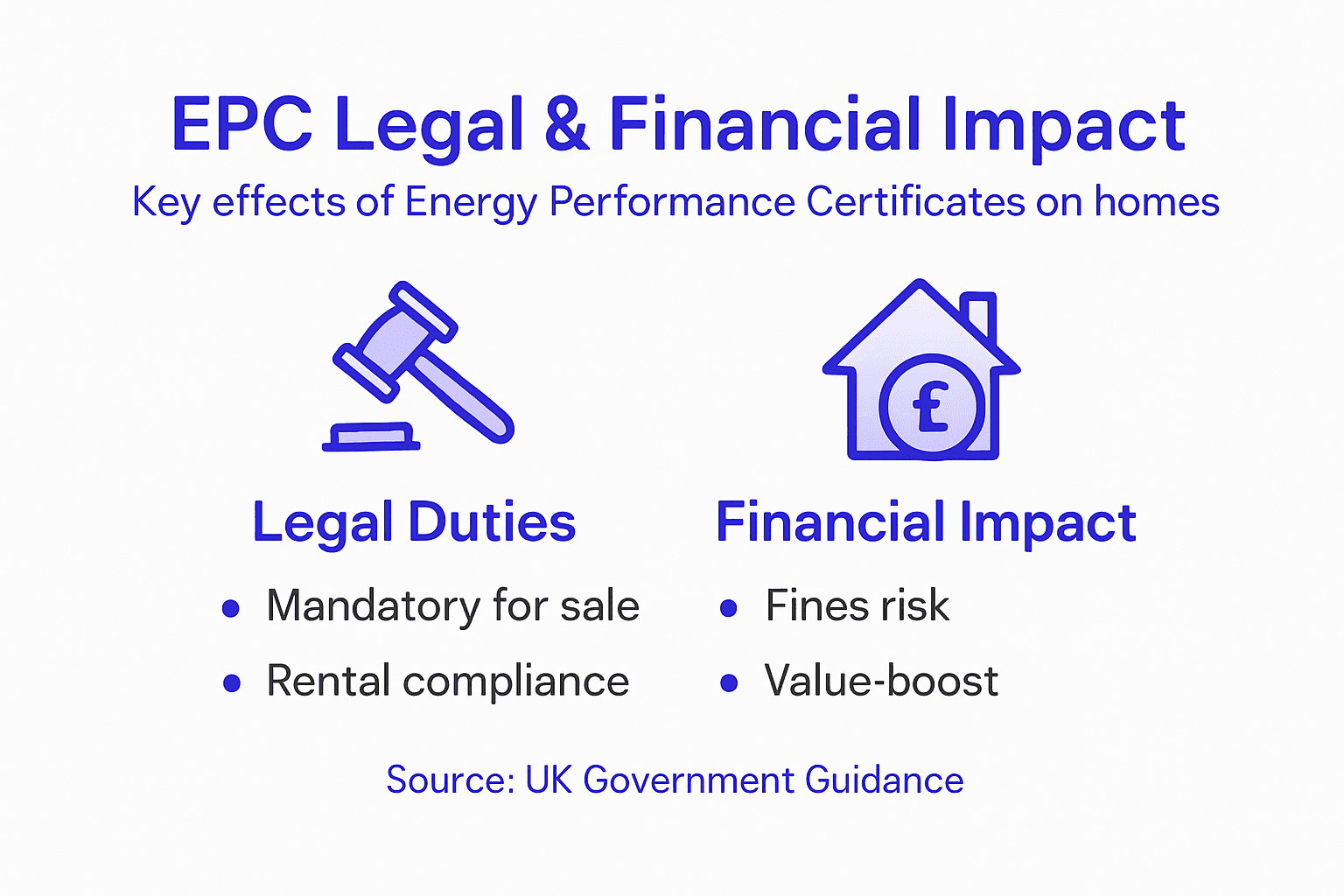
Non-compliance with EPC regulations can result in significant financial consequences. Local authorities have the power to issue penalty charges ranging from £500 to £5,000 depending on the property’s rateable value and the duration of the breach. These penalties underscore the importance of understanding and adhering to the legal requirements surrounding Energy Performance Certificates.
Here is a quick reference to EPC penalty scenarios and their implications:
| Breach Type | Example Consequence | Penalty Range |
|---|---|---|
| No valid EPC when selling | Sale may be delayed or blocked | £500 to £5,000 |
| Renting property below MEES | Lease invalid, tenants may not move in | Up to £5,000 |
| Missing EPC on marketing | Advert may be withdrawn | £500 to £1,000 |
Pro tip: Consult a professional EPC assessor to ensure your property meets all current legal standards and avoid potential financial penalties.
Financial Benefits and Cost Implications
Property owners can unlock substantial financial advantages by understanding and strategically improving their Energy Performance Certificates (EPCs). Government assessments reveal significant economic incentives for investing in energy efficiency upgrades and maintaining higher EPC ratings.
Property Value and Rental Potential
Properties with higher EPC ratings consistently demonstrate increased market value and rental attractiveness. Research indicates that homes with improved energy efficiency can command:
- Up to 10% higher rental rates
- Faster property transactions
- Greater appeal to environmentally conscious tenants and buyers
Energy Cost Savings
Investing in EPC improvements directly translates to reduced energy consumption and lower utility bills. Typical energy efficiency upgrades can result in:
- Annual heating cost reductions of 20-30%
- Improved insulation
- More efficient heating systems
- Reduced carbon emissions
Long-term financial planning becomes more predictable when property owners understand their energy performance. The initial investment in EPC improvements often pays for itself through reduced energy expenditure, with many upgrades delivering returns within 3-7 years. Moreover, these investments future-proof properties against increasingly stringent energy efficiency regulations and potential carbon taxation.
Pro tip: Prioritise energy efficiency upgrades that offer the most significant return on investment by consulting an experienced EPC assessor who can provide tailored recommendations.
Common Mistakes When Obtaining an EPC
Navigating the Energy Performance Certificate (EPC) process can be complex, with numerous potential pitfalls that property owners must carefully avoid. Data quality issues frequently compromise certificate accuracy and can lead to significant compliance challenges.
Mistake 1: Choosing an Unaccredited Assessor
One of the most critical errors property owners make is selecting an assessor who lacks proper certification. This can result in:
- Invalid or inaccurate EPC documentation
- Potential legal non-compliance
- Rejected certificates during property transactions
- Additional costs for re-assessment
Mistake 2: Incomplete Property Information
Providing incomplete or incorrect property details can dramatically impact the EPC rating. Common oversights include:
- Failing to document recent energy efficiency upgrades
- Not accounting for specific building modifications
- Omitting detailed information about heating systems
- Underestimating the importance of precise measurements
Mistake 3: Misunderstanding EPC Requirements
Many property owners mistakenly believe certain properties are exempt from EPC regulations. This misconception can lead to unintentional non-compliance, particularly for:
- Listed buildings
- Temporary structures
- Renovation properties
- Complex commercial spaces
Understanding the nuanced legal requirements is crucial to avoiding potential penalties and ensuring smooth property transactions. Each property type has specific guidelines that must be carefully navigated to maintain full compliance.
Pro tip: Always work with a certified EPC assessor who can provide comprehensive guidance tailored to your specific property type and requirements.
Secure Your Property’s Future with Expert EPC Services
Understanding the legal and financial impact of Energy Performance Certificates is vital for every homeowner, landlord, or estate agent in London. If you are facing challenges like meeting the Minimum Energy Efficiency Standards or avoiding costly penalties, you are not alone. The article highlights key concerns such as obtaining valid and accurate EPCs, improving property value, and reducing energy costs — all crucial for smooth property sales or rentals.
At Complete EPC, we specialise in providing reliable and competitively priced domestic and commercial EPCs that help you navigate these regulations confidently. Our qualified assessors deliver detailed reports with actionable recommendations tailored to your property’s needs. Whether you need to comply with legal requirements or want to maximise your financial benefits through energy efficiency upgrades, our seamless service is designed to support you every step of the way.
Don’t risk delays or penalties – take control now and safeguard your investment. Visit Complete EPC’s official site to book your assessment today and explore how our expertise can turn your EPC into a smart opportunity. For further guidance, discover practical tips and regulatory insights directly on our website to stay ahead in your property journey.
Frequently Asked Questions
What is the purpose of an Energy Performance Certificate (EPC)?
An Energy Performance Certificate (EPC) provides an assessment of a property’s energy efficiency, ranking it from A (most efficient) to G (least efficient) and offering insights on how to improve energy consumption.
Are EPCs mandatory for all properties?
Yes, obtaining an EPC is mandatory when selling or renting a property. Homeowners and landlords must ensure their property has a valid EPC before marketing it.
How can a higher EPC rating impact property value?
A higher EPC rating can significantly enhance property value and rental attractiveness, potentially allowing owners to charge up to 10% more in rent and facilitating quicker property transactions.
What are the penalties for not complying with EPC regulations?
Non-compliance with EPC regulations can lead to penalties ranging from £500 to £5,000, depending on the specific breach and property rateable value.
Recommended
- Why Landlords Need EPCs – Legal, Financial, and Market Impacts
- Benefits of EPC for Landlords in London Property
- 7 Key EPC Legal Requirements UK Property Owners Must Know – Complete EPC
- Complete Guide to EPC and Legal Compliance UK – Complete EPC
- Waarom energiebesparing essentieel is voor huiseigenaren – Holland Electric Duurzaam
- Energie-efficiëntie uitgelegd: Minder kosten, meer comfort