

Many London landlords face mounting pressure to comply with changing energy efficiency rules while also keeping property expenses manageable. Meeting legal requirements for an Energy Performance Certificate can feel like just another task, yet a well-prepared EPC report can reveal where your properties stand and point to smart ways to cut bills. By organising your essential property details from the start, you set the stage for a smoother assessment and uncover real opportunities to increase value and save on energy costs.
Table of Contents
- Step 1: Gather Required Property Information
- Step 2: Book a Qualified EPC Assessor
- Step 3: Prepare for the EPC Assessment
- Step 4: Review and Obtain Your EPC Certificate
Quick Summary
| Essential Insight | Detailed Explanation |
|---|---|
| 1. Prepare Property Details | Organise essential information about your property before booking an EPC assessment to facilitate a smooth evaluation process. |
| 2. Choose an Accredited Assessor | Ensure the EPC assessor is accredited and registered with an official government scheme for compliance and reliability. |
| 3. Clear Accessibility for Inspection | Make sure your property is accessible by clearing areas that need assessment to allow for a thorough evaluation of energy efficiency. |
| 4. Review Your EPC Certificate Carefully | After receiving your EPC, examine it closely to understand your property’s energy rating and recommended improvements. |
| 5. Use Recommendations for Energy Improvements | Leverage the suggestions in your EPC to prioritise and implement energy-saving upgrades that can reduce costs and enhance efficiency. |
Step 1: Gather Required Property Information
Before booking your EPC assessment, collecting the right property details makes the process smoother and ensures your assessor can deliver an accurate certificate. You don’t need to be an expert—just have your property basics ready.
Start by locating your current Energy Performance Certificate if you’ve had one before. Your existing EPC contains valuable information about your property’s energy use, typical costs, and recommendations for improvements. This document gives you a starting point and shows what’s already been assessed.
Next, gather these essential property details:
- Your full property address
- Age or year built (approximate is fine)
- Building type (flat, semi-detached, detached, terraced)
- Type of heating system (boiler, heat pump, storage heaters)
- External wall construction (cavity, solid, timber frame)
- Approximate floor area or room dimensions
- Primary energy sources (gas, electricity, oil)
You can find many of these details in your property deeds, council tax band information, or previous survey reports. Don’t worry if you don’t have everything—your assessor will help identify missing information during the visit.
For online support, the Energy Saving Trust’s Home Energy Check provides useful guidance on identifying your home’s characteristics. This free tool helps you understand your property’s energy profile before the formal assessment.
Having this information prepared means your assessor can work efficiently and produce a compliant certificate without delays. It also helps you understand your property’s energy performance better.
Having your property details organised before the assessment speeds up the process and ensures a more thorough evaluation of your home’s energy efficiency.
Pro tip: Create a simple document with your property details and leave it accessible for your assessor—this demonstrates organisation and helps them complete the assessment more quickly, often within the same day.
Step 2: Book a Qualified EPC Assessor
Now that you have your property details ready, it’s time to find and book a qualified assessor. Booking the right professional ensures your EPC is accurate, compliant, and delivered on schedule.
You must use an accredited EPC assessor registered with an official government scheme. These assessors hold the necessary qualifications and follow the Standards Assessment Procedure (SAP) methodology, which is the industry standard for energy evaluations. When searching for assessors, verify they’re listed on the official government register to confirm their credentials are valid.
Here’s what to do when contacting assessors:
- Search for accredited assessors in your London area
- Request quotes from at least two or three assessors for comparison
- Confirm they hold current accreditation with a recognised scheme
- Check their availability for your preferred inspection dates
- Ask about their turnaround time for the final certificate
When evaluating quotes, don’t just focus on price. Look at what’s included, how quickly they deliver results, and whether they provide recommendations for energy improvements. A slightly higher fee often means faster service or more detailed guidance on reducing your energy costs.
Here is a summary of factors to consider when comparing EPC assessors:
| Criteria | Why It Matters | What to Look For |
|---|---|---|
| Accreditation | Ensures legal compliance | Assessor registered with official scheme |
| Turnaround Time | Affects transaction speed | Certificate provided within 1–2 days |
| Cost Transparency | Prevents hidden fees | Clear quote with itemised costs |
| Recommendations Quality | Impacts energy savings | Specific, property-tailored suggestions |
| Customer Reviews | Indicates service level | Positive feedback on government website |
Contact your chosen assessor directly to arrange the inspection. They’ll confirm the date, time, and what to expect during the visit. Most inspections take 30 minutes to an hour, depending on your property size.
Selecting an assessor from the official register guarantees they meet legal requirements and follow proper assessment standards for your property.
Pro tip: Book your assessment during daylight hours if possible—this helps the assessor examine external walls and insulation more thoroughly, resulting in a more comprehensive evaluation.
Step 3: Prepare for the EPC Assessment
Good preparation makes the assessment smoother and helps your assessor deliver an accurate, detailed evaluation of your property’s energy performance. A few simple steps beforehand can save time on the day.

Start by ensuring your property is accessible. Clear pathways to your loft, boiler cupboard, and any heating systems or storage areas. The assessor needs to inspect these spaces closely to evaluate your building’s fabric and energy efficiency. Remove clutter from hallways and ensure they can safely access all inspection points.
Gather relevant documents about your property:
- Records of recent insulation upgrades or installations
- Documentation of new heating systems or boilers fitted
- Details of any double glazing or window replacements
- Building modification certificates or planning approvals
- Utility bills showing your energy consumption patterns
- Any previous EPC certificates or energy surveys
Having these documents ready helps the assessor understand what improvements you’ve already made. This context leads to a more accurate rating and better recommendations for future improvements. The assessor will also need access to your boiler to inspect its efficiency rating and age.
On the assessment day, be present and available to answer questions about your heating system, hot water provision, and any upgrades you’ve completed. The assessor may ask about ventilation, draught-proofing, or building features that aren’t immediately obvious. Your knowledge of the property helps them understand the complete assessment process and provide tailored energy-saving recommendations.
Preparation demonstrates organisation and ensures the assessor can thoroughly evaluate all aspects of your property’s energy performance.
Pro tip: Take photos of your boiler’s nameplate and any insulation materials in your loft before the assessment day—these visual aids help the assessor verify details and speed up the evaluation.
Step 4: Review and Obtain Your EPC Certificate
Once the assessment is complete, you’ll receive your Energy Performance Certificate digitally. This certificate shows your property’s energy efficiency rating and provides valuable insights into how your home performs against current standards.
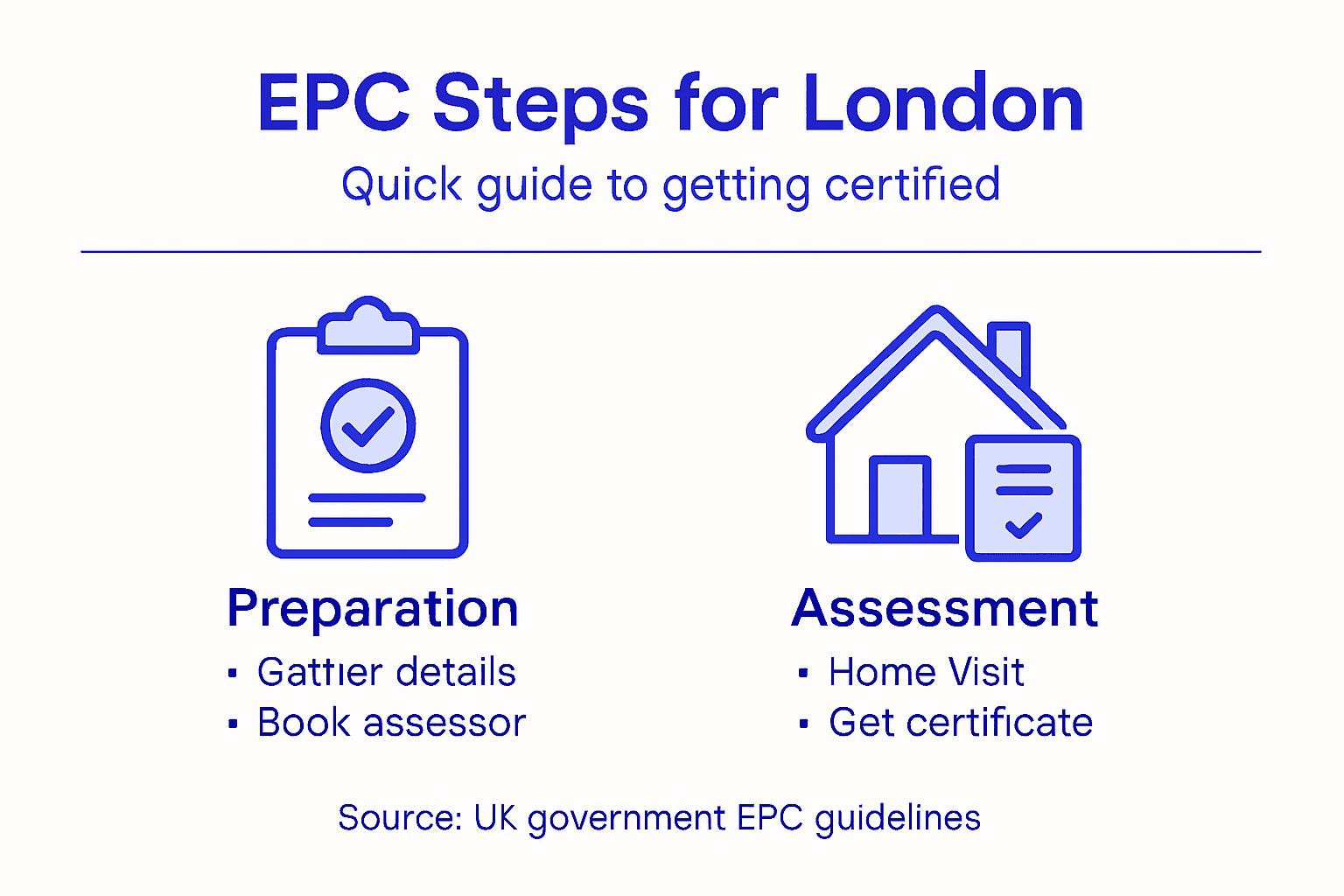
Your assessor will deliver the certificate shortly after the inspection. Take time to review the document carefully. It includes your property’s overall energy rating (rated from A to G, with A being most efficient), typical annual energy costs, and a breakdown of your heating, cooling, and hot water systems. Understanding these details helps you identify where energy improvements could save you money.
The following table clarifies EPC rating bands and their implications:
| Rating Band | Description | Typical Outcome |
|---|---|---|
| A–B | Highly efficient | Low energy bills, attractive to buyers |
| C–D | Average efficiency | Moderate running costs |
| E–G | Poor efficiency | High bills, improvement needed |
The certificate also contains recommended improvements tailored to your property. These suggestions range from simple low-cost measures like draught-proofing to larger investments such as boiler upgrades or insulation. Prioritise recommendations that offer the best return on investment and align with your budget.
Your EPC is valid for 10 years from the date of issue. You can verify and download your certificate from the official register to ensure it’s properly recorded and compliant with legal requirements. This step is crucial if you’re planning to sell or let your property, as buyers and tenants will need to access it.
Keep your certificate safe in digital and physical formats:
- Store the PDF securely on your computer or cloud storage
- Print a copy for your property file
- Note the certificate reference number for easy retrieval
- Update your records if you make energy improvements later
If you plan to make improvements to your property, consider obtaining a new EPC after completing major work. This demonstrates increased energy efficiency to future buyers or tenants.
Your EPC certificate is a legal document that proves your property meets energy efficiency standards and is essential for any property transaction in London.
Pro tip: Use your EPC recommendations to prioritise energy improvements—starting with quick wins like draught-proofing or thermostat upgrades can reduce costs immediately whilst you plan larger investments like insulation upgrades.
Secure Your London Property’s EPC Quickly and Accurately with Complete EPC
If you find the process of gathering property details, choosing a qualified assessor, and preparing for your EPC assessment overwhelming, you are not alone. Many property owners, landlords, and estate agents struggle to navigate the legal requirements while ensuring the certificate reflects an accurate energy performance rating. Key challenges include verifying assessor accreditation, understanding detailed recommendations, and obtaining your certificate promptly to avoid delays in sales or lettings.
Complete EPC is here to eliminate this stress. Our expert team specialises in providing reliable, competitively priced energy performance certificates across London. We guarantee the lowest rates in the UK market and employ only qualified assessors who understand every aspect of the assessment process from building fabric inspections to heating system evaluations. By choosing us, you benefit from:
- Fast booking and flexible appointment times to suit your schedule
- Thorough assessments that comply fully with government standards
- Detailed, easy-to-understand reports with clear improvement suggestions
Don’t let EPC procedures delay your property transaction or compliance. Visit Complete EPC today to book your assessment, explore our expert guidance, and take the first step towards enhancing your property’s energy efficiency. Get your certificate issued smoothly and swiftly with professionals who care about compliance, quality, and your peace of mind.
Ready to move forward now Ensure compliance and start saving energy by securing your EPC with Complete EPC at https://completeepc.co.uk. Let us support your property journey with trustworthy energy certification delivered without hassle.
Frequently Asked Questions
What information do I need to provide to get an EPC certificate for my London property?
To obtain an EPC certificate, you need essential property details such as your address, year built, building type, heating system, wall construction, and energy sources. Gather these details before booking your assessment to streamline the process.
How do I find a qualified EPC assessor in London?
You can find a qualified EPC assessor by searching for accredited professionals listed on an official government register. Contact at least two or three assessors to compare quotes and confirm their current accreditation.
What should I do to prepare for the EPC assessment?
Prepare your property by ensuring access to areas that need inspection, such as the loft and boiler cupboard. Gather relevant documents like previous EPC certificates and evidence of energy improvements to assist your assessor in delivering a detailed evaluation.
How long will it take to receive my EPC certificate after the assessment?
You should receive your EPC certificate digitally shortly after the assessment, often within 1 to 2 days. If necessary, confirm the expected turnaround time with your assessor when you book the appointment.
How long is my EPC certificate valid, and when should I get a new one?
An EPC certificate is valid for 10 years from the date of issue. Consider obtaining a new EPC after making significant energy improvements to demonstrate enhanced energy efficiency to potential buyers or tenants.
What details are included in my EPC certificate?
Your EPC certificate includes the energy efficiency rating (A to G), typical energy costs, and specific recommendations for improvement. Review this information to identify potential energy-saving measures and manage your property’s energy performance better.
Recommended
- Why an EPC Certificate Is Essential for London Homeowners – Complete EPC
- London’s Ultimate Guide to Energy Performance Certificates: Enhance Your Property’s Efficiency – Complete EPC
- The Benefits of an Energy Performance Certificate for London Properties – Complete EPC
- Benefits of EPC for Landlords in London Property
- How Solar Panels Can Help Your Home Sell Faster | PES Solar