

What happens when warmth slips through unexpected gaps in your insulation? For property owners across Greater London, these hidden weak spots—known as thermal bridges—can transform a comfortable home into a costly one. Thermal bridging is responsible for as much as 30 percent of heat loss in buildings, according to research from Selfbuildportal. This guide clarifies what thermal bridging means for your property, why it affects EPC ratings, and practical steps to boost energy performance.
Table of Contents
- Thermal Bridging Explained: Definition And Basics
- Types Of Thermal Bridging In UK Properties
- How Thermal Bridging Causes Heat Loss And Cold Spots
- Impact On EPC Ratings And Legal Obligations
- Practical Solutions For Minimising Thermal Bridging
Key Takeaways
| Point | Details |
|---|---|
| Thermal Bridging Significance | Thermal bridging can account for up to 30% of heat loss, contributing to higher energy bills and uneven heating in properties. |
| Impact on EPC Ratings | Poor thermal bridging management can lower a property’s EPC rating, affecting its rental value and legal rental compliance. |
| Types of Thermal Bridges | Linear, point, and geometric thermal bridges have varied locations and challenges, demanding tailored solutions for effective energy efficiency. |
| Practical Solutions | To minimise thermal bridging, utilise continuous insulation and low-conductivity materials, focusing on high-impact areas for improvements. |
Thermal bridging explained: definition and basics
Thermal bridging occurs when heat escapes through parts of your building that bypass the insulation layer. These weak points form where materials with higher heat conductivity interrupt otherwise continuous insulation—think of them as shortcuts for warmth to travel straight outside.
You’ll find thermal bridges at predictable locations throughout any property. Common areas include:
- Junctions where walls meet floors or roofs
- Concrete lintels above windows and doors
- Metal studs or ties within wall cavities
- Balconies attached to external walls
- Window and door frames set into walls
Why does this matter for your London property? Thermal bridging can account for up to 30% of heat loss in buildings where insulation design isn’t optimised. That’s roughly the difference between an efficient home and one that wastes substantial energy throughout winter.
Here’s the practical problem: when heat flows through these bridged areas, your heating system must work harder to maintain comfortable temperatures. Your energy bills climb, and your property becomes harder to heat evenly—some rooms stay noticeably cooler than others.
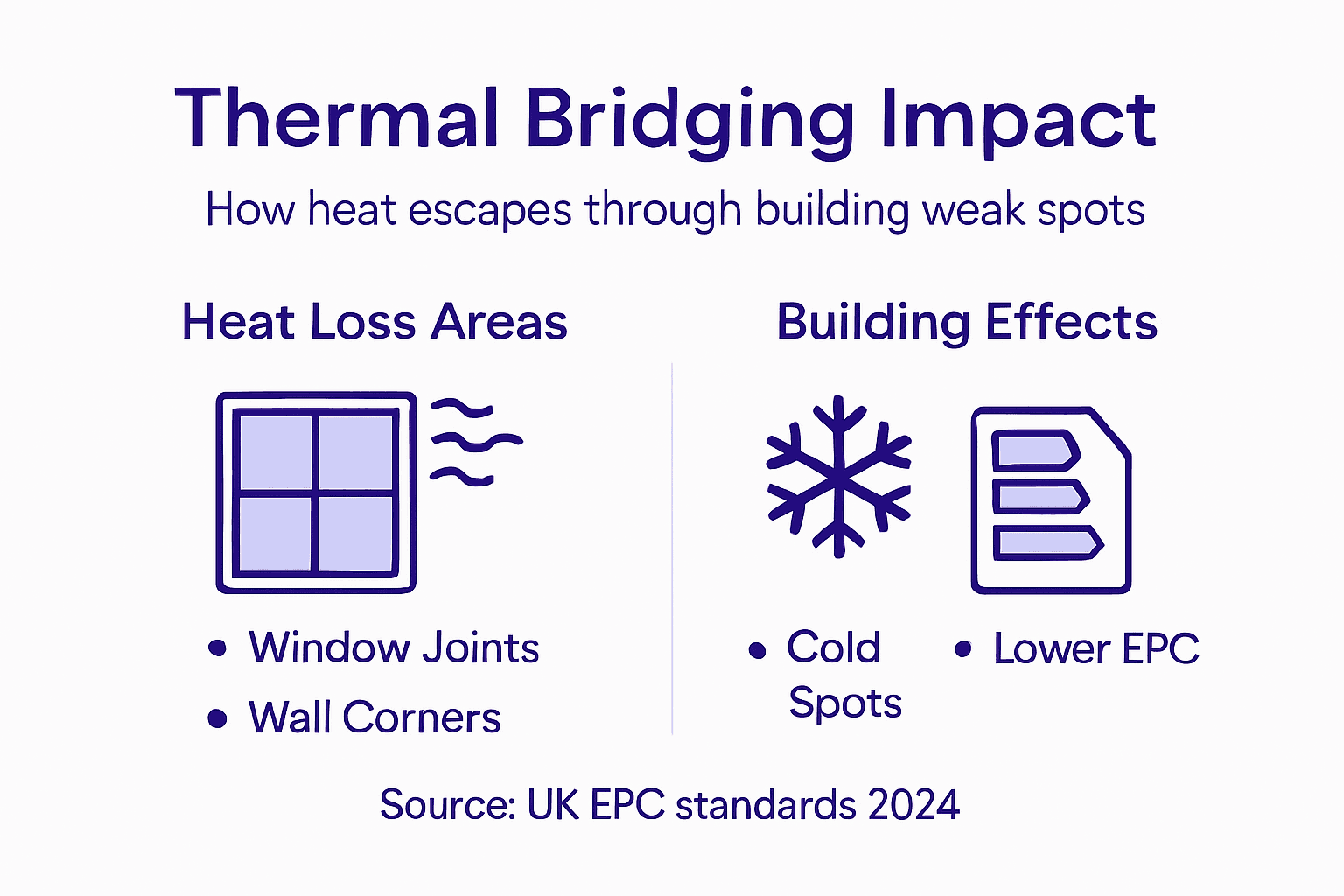
From an EPC perspective, thermal bridging directly influences your building’s energy rating. The assessment calculates heat loss based on your insulation quality and continuity. Significant thermal bridges weaken your overall rating, potentially dropping you from a Grade D into Grade E territory. For landlords, this matters because lower ratings affect rental values and tenant appeal.
Current Building Regulations now specifically target thermal bridging reduction. Part L of the Building Regulations emphasises minimising thermal bridging to reduce heat loss across new builds and major renovations. Meeting these requirements means choosing materials and designs that maintain continuous insulation coverage.
The distinction between old buildings and modern standards is stark. Many Victorian and Edwardian properties in London feature brick cavity walls with minimal insulation—classic thermal bridge problems. Modern construction uses thermally resistant materials and careful detailing to keep insulation unbroken.
Understanding where thermal bridges occur in your building is the first step toward improving energy efficiency and achieving better EPC ratings.
Identifying thermal bridges in your own property requires looking beyond surface appearance. You’re looking for material transitions, structural elements, and junction details that might compromise insulation continuity.
Pro tip: Request a thermal imaging survey during your EPC assessment—it visually reveals cold spots caused by thermal bridging, giving you exact locations to prioritise when planning energy improvements.
Types of thermal bridging in UK properties
Thermal bridges don’t all look the same or behave identically. Understanding the different types helps you spot them in your own property and address them effectively when planning energy improvements.
Linear thermal bridges form along continuous lines where two building elements meet. These are the most common type you’ll encounter in UK homes. They typically occur at:
- Wall-to-floor junctions
- Wall-to-roof connections
- Window and door frame perimeters
- Ground floor edges where walls meet foundations
Linear bridges create predictable heat loss patterns because they follow consistent paths around your building’s perimeter.
Point thermal bridges happen where individual structural elements punch through your insulation layer. Think steel columns, concrete lintels, or metal ties embedded within wall cavities. Different construction types require tailored thermal bridging approaches, meaning what works for a modern timber frame won’t solve problems in a Victorian brick building.
Geometric thermal bridges are trickier because they’re caused by building shape rather than materials. External corners, recesses, and bay windows create these bridges—the geometry itself forces heat to escape more readily than flat surfaces.
Here’s a quick comparison of thermal bridge types and their main challenges:
| Type of Thermal Bridge | Typical Location | Primary Challenge |
|---|---|---|
| Linear | Wall-floor junctions | Repeated, hard to fully eliminate |
| Point | Steel columns, lintels | Localised but severe heat loss |
| Geometric | Bay windows, corners | Shape-driven, tricky to insulate |
Different constructions, different challenges
Your property’s construction method determines which thermal bridges matter most. Solid masonry walls (common in older London properties) present different challenges than modern cavity walls or timber framing. Historic buildings face the steepest hurdles because adding cavity insulation risks damaging heritage fabric.
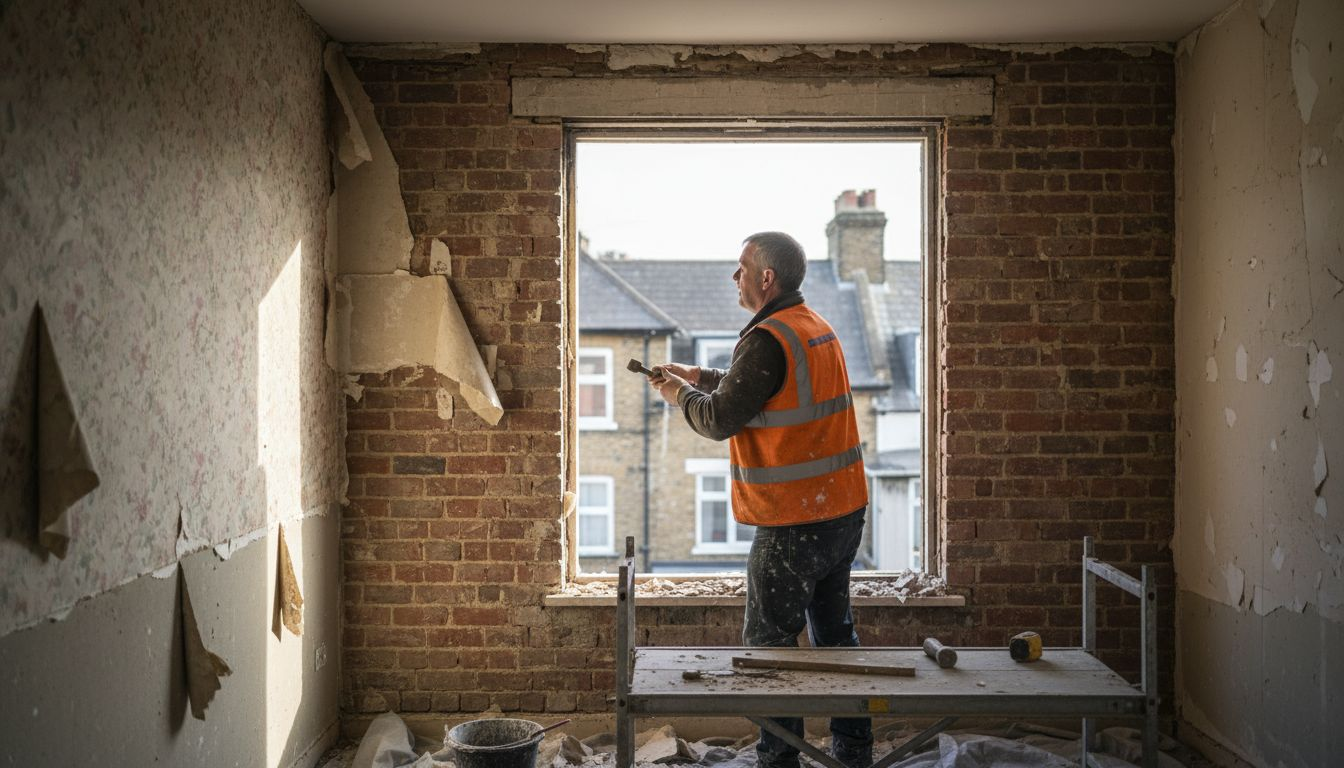
Masonry walls transfer heat directly through brick and mortar. Timber frames can develop bridges where timber members sit in external walls. Steel-frame buildings show bridging wherever metal structural elements contact the building envelope.
Cavity walls offer advantages if the cavity is properly filled, yet bridges still occur at cavity barriers, lintels, and wall ties.
Identifying your building’s construction type is essential for choosing the right thermal bridging solutions for your property.
Modern new-build properties in London incorporate design strategies to minimise these bridges from the outset. Continuous external insulation, thermally broken connections, and careful material selection reduce thermal bridging substantially.
Older properties typically need retrofit solutions tailored to their original construction and heritage considerations.
Pro tip: Request your EPC assessor to identify specific thermal bridge locations in your property—they’ll pinpoint which junctions and elements contribute most to your heat loss, helping you prioritise cost-effective improvements first.
How thermal bridging causes heat loss and cold spots
Thermal bridges work like shortcuts for heat escaping your property. Instead of travelling through continuous insulation, warmth finds the path of least resistance through conductive materials—metal, timber, or concrete—and vanishes outdoors.
The physics is straightforward. Heat always flows from warm areas to cold areas. When insulation is broken or bypassed, heat accelerates through that weak point far more readily than through proper insulation layers. Your heating system compensates by running longer and harder, consuming more energy.
Cold spots appear on interior surfaces directly above or around thermal bridges. If you’ve noticed one wall in your bedroom feels noticeably colder to touch than others, you’ve likely found a thermal bridge. These aren’t random—they follow predictable patterns at structural junctions.
The consequences ripple through your home in several ways:
- Higher heating bills from compensating heat loss
- Uneven comfort (some rooms stay noticeably colder)
- Reduced property resale value due to poor energy ratings
- Potential condensation and mould growth on cold surfaces
Heat loss through thermal bridging creates pathways where warmth escapes unimpeded, particularly around window reveals and where insulation layers are discontinuous. This isn’t just uncomfortable—it damages your building fabric over time.
Cold spots and moisture problems
Here’s where thermal bridges become genuinely problematic. Cold interior surfaces encourage water vapour to condense, creating damp patches. Sustained moisture leads to mould growth, which threatens both your health and your building’s structural integrity.
In London properties, this becomes critical. Many Victorian and Edwardian homes already struggle with moisture due to solid walls and poor ventilation. Unaddressed thermal bridges worsen these conditions substantially.
Thermal bridges don’t just waste energy—they create conditions for condensation, mould, and long-term structural damage.
Your EPC assessment calculates heat loss partly based on how well thermal bridges are managed. Properties with significant, unaddressed thermal bridges receive lower energy ratings. A Grade D property with poor thermal bridging mitigation could drop to Grade E, directly affecting rental appeal and property values.
The impact accelerates in winter. During heating season, the temperature difference between outside and inside grows largest, making thermal bridges more pronounced and damaging.
Pro tip: Use a thermal imaging camera (available cheaply from online retailers) to photograph your interior walls on a cold day—you’ll see cold spots as darker patches, revealing exactly where thermal bridges exist in your property.
Impact on EPC ratings and legal obligations
Thermal bridging directly shapes your EPC rating. It’s not optional—it’s a core component of how assessors calculate your building’s energy performance. Poor thermal bridging control means lower ratings, which creates real legal and financial consequences for London property owners.
EPCs are legally required when buildings are constructed, sold, or rented in the UK. This is non-negotiable. When you sell or let a property, you must provide a valid EPC or face potential fines from local authorities. Thermal bridging performance directly influences that rating.
Here’s the mechanism. The UK Building Regulations Part L sets mandatory standards for energy performance including controlling thermal bridging, which can represent up to 30% of heat loss. Your EPC assessment measures how well your property meets these standards. Unaddressed thermal bridging pushes your rating downward, sometimes dramatically.
A property that should rate Grade C might slip to Grade D or E if thermal bridges aren’t properly managed. That difference directly impacts:
- Rental income (tenants prefer higher-rated properties)
- Property resale value (buyers pay more for efficient homes)
- Tenant retention (poor ratings drive people away)
- Landlord insurance premiums (some insurers charge more for low-rated properties)
Legal consequences and MEES compliance
The Minimum Energy Efficiency Standards (MEES) regulations add another layer of legal obligation. These rules require rental properties to achieve a minimum EPC rating of Grade E. If your property falls below Grade E, you cannot legally let it out. Period.
Thermal bridging can be the difference between legal compliance and being unable to rent your property. Landlords facing MEES compliance issues often discover thermal bridging as the culprit dragging their ratings down.
For new builds and major refurbishments, compliance testing becomes mandatory. Buildings must pass energy performance assessments before handover. Failure means remedial work, delayed handovers, and financial penalties.
Addressing thermal bridging isn’t just about comfort—it’s about legal compliance and avoiding substantial financial penalties.
Local authorities have enforcement powers. They investigate complaints about non-compliant properties and can impose fines of thousands of pounds. Some landlords have faced prosecution for renting non-compliant properties.
Your EPC rating follows your property permanently. Future buyers and tenants will see that rating before deciding to engage. A Grade E property is considerably harder to let or sell than a Grade D.
Pro tip: Have your surveyor specifically assess thermal bridging during any pre-purchase survey—identifying and quantifying thermal bridge issues before you buy allows you to negotiate price reductions or factor remedial costs into your offer.
Practical solutions for minimising thermal bridging
Reducing thermal bridging requires deliberate design choices and careful installation. The good news is that proven solutions exist for both new construction and retrofit scenarios in London properties.
The fundamental principle is straightforward: maintain continuous insulation layers across your entire building envelope. Where insulation must be interrupted, use materials with low thermal conductivity to minimise the shortcut for heat.
Minimising thermal bridging can be achieved by designing to avoid breaks in insulation continuity and using thermal breaks in structural elements. This approach works across new builds and retrofits, though implementation differs based on your building’s age and construction type.
Solutions for different scenarios
For new construction, modern approaches offer significant advantages. Factory-made junction details and high-performance insulation products reduce on-site installation errors. Detailed construction drawings specify thermal break placements precisely.
Retrofit work requires tailored approaches. External insulation wrapping entire buildings eliminates many thermal bridges at once. Internal insulation works when external work isn’t feasible, though it requires careful detailing around junctions.
For historic properties, solutions must balance energy efficiency with heritage preservation. Non-invasive insulation options and careful detailing conserve building fabric whilst improving thermal performance.
Key practical measures include:
The following table summarises practical ways to minimise thermal bridging and their typical impact:
| Solution | Best For | Likely Impact on EPC |
|---|---|---|
| Continuous external insulation | Modern and retrofit | Major rating improvement |
| Internal insulation upgrades | Historic/period homes | Moderate upgrade with care |
| Thermal breaks in structures | Steel/timber elements | Reduces severe point losses |
| Airtightness detailing | All property types | Enhances insulation, modest gain |
- Installing external or internal insulation continuous over junctions and problem areas
- Using thermal breaks in metal or timber elements penetrating insulation
- Selecting building materials with low thermal conductivity
- Specifying high-performance insulation products with better U-values
- Sealing air leakage paths that worsen thermal bridging effects
- Creating detailed junction specifications before work begins
Implementation priorities
Start with the highest-impact areas. Window reveals and door frames represent significant thermal bridges in many properties. Lintels above openings and floor-to-wall junctions rank equally high.
Airtightness complements insulation improvements. Air leakage through thermal bridges worsens heat loss beyond conductive loss alone. Tape, sealants, and careful construction sequencing address this.
Continuous insulation layers and thermal breaks in structural elements form the foundation of effective thermal bridging control.
For London properties, external insulation systems offer excellent returns if your property’s appearance permits. Internal insulation costs less but requires more careful detailing to avoid condensation risks.
Consult your EPC assessor about which improvements deliver the biggest rating improvements for your specific property. Some thermal bridges contribute far more to overall heat loss than others.
Pro tip: Obtain detailed thermal bridging calculations (available through SAP assessments) before committing to remedial work—these quantify exactly how much each thermal bridge contributes to heat loss, helping you prioritise spending on improvements with the highest impact.
Take Control of Thermal Bridging and Boost Your EPC Compliance Today
Thermal bridging presents a hidden challenge that can drastically reduce your property’s energy efficiency and EPC rating. This leads to higher heating costs, legal risks under MEES regulations, and difficulty letting or selling your property. Don’t let cold spots and poor thermal details drag down your building’s performance or value. By understanding and addressing thermal bridging issues, you take the first vital step towards a warmer, more compliant, and valuable home or commercial space in London.
Complete EPC specialises in comprehensive energy performance assessments tailored to uncover thermal bridging weak points and inform effective energy improvements. Our expert assessors provide detailed, accurate EPC reports that highlight where heat escapes and recommend practical solutions for minimising these costly heat losses. Benefit from our expert guidance and competitive pricing at Complete EPC so you can meet legal requirements confidently and enhance your property’s energy rating. Ready to improve your EPC compliance and property comfort? Get your professional EPC assessment today at Complete EPC and start tackling thermal bridging head-on.
Frequently Asked Questions
What is thermal bridging and why is it important?
Thermal bridging is the process where heat escapes through parts of a building that bypass the insulation layer. It is significant because it can account for up to 30% of heat loss, leading to higher energy bills and cooler rooms.
How does thermal bridging affect my EPC rating?
Thermal bridging directly influences your Energy Performance Certificate (EPC) rating. Poor management of thermal bridges can lower your rating, affecting your property’s rental appeal and resale value.
What are common areas in a property where thermal bridging occurs?
Common areas include junctions between walls and floors or roofs, concrete lintels above windows and doors, metal studs within wall cavities, and balcony connections to external walls.
What solutions can minimise the impact of thermal bridging on my property?
Solutions include using continuous external or internal insulation, thermal breaks in structural elements, and specifying high-performance insulation materials to maintain insulation continuity and reduce heat loss.