

TL;DR:
- Practical energy conservation tips help reduce home energy use, lower bills, and lessen environmental impact.
- Focusing on heating and cooling is most effective since they account for over 52% of household electricity consumption.
Tips for energy conservation are practical steps to reduce your home’s energy use, cut utility bills, and lower your environmental impact. The US Department of Energy’s Energy Saver Guide and sources such as Entergy confirm that heating and cooling alone account for more than 52% of the average household’s electricity bill. That single figure tells you exactly where to focus first. The industry term for this discipline is energy efficiency, and the practical habits that support it are what this guide covers, from thermostat discipline to draught-proofing and appliance maintenance.
1. How can you maximise savings from heating and cooling?
Heating and cooling your home is the single largest drain on your energy budget, so improving HVAC efficiency delivers the greatest return of any conservation measure. Targeting this area first is the most cost-effective energy conservation strategy available to homeowners and renters alike.
Set your thermostat to 18–21°C during colder months and 24–26°C in warmer months. Raising your air-conditioning setpoint by just 1°C reduces energy use by around 10%, which adds up quickly across a long summer. A programmable or smart thermostat, such as a Nest or Hive, automates this discipline so you do not have to think about it.
Key heating and cooling habits to adopt:
- Set the thermostat lower at night and when the property is unoccupied.
- Avoid setting the thermostat to an extreme temperature to cool or heat faster. It wastes energy without speeding up the process.
- Use ceiling fans to supplement cooling, but turn fans off when leaving a room. Fans cool people through wind chill, not the air itself, so running them in empty rooms achieves nothing.
- Close blinds and curtains on south and west-facing windows during summer afternoons to block solar heat gain.
- Open south-facing windows on clear winter days to capture free passive heat, then close curtains at dusk to retain it.
Pro Tip: When you leave the house, raise the cooling setpoint or lower the heating setpoint by at least 3°C. Return it to your comfort level 30 minutes before you arrive home using a smart thermostat app. This single habit can cut your HVAC running costs noticeably over a month.
2. What are the most effective appliance and lighting energy-saving tips?
Appliances and lighting account for a significant share of household energy use, and most of the savings here come from behaviour rather than expensive upgrades. The good news is that these are among the simplest energy efficiency practices to adopt immediately.
Lighting is straightforward. Replace incandescent bulbs with LEDs and turn off lights whenever you leave a room. LED bulbs use up to 80% less energy than traditional incandescent alternatives and last significantly longer, making them one of the best value eco-friendly energy solutions available.
For laundry and kitchen appliances, follow these habits:
- Wash clothes in cold water and only run full loads. The heating element in a washing machine accounts for roughly 90% of its energy draw, so cold washing is a direct saving.
- Clean the dryer’s lint trap before every load. A blocked trap forces the machine to work harder and run longer, wasting both energy and time.
- Use a microwave or an Instant Pot instead of a conventional oven for smaller meals. Both appliances use considerably less energy for the same cooking task.
- Unplug chargers, televisions, and other devices when not in use. Standby power, often called phantom load, can account for up to 10% of a household’s electricity consumption.
- Set your fridge to 3–5°C and your freezer to around -18°C. Colder settings than necessary waste energy without improving food preservation.
- Clean fridge condenser coils annually. Dust-covered coils force the compressor to run longer, increasing electricity use.
3. How can insulation and sealing make your home more energy efficient?
Improving your home’s building envelope, the walls, roof, floors, windows, and doors, reduces the amount of energy needed to maintain a comfortable temperature. This is where insulation and draught-proofing deliver lasting results.
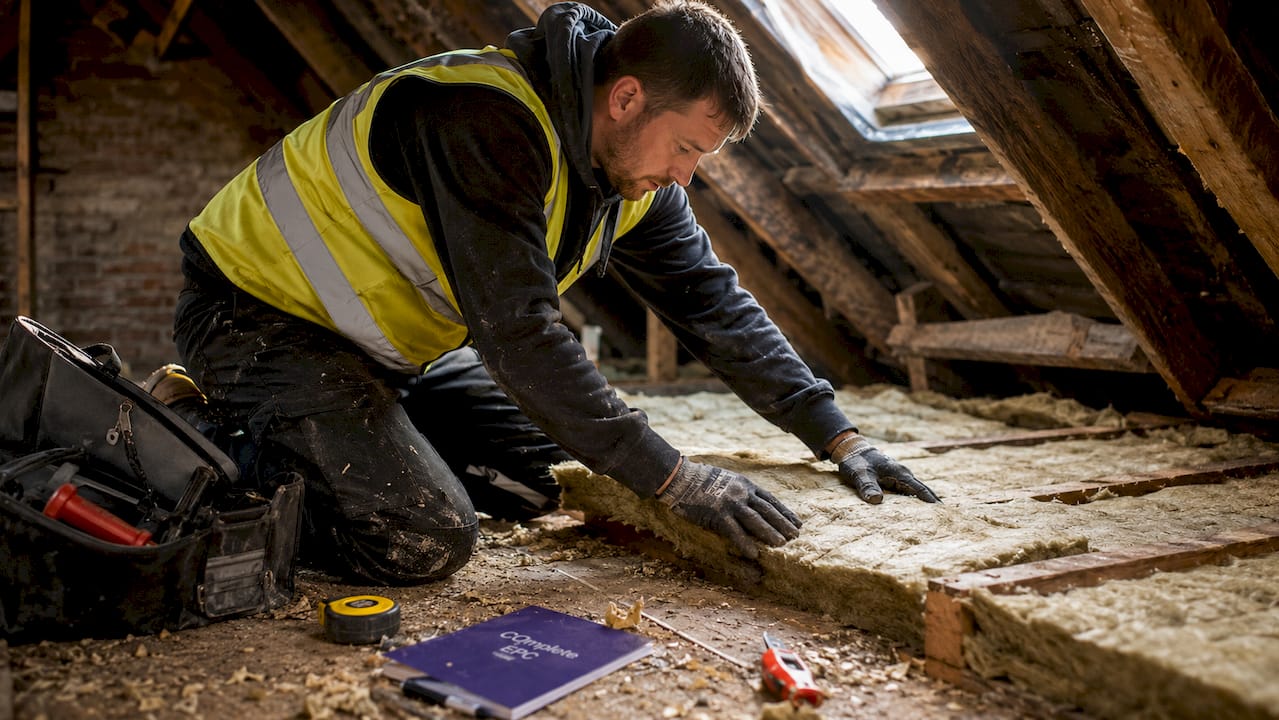
For homeowners, loft insulation is the highest-priority upgrade. Heat rises, and an uninsulated loft can account for up to 25% of a home’s heat loss. Cavity wall insulation and solid wall insulation follow closely, depending on your property type. These measures reduce both heating demand in winter and cooling demand in summer.
Renters face different constraints, but there are several low-cost, reversible measures that work well:
- Apply self-adhesive draught-proofing strips to window and door frames. These cost very little and can be removed without damage when you move out.
- Use thermal or blackout curtains on windows. They reduce heat transfer in both directions, keeping warmth in during winter and heat out during summer.
- Apply plastic window film insulation kits to single-glazed windows. These are inexpensive and create a secondary glazing effect.
- Place draught excluders at the base of external doors.
Pro Tip: Draught-proofing strips and thermal curtains together can save between £150 and £400 per year on energy bills. For renters, this combination represents the highest return on investment of any reversible measure.
The table below compares common insulation and sealing methods by approximate cost and typical annual saving for a UK home:
| Method | Approximate cost | Typical annual saving |
|---|---|---|
| Loft insulation (homeowner) | £300–£500 | Up to £215 |
| Cavity wall insulation | £400–£600 | Up to £275 |
| Draught-proofing strips (renter) | £10–£30 | £25–£50 |
| Thermal curtains (renter) | £40–£100 | £50–£150 |
| Plastic window film (renter) | £10–£20 | £20–£60 |
Note: Savings figures are indicative estimates based on typical UK homes and will vary by property size and energy tariff.
4. Which behavioural changes quickly reduce energy use?
Small, consistent habits compound into meaningful savings over a year. These ways to reduce energy use require no upfront investment and can be started today.
Showers are a good place to begin. Cutting your shower time from ten minutes to five can save a significant amount of hot water energy each week. Fitting a flow restrictor to your showerhead reduces water volume without noticeably affecting pressure, cutting both water heating costs and water bills simultaneously.
Daily habits that make a real difference:
- Turn off lights, fans, and televisions when leaving a room, even briefly.
- Use natural daylight for reading and working where possible, positioning yourself near windows rather than relying on artificial lighting.
- Avoid placing heat-generating appliances such as lamps or televisions near your thermostat. The thermostat reads a false high temperature and runs the cooling system unnecessarily.
- Schedule routine servicing for your boiler and heating system, and replace air filters monthly or as the manufacturer recommends. A well-maintained system runs more efficiently and costs less to operate.
- Use the dishwasher’s eco setting and only run it when full.
- Boil only the water you need in a kettle. Overfilling a kettle repeatedly wastes a surprising amount of electricity over a week.
Pro Tip: Combining five or six of these small habits creates a compounding effect. Each individual saving may seem minor, but together they can reduce your monthly energy bill by 10–15% without any capital outlay.
For homeowners considering energy-efficient air cleaning alongside ventilation improvements, pairing good airflow management with the habits above produces the best overall results.
5. How does your EPC rating reflect your conservation efforts?
An Energy Performance Certificate, or EPC, is the official measure of your property’s energy efficiency in the UK. It rates your home on a scale from A (most efficient) to G (least efficient) and identifies specific improvements that would raise your rating. Every improvement covered in this guide, from loft insulation to LED lighting, directly influences your EPC score.
For landlords, an EPC rating of E or above is a legal requirement under the Minimum Energy Efficiency Standards (MEES). Properties rated F or G cannot be legally let. For homeowners selling a property, a higher EPC rating supports a stronger asking price and faster sale. Buyers and tenants increasingly factor energy costs into their decisions, making a good rating a genuine commercial advantage.
Understanding your current EPC rating is the logical starting point before investing in any improvements. The certificate tells you exactly which measures will have the greatest impact on your score and your bills, so you can prioritise spending effectively. You can explore how EPC ratings affect property value to understand the full commercial picture before making decisions.
Key takeaways
The most effective energy conservation strategy starts with heating and cooling, then builds through insulation, appliance habits, and daily behavioural changes to produce compounding savings.
| Point | Details |
|---|---|
| Prioritise heating and cooling | Heating and cooling exceed 52% of bills, so HVAC efficiency delivers the greatest savings. |
| Use thermostat discipline | Raising AC setpoint by 1°C cuts energy use by 10%; a smart thermostat automates this. |
| Draught-proof for quick wins | Renter-friendly sealing strips and thermal curtains can save £150–£400 per year. |
| Switch to LED lighting | LED bulbs use up to 80% less energy than incandescent bulbs and require no behaviour change. |
| Maintain appliances regularly | Cleaning filters, coils, and lint traps keeps systems running efficiently and reduces waste. |
Why I always tell clients to start with the thermostat
After years of working in property energy assessment, I have seen homeowners spend thousands on solar panels or new boilers before addressing the basics. The results rarely match expectations, because the underlying habits have not changed.
The single most impactful shift I have observed is thermostat discipline combined with draught-proofing. These two measures cost very little and deliver results within the first billing cycle. Renters often feel excluded from energy efficiency conversations because they cannot install insulation or replace windows. The truth is that reversible measures like thermal curtains and self-adhesive strips close a large part of that gap.
I also think the UK policy direction is worth watching. The government’s trajectory on MEES and EPC minimum ratings means that energy efficiency is moving from a nice-to-have to a legal baseline. Homeowners who act now, even with small measures, are building towards compliance rather than scrambling to catch up. The comfort benefits alone, fewer cold draughts, more stable room temperatures, make the effort worthwhile before you even count the bill savings.
For anyone unsure where their property currently stands, getting a formal EPC assessment is the clearest way to identify which improvements will move the needle most. It removes the guesswork entirely.
— Danny
How Completeepc can help you take the next step
Understanding your home’s energy performance is the foundation of any effective conservation plan. A domestic EPC assessment from Completeepc gives you a certified, detailed report showing your property’s current energy rating and a prioritised list of recommended improvements. Completeepc’s qualified assessors cover all London properties, offering the UK’s most competitive pricing with no compromise on accuracy. Whether you are a homeowner preparing for sale, a landlord meeting MEES compliance, or a renter advising your landlord, an EPC provides the evidence base to act confidently. For commercial properties, Completeepc also provides commercial EPC assessments with the same standard of expertise. Book your assessment today and turn these conservation tips into a personalised action plan.
FAQ
What is the quickest way to reduce my energy bill at home?
Adjusting your thermostat settings and draught-proofing doors and windows deliver the fastest results. Heating and cooling account for more than 52% of the average electricity bill, so even small setpoint changes produce measurable savings within a month.
Can renters make meaningful energy efficiency improvements?
Yes. Reversible measures such as self-adhesive draught-proofing strips, thermal curtains, and plastic window film kits require no permanent changes and can save between £150 and £400 per year. Washing clothes in cold water and unplugging standby devices add further savings at no cost.
How often should I service my boiler or heating system?
Annual servicing is the standard recommendation for gas boilers in the UK. Air filters in heating and cooling systems should be checked monthly and replaced as needed. Regular maintenance keeps the system running at full efficiency and reduces the risk of costly breakdowns.
Does switching to LED bulbs make a significant difference?
LED bulbs use up to 80% less energy than traditional incandescent bulbs and last significantly longer. Replacing all bulbs in a typical home produces a noticeable reduction in electricity use, particularly in properties where lights are on for many hours each day.
What is an EPC and why does it matter for energy conservation?
An Energy Performance Certificate (EPC) is an official document rating your property’s energy efficiency from A to G. It identifies specific improvements that would reduce energy use and bills, making it the most reliable starting point for any home energy conservation plan.