

TL;DR:
- Behavioral changes like lowering thermostats and turning off devices can immediately reduce energy bills without cost.
- Targeted low-cost upgrades such as LED lighting and loft insulation offer quick payback periods and significant savings.
- A staged approach prioritizes behavioral adjustments, air sealing, insulation, and then advanced technology for optimal energy efficiency.
Energy saving tips for homeowners are defined as a combination of behavioural changes and targeted home upgrades that reduce utility costs and improve home energy efficiency. Combining these two approaches can cut annual energy expenditure by 30%–70%. That figure is not a best-case scenario. It is achievable for most UK households through measures as straightforward as adjusting a thermostat, switching to LED lighting, and adding loft insulation. This guide walks you through each step in order of cost and impact, so you know exactly where to start and what to tackle next.
1. What are the easiest energy saving tips for homeowners?
Behavioural changes are the fastest way to reduce energy bills because they cost nothing and take effect immediately. The Energy Saving Trust confirms that turning your thermostat down by just 1°C can cut heating costs by roughly 10%. That is a meaningful saving on any household bill, achieved with a single adjustment.
Beyond the thermostat, the following no-cost actions deliver consistent results:
- Turn off devices fully rather than leaving them on standby. Standby power accounts for a measurable share of annual electricity use in most homes.
- Switch off lights when leaving a room. This is obvious advice, but most households do not do it consistently.
- Wash clothes at 20°C–30°C instead of 40°C or higher. Modern detergents work effectively at lower temperatures.
- Air-dry laundry rather than using a tumble dryer whenever possible.
- Take shorter showers and fit a water-efficient showerhead to reduce both water and water-heating costs.
- Seal draughts around doors and windows using draught excluders and low-cost sealant.
Pro Tip: Fix draughts before investing in any heating upgrade. A draught-proofed home retains heat far more effectively, which means your boiler or heat pump works less hard.
2. Which home upgrades deliver the best return on investment?
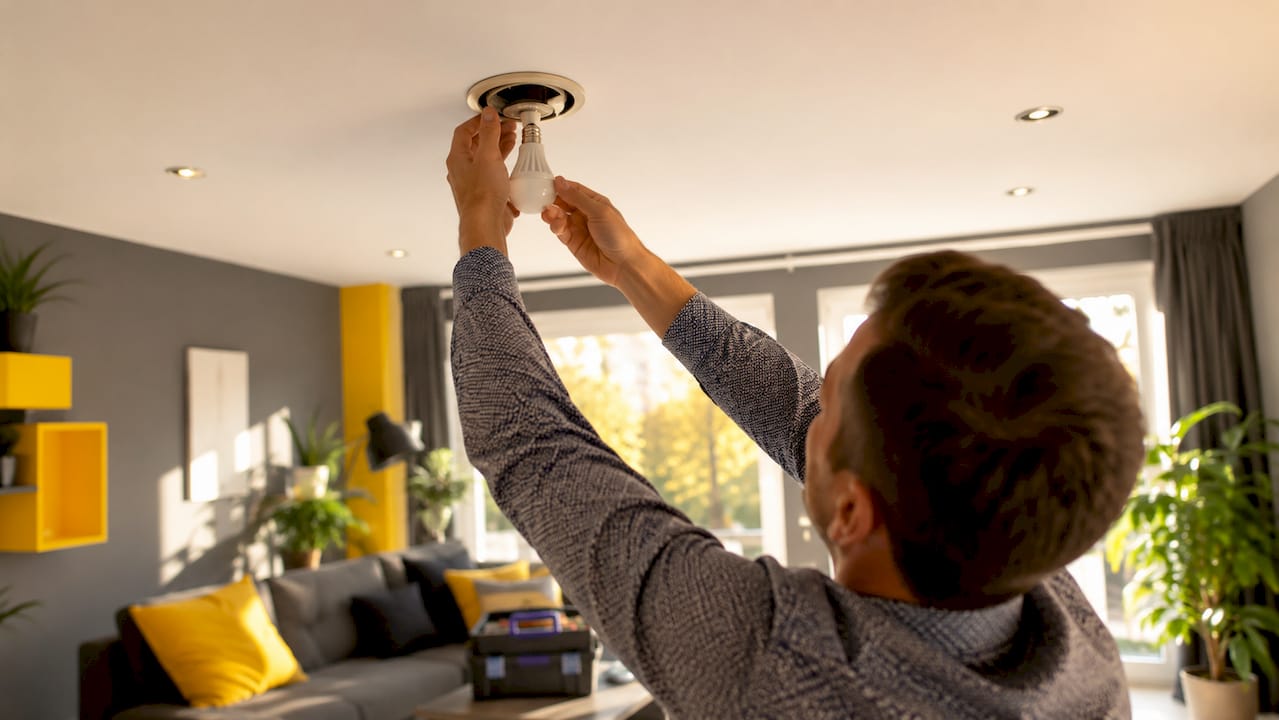
Low-cost home upgrades offer the highest return relative to outlay, and LED lighting is the clearest example. LED conversion typically costs £50–£150 and pays back within a year through lower electricity bills. LEDs use around 75% less energy than traditional incandescent bulbs and last significantly longer.
Insulation is the next priority. Up to 25% of heat escapes through an uninsulated roof. Adding or upgrading loft insulation addresses this directly and typically pays back within two to three years. Cavity wall insulation delivers similar results for properties with unfilled cavity walls.
| Upgrade | Approximate cost | Typical payback period |
|---|---|---|
| LED lighting | £50–£150 | Under 1 year |
| Draught-proofing | £50–£200 | 1–2 years |
| Loft insulation | £300–£600 | 2–3 years |
| Cavity wall insulation | £400–£800 | 3–5 years |
| Smart thermostat | £150–£300 | 2–3 years |
Lowering your boiler flow temperature is a free adjustment that many homeowners overlook. For combi boilers, reducing the flow temperature to around 60°C maintains comfort while cutting gas consumption. This change takes minutes and costs nothing.
Programmable thermostats save an average of 8% on utility bills by adjusting temperatures automatically when the house is empty. Smart thermostats go further by learning your schedule and responding to weather data.
Pro Tip: Combine loft insulation with draught-proofing before upgrading your boiler. Reducing heat loss first means you may need a smaller, cheaper heating system than you currently think.
3. How do smart home technologies contribute to energy savings?
Smart meters and smart thermostats are the two technologies most homeowners encounter first, and they serve different purposes. A smart meter does not lower bills by itself. Its real value is granular usage data that shows exactly when and where you consume the most energy. That data enables better tariff choices, including time-of-use tariffs that charge less during off-peak hours.
Smart thermostats automate heating schedules so your home is warm when you need it and cooler when you do not. Products like Nest and Hive learn your routine and adjust accordingly, removing the need for manual changes. This automation reduces the waste that comes from heating an empty house.
Time-of-use tariffs are worth considering if you have a smart meter installed. By shifting heavy appliance use, such as dishwashers and washing machines, to off-peak hours, you pay a lower rate for the same activity. This is a practical green home strategy that requires no physical changes to your property.
Smart lighting controls and occupancy sensors add another layer of savings by cutting electricity use in rooms that are unoccupied. These technologies complement behavioural changes rather than replacing them. The homeowners who save the most are those who combine smart controls with consistent habits.
4. What are the long-term benefits of improving home energy efficiency?
Energy efficiency improvements deliver benefits well beyond lower bills. Efficiency upgrades improve indoor comfort, air quality, and property values alongside cost savings. A warmer, better-insulated home is also a healthier one, with fewer cold spots and less condensation.
The financial case for deeper upgrades is supported by government incentives. In 2026, the UK Government’s Great British Insulation Scheme and the Boiler Upgrade Scheme offer grants for insulation and heat pump installations. These schemes reduce the upfront cost of measures that would otherwise take years to pay back.
A higher EPC rating directly increases property value. Buyers and tenants increasingly factor energy costs into their decisions, and a property rated B or above commands a premium in most markets. For landlords, meeting minimum EPC requirements is also a legal obligation.
A home energy retrofit is not a single project. It is a series of improvements that compound over time. Each upgrade makes the next one more effective and more affordable.
Heat pumps represent the most significant long-term investment for most homeowners. They transfer heat rather than generate it, making them two to four times more efficient than gas boilers. The upfront cost is higher, but combined with a heat pump installation grant, the payback period shortens considerably.
5. How to prioritise energy saving actions by cost and impact
Home energy retrofits are most effective when staged systematically, starting with audits and low-cost fixes before moving to capital upgrades. This staged approach prevents the common mistake of investing in expensive equipment before addressing basic inefficiencies.
Follow this sequence:
- Start with behavioural changes. Lower the thermostat, reduce wash temperatures, and turn off standby devices. These cost nothing and deliver immediate savings.
- Fix draughts and air leaks. Air sealing and draught-proofing with low-cost materials can achieve 60%–70% of total possible savings for minimal outlay.
- Switch to LED lighting. Replace remaining incandescent or halogen bulbs. The payback is under a year.
- Improve insulation. Prioritise loft insulation, then cavity walls, then floor insulation if applicable.
- Upgrade heating controls. Install a smart or programmable thermostat and lower your boiler flow temperature.
- Consider a home energy audit. A professional assessment identifies the specific areas of greatest waste in your property, so you spend money where it counts most. You can start with a home energy saving form to get tailored recommendations.
- Plan major capital upgrades last. Heat pumps, solar panels, and new boilers make the most sense once the fabric of your home is already efficient.
Pro Tip: Book a home energy audit before committing to any upgrade costing more than £500. The audit often reveals that a cheaper fix delivers the same result.
Key takeaways
Combining behavioural changes with targeted home upgrades is the most cost-effective approach to reducing energy bills and improving home energy efficiency.
| Point | Details |
|---|---|
| Behavioural changes first | Lowering the thermostat by 1°C saves roughly 10% on heating costs with no outlay. |
| LED lighting pays back fast | Conversion costs £50–£150 and typically pays back within one year. |
| Insulation cuts heat loss | Loft insulation reduces heat escape by up to 25% and pays back in 2–3 years. |
| Smart meters need action | A smart meter only saves money when you act on the usage data it provides. |
| Stage your upgrades | Work from behavioural changes to low-cost fixes to capital improvements for the best results. |
Why I think most homeowners tackle this in the wrong order
The most common mistake I see is homeowners investing in a new boiler or heat pump before they have addressed the basics. A new heating system installed in a draughty, poorly insulated house will never perform as well as the manufacturer’s figures suggest. You are paying for efficiency that your home cannot retain.
Behavioural change is consistently underestimated. Tariff switching gets far more attention, but behavioural changes and efficiency improvements beat tariff switching for consistent, long-term savings. Switching tariffs might save you £100 in a year. Lowering your thermostat, fixing draughts, and switching to LEDs can save multiples of that, every year, without any ongoing effort.
The other thing I would stress is planning. Many homeowners start one project, run out of momentum, and never complete the sequence. Breaking the process into three distinct phases, behavioural changes, low-cost fixes, and then capital upgrades, makes it manageable. Each phase builds on the last. Each one makes the next phase more effective.
Smart technology is genuinely useful, but it belongs in phase two or three, not phase one. A smart thermostat in a draughty house is a sophisticated way of heating the outdoors. Sort the fabric of your home first, then let the technology do its job.
— Danny
How Completeepc can support your energy efficiency goals
Understanding your home’s current energy performance is the logical starting point for any improvement plan. An Energy Performance Certificate provides a detailed assessment of your property’s energy efficiency, rated from A to G, along with specific recommendations for improvement. Completeepc provides professional EPC assessments for domestic properties across London, carried out by qualified assessors with extensive industry experience. Whether you need an EPC for legal compliance, a property sale, or simply to understand where your home is losing energy, Completeepc offers accurate assessments at competitive rates. Discover how your EPC rating can guide your upgrade decisions and increase your property’s value.
FAQ
How much can homeowners realistically save on energy bills?
Homeowners who combine behavioural changes with targeted upgrades can reduce annual energy costs by 30%–70%. The exact saving depends on the starting point and which measures are implemented.
Does a smart meter reduce my energy bills automatically?
A smart meter does not reduce bills on its own. It provides detailed usage data that enables you to make better tariff choices and identify where you are consuming the most energy.
What is the quickest home upgrade to pay back its cost?
LED lighting conversion costs £50–£150 and typically pays back within one year through lower electricity bills, making it the fastest-returning upgrade for most homeowners.
How does an EPC help with energy saving?
An Energy Performance Certificate rates your home’s efficiency from A to G and lists specific recommended improvements. It gives you a clear, evidence-based starting point for planning upgrades.
Should I upgrade my boiler before improving insulation?
Insulation should come first. Improving your home’s thermal fabric reduces heat loss, which means your existing or new boiler operates more efficiently and you may need a smaller system than originally planned.