

TL;DR:
- An EPC rating of C indicates above-average energy efficiency, with scores between 69 and 80 on the SAP scale. It is the legal minimum for private rental properties in the UK after October 2030 and offers financial benefits such as lower energy bills and higher property value. Achieving or maintaining a C rating involves improving insulation, upgrading systems, and updating certificates after improvements.
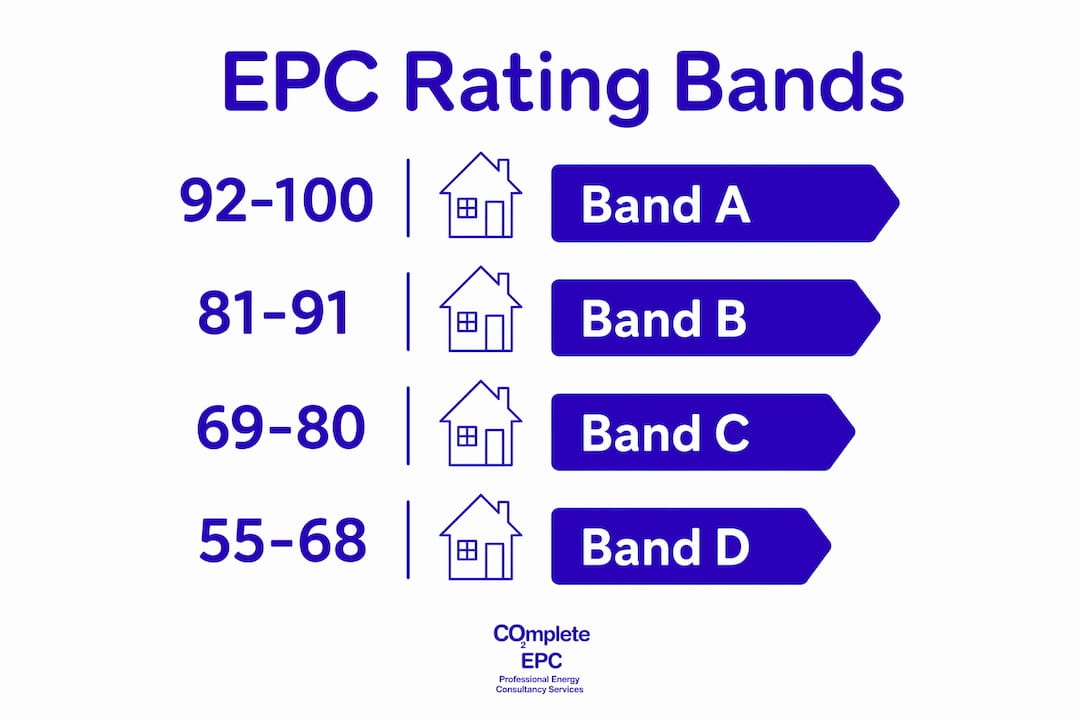
An EPC rating of C is defined as a score between 69 and 80 on the Standard Assessment Procedure (SAP) scale, placing a property in the upper half of energy efficiency across the UK. The energy performance certificate, or EPC, is the official document that records this score. Understanding the EPC rating C meaning matters now more than ever, because the UK government has set a minimum C rating for private rental properties from 1 october 2030. Whether you own, let, or rent a property, knowing where a C rating sits and what it takes to achieve one has real financial and legal consequences.
What does EPC rating C mean on the SAP scale?
An EPC C score sits between 69 and 80 on the SAP scale, representing above-average energy efficiency in UK housing. The average UK home currently holds a D rating, so a C is a meaningful step above the national norm. Properties scoring around 73 on SAP typically show good insulation and a reasonably modern heating system, though there remains scope to improve towards bands B or A through more extensive retrofitting.

The EPC measures the building’s thermal efficiency as an asset, not the occupant’s lifestyle or habits. This is a critical distinction. A property with poor insulation and old glazing will score low regardless of how carefully the occupant manages the thermostat. The certificate focuses entirely on fixed building features: insulation levels, heating system type, glazing, and the fabric of the structure itself.
Buildings that typically achieve a C rating share several common characteristics:
- Loft insulation of at least 100mm, ideally 270mm or more
- Cavity wall insulation or solid wall insulation
- A modern condensing boiler or heat pump
- Double or triple glazing throughout
- Energy-efficient lighting, such as LED fittings
- A well-controlled heating system with a programmer and thermostatic radiator valves
Each of these features contributes directly to the SAP score. An assessor from a qualified firm such as Completeepc evaluates each element during the EPC assessment process and calculates the final band accordingly.
How does EPC rating C compare to other energy bands?
The EPC classification system runs from A at the top to G at the bottom. Each band covers a specific SAP score range and carries different energy cost expectations. The table below sets out the full picture.
| Band | SAP score | Typical annual heating cost | Common property type |
|---|---|---|---|
| A | 92–100 | Very low | New build, Passivhaus |
| B | 81–91 | Low | Recently built or retrofitted home |
| C | 69–80 | Around £800–£1,200 | Well-insulated older home |
| D | 55–68 | Around £984 per year | Average UK semi-detached |
| E | 39–54 | Higher than D | Older property, partial insulation |
| F | 21–38 | High | Poor insulation, old boiler |
| G | 1–20 | Very high | Unimproved older stock |
The cost difference between bands is substantial. C-rated homes cost around £57 per month on energy bills, compared to roughly £82 for D-rated and £111 for E-rated properties. That gap adds up to hundreds of pounds each year, which is a direct saving for tenants and a selling point for landlords.
The average UK home is rated D, which means a C-rated property already outperforms the majority of the housing stock. Band C represents the government’s target floor for rental properties from 2030, making it the most practically significant threshold in the current regulatory environment. Bands A and B remain aspirational for most existing properties without major retrofit work.
What are the benefits and implications of an EPC C rating?
A C rating carries concrete advantages for property owners, landlords, and tenants alike. The most pressing benefit for landlords is regulatory compliance. From 1 october 2030, all privately rented properties in England and Wales must hold a minimum EPC rating of C. Properties already at C are compliant and face no immediate legal pressure, provided their certificate remains valid. EPC certificates last ten years, so a recently issued C rating gives landlords a clear window of security.
For sellers, a C rating can support a higher asking price. Properties with an EPC C often command a 1–5% premium over lower-rated homes. Buyers increasingly factor energy costs into their purchase decisions, and a C rating signals lower running costs from day one.
Green mortgage eligibility is another financial benefit worth noting. Several UK lenders offer preferential rates on green home refinancing to properties rated C or above. This can reduce borrowing costs for owners who have already invested in energy improvements.
For tenants, the implications are straightforward:
- Lower monthly energy bills compared to D, E, or F-rated properties
- A warmer, more comfortable home due to better insulation and heating
- Greater confidence that the property meets legal standards
- Reduced carbon footprint, which matters to an increasing number of renters
One point that catches property owners off guard: you do not need to renew your EPC simply because you have made improvements. However, commissioning a new EPC after upgrades officially records the improved rating, which is essential if you need to prove compliance to a letting agent, mortgage lender, or local authority.
What improvements help achieve or maintain an EPC C rating?
Moving from a D to a C rating is achievable for most UK properties with targeted investment. The most cost-effective upgrades address the biggest sources of heat loss first.
-
Loft insulation is the single highest-impact improvement for most homes. Installing 270mm of mineral wool insulation in an uninsulated loft costs relatively little and delivers immediate savings. Properties with no loft insulation can gain several SAP points from this one measure alone.
-
Cavity wall insulation fills the gap between the inner and outer leaves of a cavity wall with mineral wool or polystyrene beads. This is one of the most affordable upgrades available, and many properties built between the 1930s and 1990s are suitable candidates.
-
Modern condensing boiler replacement is often the most significant single upgrade for older properties. A new A-rated condensing boiler replaces a system that may be operating at 60–70% efficiency with one running at over 90% efficiency.
-
Double glazing replaces single-glazed windows and reduces heat loss through the building envelope. Properties with older single glazing can see a meaningful SAP score increase from this upgrade alone.
-
LED lighting throughout the property contributes to the SAP score. Replacing halogen or incandescent fittings with LED equivalents is low cost and straightforward.
Typical improvements to reach EPC C cost between £1,000 and £4,000 in total, depending on the property’s starting point and the combination of measures required. That figure covers loft insulation, cavity wall insulation, and a boiler upgrade in many cases. More extensive work, such as solid wall insulation or heat pump installation, costs more but can push a property towards band B.
Pro Tip: Get a current EPC assessment before committing to any upgrades. The report includes a recommendations section that lists the specific measures most likely to improve your property’s score, along with estimated costs and savings. This prevents spending money on improvements that deliver little SAP benefit for your particular building.
Once improvements are complete, commissioning a new EPC certificate is the only way to officially record the higher rating. Without an updated certificate, you cannot demonstrate compliance to a letting agent or lender, even if the physical work has been done.
For properties with spray foam insulation already installed, it is worth checking whether the installation method affects mortgage lender acceptance, as some lenders treat certain spray foam types with caution. Guidance on insulation and energy upgrades varies by property type and lender policy.
Key takeaways
An EPC C rating is the legal minimum for private rentals in England and Wales from 2030, and it already delivers measurable financial benefits for owners and tenants today.
| Point | Details |
|---|---|
| SAP score range | A C rating covers scores of 69–80, placing a property above the UK average of D. |
| 2030 rental deadline | Landlords must hold a minimum C rating for all private rentals from 1 october 2030. |
| Energy cost savings | C-rated homes cost around £57 per month on energy, versus £82 for D-rated properties. |
| Improvement costs | Reaching C from D typically costs £1,000–£4,000 through insulation and boiler upgrades. |
| Certificate update | A new EPC after improvements is the only way to officially record and prove a higher rating. |
Why the 2030 deadline should not be left to the last minute
The EPC C threshold is not a distant regulatory footnote. Having worked in energy certification for years, I have seen the same pattern repeat: property owners wait until a tenancy renewal or a sale to check their rating, then discover they are two or three SAP points short of C with no time to plan the work properly.
The EPC measures the building, not the occupant. That means no amount of careful energy use by a tenant will change the certificate. Only physical improvements to the fabric and systems of the building move the needle. Owners who treat the EPC as a neutral, asset-based benchmark, rather than a bureaucratic hurdle, tend to make better decisions about where to spend their improvement budget.
The 2030 deadline gives landlords time to plan, obtain quotes, and phase improvements across multiple properties if needed. Acting now means you can choose contractors carefully, apply for any available government grants, and avoid the price inflation that tends to hit the market as deadlines approach. A C rating achieved today also protects you against any future tightening of standards towards B, which several industry bodies have already flagged as a longer-term direction of travel.
— Danny
How Completeepc supports your EPC C compliance
Completeepc provides domestic EPC certification for property owners and landlords across London, carried out by qualified assessors with extensive industry experience. If your current certificate is approaching expiry, or if you have recently completed energy improvements and need an updated rating, Completeepc can arrange a fast, accurate assessment at competitive rates. The resulting certificate is lodged on the national register and accepted by all letting agents, mortgage lenders, and local authorities. For landlords planning ahead of the 2030 rental standard, Completeepc also provides guidance on the EPC rating and property value relationship, helping you prioritise upgrades that deliver the best return on investment.
FAQ
What SAP score is needed for an EPC C rating?
An EPC C rating requires a SAP score between 69 and 80. The Standard Assessment Procedure calculates this score based on the building’s insulation, heating system, glazing, and other fixed features.
Is EPC rating C good enough for renting out a property?
From 1 october 2030, a C rating will be the legal minimum for private rentals in England and Wales. Properties currently rated C are already compliant with the upcoming standard.
How much does it cost to improve from D to C?
Reaching a C rating from D typically costs between £1,000 and £4,000, covering measures such as loft insulation, cavity wall insulation, and a modern condensing boiler.
Does an EPC C rating affect property value?
Properties with an EPC C rating often sell for 1–5% more than lower-rated equivalents. A C rating also supports eligibility for green mortgage products offered by several UK lenders.
How long does an EPC certificate last?
An EPC certificate is valid for ten years. After making energy improvements, you can commission a new EPC at any time to record the updated, higher rating officially.