

Energy Performance Certificates (EPCs) are a legal requirement for any landlord marketing or letting a residential property in England and Wales, and they are the compliance mechanism for the Minimum Energy Efficiency Standards (MEES). Your property must currently hold at least an EPC band E to be lawfully let, and government policy confirms that standard rises to band C by 2030, with a £10,000 per-property cost cap. Understanding why landlords need energy efficiency ratings is no longer optional: the certificate is your legal proof, your compliance trigger, and increasingly your commercial differentiator.
Three things to do right now:
- Commission an EPC if your current one is missing or over ten years old
- Check your band against the E minimum and the upcoming C standard
- Decide whether targeted improvements or a registered exemption is the right route for your property
Key takeaways
EPCs are a legal requirement for letting, the compliance trigger for MEES, and the primary evidence of a band improvement after works are completed.
| Point | Details |
|---|---|
| Legal requirement | An EPC is required before marketing any domestic or commercial property for rent. |
| Current minimum | Band E is the minimum for all domestic tenancies since April 2020; band C is required by 2030. |
| Financial benefit | A/B-rated properties sell for a notable premium compared to D-rated equivalents; shorter voids add further value. |
| Cost cap | The £10,000 per-property cap limits required spend; exemptions are available if C cannot be reached within it. |
| Completeepc | Completeepc provides domestic and commercial EPCs across London, including post-retrofit certificates to demonstrate MEES compliance. |
Table of Contents
- Why do energy efficiency ratings matter for landlords today?
- How do EPCs affect your property’s value and rental income?
- What are the current MEES rules and key deadlines?
- Which improvements raise an EPC band most effectively?
- Step-by-step checklist: from commissioning to compliance
- How do you commission an EPC and what does it involve?
- How can landlords fund energy efficiency works?
- What are the most common pitfalls and how does enforcement work?
- When do you need a new EPC and what records should you keep?
- Acting early usually saves money and reduces risk
- Completeepc can help you commission and demonstrate compliance
- Sources
- FAQ
Why do energy efficiency ratings matter for landlords today?
The legal floor has already moved once and is moving again. Since 1 April 2020, private landlords cannot let in-scope domestic properties rated below E unless a valid exemption applies. The 2030 uplift to C is driven by two overlapping policy goals: reducing fuel poverty in the private rented sector and cutting residential carbon emissions.
Evaluation of the 2015 PRS regulations found that previously F- or G-rated properties were 3.53 times more likely to reach band E or above by August 2023, with average CO₂ emissions falling and energy bills in the evaluated sample dropping by around £67 per household per year. That is real-world evidence that regulation shifts’ landlord behaviour when enforcement and timelines are clear.
Key policy pressures you need to track include the government’s Warm Homes Plan which targets fuel poverty reduction, prioritising the private rented sector. The planned 2030 C-standard aims to apply to all new and existing tenancies, not just new lets.
- EPCs function as both administrative proof of compliance and the policy trigger that determines whether works or exemptions are needed
How do EPCs affect your property’s value and rental income?
The commercial case for higher EPC bands is clearer than many landlords expect. Market analysis found that A/B-rated buy-to-let homes sell for around 12% more than comparable D-rated properties. C-rated properties attract a smaller but still positive premium; E-rated properties show a modest discount.
Rental premiums are more modest, but shorter voids often deliver the bigger financial gain: a property that lets faster and retains tenants longer generates more income than one sitting empty between tenancies.
- Sale premium: A/B-rated properties command roughly 12% over D-rated equivalents
- Lettability: Higher-rated properties tend to attract tenants more quickly and with fewer voids
- Mortgage access: Several lenders now offer preferential green mortgage rates for properties at C or above, which can reduce your financing costs
Capital value effects are sharpest at the extremes. Moving from F to E matters enormously for compliance; moving from D to C matters for both compliance and market positioning. Chasing a small rent uplift from C to B is rarely the primary reason to invest, but avoiding the discount that comes with an E or below rating is.
What are the current MEES rules and key deadlines?
MEES applies to all domestic private rented properties in England and Wales that require an EPC. The phased implementation ran from 2018 (new tenancies) to 2020 (all tenancies), and the next step is significant.
Timeline every landlord must track:
- April 2018: MEES applied to new tenancies; properties below E could not be newly let
- April 2020: MEES extended to all existing tenancies; band E became the universal minimum
- By 2029/2030: The minimum standard rises to band C for all tenancies
The government response confirms a £10,000 per-property cost cap. If the cost of reaching C exceeds the set cap and you have spent up to it, you may register an exemption. Common exemption categories include:
- Cost cap: All relevant improvements made up to the £10,000 cap but C not achieved
- All relevant improvements made: No further cost-effective measures exist
- Third-party consent: Freeholder, planning authority or mortgage lender refuses permission
- Temporary exemption: Following property purchase or change of tenancy (typically six months)
Exemptions must be registered on the PRS exemptions register and are not automatic. Failing to register a valid exemption is itself an enforcement risk.
Which improvements raise an EPC band most effectively?
Most properties move one band through a combination of fabric and heating upgrades. The measures below are the most commonly recommended and the most frequently installed:
For energy-efficient glazing options, performance varies significantly by specification, so confirm U-values with your supplier before ordering.
Pro Tip: Start with fabric measures (insulation, draught-proofing, glazing) before upgrading heating. A well-insulated property needs a smaller, cheaper heating system, and the SAP model rewards fabric improvements more predictably than heating swaps alone.
Step-by-step checklist: from commissioning to compliance
- Locate or commission your EPC. If your current certificate is valid (under ten years old), retrieve it from the EPC register. If it has expired or does not exist, commission a new one before marketing.
- Review the recommendations report. The EPC includes costed recommendations with indicative payback estimates, produced using RdSAP methodology.
- Get cost estimates for recommended works. Obtain at least two quotes per measure and compare against the £10,000 cost cap.
- Decide: improvements or exemption. If works can reach C within the cap, proceed. If not, document your spend and register an exemption.
- Arrange and complete the works. Use qualified installers; retain all invoices and installation certificates.
- Commission a post-retrofit EPC. A new EPC from an accredited assessor is required to demonstrate the improved band. The old certificate does not update automatically.
- Register an exemption if needed. Use the PRS exemptions register and keep a copy of the registration confirmation.
- Retain all records. Keep EPCs, invoices, assessor reports and exemption registrations for at least five years or for the duration of the tenancy, whichever is longer.
How do you commission an EPC and what does it involve?
EPCs must be produced by an accredited energy assessor and must be commissioned before marketing a property for sale or let. For domestic properties, assessors use RdSAP to calculate the asset rating. A commercial EPC uses a different methodology and is required for non-domestic lettings.
What to expect from a domestic assessment:
- Inspection typically takes 45–90 minutes depending on property size
- The assessor checks construction type, insulation, heating system, glazing, lighting and ventilation
- You should supply any existing documentation: boiler service records, insulation installation certificates, planning consents
Questions to ask before booking:
- Are you accredited with an approved accreditation scheme (Elmhurst, Stroma, or equivalent)?
- Can you produce a post-retrofit EPC after works are completed?
- How quickly will the certificate be lodged on the national register?
Pro Tip: Commission your post-retrofit EPC promptly after works finish. The improved band only counts for MEES compliance once the new certificate is lodged on the register.
How can landlords fund energy efficiency works?
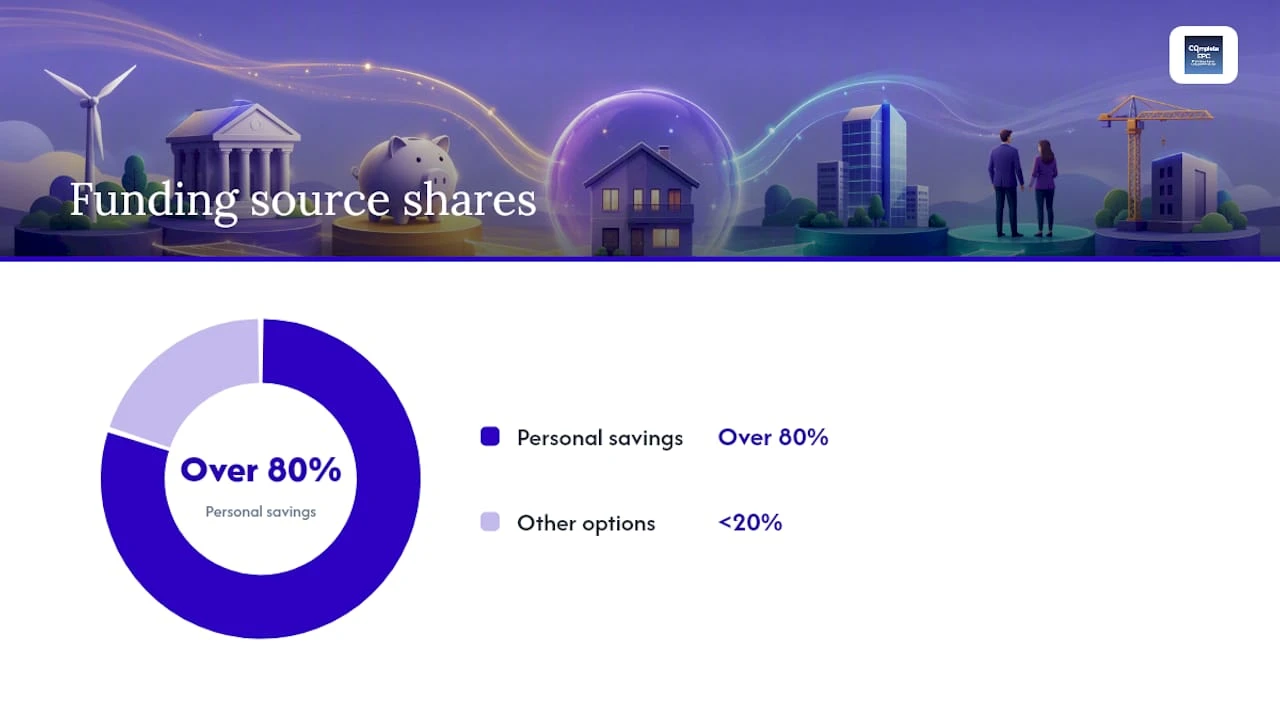
Evaluation evidence found that over 80% of landlords used savings to finance improvements. That remains the most common route, but it is not the only one.
Funding options to consider:
- Personal savings: The most straightforward route; no interest cost
- Green buy-to-let mortgages: Several lenders offer reduced rates for properties at C or above
- Government and local authority grants: The Warm Homes Plan includes grant funding; eligibility varies by property type and tenant income
- Third-party funding: Some energy companies offer subsidised or free measures under the Energy Company Obligation (ECO4) scheme for eligible properties
- Phased investment: Portfolio landlords can prioritise the lowest-rated properties first, spreading capital spend across financial years
On tax treatment, energy efficiency works may qualify as repairs (revenue expenditure) or improvements (capital expenditure) depending on the nature of the work. The distinction affects when and how you can offset costs against rental income. Seek advice from a qualified tax adviser before filing.
What are the most common pitfalls and how does enforcement work?
Enforcement sits with local authorities, which can issue civil penalty notices for MEES breaches. Penalties can reach up to £30,000 per property for serious or prolonged non-compliance, and details of penalties are recorded on the public exemptions and penalties register.
Common mistakes that lead to enforcement risk:
- Letting a property with an expired EPC or no EPC at all
- Assuming an exemption applies without formally registering it
- Miscounting cost-cap spend (only eligible measures count)
- Poor recordkeeping that cannot demonstrate compliance during an inspection
Stakeholder feedback to the government’s consultation raised concerns about EPC accuracy and the complexity of new metrics. The government intends to display the legacy Energy Efficiency Rating (EER) during a transitional period and to recognise early compliance, but landlords should not rely on transitional arrangements as a reason to delay.
When do you need a new EPC and what records should you keep?
An EPC is valid for ten years. You need a new one when:
- The existing certificate has expired
- You have completed energy efficiency works and need to demonstrate the improved band
- You are marketing the property for a new tenancy and no valid EPC exists
Documents to retain and suggested minimum periods:
- Current EPC: For the duration of its validity plus the tenancy
- Post-retrofit EPC: Indefinitely while the property is let
- Invoices and installation certificates: At least five years
- Exemption registration confirmation: For the duration of the exemption
- Assessor reports and correspondence: At least five years
A post-retrofit EPC is the only way to demonstrate a band improvement under MEES. Invoices alone are not sufficient proof; the new lodged certificate is the compliance record.
Acting early usually saves money and reduces risk
The landlords who will find the 2030 standard most manageable are those who start now rather than in 2029. Installer capacity for insulation, heat pumps and glazing is finite, and prices tend to rise as deadlines approach and demand concentrates. Spreading works over two or three years also makes the capital outlay more manageable.
There is a concrete incentive to act before 1 October 2029: properties that reach EPC C under the existing EER metric before that date will be treated as compliant with the higher 2030 standard until the EPC expires. That means a landlord who achieves C now under the current methodology may avoid more invasive or costly works that the reformed metrics might otherwise require. The government has confirmed this transitional recognition, and it is one of the clearest financial arguments for early action.
Completeepc can help you commission and demonstrate compliance
Completeepc provides domestic EPCs and commercial EPCs for landlords across London, with qualified accredited assessors and competitive pricing. Whether you need a first certificate before marketing, a post-retrofit EPC to confirm a band improvement, or guidance on the EPC assessment process, the team can turn around certificates quickly and lodge them on the national register. For landlords managing mixed portfolios, commercial EPC compliance is also covered. Get a quote today and have your compliance paperwork in order before the next tenancy begins.
Sources
- Gov
- The Energy Efficiency (Private Rented Property) (England and Wales) Regulations (domestic) 2015
- Landlords pay 12% premium for energy-efficient homes – Mortgage Solutions
- Private rented sector homes energy performance: government response (PDF)
- Energy performance certificates: requirements and enforcement – Shelter England
This article is general information, not a substitute for advice from a qualified lawyer. Consult a qualified legal professional about your own circumstances before acting on anything here.
FAQ
Why does my landlord need an EPC?
An EPC is a legal requirement before any property is marketed for rent. It proves the property meets the minimum energy efficiency standard (currently band E) and must be made available to prospective tenants.
What energy efficiency rating does a rental property need?
Since April 2020, all domestic private rented properties in England and Wales must hold at least an EPC band E. The minimum rises to band C by 2030 under confirmed government policy.
Should I buy a house with an EPC rating of F?
An F-rated property cannot currently be let without a registered exemption, and it will require significant works to reach the 2030 C standard. Market analysis shows E-rated properties already attract a modest discount; F and G ratings carry greater compliance risk and capital cost.
How important is an energy efficiency rating for landlords?
Very. An EPC is required by law, determines whether a property can be legally let, affects sale and rental value, and is the compliance document for MEES. Without a valid EPC at the correct band, you cannot lawfully let the property and risk penalties of up to £30,000.