
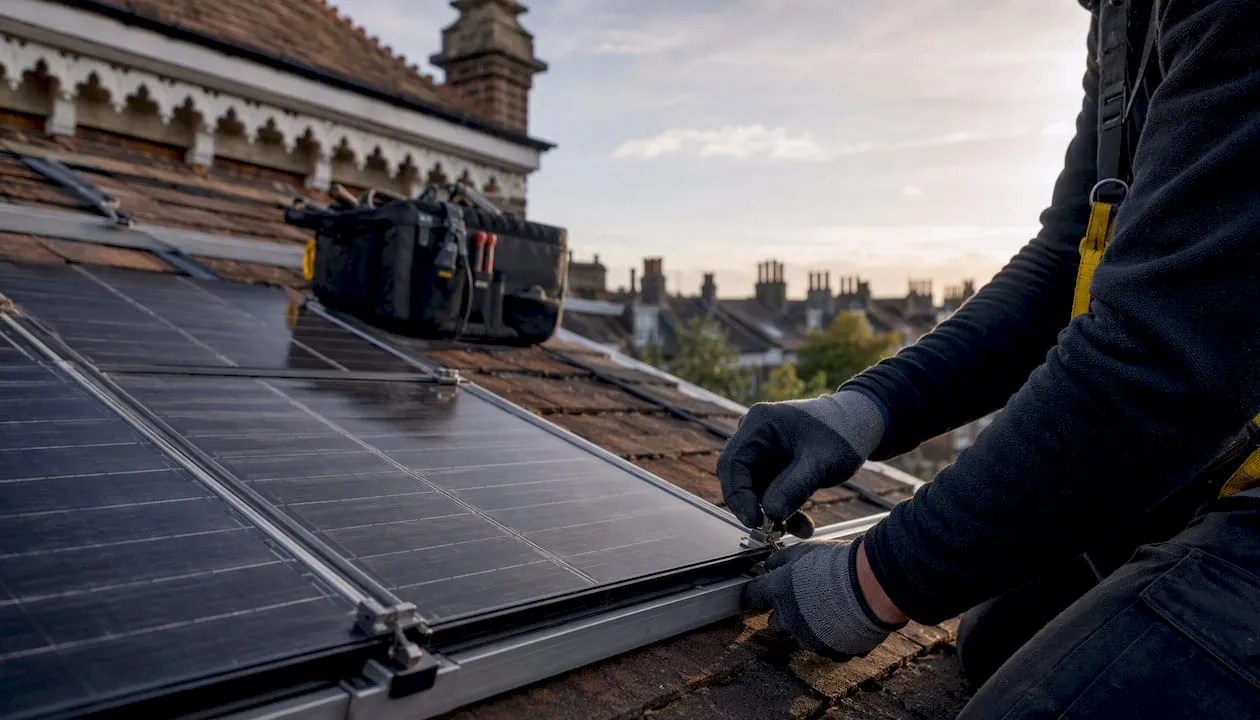
Solar PV almost always improves an EPC. The reason is straightforward: the SAP/RdSAP methodology that underpins every UK Energy Performance Certificate credits on-site generation because it reduces the amount of electricity the model assumes you import from the grid. The typical uplift is roughly 6–15 SAP points, which is enough to shift many properties up a full band. If you want to capture that improvement on paper, you need a new certificate issued by an accredited EPC assessor after the panels are commissioned, with the right documentation to hand.
- Solar PV reduces modelled grid electricity imports in SAP/RdSAP, raising the score.
- Typical uplift: 6–15 SAP points, sometimes enough for a full band change.
- The improvement only appears on a new EPC commissioned after installation.
- Completeepc provides accredited domestic and commercial EPC assessments across London.
Pro Tip: Book your EPC assessment only after your MCS certificate and commissioning paperwork are signed. An assessor cannot model generation from a system that has no formal documentation.
Key takeaways
Solar PV usually raises an EPC by 6–15 SAP points, but the improvement only appears on a new certificate commissioned after installation with full MCS documentation provided to the assessor.
| Point | Details |
|---|---|
| Typical SAP uplift | Solar PV adds roughly 6–15 SAP points; a 4kW system often delivers 8–10 points. |
| Timing matters | Commission the EPC only after panels are installed and MCS paperwork is signed. |
| Reassessment risk | A lower score after solar usually reflects re-recorded insulation or heating, not the panels. |
| Documentation is critical | Provide MCS certificate, commissioning report, and existing insulation evidence at the assessor visit. |
| Completeepc | Accredited assessors for domestic and commercial EPCs, with fast turnaround and competitive pricing. |
Table of Contents
- How does SAP/RdSAP produce an EPC, and where does solar fit in?
- How solar PV changes the SAP score and what uplift you can expect
- Why can your EPC fall after installing solar?
- Which factors change how many SAP points solar delivers?
- How to make sure your solar panels are recorded correctly
- What does a better EPC mean for sales and lettings?
- When should you commission the EPC, and what does it cost?
- What I see most often go wrong with solar EPCs
- Completeepc can issue your post-solar EPC
- Sources
- FAQ
How does SAP/RdSAP produce an EPC, and where does solar fit in?
SAP (Standard Assessment Procedure) converts a set of building inputs into a modelled energy use and carbon figure, which then maps to the A–G EPC band. For existing homes, assessors use the reduced-data version, RdSAP. The inputs cover fabric (walls, roof, floor, windows), heating system, hot water, controls, and any on-site generation.
The key inputs an assessor records include:
- Wall, roof, and floor construction and insulation levels
- Glazing type and area
- Main and secondary heating systems and their fuel types
- Hot water provision
- On-site generation: solar PV system size (kWp), orientation, pitch, and shading
Assessors gather this evidence through a physical site visit combined with documentation you provide. This is why assessor credentials matter: a qualified, accredited assessor knows which defaults to apply when evidence is missing and which figures require documentary proof. Providing clear evidence at the visit prevents the assessor from falling back on conservative defaults that understate your property’s performance.
How solar PV changes the SAP score and what uplift you can expect
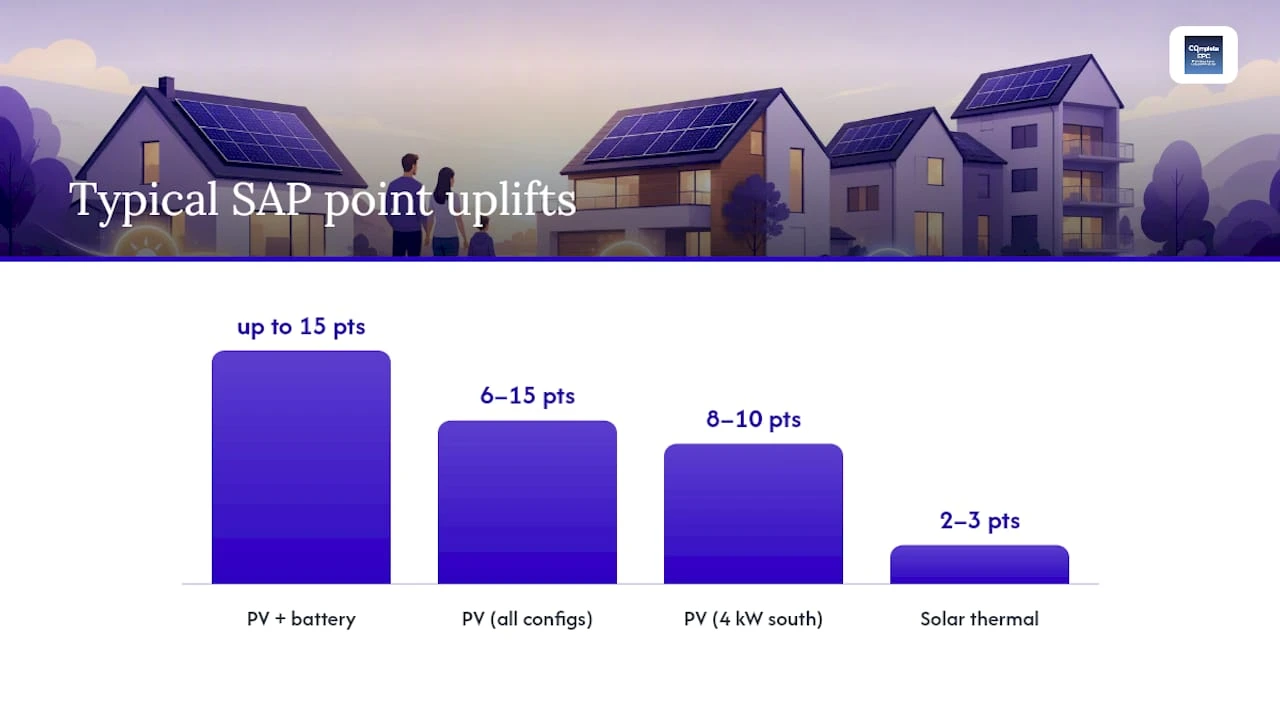
PV is credited in SAP because it offsets grid electricity in the model, which raises the SAP score and can shift an EPC band. The commonly reported range is roughly 6–15 SAP points, though the exact figure depends on several property-specific variables.
A worked example helps make this tangible. A 4kW south-facing array on a D-rated semi-detached house, with no significant shading and no battery, typically delivers an 8–10 SAP point uplift. That is usually enough to move a mid-D property into the C band. Add a battery and the gain can push toward the top of the range; a poorly oriented or shaded system may land closer to the bottom.
Solar thermal systems (for hot water only) deliver a more modest improvement of around 2–3 SAP points, so PV is the stronger choice when EPC band improvement is the goal.
| System type | Typical SAP uplift | Notes |
|---|---|---|
| Solar PV (4kW, south-facing) | 8–10 points | Most common domestic configuration |
| Solar PV (range, all configs) | 6–15 points | Varies by size, orientation, shading |
| Solar thermal (hot water) | Small uplift | Hot water offset only |
| Solar PV + battery storage | Higher uplift possible | Higher self-consumption credited |
Why can your EPC fall after installing solar?
A fresh EPC can show a lower score after solar installation, and this surprises many homeowners. The cause is almost always reassessment recording differences, not the panels themselves. When an assessor visits for a new certificate, they record the whole property from scratch. If the previous certificate used lenient defaults for insulation or heating, the new assessor may apply more conservative figures, and that reduction can outweigh the solar gain.
The main causes of a surprise drop are:
- The previous certificate assumed better insulation than the assessor can now verify with evidence
- A different heating system or fuel type is recorded more accurately this time
- Glazing or construction details are re-classified under updated RdSAP conventions
- Solar panels were already present but not documented, so the old certificate may have credited them informally
To prevent this, work through the following steps before and during the assessor visit:
- Gather all existing evidence: cavity wall insulation certificates, loft insulation receipts, boiler installation records, and window guarantees.
- Photograph insulation in accessible areas (loft hatch, exposed joists) so the assessor can verify depth.
- Provide your MCS certificate and commissioning report for the solar system.
- Ask the assessor in advance which measures they will need evidence for, and what band change is realistic.
- If the previous EPC used assumptions you cannot now evidence, address those gaps before the visit.
Pro Tip: Ask your assessor to walk you through the expected band outcome before the visit is complete. A good assessor will flag any recording differences so there are no surprises on the certificate.
Which factors change how many SAP points solar delivers?
The uplift depends on a combination of system and property variables. System size, roof orientation, pitch, and shading are the primary specification factors. The property’s baseline efficiency and heating type also shape the final figure.
- System size (kWp): Larger arrays generate more electricity and offset more grid imports, pushing the score higher.
- Orientation and pitch: South-facing at 30–40° is optimal; east/west orientations reduce output by roughly 15–20%, and flat roofs reduce it further.
- Shading: Even partial shading from chimneys or neighbouring buildings can cut generation significantly and reduce the SAP credit.
- Battery storage: Batteries increase self-consumption, meaning more on-site generation is used rather than exported, which the SAP model rewards with a higher score.
- Heating type: Properties with electric heating benefit more from PV because the model offsets a high-carbon, high-cost fuel. Gas-heated homes see a smaller relative gain.
- Baseline efficiency: A poorly insulated property in band E or F has more room to gain than a well-insulated band C home, where the marginal benefit of PV is smaller.
| Factor | Direction of effect | Relative influence |
|---|---|---|
| System size (kWp) | Larger generally means higher uplift | High |
| South-facing orientation | Optimal orientation typically leads to higher uplift | High |
| Shading | Increased shading generally lowers uplift | High |
| Battery storage | Presence may increase uplift | Medium |
| Heating type (electric vs gas) | Electric heating often associated with larger gain | Medium |
| Baseline property efficiency | Lower baseline efficiency generally allows larger gain | Medium |
How to make sure your solar panels are recorded correctly
Commission the EPC only once the panels are fully commissioned and the MCS certificate is signed. That single timing decision determines whether the new certificate captures the full benefit.
- Before installation: Check your roof orientation and pitch with a solar installer. Decide whether to include battery storage. If you own a flat, confirm with your freeholder or managing agent that rooftop installation is permitted and that the system will be metered to your individual unit, not a communal supply.
- At handover: Collect your MCS certificate, commissioning report, system kWp rating, inverter specifications, and a generation estimate from your installer.
- At the assessor visit: Hand over all solar documentation at the start of the visit. Also provide evidence for existing measures: insulation certificates, boiler service records, and window guarantees. Ask the assessor to confirm the expected band outcome before they leave.
- After installation: Schedule the EPC promptly. Keep generation logs and photographs of the installation for future reassessments or buyer queries.
For flats specifically, solar connected only to a communal or landlord meter will not credit your individual flat’s EPC under current SAP rules. The array must be metered to your unit.
Pro Tip: Keep a dedicated folder (physical or digital) with every piece of solar documentation. Future buyers, lenders, and assessors will all ask for it.
What does a better EPC mean for sales and lettings?
A higher EPC band is a positive signal to buyers and tenants, but it does not translate to a fixed price uplift. Market conditions, location, and overall property condition remain the dominant factors. Treat the improved EPC as a credible, verifiable efficiency credential rather than a guaranteed premium.
For landlords, the regulatory picture makes solar a low-regret investment. The government’s direction of travel points toward a minimum EPC band C for rental properties by 2030, and a 4kW system adding 8–10 SAP points is a cost-effective route toward that threshold for many mid-band properties.
- Buyers and mortgage lenders vary in how much weight they place on EPC ratings; some lenders offer preferential rates for higher-rated properties.
- Tenants increasingly ask about energy costs, and a C or above is a practical differentiator in competitive rental markets.
- No fixed price uplift figure should be quoted to buyers or tenants; the EPC is evidence, not a valuation tool.
Pro Tip: Align your EPC date with your sale marketing or tenancy start date. An EPC is valid for ten years, but a certificate that predates your solar installation will not reflect the improvement.
When should you commission the EPC, and what does it cost?
Commission the EPC after the panels are fully installed and the MCS paperwork is signed. Ordering before that point means the assessor cannot model the system, and the certificate will not capture the improvement.
- A residential EPC assessment typically takes 45–60 minutes on site, with the certificate issued within 24–48 hours in most cases.
- Domestic EPC prices vary by location and property size; competitive rates in London typically start from around £60–£90 for a standard residential property, though prices differ by provider.
- The certificate is valid for ten years, so timing it correctly at the point of solar commissioning avoids the cost of a repeat assessment.
For sales or lettings, align the EPC date with your marketing launch or tenancy start. If you are unsure about timing, speak to an accredited EPC assessor before you book the installation completion date.
What I see most often go wrong with solar EPCs
The paperwork gap is the single most avoidable problem. A homeowner installs a well-specified 4kW system, the installer leaves, and the MCS certificate sits in an email inbox for months. When the EPC assessor arrives, there is nothing to hand over, so the assessor either defaults to conservative generation assumptions or cannot credit the system at all.

The second common mistake is commissioning the EPC too early, before the system is signed off. The assessor visits, the panels are on the roof, but the commissioning report does not exist yet. The certificate is issued without the solar credit, and the homeowner pays for a second assessment later.
Completeepc’s qualified assessors handle both domestic and commercial EPC assessments and will tell you exactly which documents to prepare before the visit. That conversation, before the appointment, is what prevents the reassessment surprises this guide describes.
Completeepc can issue your post-solar EPC
Once your solar system is commissioned and your MCS paperwork is signed, Completeepc can issue an updated domestic or commercial EPC that fully reflects the installation. Accredited assessors handle the documentation review, model the system correctly in SAP, and deliver the certificate quickly so your sale, letting, or compliance deadline is not delayed. Pricing is competitive, with a lowest-rate guarantee across the UK market. To get your updated certificate, contact Completeepc and book an assessment at a time that works around your installation completion date.

Sources
The following sources were used in preparing this guide and are recommended for further reading:
- Do solar panels affect your EPC rating? (the honest UK answer) | Solarable
- Solar Panels and EPC Ratings: Impact and Benefits | WattScore
- The impact of solar power on EPC ratings | Marley
- Solar panels and EPC rating: how many points in 2026? | EPC Advisor
For accredited EPC assessors and MCS documentation support, contact Completeepc.
FAQ
Will solar panels increase my EPC rating?
Yes, in most cases. Solar PV reduces modelled grid electricity imports in SAP/RdSAP, which raises the score; the typical uplift is 6–15 SAP points, sometimes enough for a full band change.
Why might an EPC fall after installing solar panels?
A fresh assessment re-records the whole property. If the previous certificate used lenient defaults for insulation or heating that the new assessor cannot verify with evidence, the reduction in those areas can outweigh the solar gain.
Is it harder to sell a house with solar panels?
Not typically, though buyers and lenders vary in how they assess panels, particularly leased systems. Owned panels with a valid MCS certificate and a strong EPC are generally viewed positively by buyers and some mortgage lenders.
Do solar panels help landlords meet the 2030 EPC C target?
A 4kW system often adds 8–10 SAP points, making it a practical and cost-effective measure for landlords whose properties currently sit in band D or low C and need to reach band C ahead of regulatory deadlines.