

Yes, in most cases an EPC survey pays for itself. The certificate itself is a legal requirement for selling or letting, but the real value sits in the recommendation report that comes with it: a shortlist of measures that cut bills, protect rental income, and support grant applications. Whether it delivers a strong return depends on your starting point and which measures you act on.
A standard domestic EPC typically costs between £60 and £120 and stays valid for ten years. If you’re a landlord, that ten-year window matters more than ever with new minimum-rating rules affecting tenancies from 2026 onwards.
- Selling or letting soon? Book an assessor now. You need a valid certificate before marketing the property.
- Applying for a grant? Many schemes require an EPC dated within the last ten years, so check first.
- Already have a certificate under ten years old? No rush, but read the recommendation report anyway. It may flag quick wins you’ve missed.
Key Takeaways
An EPC survey typically pays for itself through lower bills, stronger sale or rental positioning, and access to grants, provided you act on the cost-effective measures in the recommendation report first.
| Point | Details |
|---|---|
| Verdict on value | Most EPC surveys pay off through bill savings, marketability, and grant access, though returns depend on your current band. |
| Cost and validity | A standard domestic EPC costs £60 to £120 and stays valid for ten years unless the property changes significantly. |
| Prioritise by payback | Tackle measures with under three years’ payback first, then weigh disruption, grants, and MEES relevance. |
| Know the MEES cost cap | Relevant improvements are capped at £3,500 including VAT; exemptions apply once that’s spent without reaching the required band. |
| Book with Completeepc | Completeepc provides accredited domestic and Commercial EPC assessments across London with lodged certificates and prioritised recommendations. |
Table of Contents
- What are the real EPC survey benefits for owners and landlords?
- What happens during an EPC survey?
- How to prioritise EPC recommendations for the fastest return
- When do you actually need an EPC?
- How to verify an assessor and read your certificate
- What an EPC actually is, and why the recommendation report matters more than the rating
- A provider’s view on what actually gets acted on
- How Completeepc can help you act on your EPC results
- Sources
- FAQ
What are the real EPC survey benefits for owners and landlords?
The certificate itself is a compliance document. The benefits come from what you do with the recommendation report attached to it. Split them into four categories and the picture gets a lot clearer.
Financial benefits start with lower running costs. The recommendation report ranks cost-effective measures with an estimated impact on your energy bills, so you’re not guessing which upgrade matters most. A better EPC band also tends to support a stronger asking price or rent, since buyers and tenants increasingly factor running costs into their decision. The English Housing Survey gives a useful benchmark here: it tracks how energy efficiency varies across the housing stock, so you can see roughly where your property sits against comparable homes.
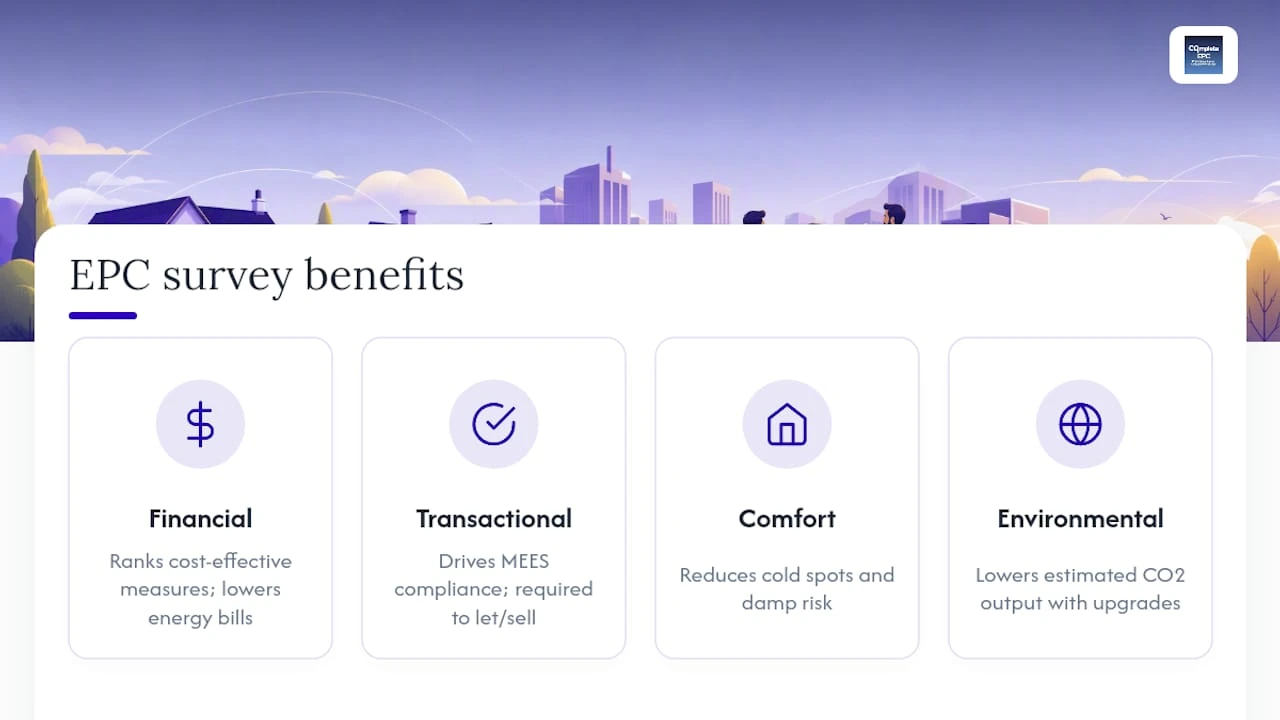
Transactional benefits are the ones most owners underestimate. A valid EPC is required to market a property for sale or let, and if you’re a landlord, your rating feeds directly into Minimum Energy Efficiency Standards (MEES) compliance. Falling below the required band without a registered exemption can restrict your ability to let the property at all. On the funding side, schemes such as the Warm Homes Local Grant often require a current EPC to assess eligibility, so having one in hand speeds up any application.
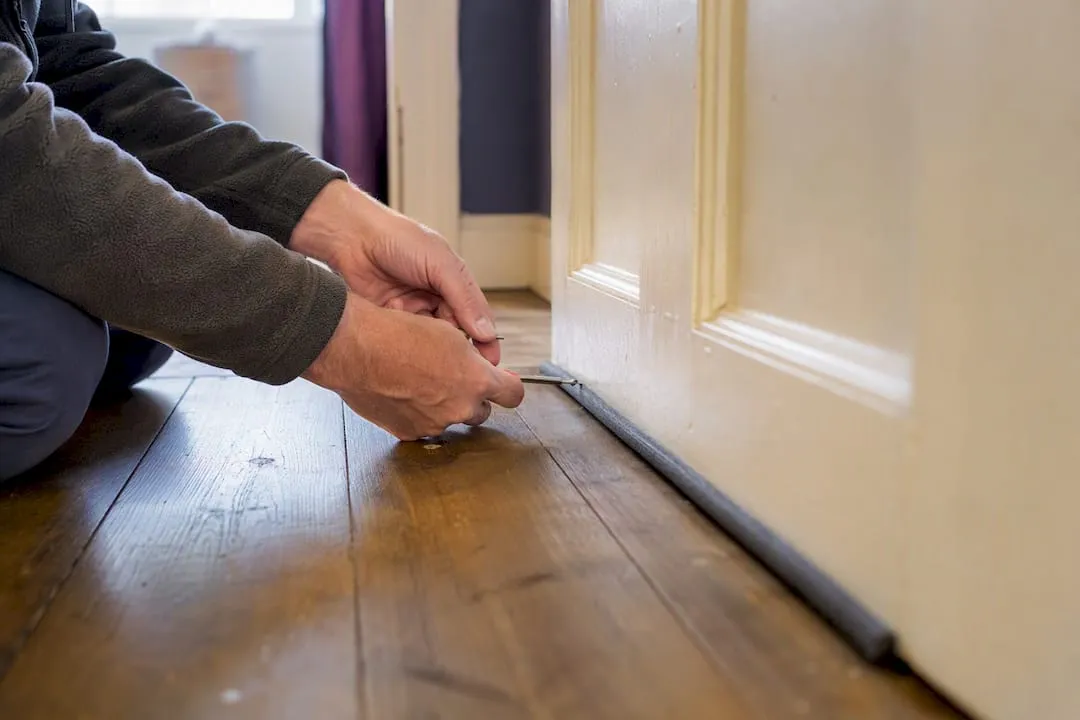
Comfort benefits are harder to put a number on but easy to feel. Measures like loft insulation, draught-proofing, and better heating controls, all commonly flagged on an EPC, reduce cold spots and damp risk. For older tenants or anyone with respiratory sensitivities, that’s not a minor detail.
Environmental benefits follow naturally from the same measures. Every band improvement generally corresponds to a meaningful cut in a property’s estimated CO2 output, since the EPC rating itself runs from A to G based on efficiency and emissions together.
Pro Tip: Implementing recommendations isn’t legally compulsory in every case, but a higher rating tends to make a property more marketable and cuts running costs even when you’re not obliged to act.
What happens during an EPC survey?
The visit is quicker than most people expect and entirely non-invasive. An assessor won’t drill into walls or move furniture. They’ll inspect the property, take measurements, check the heating system, photograph key features, and enter everything into the government-approved RdSAP methodology for existing dwellings (new builds use full SAP instead).
For a typical home, expect the visit itself to take between around three quarters of an hour to an hour and a half. Cost sits in the £60 to £120 range for a standard domestic property, though larger or unusual properties, and commercial buildings, cost more.
Before the assessor arrives, gather:
- Insulation certificates (cavity wall, loft, or floor insulation installed by a professional).
- Boiler make and model details, or the data plate photograph if the boiler is inaccessible.
- FENSA certificates for replacement windows, confirming installation date and glazing type.
Pro Tip: If the assessor can’t verify a measure with paperwork, they have to apply a default assumption that usually understates its benefit. A folder of certificates and a few photos on the day can be the difference between a C and a D.
How to prioritise EPC recommendations for the fastest return
The recommendation report is structured deliberately: cost-effective measures come first, followed by further improvements that cost more but deliver a bigger rating jump. That split exists to help you act in the right order rather than chasing the most dramatic upgrade first.
A simple decision rule works well here: tackle anything with a payback under three years before anything else. After that, weigh disruption, grant availability, and MEES relevance. A loft top-up might cost little and pay back within two years; a heat pump might transform your rating but take a decade to repay through savings alone, unless a grant offsets the upfront cost.
If you’re a landlord working towards MEES compliance, know the cost cap. GOV.UK guidance defines relevant energy efficiency improvements as measures costing £3,500 or less including VAT. If you’ve installed everything under that cap and the property still falls below the required band, you can register a valid exemption rather than spending beyond it.
Pro Tip: Several small measures, LED lighting, better heating controls, a loft top-up, often produce a faster combined payback than one large project. Stack the cheap wins before you commit to anything structural.
When do you actually need an EPC?
An EPC becomes mandatory the moment you market a property for sale or rent. If your existing certificate has expired, or is close to its ten-year limit, you’ll need a fresh one before listing.
Landlords should watch the compliance calendar closely. The shift towards minimum EPC band C for new tenancies is reshaping how far ahead landlords need to plan improvement works, particularly on older stock that currently sits at D or below.
You should also commission a new certificate after major works, a heat pump installation, full re-insulation, or a similar upgrade, since your old certificate won’t reflect the improvement. The same applies before a grant application: most schemes want a certificate dated recently, not one that’s nine years old and no longer representative of the property.
How to verify an assessor and read your certificate
Every domestic energy assessor must hold accreditation through a government-approved scheme, and every completed assessment gets lodged on the national register. Before booking, it’s worth checking that register yourself, both to confirm the assessor is accredited and to see whether a valid certificate already exists for the property.
Your finished EPC shows the current band, the potential band achievable with improvements, indicative costs and payback for each recommended measure, an estimated CO2 figure, and the assessor’s registration details. Keep it somewhere accessible: certificates run for ten years, and you’ll need to show it again for any future sale, letting, or grant application within that window.
One legal point worth flagging here: MEES compliance turns on those same “relevant improvements”, the ones costing £3,500 or less. Understanding that cap now saves confusion later if your rating sits close to the regulatory threshold.
What an EPC actually is, and why the recommendation report matters more than the rating
An Energy Performance Certificate rates a building’s energy efficiency on a scale from A, the most efficient, down to G. It’s a standardised assessment, produced using RdSAP for existing homes, that estimates running costs and carbon emissions based on the building’s construction, heating system, and insulation.
The rating itself gets most of the attention, but the recommendation report attached to it is where the practical value lives. It lists specific measures, ranked broadly by cost-effectiveness, alongside indicative installation costs, expected savings, and the potential rating you’d reach if you implemented them. Think of the letter grade as the headline and the report as the instructions for improving it.
This is also where the report earns its keep for landlords and sellers. A property currently rated E with a report showing it could reach C for a few thousand pounds of work tells a very different story to a buyer or tenant than a bare letter grade does. It shows a realistic path forward, not just a static score.
For commercial landlords, the equivalent report follows the same logic but applies to non-domestic methodology, and a Commercial EPC needs its own accredited assessment rather than one carried across from a domestic certificate.
A provider’s view on what actually gets acted on
Most clients accept the cheap, low-disruption measures readily, loft top-ups, LED swaps, better heating controls, but defer anything involving structural work or a full boiler replacement until it’s financially unavoidable. That’s rational, but it means the biggest rating jumps often get delayed longest.
Acting early on EPC recommendations reduces transaction risk. A sale falling through over a poor rating, or a tenancy stalling because a property fails a minimum band, costs far more than the improvement work would have.
How Completeepc can help you act on your EPC results
Completeepc handles domestic and commercial EPC assessments across London, alongside SAP calculations for new builds, conversions, and extensions. Every assessment is carried out by an accredited assessor and lodged directly on the national register, so you get a compliant certificate plus a clear, prioritised recommendation report rather than a bare rating.
If you manage a commercial property and need a lodged, accredited certificate, the Commercial EPC service covers the assessment, the report, and the paperwork in one visit. Booking is straightforward: get in touch with your property details and timeline, whether that’s an upcoming sale, a letting deadline, or a grant application that needs a recent certificate, and Completeepc will confirm a visit slot and turnaround time before you commit.
Sources
- Energy assessor UK costs and EPC rules (2026) | Axiom
- Guide to energy performance certificates (EPCs) | Energy Saving Trust
FAQ
What should I expect during an EPC survey?
An accredited assessor inspects the property, takes measurements, checks the heating system, and photographs key features, feeding everything into the RdSAP methodology. The visit is non-invasive and usually takes around three quarters of an hour to an hour and a half for a standard home.
How much does an EPC survey cost?
A standard domestic EPC typically costs between £60 and £120, though larger, unusual, or commercial properties cost more.
Does a better EPC rating increase house value?
A stronger EPC band tends to support a higher asking price or rent, since buyers and tenants increasingly weigh running costs into their decision, though the exact impact varies by property and location.
How much do EPC assessors earn?
Assessor earnings vary widely by region, workload, and whether they’re self-employed or salaried, and this isn’t a figure Completeepc tracks or reports on.
Do I need a new EPC after home improvements?
Yes, if you’ve completed significant work like a heat pump installation or full re-insulation, since your existing certificate won’t reflect the change, and you’ll typically want an updated one before any sale, letting, or grant application.