
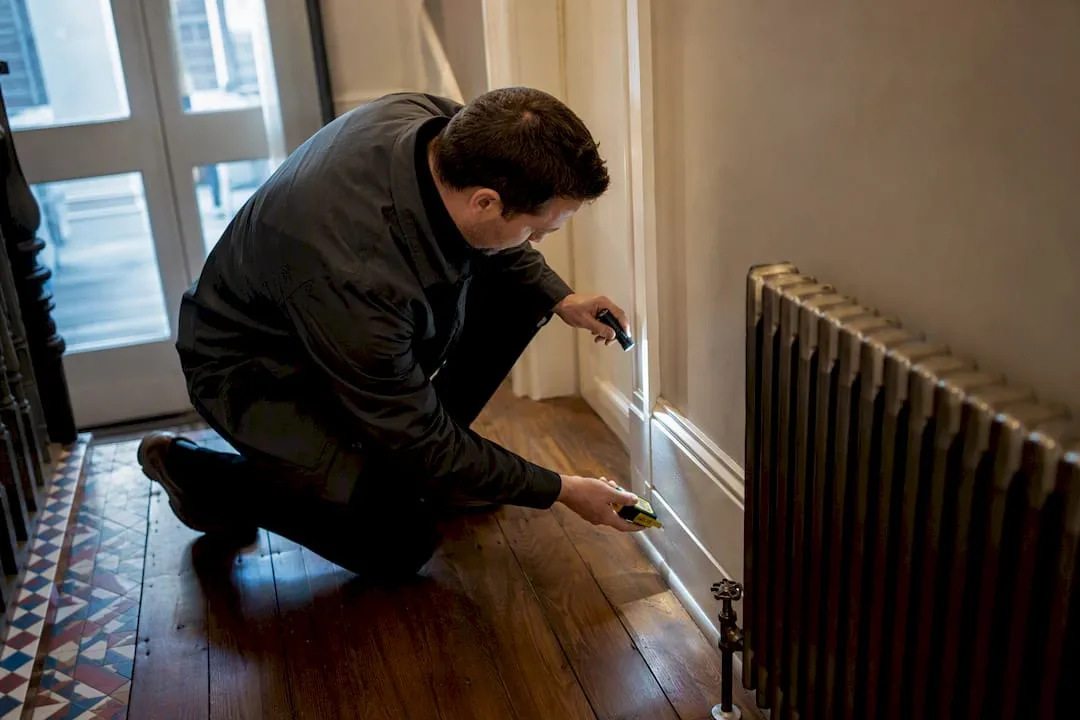
An energy assessor is the accredited professional who inspects your property, calculates its efficiency rating and lodges your EPC on the national register. Before you book anyone, verify their accreditation and ask for an all-in quote that covers the visit, the calculation and the lodging fee. Two safe starting points are a government-approved accreditation scheme’s lookup tool and an established consultancy such as Complete EPC.
TL;DR:
- Verify the assessor’s accreditation through official registers and confirm it covers the specific property type before booking to ensure legitimacy.
- Expect a domestic EPC inspection to take at least 30 minutes and avoid low quotes or assessors refusing access to key areas, as these indicate potential quality issues.
- Request an all-in quote covering the visit, calculation, lodging, and any file downloads, and confirm the turnaround time will meet your sale or lease deadlines.
- Be prepared for the inspection by providing access to key areas, recent work details, and clear property information to improve accuracy and efficiency.
- Recognize that accreditation alone does not guarantee report thoroughness; choose reputable consultancies that provide detailed, actionable recommendations and quality standards.
Table of Contents
- What does an energy assessor actually do?
- How do you verify accreditation and confirm an assessor is genuine?
- What should be in the quote, and how much should it cost?
- What questions should you ask, and what red flags should you avoid?
- How should you prepare your property before the assessor arrives?
- Publisher perspective: what a professional consultancy actually delivers
- Get a compliant EPC quote from Complete EPC
- Sources
- FAQ
What does an energy assessor actually do?
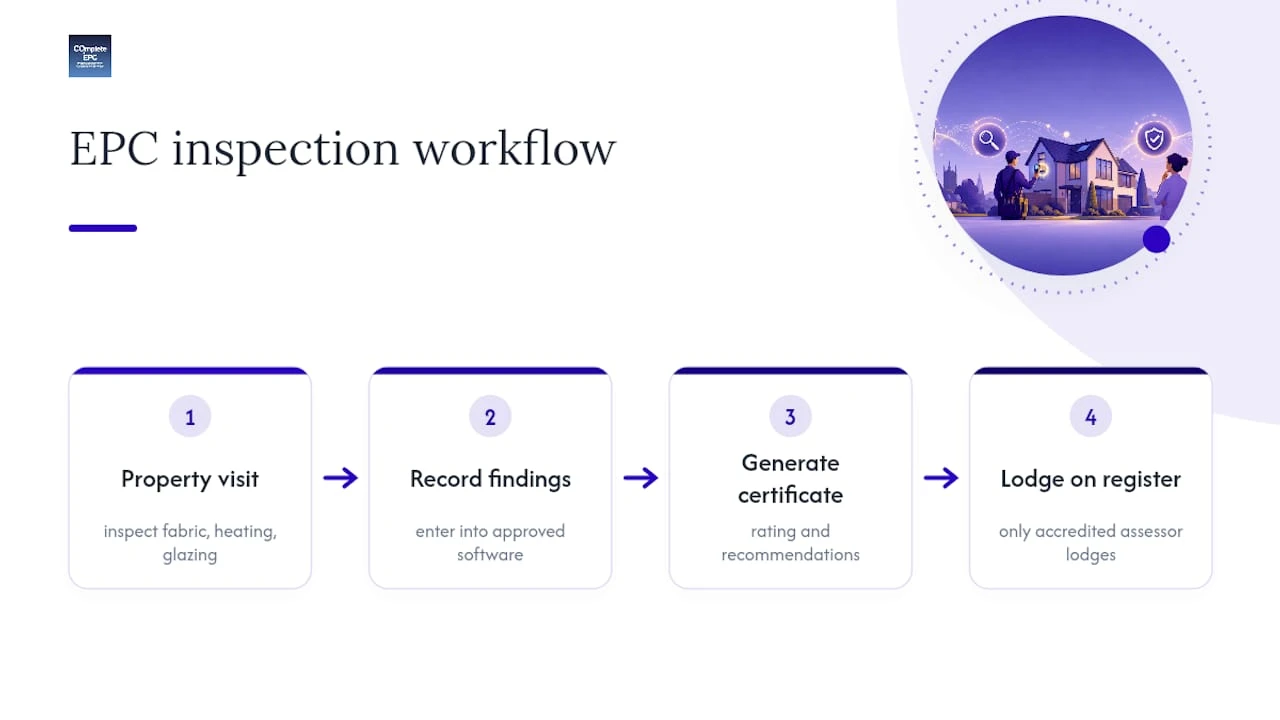
An energy assessor visits your property, inspects its construction, heating, insulation and glazing, then enters those findings into government-approved software to generate a rating. That software produces the certificate and a set of recommendations for improving efficiency, and only an accredited assessor can legally lodge the finished document on the national register, as the Gov confirms.
The quality of that inspection matters more than most property owners realise. An assessor who rushes the survey, misreads a wall construction type or skips the loft entirely will feed poor data into the software, and the certificate that comes out will understate your property’s real performance. Accreditation schemes require members to hold professional indemnity insurance and complete regular continuing professional development, which is one reason accredited assessors tend to produce more reliable, more usable reports. For older or unusually constructed properties, an assessor who understands local building stock and materials such as sandwich panel construction is more likely to identify the details that actually drive your rating.
How do you verify accreditation and confirm an assessor is genuine?
Verification takes minutes and it is the single most reliable trust signal you have before booking anyone. Do not rely on a website badge or a verbal claim alone.
- Search the official EPC register by the assessor’s name or a previous certificate number to see lodged work tied to them.
- Ask directly which accreditation body they belong to and their membership number, then check that scheme’s own lookup tool independently.
- Confirm the accreditation covers the right category. Domestic and non-domestic EPCs sit under separate qualifications, so an assessor accredited for houses is not automatically qualified for a shop or office.
- If you’re in Scotland, the Scottish EPC register lets you search by service type and postcode.
The accreditation scheme confirms membership and CPD status, while the national register shows the actual certificates that assessor has lodged. Checking both gives you a fuller picture than either alone.
What should be in the quote, and how much should it cost?
Ask for an all-in price before you agree to anything. That figure should cover the site visit, the energy calculation and the official lodging fee, since some assessors quote a low headline price and then add lodging, travel or urgency charges afterwards. It’s worth checking whether the underlying building energy model or XML file is included too. Some clients need it later for retrofit planning or asset management purposes, and it is not always supplied by default.
Statistic: A domestic EPC is valid for 10 years from the date it is lodged, so a certificate you already hold may still be usable for a sale or letting without a new assessment.
Pricing varies with property size, location and complexity:
- Standard flats and terraced houses: typically the lowest end of the domestic price range.
- Larger detached houses or period properties: higher, reflecting longer inspection time.
- Listed buildings or unusual constructions: expect a wider price range, since these often need extra care and sometimes specialist knowledge.
- Commercial and non-domestic properties: pricing depends heavily on floor area, building type and complexity.
Whatever the quote, confirm turnaround time in writing so the lodged certificate arrives before your sale or letting deadline.
What questions should you ask, and what red flags should you avoid?
A short conversation before booking will tell you almost everything you need to know. Ask these questions directly:
- Which accreditation body are you registered with, and what is your membership number?
- Does your quote include the visit, calculation and lodging, with no extras?
- What is your expected turnaround from visit to lodged certificate?
- Have you assessed properties similar to mine, including any listed or unusual features?
Certain answers, or the absence of them, should make you walk away. Extremely low quotes, often under £40, are a common warning sign, alongside an assessor who cannot produce accreditation evidence or refuses to give you a certificate number once the job is done. Refusal to access the loft, boiler or hot water cylinder is another red flag, since these areas are essential to an accurate rating. A visit that wraps up in a few minutes rarely allows time to gather proper evidence.
Pro Tip: A thorough domestic inspection commonly runs well past 30 minutes. If an assessor is in and out faster than that, question whether they actually checked the details that affect your rating.
If something does go wrong, raise it with the assessor first, then escalate to their accreditation scheme if it isn’t resolved. Every scheme runs a formal complaints process precisely for this reason.
How should you prepare your property before the assessor arrives?
A well-prepared visit is faster and produces a more accurate certificate, because the assessor spends less time hunting for access and more time gathering evidence.
Before the visit, have these ready:
- Your postcode, property type and a rough floor area estimate.
- Details of any recent works, such as insulation upgrades, new windows or a replacement boiler.
- Clear access to the loft, meter cupboard, boiler, hot water cylinder and heating controls.
- At least one representative window per room type, since the assessor needs to record glazing consistently across the property.
Meet the assessor at the main entrance and walk them through anything unusual before they start, such as a recently converted loft or an extension that isn’t obvious from the outside. If you’ve had insulation installed but don’t have paperwork, a few photographs of the work in progress can help support the assessor’s findings.
Publisher perspective: what a professional consultancy actually delivers
Most guidance on this topic focuses on the mechanics of booking. What gets missed is that accreditation is a floor, not a guarantee of quality. Two assessors can both be legitimately accredited and still produce very different reports, because the standard only mandates minimum competence, not thoroughness.
Some consultancies provide both domestic and commercial EPC assessments, carried out by qualified assessors working to compliance standards. What that should mean for you in practice is an all-in quote agreed upfront, a certificate correctly lodged on the register, and recommendations that are genuinely usable rather than boilerplate. A property owner comparing quotes should treat a suspiciously fast turnaround or a vague price the same way they’d treat a vague accreditation answer: as a reason to ask more questions before booking.
— Danny
Get a compliant EPC quote from Complete EPC
Some companies offer direct booking options for property owners to skip verification legwork and secure a compliant assessment. Whether you need a Domestic Energy Performance Certificate for a house sale or letting, or a Commercial EPC for an office, shop or industrial unit, the process starts the same way: provide your postcode, property type and approximate floor area, and you’ll get a clear all-in quote covering the visit, calculation and lodging. You can get a quote and have your certificate lodged on the register through some service providers, removing the need to chase accreditation details yourself.
Sources
FAQ
How long does an EPC assessment take?
A thorough domestic inspection commonly takes longer than 30 minutes, depending on property size; a visit that finishes far faster than that is a warning sign of a rushed survey.
How long is an EPC valid for?
A domestic EPC is valid for 10 years from the date it’s lodged on the national register.
Can any energy assessor do commercial EPCs?
No. Domestic and non-domestic accreditation are separate qualifications, so you should confirm the assessor’s accreditation specifically covers commercial or non-domestic buildings before booking.
What is a reasonable price for a domestic EPC?
Prices vary by property size and complexity, with standard flats and terraces at the lower end and listed or unusual properties toward the higher end; always ask for an all-in figure that includes lodging.
What should I do if an assessor won’t share their accreditation details?
Treat it as a red flag and choose another assessor. A legitimate assessor will readily provide their accreditation body and membership number, which you can check against the official EPC register or the scheme’s own lookup tool.