
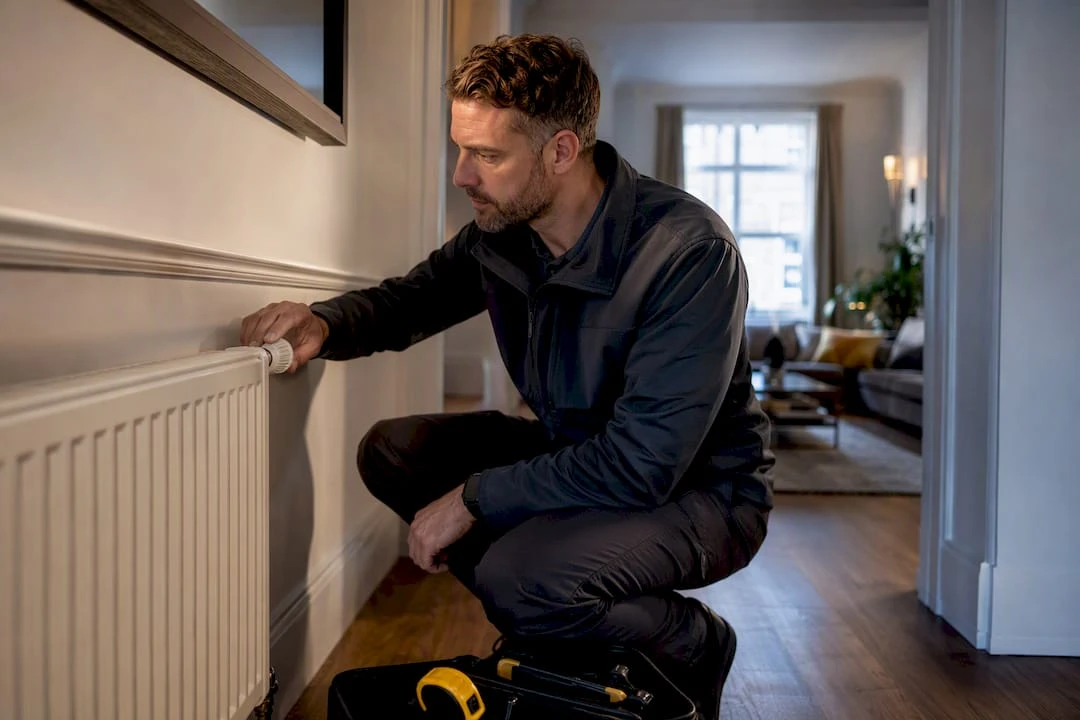
An Energy Performance Certificate exists to show a building’s energy efficiency on an A–G scale, and you need one whenever a property is sold, let, or newly built. The certificate stays valid for 10 years. If you’re preparing to market a property, check whether a valid EPC already exists on the register or order a new one before the first viewing.
TL;DR:
- A building’s EPC rating depends on its fabric, heating system, and insulation, not on how the current occupants use it, making comparisons fair.
- Legally, an EPC must be ordered before marketing begins, with failure to provide one potentially resulting in penalties from Trading Standards.
- The certificate displays current and potential ratings, with improvement recommendations including their costs and energy savings to prioritize actions.
- The cost of assessment varies by property size and complexity, with larger or commercial buildings costing more; assessments are valid for 10 years.
- Upgrading quick wins before selling can boost ratings and property appeal, while larger improvements may require a new EPC after completion.
Table of Contents
- What is an EPC for, and what does it actually measure?
- When do you legally need an EPC, and how tight is the timing?
- How do you read the rating and the recommendations on the certificate?
- How do you actually book an EPC, and what will it cost?
- Should you act on the recommendations, and when do you need a new EPC?
- Are there exemptions, and do the rules differ across the UK?
- How does Completeepc approach an EPC assessment?
- A checklist before your assessor arrives
- Book a compliant EPC assessment with Completeepc
- Sources
- FAQ
What is an EPC for, and what does it actually measure?
An Energy Performance Certificate rates a building’s energy efficiency from A (most efficient) to G (least efficient), alongside a separate environmental impact score covering carbon emissions. What it does not do is judge how the current occupants use the building.
The certificate is an asset rating, not a behaviour rating. Assessors apply standard occupancy assumptions, such as fixed heating patterns and typical household size, so a family who leaves radiators blasting all winter gets the same rating as one who barely touches the thermostat. This is deliberate: it lets buyers and tenants compare buildings fairly, according to gov.scot’s EPC guide.
To reach a rating, an accredited assessor looks at:
- The building fabric: wall construction, insulation levels, window glazing
- The heating system: boiler type, age, and controls
- Ventilation and any fixed lighting
- Hot water provision and renewable technology, where fitted
A poorly insulated Victorian terrace with an old boiler will score lower than a new-build with cavity wall insulation, regardless of who lives there.
When do you legally need an EPC, and how tight is the timing?
An EPC becomes a legal requirement when a property is constructed, put up for sale, or offered for rent, according to Gov. The timing rules are stricter than most sellers expect.
- Order it before marketing starts. Regulations require a valid EPC to be made available free of charge to prospective buyers or tenants at the earliest opportunity, under regulation 5 of the 2007 Energy Performance of Buildings Regulations. In practice, that means before the first listing goes live, not after an offer comes in.
- Build it into your sales or letting timeline. Estate agents and letting agents will usually ask for the certificate reference number before they publish a listing, so booking an assessment early avoids delays to your marketing date.
- Understand the risk of skipping it. Trading Standards can issue penalty notices to sellers, landlords, or agents who fail to supply a valid EPC on request, so treat it as a prerequisite, not paperwork to sort out later.
How do you read the rating and the recommendations on the certificate?
Every EPC shows two figures side by side: the current rating (how the building performs today) and the potential rating (what it could achieve if the recommended improvements were carried out). The gap between the two tells you how much headroom exists for improvement.
The certificate’s headline metric is the energy efficiency rating, sitting alongside estimated annual energy use in kWh/m² and CO2 emissions, according to official EPC glossary guidance. These figures cover regulated energy use, meaning heating, hot water, and fixed lighting, rather than appliances or plug-in electronics.
Below the rating sits the recommendations report, which typically lists:
- The specific improvement suggested (loft insulation, a new boiler, double glazing)
- An indicative installation cost
- A typical annual saving on energy bills
Statistic callout: These indicative cost and savings figures exist precisely so owners can prioritise measures that pay for themselves fastest, according to the Energy Saving Trust’s EPC explainer.
How do you actually book an EPC, and what will it cost?
Only an accredited energy assessor can produce a legally valid EPC. You can search for one, or check whether a property already has a valid certificate, through the official GOV.UK EPC register. Estate agents will often coordinate this on your behalf, but you’re free to book directly.
What to expect once you’ve booked:
- A site visit typically takes 45 minutes to a couple of hours, depending on the property’s size and layout
- The assessor photographs meters, checks loft access, and notes construction details, glazing, and heating controls
- Book at least a week or two ahead of your intended marketing date to avoid a last-minute scramble
- Once issued, the certificate is valid for 10 years and gets lodged automatically on the national register
Costs vary with property type, floor area, and location. Smaller properties will generally cost less to assess than larger or more complex commercial buildings, since larger properties take longer to survey.
Should you act on the recommendations, and when do you need a new EPC?
Nothing in the regulations forces you to carry out a single recommendation on your EPC. That said, ignoring them entirely usually means leaving money on the table, both in energy bills and in how the property presents to buyers.
Split the recommendations into two categories:
- Quick wins: loft top-ups, draught-proofing, LED lighting swaps. Cheap, fast, and often paid back within a year or two.
- Larger retrofit work: boiler replacement, external wall insulation, solar panels. These cost more upfront but tend to move the rating band significantly.
Pro Tip: If you’re planning to sell within the next year, tackle the quick wins now. A jump from a D to a C rating can make a genuine difference to how a listing reads on property portals, where energy ratings are displayed prominently.
Once you’ve completed works that materially shift the building’s performance, it’s worth commissioning an updated EPC. GOV.UK’s own guidance notes that a fresh certificate records the improvement properly, rather than leaving an outdated, lower rating attached to the property for years. For inspiration on which upgrades tend to move the needle, this list of energy-saving home upgrades covers common options and their typical impact.
Are there exemptions, and do the rules differ across the UK?
A handful of building types fall outside the standard EPC requirement. Common exemptions include listed buildings where the improvements would unacceptably alter their character, buildings due for demolition, and certain temporary structures used for less than two years.
A few points worth checking before assuming you’re exempt:
- Places of worship and some agricultural buildings with low energy demand are also commonly exempt
- Certain public buildings over 250m² need a Display Energy Certificate (DEC) rather than a standard EPC, and DECs must be physically displayed
- Scotland has its own display requirement in some circumstances, so don’t assume England and Wales rules apply automatically north of the border
- Rules and exemption categories can shift, so always confirm your specific case against official guidance rather than a general assumption
If you’re unsure whether your property qualifies for an exemption, check the position directly with GOV.UK or the relevant devolved government guidance for Scotland, Wales, or Northern Ireland before skipping the certificate altogether.
How does Completeepc approach an EPC assessment?
Every assessment starts with the same question: what does this specific property actually need? A one-bedroom flat above a shop and a six-bedroom Georgian townhouse call for different levels of detail, and getting that scoping right at the booking stage avoids surprises on the day.
An accurate EPC depends on the assessor actually seeing the building’s fabric and fixed services properly, not guessing from a floor plan. That means checking loft access, boiler documentation, and any recent insulation or glazing work before the rating gets calculated.
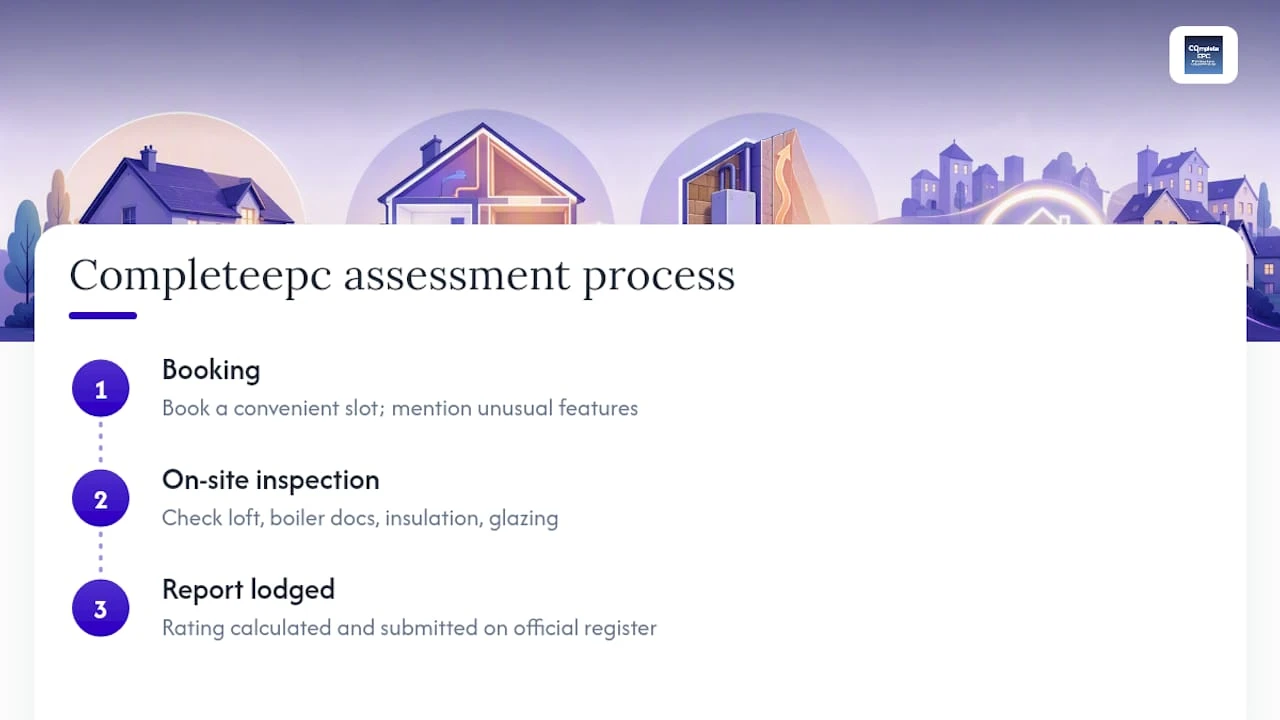
Completeepc works with qualified assessors covering domestic and commercial properties across London. The process runs in three stages: booking a convenient slot, an on-site visit to inspect the building’s construction and systems, and a report that gets lodged directly on the official register once complete.
When you book, mention anything unusual: recent extensions, a new boiler, solar panels, or a loft conversion. Details like these change the scope of the visit and can move your rating in your favour if the assessor knows to look for them.
A checklist before your assessor arrives
Before the visit, dig out your boiler manual or service record, note any insulation or glazing work you’ve had done, and make sure loft and meter cupboard access is clear. Three quick fixes worth doing beforehand: replace any blown bulbs with LEDs, clear access to hatches and cupboards, and gather paperwork for double glazing or recent works. None of this takes long, and a smoother visit usually means a faster turnaround on your certificate. Ten years of validity gives you breathing room once it’s done.
— Danny
Book a compliant EPC assessment with Completeepc
Whether you’re selling a two-bedroom flat or managing a commercial unit, Completeepc helps you obtain a compliant certificate without the guesswork of finding an assessor yourself. Qualified assessors cover both residential and non-residential properties across London, and every assessment gets lodged on the official register once complete, so your listing can go live without delay.
For a rental property, a house sale, or a new-build handover, book a domestic EPC assessment directly online. If you’re managing an office, retail unit, or industrial building, the commercial EPC service covers the same accredited process for non-domestic buildings. Get in touch to arrange a convenient assessment date and a quote based on your property’s size and type.
Sources
- Selling a home: Energy Performance Certificates
- Energy performance certificates (EPCs) explained – Energy Saving Trust
- The Energy Performance of Buildings (Certificates and Inspections) (England and Wales) Regulations 2007 — regulation 5
FAQ
How much should I expect to pay for an EPC?
Cost depends on property type, floor area, and location, with larger or more complex commercial buildings costing more to assess than a small flat. Get a quote based on your specific property rather than relying on a generic average.
How many years does an EPC certificate last?
An EPC remains valid for 10 years from the date of issue, regardless of whether the property changes hands during that time.
Is it worth getting an EPC certificate?
Beyond the legal requirement to sell or let, an EPC flags cost-effective improvements with indicative savings figures that can lower bills and make a property more appealing to energy-conscious buyers or tenants.
Can an electrician do an EPC?
No. An EPC must be produced by an accredited domestic or non-domestic energy assessor listed on the official register, not by a general electrician, however qualified they are in their own trade.