
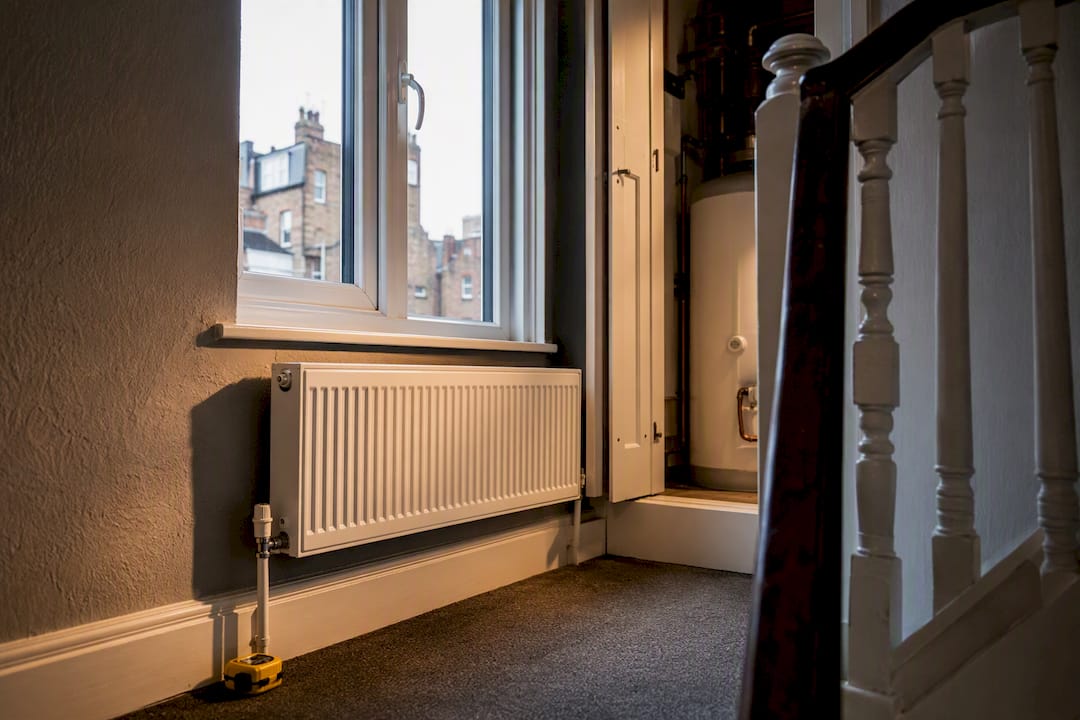
Start with insulation top-ups, heating controls and LED lighting. These deliver the quickest, cheapest EPC points, and most homes can complete all three within a fortnight. Bigger fabric work such as wall insulation or a heat pump comes next, once you know what your assessor’s recommendations actually cost against the points they’ll return.
TL;DR:
- Completing low-cost measures like loft insulation, heating controls, and LED lighting can raise EPC scores quickly and cost-effectively in most homes.
- Insulation upgrades such as cavity wall or solid wall insulation offer larger long-term savings but require careful assessment to avoid unnecessary disruption or costs.
- Replacing an old boiler or installing a heat pump can improve EPC ratings if the building’s fabric is properly insulated first, with costs ranging from £2,000 to over £13,000.
- Achieving a band C from D typically involves targeted improvements like loft top-up, cavity insulation, and heating controls, often under a £2,500 budget.
- Using grants and schemes like ECO or the Boiler Upgrade Scheme can significantly reduce the upfront costs of fabric upgrades and heating system replacements.
Table of Contents
- What does an EPC actually measure, and why should you care?
- Which low-cost measures give the fastest EPC point gains?
- How much do fabric upgrades cost, and are they worth the disruption?
- Do boilers, heat pumps and solar panels move the needle?
- How do you move a property from band D to band C?
- What grants and schemes can cover part of the cost?
- How do assessors check completed work?
- When does it make sense to bring in a certified assessor?
- A long-term view on ratings and property value
- How Complete EPC can help with compliance and follow-up assessments
- Sources
- FAQ
What does an EPC actually measure, and why should you care?
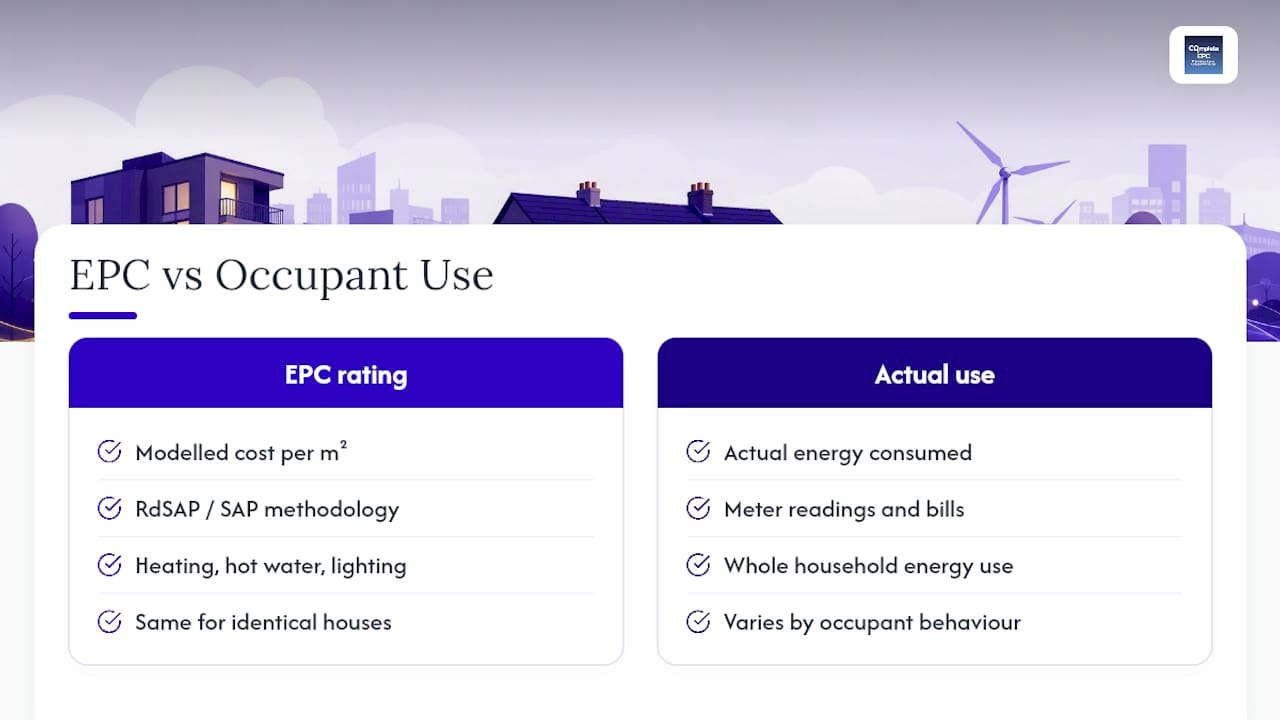
An Energy Performance Certificate rates a property from A to G, based on the modelled cost of heating, hot water and lighting per square metre using the RdSAP or SAP methodology, not on how much energy you actually used last winter. Two identical houses with different occupants get the same EPC rating, because the certificate scores the building, not the behaviour of whoever lives in it.
That distinction matters for landlords because private rented properties in England generally need at least an EPC E to be let, with policy proposals aiming for new tenancies to require band C by 2030. If your portfolio sits on D or E ratings now, waiting for the deadline is the expensive option.
The recommendations on your EPC report are a useful starting point, not a bespoke retrofit design. They come from a national model and can miss property-specific quirks, so treat the certificate as guidance rather than gospel before you commission expensive work, particularly in older or solid-wall homes where insulation choices carry real risk of trapped moisture.
Which low-cost measures give the fastest EPC point gains?
Cheap fixes rarely rewrite your entire rating, but stacked together they close the gap between a low D and a comfortable C surprisingly fast. Assessors reward several small, verifiable improvements more consistently than one big-ticket item you can’t fully document.
- LED lighting. Swapping the whole house typically costs under £100 in bulbs and adds a small SAP point gain. On its own it rarely shifts a full band, but it’s the cheapest item on any list, so do it regardless.
- Draught-proofing. Focus on external doors, letterboxes, loft hatches and gaps around pipework. Materials cost roughly £30 to £100 depending on the property, and the work takes an afternoon.
- Hot water cylinder jacket. If your cylinder isn’t already lagged to at least 80mm, a jacket costs around £15 to £30 and pays for itself within a year through reduced heat loss.
- Loft insulation top-up. Many older homes have loft insulation at 100mm or less. Topping up to the recommended 270mm typically costs £300 to £500 for an average loft and is one of the more reliable small point gains available.
- Heating controls. Adding thermostatic radiator valves, a room thermostat and a programmer where none currently exist can noticeably improve the modelled score, because RdSAP credits controlled, zoned heating; learn more about master systems integration and how whole-building controls enhance performance.
LEDs, draught-proofing and loft top-ups are among the most commonly listed EPC recommendations, and they deliver measurable gains even though lighting changes alone almost never move a property a full band.
Pro Tip: Do the cylinder jacket and draught-proofing together in one visit. Both are quick, both are cheap, and doing them at the same time means you only disturb tenants once.
How much do fabric upgrades cost, and are they worth the disruption?
Fabric measures deliver the largest long-term cut to heating demand, but the cost and hassle vary enormously depending on your wall type and how the property was built. Getting this stage right before touching the heating system is the difference between a heat pump that performs as promised and one that leaves tenants cold.
- Cavity wall insulation. Where cavities are suitable and unfilled, this is often the single best value fabric measure, typically costing £500 to £1,500 and returning a meaningful jump in modelled points. Not every cavity is suitable, so a survey first is worth the modest fee.
- Solid wall insulation. Older properties with solid brick or stone walls need internal or external insulation instead, running from roughly £4,000 for internal work on a few rooms to £8,000 to £15,000 for full external cladding. Heritage restrictions and condensation risk mean this is not a DIY job, and planning consent may apply in conservation areas.
- Suspended floor insulation. Where there’s under-floor access, insulating a suspended timber floor typically costs £500 to £1,200 and gives a smaller but genuine point improvement, mainly noticeable as reduced draughts underfoot.
- Glazing. Full double or triple glazing replacement offers the biggest single glazing-related gain but costs several thousand pounds across a typical house. Secondary glazing is a cheaper, reversible alternative for period properties where listed status rules out replacement windows.
Pro Tip: Get a cavity survey before you assume insulation is possible. Some 1930s and 1960s builds have narrow or part-filled cavities that make standard blown insulation unsuitable, and a wasted quote costs more than the survey would have.
Do boilers, heat pumps and solar panels move the needle?
Replacing an old, inefficient boiler with a modern condensing model typically costs £2,000 to £3,500 and can produce a meaningful EPC uplift, particularly if the existing boiler predates 2005. If your current boiler is already a reasonably efficient condensing model, replacement alone won’t move much.
Heat pumps work best once the fabric is sorted first. Insulation should come before low-carbon heating, because heat pumps run at lower flow temperatures than gas boilers and rely on the building holding heat well. Installing one in a poorly insulated home without radiator upgrades often disappoints on both comfort and the EPC score. Costs typically range from £7,000 to £13,000 before grant support, and radiators frequently need enlarging to compensate for lower flow temperatures.
Solar PV tends to deliver one of the more visible EPC boosts among renewable options, because it reduces the modelled cost of electricity use directly. Typical residential arrays run from £4,000 to £8,000, with payback depending heavily on local export tariffs and how much electricity you use during daylight hours. Battery storage improves your own bill savings but has a smaller effect on the EPC figure itself, since the model focuses on generation rather than storage efficiency.
- Fit weather compensation or load compensation controls alongside any new boiler or heat pump to secure full modelling credit.
- Confirm the assessor records the correct flow temperature setting, since this affects the calculated efficiency.
How do you move a property from band D to band C?
Most landlords chasing this specific jump can hit it with a focused, ranked package rather than a full retrofit. Start with your EPC’s own recommendations, sorted by cost-effectiveness, and target whichever measures return the most points per pound before considering anything expensive.
- Loft insulation top-up to 270mm, if not already there.
- Cavity wall insulation, where a survey confirms suitability.
- Heating controls: TRVs, a room thermostat, and a programmer.
- LED lighting throughout.
For many D-rated homes, this kind of bundle typically costs under £2,500 in total and can deliver the roughly 10 to 20 points often needed to cross from D into C. Solid-wall properties are the exception. If your walls can’t take cavity insulation and need internal or external cladding instead, budget several times that figure and expect the sequencing to change, insulation first, heating second, renewables last.
What grants and schemes can cover part of the cost?
Several funding routes exist specifically to reduce the upfront cost of the measures above, and it’s worth checking eligibility before you pay full price for anything beyond LEDs and draught-proofing.
- ECO (Energy Company Obligation) targets low-income and vulnerable households, and is typically delivered through energy suppliers and their approved installers rather than a direct government application.
- Boiler Upgrade Scheme offers a grant toward heat pump installation costs, usually claimed by the installer on your behalf and deducted from the quoted price.
- Great British Insulation Scheme focuses on insulation measures for eligible council tax bands and property types.
Installer-led schemes mean the paperwork burden sits mostly with the contractor, but you’ll usually need to provide proof of ownership, council tax band evidence, and sometimes income verification. Check for regional or local authority top-up funding before committing, since availability and criteria change through the year, and time larger works to coincide with open funding windows rather than starting mid-scheme when budgets may be exhausted.
How do assessors check completed work?
Assessors record only what they can verify, following RdSAP conventions that rely on physical inspection and supporting evidence rather than assumption. An assessor who can’t confirm insulation depth, boiler specification, or control type will default to a conservative figure, which can quietly cap your score even after real improvements.
- Keep every installer certificate, product guarantee, and building control sign-off.
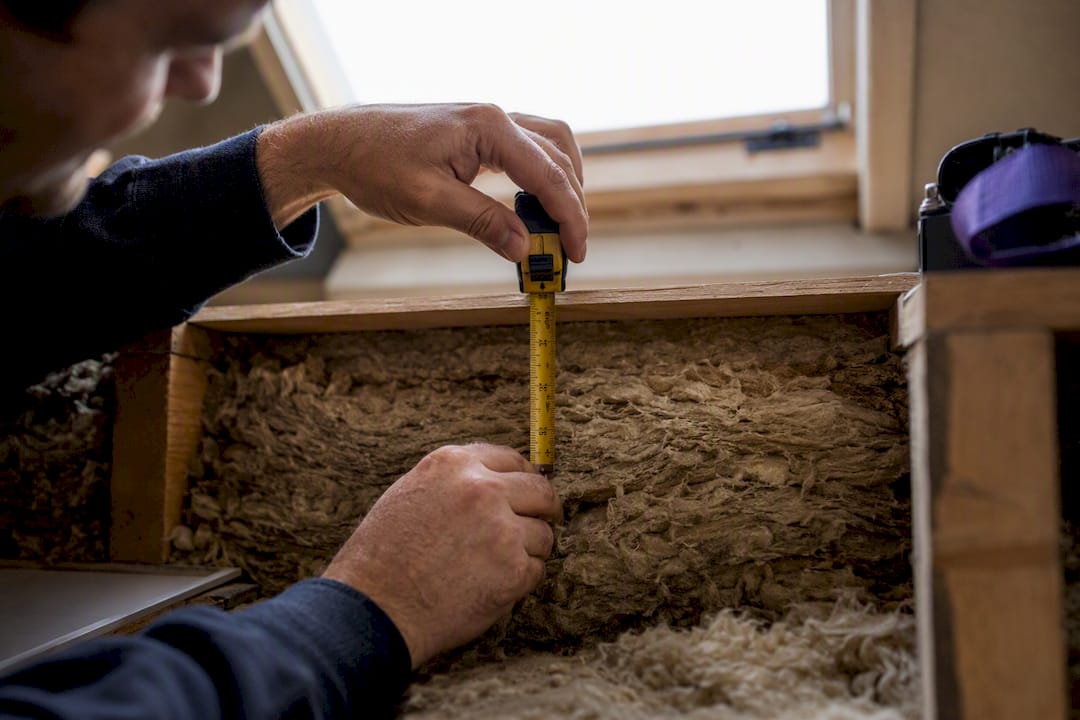
- Photograph loft insulation depth and cavity fill work before it’s covered by boarding or plasterboard.
- Retain boiler commissioning documents showing model number and efficiency rating.
Assessors can only record measures for which there’s evidence, so commission a fresh EPC only once your paperwork is complete. Turning up to a reassessment without proof is the single most common cause of an unexpectedly low result.
Pro Tip: Ask your installer for a dated photo of insulation depth before boarding goes down. It costs nothing and it’s the one piece of evidence assessors ask for most often.
When does it make sense to bring in a certified assessor?
DIY measures like LEDs and draught-proofing don’t need a professional. Anything touching insulation choice, heating system design, or a formal EPC for compliance purposes does. The company works across domestic and commercial properties, covering EPC assessments, SAP calculations for new builds and extensions, and improvement recommendation reports that landlords can use to plan work in the right order.
If you’re weighing whether a solid wall property needs internal or external insulation, or whether your heat pump quote accounts for radiator sizing properly, that’s a retrofit coordination question rather than a certificate question, and it’s worth getting both answered before you spend.
A long-term view on ratings and property value
Regulation is heading toward higher minimum standards, not lower ones. Landlords who insulate the fabric first, before chasing heat pumps or solar, avoid paying twice for the same outcome. Keep every certificate from day one. A property with a documented upgrade history holds both rental income and resale value better than one relying on guesswork at the next sale.
— Danny
How Complete EPC can help with compliance and follow-up assessments
Compliance certainty matters more than DIY guesswork once minimum standards are involved, particularly for commercial premises where the rules and penalties differ from residential lettings. Complete EPC’s Commercial EPC service covers assessments for offices, retail units and mixed-use buildings, supporting MEES compliance with a report that ranks improvements by cost-effectiveness rather than generic checklist advice.
The practical next step is straightforward: book an assessor before you start any works so you have a documented baseline, gather your installer certificates and photographs as work completes, then schedule a follow-up EPC once everything’s finished. Reassessing without a proper paper trail is how landlords end up disputing scores they’ve genuinely earned. If you need a commercial property assessed or a compliance check ahead of a lease renewal, book through the Commercial EPC page and get a clear picture of where your rating stands before you commit to any spending.
Sources
FAQ
What is the best way to improve my EPC rating?
Start with low-cost, high-return measures such as loft insulation top-ups, heating controls, and LED lighting, then move to cavity wall insulation or glazing if the budget allows. These deliver the most points per pound before you consider a boiler replacement or renewables.
Is an EPC rating of D good?
A D rating is legal to let under current minimum standards, but it sits below the C threshold that policy proposals target for new tenancies by 2030, so landlords planning to hold a property long term should treat D as a starting point to improve on, not a comfortable ceiling.
How do I get my EPC rating from D to C?
A prioritised package such as loft top-up, cavity wall insulation where suitable, heating controls and LED lighting can commonly deliver the 10 to 20 points many D-rated homes need to reach band C, often for under £2,500 in a standard semi-detached property.
How can I reduce my EPC rating without expensive work?
Draught-proofing, a hot water cylinder jacket, and topping up loft insulation to 270mm are the cheapest measures with a genuine, verifiable point gain. Keep certificates and photographs of the work, since assessors can only record improvements they can evidence.
Does Complete EPC offer improvement recommendations alongside the certificate?
Yes. Complete EPC provides EPC assessments and improvement recommendation reports ranked by cost-effectiveness, alongside SAP calculations and landlord compliance support for domestic and commercial properties.