
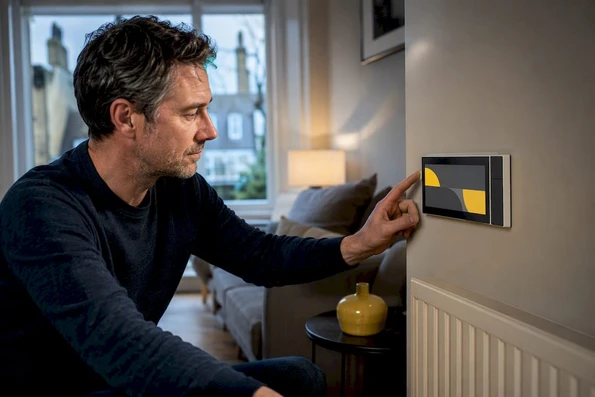
A smart meter and in-home display add a modest but free 2–3% saving once you actually engage with the data. Integrated whole-home systems can push combined savings towards 20%, but cost far more upfront. Start with your in-home display, then move to a smart thermostat and TRVs.
TL;DR:
- Smart thermostats and TRVs can save up to 20% of heating energy in well-configured systems, especially when paired with accurate scheduling and zoning.
- A smart meter and in-home display typically reduce household electricity use by 3% and gas by 2–3%, generating modest but cost-effective savings for engaged users.
- Smart plugs targeting standby power can recoup costs within months, prioritizing devices with standby lights and avoiding subscription fees.
- An integrated whole-home energy management system offers the highest savings of up to 23%, but requires a larger upfront investment and is better suited for households with solar panels, EVs, or heat pumps.
- Conducting a professional EPC before upgrading helps identify the most impactful improvements, such as insulation or boiler efficiency, that can deliver greater long-term savings than standalone smart devices.
Table of Contents
- How do smart thermostats and TRVs cut energy use?
- What do smart meters and in-home displays actually do?
- Do smart plugs and appliance scheduling pay for themselves?
- Can smart lighting and blinds meaningfully reduce bills?
- Integrated energy management or separate smart devices: which wins?
- How should you prioritise smart-home upgrades on a budget?
- Why does an EPC matter before you buy more smart devices?
- Can automation and AI push savings further?
- Are smart energy systems secure and private?
- What can energy monitoring platforms tell you about your own habits?
- How do solar panels and home batteries fit into a smart setup?
- How does scheduling appliances to off-peak hours save money?
- What smart-home upgrades are actually worth it in 2026?
- Get a professional EPC before you commit to major upgrades
- Sources
- FAQ
How do smart thermostats and TRVs cut energy use?
A smart thermostat saves energy by stopping you heating an empty house. Scheduling switches the heating off when nobody’s home, geofencing detects when your phone (and presumably you) has left the property, and remote control lets you delay the morning warm-up on a day you’re running late. None of this is complicated, but each function removes hours of unnecessary heating a week.
The savings are well documented. Honeywell Home’s analysis notes that turning your thermostat down by just 1°C cuts annual heating bills by roughly 10%, and a well-configured smart thermostat typically adds another significant reduction in heating energy on top of that. Thermostatic radiator valves extend the effect room by room, useful if you heat a living room to 21°C but a spare bedroom sits empty most of the week.
Upfront costs usually run to a few hundred pounds fitted, with payback inside two to three heating seasons for most three-bedroom homes.
- Scheduling that matches your actual routine, not a generic factory preset
- Geofencing enabled on at least one household member’s phone
- TRVs fitted on rooms used less than daily
- A boiler compatible with modulating smart controls, not just on/off switching
Pro Tip: Check the schedule again after the clocks change twice a year. Homeowners routinely install a smart thermostat, get it right in October, then forget to adjust it after the spring change, quietly cancelling out months of savings.
What do smart meters and in-home displays actually do?
A SMETS smart meter records consumption in half-hourly intervals and feeds that data to an in-home display, giving you a running picture of what you’re spending in near real time rather than waiting for a quarterly bill. Government guidance on smart meters confirms this half-hourly data is also what unlocks time-of-use tariffs and automated demand response, meaning appliances can be scheduled to run when electricity is cheapest or greenest.
That matters most if you charge an electric vehicle, run a tumble dryer daily, or are considering a heat pump, since shifting those loads to off-peak windows is where time-of-use tariffs deliver their biggest benefit.
Getting the most from an IHD in practice:
- Ask your supplier to fit the meter and IHD together; most installs are free and take under two hours.
- Check the display daily for the first month to learn your baseline usage.
- Set alerts or budget targets in the companion app once you know your patterns.
- Pair the meter with a time-of-use tariff if you have an EV, storage heaters, or a heat pump.
The engaged-user effect is real but modest. Households who actively use their in-home display cut electricity use by around 3% and gas by 2–3%, worth roughly £40 to £50 a year for a medium UK household. It costs nothing extra to claim.
Do smart plugs and appliance scheduling pay for themselves?
Smart plugs solve a specific, cheap problem: standby power draw from devices you forget are still switched on. Games consoles, set-top boxes, phone chargers, and older televisions can draw several watts continuously, day and night, adding up over a year even though no single device feels wasteful on its own.
At £10–£15 per plug, the payback is fast if you target the right devices first.
- Prioritise anything with a standby light or a “quick start” feature, since these draw power even when off
- Schedule high-draw appliances like dishwashers and washing machines for off-peak tariff windows
- Start with three or four plugs on your worst offenders rather than kitting out the whole house
- Check whether the plug requires a paid app subscription, since a £3-a-month fee can erode a modest annual saving
Realistic savings sit in the tens of pounds a year per household rather than a dramatic bill cut, which makes smart plugs a sensible first purchase but not a substitute for tackling heating.
Can smart lighting and blinds meaningfully reduce bills?
Lighting offers a smaller but genuine saving. Swapping to LED bulbs alone cuts lighting energy use dramatically compared with older halogen or incandescent fittings, and adding programmable smart control (dimming, occupancy sensors, scheduled off-times) squeezes out a bit more by stopping lights running in empty rooms.
Smart blinds are more situational; for detailed guidance on window treatments and solar control, refer to practical advice on home window tint UV protection. On south-facing rooms with poor glazing, automated blinds that close during peak summer sun or open to capture winter warmth can measurably reduce heating and cooling demand. In a well-insulated, north-facing room, the effect is negligible.
- LED plus smart control: consistent, low-cost savings in every property
- Smart blinds: worthwhile mainly where orientation and glazing quality create a real solar gain or loss
- Both integrate easily with existing smart hubs, but neither rivals heating controls for impact
Treat lighting and blinds as sensible add-ons once heating and monitoring are sorted, not a starting point.
Integrated energy management or separate smart devices: which wins?
The right answer depends on your household profile more than your budget alone.
Separate smart devices (thermostat, TRVs, plugs, an IHD) cost less to buy and install gradually, and field evidence from a trial combining smart heating controls with smart meter data found gas consumption fell by around 5% across all participants, rising to roughly 14% among households that engaged fully with the intervention. Integrated whole-home energy management, which coordinates heating, appliances, solar and storage through one system, costs considerably more to commission but has reported savings as high as 20 to 23% in pilot studies.
| Approach | Typical upfront cost | Annual energy savings | Payback period | Best suited to |
|---|---|---|---|---|
| Separate smart devices | a few hundred pounds | 8–14% | 1–3 years | Flats and smaller homes without solar or EVs |
| Integrated whole-home system | considerably more | Up to 20–23% | 4–8 years | Larger homes with EVs, solar panels, or heat pumps |
- If you rent, live in a flat, or have a simple heating setup, separate devices give a faster payback
- If you own multiple zones, an EV, solar generation, or battery storage, integration captures far more value
- If you’re planning a heat pump install soon, wait and commission the two together rather than buying twice
How should you prioritise smart-home upgrades on a budget?
Sequencing matters more than which brand you buy. Get the free and cheap wins in place first, then move to the measures with the strongest evidence behind them.
- Engage properly with your smart meter’s in-home display; it costs nothing and is the highest-return step available, according to consumer guidance from Smart Energy GB.
- Fit two or three smart plugs on your worst standby offenders.
- Swap remaining bulbs to LEDs.
- Install a smart thermostat with realistic scheduling, then add TRVs to underused rooms.
- Consider an integrated system only if you have solar, an EV, or a heat pump on the horizon.
- Book a professional energy assessment before committing to major fabric or heating work.
Most homeowners can complete steps one to four within a fortnight without a tradesperson.
Pro Tip: Do the cheap steps before the expensive ones. A smart thermostat fitted in a poorly insulated loft still leaks heat through the roof; sequencing insulation checks alongside device upgrades protects your investment.
Why does an EPC matter before you buy more smart devices?
An Energy Performance Certificate tells you what’s actually limiting your home’s efficiency before you spend money on controls for it. The report covers loft and wall insulation, boiler efficiency, glazing, and existing heating controls, then generates tailored recommendations ranked by cost and impact.
That matters because a smart thermostat cannot compensate for a poorly insulated loft losing heat as fast as the boiler produces it. An EPC recommendation for improved insulation often delivers a bigger, more permanent saving than any device sitting on top of a leaky fabric.
- Confirms your current SAP rating and where points are being lost
- Flags whether your boiler and heating controls are already compatible with smart upgrades
- Supports grant and funding eligibility checks that often require a valid EPC on file
- Reduces the risk of buying smart tech that underperforms because of an underlying fabric issue
Completeepc’s assessors produce a domestic EPC with a full breakdown of these factors, giving homeowners a sequence to follow rather than a guess.
Can automation and AI push savings further?
Automation moves beyond fixed schedules by learning patterns and reacting to conditions rather than the clock. Modern smart thermostats and hub-based systems adjust based on outdoor temperature forecasts, occupancy sensors, and even electricity price signals, pre-heating a home before a cheap tariff window ends rather than running strictly on a preset timer.
The practical benefit is fewer wasted cycles. Where a basic schedule might heat a house at 7am regardless of conditions, an AI-driven system can recognise that a mild morning needs less input, or that everyone’s calendar shows a late return and delay heating accordingly. Some platforms extend this to whole-home load balancing, deciding whether to run the dishwasher now or in an hour based on live grid pricing.
The caveat is that automation only adds value on top of correctly configured basics. A learning thermostat still needs accurate room sensors and sensible TRV placement to make good decisions; feed it poor data and it optimises around the wrong assumptions. Homeowners who’ve already nailed scheduling and zoning get the most out of adding automation, because the system has clean data to work from rather than trying to compensate for a badly set-up heating system underneath it.
Treat AI-driven features as a refinement on solid fundamentals, not a replacement for getting the thermostat schedule and TRV zoning right in the first place.
Are smart energy systems secure and private?
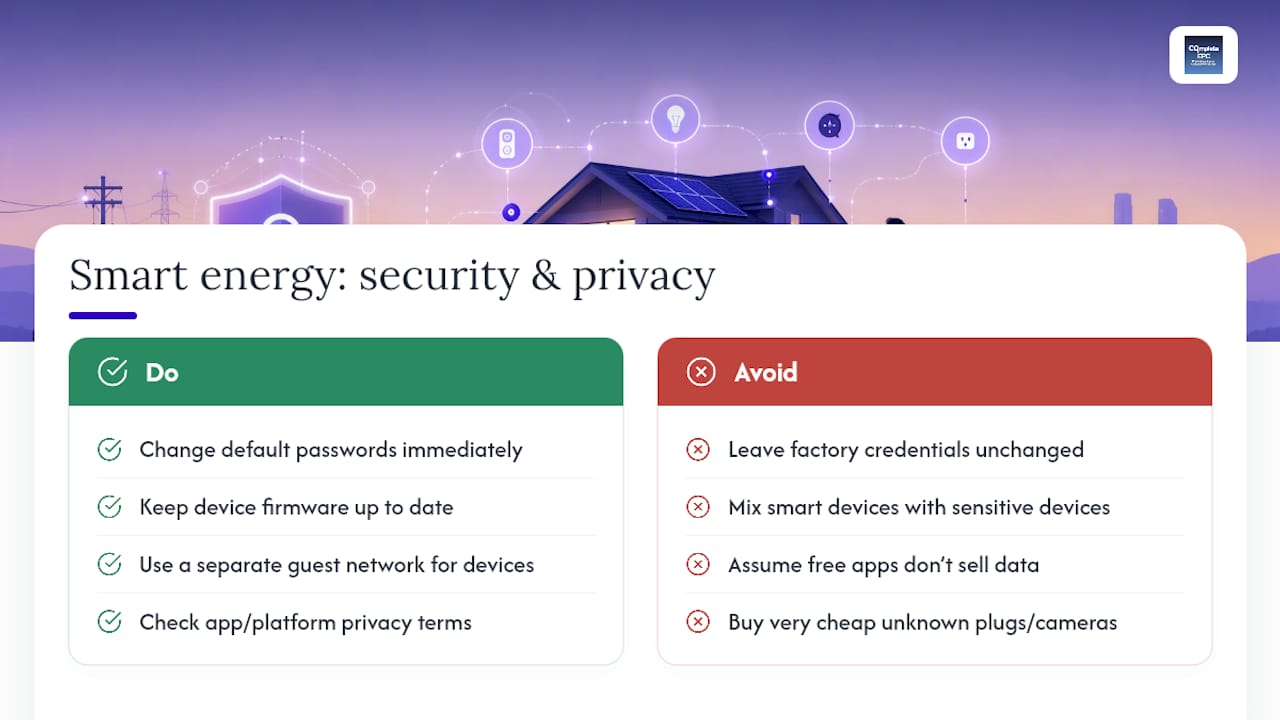
Every connected device in your home, from a thermostat to a smart plug, is a small computer talking to the internet, and that creates a genuine security consideration alongside the savings. Smart meters and IHDs transmit consumption data, which reveals patterns about when you’re home, when you’re away, and even lifestyle habits like when appliances run.
Good practice reduces the risk considerably. Change default passwords on hub devices and apps immediately after setup, since factory credentials are widely published and are the most common route into a poorly secured home network. Keep firmware updated, since manufacturers routinely patch vulnerabilities discovered after launch. Use a separate guest network for smart devices where your router supports it, isolating them from laptops and phones holding more sensitive information.
Data privacy is a separate question from hacking risk. Some smart home platforms sell anonymised usage data to third parties as part of their business model, which is worth checking in the terms before signing up to a “free” app. UK smart meter data is subject to strict data protection rules, and consumers retain control over who can access their consumption information beyond their supplier.
None of this should put you off smart heating controls or an IHD, which carry low practical risk. It’s a stronger consideration for less reputable budget smart plugs and cameras bought purely on price, where security corners are more likely to have been cut.
What can energy monitoring platforms tell you about your own habits?
Beyond the basic in-home display, dedicated monitoring apps and platforms break consumption down by time of day, by appliance where compatible sensors exist, and by comparison against similar households. That level of detail turns a vague sense of “we use a lot of electricity” into something you can actually act on.
Typical insights include spotting a fridge freezer drawing more than expected, suggesting a door seal issue, or noticing an unexplained overnight baseline load that points to a device left running. Several platforms also generate a weekly or monthly trend line, useful for checking whether a new smart thermostat schedule is actually reducing consumption or whether the reading has barely moved.
The value of these platforms depends entirely on whether you look at them. Data sitting unread in an app delivers precisely nothing; the same behavioural principle that makes IHD engagement worth 2–3% in savings applies here too. Set a recurring reminder to check your monitoring app monthly rather than downloading it once and forgetting it exists, and treat sudden spikes as a prompt to investigate rather than a number to ignore.
How do solar panels and home batteries fit into a smart setup?
Solar panels and home batteries change the economics of everything discussed so far, because the cheapest electricity in the house is the electricity you generate yourself and use immediately, rather than buying it back from the grid later.
Smart systems earn their keep here by timing consumption to match generation. A smart plug or scheduling feature that runs the washing machine at 1pm on a sunny day, rather than in the evening peak, uses free solar power instead of grid electricity. Home batteries extend this further, storing daytime solar generation for use after dark, and can also charge from the grid during a cheap off-peak tariff window if solar alone doesn’t cover overnight demand.
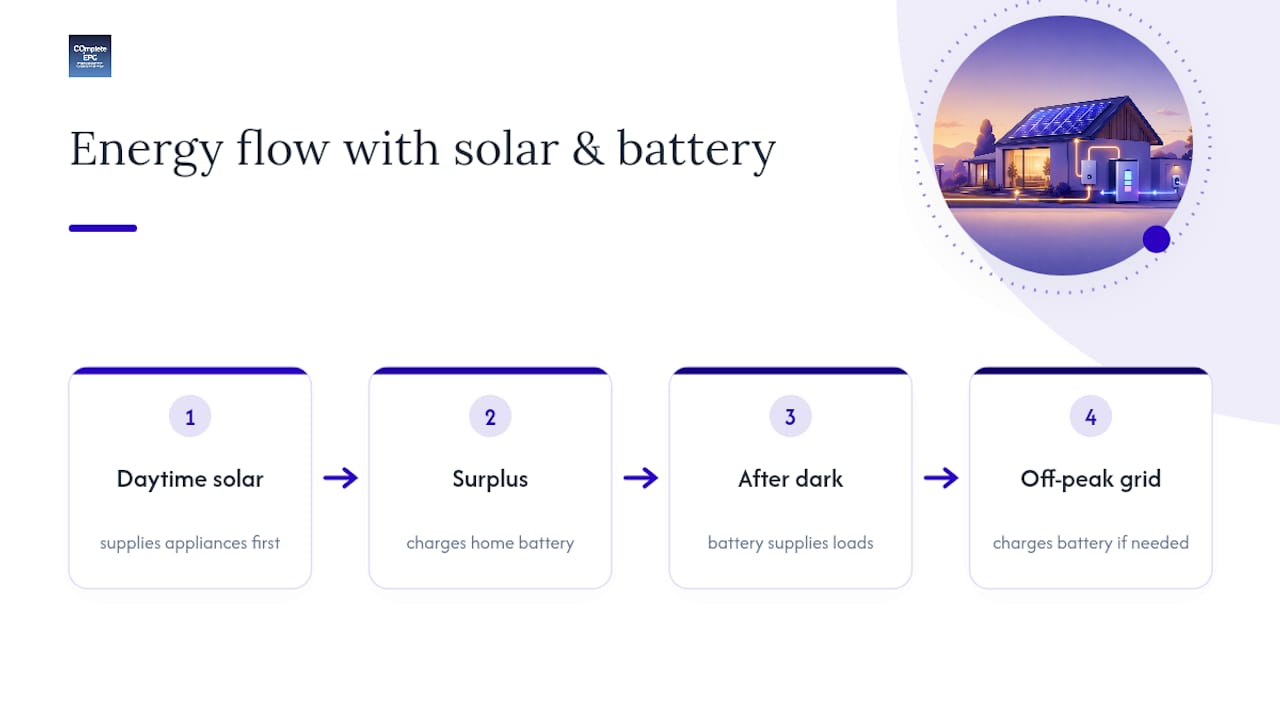
This is precisely the household profile where integrated whole-home management earns its higher price tag. Coordinating solar generation, battery storage, EV charging, and heating through one system captures value that separate, uncoordinated devices simply cannot, because each device would otherwise be making decisions in isolation without knowing what the panels are producing or what the battery holds. A smart thermostat bought in isolation has no idea whether you have surplus solar power to use, whereas an integrated system does.
If solar or battery storage is already installed or planned, that alone tips the earlier cost comparison firmly towards an integrated system rather than a collection of separate devices.
How does scheduling appliances to off-peak hours save money?
Demand response means shifting flexible loads away from expensive peak pricing towards cheaper or greener windows, and it’s one of the more mechanical savings available since it requires no behaviour change beyond an initial setup.
Washing machines, dishwashers, tumble dryers and EV chargers are the obvious candidates because none of them need to run at a specific time of day. A time-of-use tariff, unlocked by a smart meter, typically prices electricity lowest overnight and highest during early evening peak demand, and Smart Energy GB’s guidance notes this is where households with EVs see the largest gains, since charging can be delayed to run entirely within a cheap window.
Setting this up is usually a case of scheduling the appliance’s own delay-start function or connecting it through a smart plug with app-based timing, then checking your tariff’s cheap window and setting schedules to match. It’s worth revisiting the schedule if your tariff’s off-peak hours change, which suppliers do adjust periodically.
The saving scales with how much flexible load you actually have. A household running one load of laundry a week off-peak will notice little difference; one charging an EV nightly and running a dishwasher daily can see a meaningful shift in the electricity bill simply by moving that consumption a few hours later.
What smart-home upgrades are actually worth it in 2026?
Smart tech multiplies behaviour change rather than replacing it. A thermostat that’s never checked after installation, or an IHD nobody looks at, delivers close to nothing. The households seeing the savings figures cited throughout this piece are the ones who engage with the schedules, adjust them seasonally, and use the data to change habits.
Insulation and fabric improvements deserve equal billing alongside devices, because a smart thermostat controlling a badly insulated home is optimising around a problem it cannot fix. The best long-term returns usually come from pairing smart controls with fabric upgrades identified through a proper assessment, not from stacking more gadgets onto an inefficient shell.
Buyers should also weigh resale value alongside running costs; a documented, EPC-backed upgrade path tends to reassure future buyers more than a house full of unconnected smart devices with no paper trail behind them.
— Danny
Get a professional EPC before you commit to major upgrades
Completeepc’s domestic assessments give homeowners a documented, evidence-based starting point before spending on smart heating controls, insulation, or a full retrofit plan. Rather than guessing which upgrade pays back fastest, a domestic EPC rates your property’s current fabric, boiler efficiency, and heating controls, then lists recommendations in order of cost and impact, so you know whether a smart thermostat, better loft insulation, or both should come first.
That documentation also matters practically: many grant schemes and mortgage lenders now ask for a valid EPC, and having one on file speeds up eligibility checks rather than leaving you to sort it out later. The company covers domestic and commercial properties with qualified assessors and competitive pricing. Book a domestic EPC assessment today to get a clear, prioritised plan before your next purchase.
Sources
- How smart thermostats help you save on energy bills | Honeywell Home
- Gov
- SEN‑ST evaluation report
- Do smart meters reduce household energy consumption? | Behavioural Insights Team blog
FAQ
How much can smart thermostats really save on heating bills?
Well-configured smart thermostats typically cut heating energy use by 8–16%, and turning the temperature down by just 1°C separately reduces bills by around 10%, according to Honeywell Home’s analysis.
Is a smart meter worth having if I don’t change any habits?
Not much on its own; savings come from actively using the in-home display, which delivers around 3% electricity and 2–3% gas savings for engaged households, worth roughly £40–£50 a year.
What’s the fastest payback smart-home purchase?
Smart plugs targeting standby-heavy devices and your free in-home display both pay back within months, making them the sensible starting point before any bigger purchase.
Should I buy separate smart devices or an integrated system?
Separate devices suit flats and simpler homes with faster payback around 8–14% savings. Integrated whole-home systems suit larger households with solar, EVs, or heat pumps and can reach 20–23% savings but cost considerably more upfront.
Does an EPC help me choose which smart upgrades to buy?
Yes. A domestic EPC identifies whether insulation, boiler efficiency, or heating controls are limiting your home’s performance, so you invest in the right upgrade first rather than guessing.