

Saving energy cuts your bills, warms your home, lowers your carbon footprint, and can lift your resale value. Upgrading a property’s efficiency typically reduces heating costs by around 20%, while homes rated A to C often carry modest price premiums over lower-rated stock. The sections below set out the figures, the trade-offs, and the practical steps worth taking first.
TL;DR:
- Household energy savings vary significantly depending on the measure, with insulation offering up to 17% gas reduction and heating upgrades often taking over a decade to recoup costs.
- Energy efficiency improvements contribute to lower carbon emissions and cleaner air, especially when combined with electrification and renewable technologies like solar PV.
- The impact of efficiency upgrades on property value is modest, typically increasing home prices by around 1.6%, and depends on buyers’ market preferences.
- Accurate assessments such as EPC or SAP reports provide tailored advice, preventing homeowners from making ineffective or misaligned retrofit choices.
- Prioritizing low-cost fixes like thermostats and draught-proofing can deliver quick, meaningful savings before investing in structural upgrades.
Table of Contents
- How much can you actually save on your energy bills?
- Environmental benefits: carbon and cleaner air where you live
- Health and comfort: warmer, drier homes matter more than you’d think
- Does energy efficiency raise property value?
- Wider benefits: jobs, energy security, and price stability
- Practical steps to take, ranked by cost and impact
- Why accurate assessments matter more than good intentions
- Get an evidence-based starting point with Complete EPC
- Sources
- FAQ
How much can you actually save on your energy bills?
Improving your home’s efficiency reduces heating costs by roughly 20% on average, though the exact figure depends on your starting point and which measures you fit. Nationwide’s analysis puts typical fuel-cost differences at around £400 a year for A to C rated homes compared with D-rated properties, rising to about £1,200 against E-rated homes.
Not every measure delivers the same return. The National Energy Efficiency Data Framework (NEED) tracks measured, real-world outcomes rather than lab estimates, and the gaps between measures are wide:
- Solid wall insulation: around 17% median gas saving
- Condensing boiler replacement: around 2% median gas saving
- Solar PV: around 9% median first-year electricity saving
Statistic Callout: NEED data shows some savings fade slightly over five years as households take back a little comfort once bills fall, so treat first-year figures as a ceiling rather than a permanent guarantee.
Government support schemes can offset upfront costs for insulation and heating upgrades, though eligibility varies by income and property type. Payback periods range from a couple of years for draught proofing to well over a decade for solar PV, so match the measure to how long you plan to stay put.
Environmental benefits: carbon and cleaner air where you live
Household energy use is one of the biggest levers in the UK’s carbon targets, and government modelling treats domestic retrofit as central to hitting those goals while protecting lower-income households from price shocks. Every kilowatt-hour you don’t burn is a kilowatt-hour that doesn’t need generating, often from gas.
The air-quality gains are easy to overlook. Research on decarbonisation scenarios finds substantial life-year gains tied to reduced pollution from heating and transport, meaning better insulated, more efficient homes contribute to cleaner air locally, not just lower emissions on a national ledger.
The gains compound when efficiency pairs with cleaner supply:
- Electrification of heating (heat pumps) cuts direct fossil fuel burning in the home
- Solar PV reduces demand pulled from the grid at peak times
- Better insulation lowers the total energy any heating system needs to deliver
Health and comfort: warmer, drier homes matter more than you’d think
A well-insulated home stays warmer for less money, and that has knock-on effects beyond comfort. Public-health research consistently links retrofit to fewer respiratory and cardiovascular problems, largely because occupants spend less time in cold, damp rooms during winter.
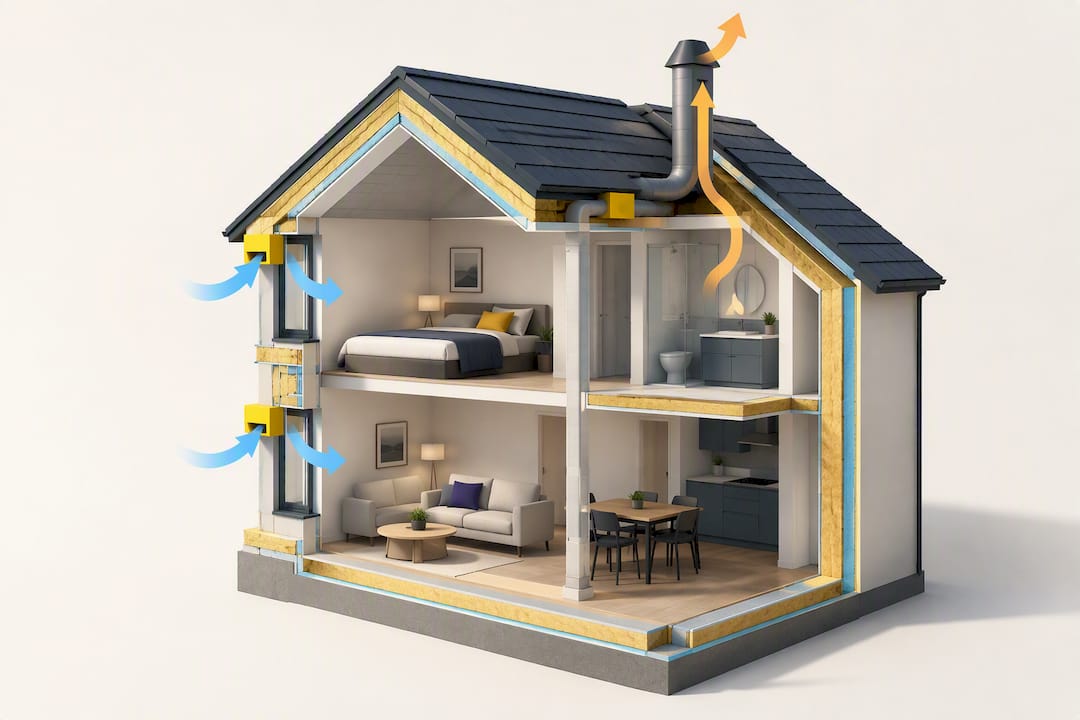
There’s a caveat worth taking seriously. Sealing a home more tightly without upgrading ventilation can trap moisture and indoor pollutants rather than remove them, so any insulation or draught-proofing work should go hand in hand with proper airflow.
Pro Tip: If you’re adding loft or wall insulation, ask your installer about trickle vents or mechanical ventilation at the same time. Cutting draughts without addressing airflow is how damp and mould problems start, not stop.
Even small changes help. Fixing a persistent cold spot or draught around a window frame often does more for day-to-day comfort than a homeowner expects.
Does energy efficiency raise property value?
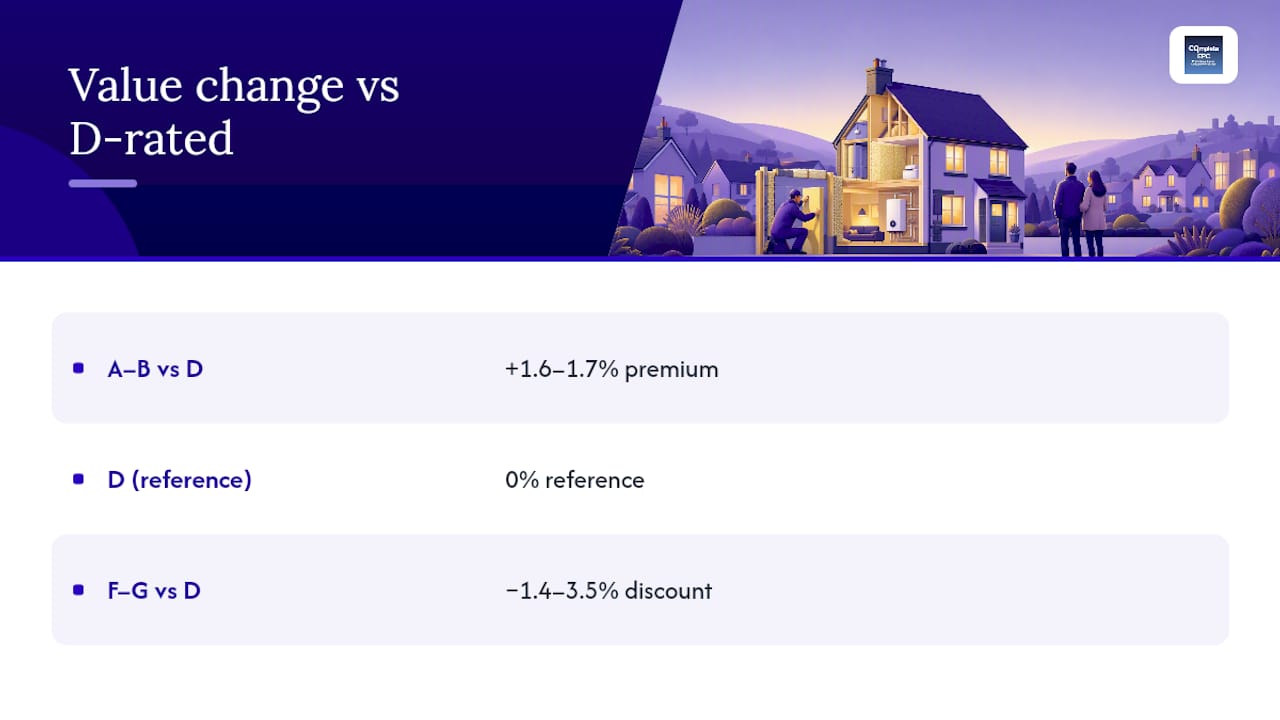
A little, but not dramatically. Nationwide’s analysis finds A or B rated homes carry a premium of around 1.6% to 1.7% over D-rated equivalents, while F or G rated properties see discounts of roughly 1.4% to 3.5%. The premium varies by property type and by how much buyers in your local market actually care about running costs.
That’s why most homeowners upgrade for comfort and lower bills first, with resale value as a bonus rather than the main driver. Retrofit costs aren’t always fully recovered on sale, so weigh the cost of work against how long you’ll stay in the property before banking on a price uplift.
Wider benefits: jobs, energy security, and price stability
Energy efficiency isn’t only a household matter. Broad retrofit programmes support jobs in insulation, heating installation and manufacturing, and economic modelling suggests returns that can exceed installation costs once wider economic activity is counted.
Lower household demand also eases pressure on national energy security, cushioning the country against price shocks when wholesale gas or electricity costs spike. Policy assessments like the ECO4 impact assessment go further, monetising health and social benefits alongside direct household savings to build the case for public investment in efficiency schemes.
Practical steps to take, ranked by cost and impact
Start with the free and cheap fixes before spending on anything structural:
- Turn thermostats down by a degree or two and use timers rather than leaving heating on constantly
- Switch remaining bulbs to LEDs
- Draught-proof doors, windows and letterboxes
- Use smart plugs to cut standby power on devices left plugged in
Bigger upgrades cost more but shift the numbers further:
| Measure | Relative cost | Typical impact |
|---|---|---|
| Loft/wall insulation | Low to medium | High (up to ~17% gas saving) |
| Heat pump | High | High, especially with insulation |
| Solar PV | Medium to high | Medium (~9% first-year electricity saving) |
| Hot water efficiency (cylinder jacket, timers) | Low | Low to medium |
Before committing to any installer, ask about their certification, expected payback period, and whether ventilation forms part of the plan. If you’re unsure where to start, a proper Domestic Energy Performance Certificate or a SAP calculation gives you a baseline and a ranked list of recommended improvements rather than guesswork. For further reading on ranked, homeowner-tested measures, see this practical energy-saving guide.
Why accurate assessments matter more than good intentions
Homeowners often fit the wrong measure first, chasing solar before sorting out insulation, or replacing a boiler that a draughty loft was always going to undermine. An accurate EPC or SAP assessment tells you what your property actually needs, not what’s fashionable. Evidence-based recommendations beat generic checklists every time, as seen regularly in property assessments. When the numbers are uncertain, get a professional assessment before you spend.
— Danny
Get an evidence-based starting point with Complete EPC
Guesswork is the expensive way to save energy. A Domestic Energy Performance Certificate from Complete EPC gives you a certified rating plus a ranked list of improvements specific to your property, so you spend on the measure that actually moves the needle first, not whatever’s being advertised that month. That ranking also matters if you’re applying for finance or a grant scheme, since many require a current EPC before releasing funds. Professional assessments are available for domestic and commercial properties, delivered by qualified assessors with competitive pricing guarantees. If you’re planning any retrofit work this year, book your assessment through the Domestic EPC page and get your recommendations before you commit to a single upgrade.
Sources
- Energy efficiency ratings have limited impact on owner-occupied house prices, despite increased interest in ‘going green’ — Nationwide
- Gov
- ECO4 final impact assessment — GOV.UK
- Health and air quality co-benefits from decarbonisation scenarios — LSHTM
FAQ
What are the main benefits of energy saving?
The main benefits are lower bills, a warmer and drier home, reduced carbon emissions, and a modest boost to resale value for higher-rated properties. Efficiency upgrades can cut heating costs by around 20% and support better respiratory and cardiovascular health by keeping homes consistently warm.
What are 10 benefits of conserving energy?
Beyond lower bills, energy conservation reduces carbon emissions, improves local air quality, supports jobs in the retrofit sector, strengthens energy security, and can raise property value slightly for well-rated homes. It also reduces damp and mould risk, improves comfort, lowers dependence on imported fossil fuels, and helps stabilise national energy prices during supply shocks.
Why is it important to save energy?
Saving energy protects household budgets from price volatility while contributing to national carbon targets and cleaner local air. It also reduces reliance on imported fossil fuels, which government strategy links directly to energy security.
What are the benefits of saving electricity specifically?
Cutting electricity use lowers your bill directly and reduces strain on the grid during peak demand periods. Measures like solar PV deliver around a 9% first-year saving on electricity costs, though this can taper slightly over time.
How do I know which energy-saving measures suit my home?
The most reliable starting point is a professional assessment rather than a general checklist, since the right measure depends on your property’s construction and current rating. A Domestic Energy Performance Certificate gives you a ranked list of recommendations tailored to your home.