
Most holiday lets need an energy performance certificate once they are let for a combined duration that meets or exceeds the relevant legal letting threshold and the guest, not the owner, pays the energy bills. That single test, borrowed from the HMRC furnished holiday let rules, decides whether the certificate is a legal requirement rather than a nice‑to‑have. Once issued, an EPC stays valid for 10 years, though exemptions exist for listed buildings, short‑term bookings, and a handful of other scenarios, provided the owner can prove it. The rest of this guide walks through how to check, commission, improve, and document compliance properly.
TL;DR:
- An EPC is mandatory for holiday lets rented for four months or more with tenants paying energy bills, but exemptions require supporting documentation.
- Scotland enforces EPC requirements regardless of letting duration, and local licensing can require ratings to be displayed in adverts.
- Improvements like loft insulation, cavity wall filling, and modern heating controls can significantly raise EPC ratings at relatively low cost.
- Owners must keep documentation such as booking records, work receipts, and exemption evidence for enforcement and compliance verification.
- A specialist assessor’s report offers actionable improvement recommendations and reduces risk, especially for heritage or complex holiday properties.
Table of Contents
- Energy performance certificates for holiday lets: the legal tests explained
- How to get an energy performance certificate for a holiday let
- Practical ways to improve your holiday lets’ EPC rating
- Compliance, enforcement, and the paperwork you need to keep
- What assessors wish holiday-let owners knew before booking
- Why the compliance gap on holiday lets is wider than owners think
- Book a domestic or commercial EPC for your holiday let
- Sources
- FAQ
Energy performance certificates for holiday lets: the legal tests explained
The starting point for England and Wales is the four‑month rule. If a furnished holiday let is rented out for a combined total of four months or more across any 12‑month period, and the occupier is responsible for their own energy costs, an EPC becomes a legal requirement. Let it for less than four months and the property is currently exempt, though this sits alongside HMRC’s own furnished holiday let conditions on availability (typically 210 days a year) and actual letting days, which owners should check separately for tax purposes. Updated GOV.UK guidance folds short‑term let considerations into general letting rules, so it’s worth checking this page before assuming an older exemption still applies.
Scotland takes a stricter line. Short‑term lets there need a valid EPC regardless of let length, and where a local licensing scheme applies, the rating must appear in the advert itself. Northern Ireland’s guidance differs again in its detail, so cross‑border owners with properties in more than one nation shouldn’t assume one ruleset covers both.
Common exemptions include:
- A single room let within an owner‑occupied home, rather than a whole self‑contained property.
- Genuinely short bookings that fall under the four‑month threshold.
- Buildings due for demolition with the relevant consent already granted.
- Situations where the occupier pays no separate energy cost at all.
None of these exemptions are automatic. Owners must hold documentary evidence, such as booking records, planning consents, or a surveyor’s letter, because assuming an exemption without paperwork is treated the same as having no EPC at all.
How to get an energy performance certificate for a holiday let
Getting an EPC is more straightforward than most owners expect, but the process differs slightly depending on the property type.
- Confirm which certificate you need. A standalone cottage or flat needs a Domestic Energy Performance Certificate. A property with commercial floorspace, such as a holiday let attached to a shop, café, or converted barn used partly for business, needs a Commercial EPC instead.
- Find a qualified assessor. Only accredited Domestic or Non‑Domestic Energy Assessors can issue a valid certificate, and GOV.UK’s own energy certificate tools let you check or order one.
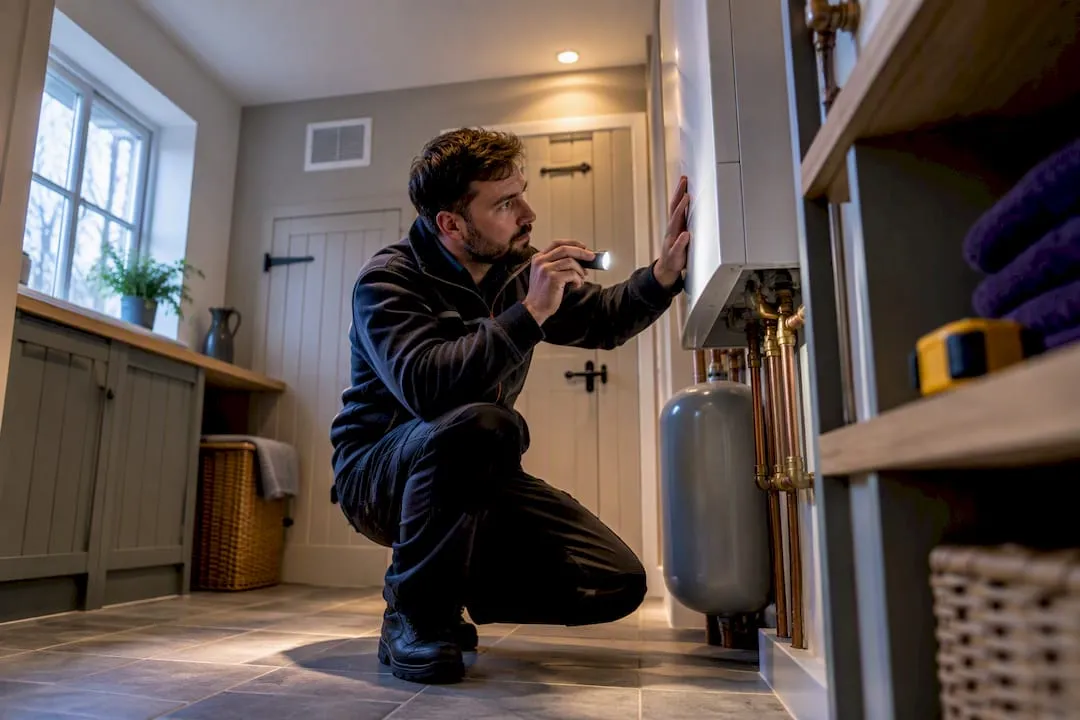
- Prepare for the visit. The assessor will walk the property measuring room dimensions, checking wall construction, loft insulation depth, glazing type, and the age and efficiency of the heating system.
- Receive the certificate and report. You’ll get a rating from A to G plus a set of tailored recommendations for improving it.
Costs vary with size, access, and how unusual the property is; a compact cottage typically costs less to assess than a sprawling converted farmhouse with multiple extensions. The certificate then lasts 10 years, with renewal only triggered when it expires and the property is marketed again.
Pro Tip: Photograph your boiler, loft insulation, and any recent windows or doors before the assessor arrives; it speeds the visit and gives you a record if you later need to challenge a rating.

Practical ways to improve your holiday lets’ EPC rating
Insulation delivers the biggest jump for the least disruption in most older holiday cottages. Loft insulation and cavity wall filling, where the wall type allows it, tend to move a rating more than almost any other single measure, because heat loss through an uninsulated roof and walls is usually the largest drain on any older property’s efficiency. Efficient heating controls matter almost as much: a modern boiler paired with thermostatic radiator valves and a programmable timer often closes much of the remaining gap.
Sensible measures to consider, roughly in order of typical impact:
- Loft insulation topped up to current recommended depth.
- Cavity wall insulation where the construction type suits it.
- A modern, correctly sized heating system with thermostatic controls.
- Secondary glazing or thorough draught proofing on original windows.
- LED lighting throughout, which is cheap and quick to fit.
Listed and heritage holiday lets need a lighter touch. Solid stone or timber‑framed walls often can’t take standard cavity insulation, and internal wall linings or secondary glazing usually need heritage‑sensitive specification and, in many cases, listed building consent before work starts.
Since April 2020, landlords have been banned from continuing to let a domestic property rated F or G, unless a valid exemption is registered, under the minimum energy efficiency standard rules. Those same regulations cap how much an owner is required to self‑fund towards improvements before an exemption can be registered, so it’s worth checking whether local grant schemes can help cover the shortfall before assuming the works are unaffordable.
Compliance, enforcement, and the paperwork you need to keep
Local authorities in England and Wales enforce the minimum energy efficiency standard, and Scottish councils enforce short‑term let licensing conditions, both with the power to issue fines where an EPC is missing, expired, or the rating breaches the F/G letting ban. In Scotland, an advert that omits a required EPC rating can itself breach licence conditions, not just EPC rules.
Keep these documents on file, ideally for the life of the let plus several years afterwards:
- The current EPC certificate and its recommendation report.
- Receipts for any improvement works carried out.
- Surveyor or heritage consultant reports used to support an exemption.
- Planning or listed building consents relevant to the property.
If an EPC has lapsed or was never obtained, the immediate fix is to book an assessment before the next guest booking goes live, not after a complaint or inspection triggers it.
What assessors wish holiday-let owners knew before booking
Complex or heritage holiday lets throw up questions a standard checklist can’t answer. A converted mill, a listed farmhouse, or a barn conversion with mixed construction types benefits from a specialist assessor who has seen similar buildings before, particularly when the goal is compiling solid exemption evidence rather than chasing an unrealistic rating.
A professional service should deliver more than a bare certificate. Expect:
- The EPC itself, valid for 10 years.
- A written set of improvement recommendations ranked by likely impact.
- A short compliance summary you can hand to an accountant, letting agent, or solicitor.
Complete EPC works as a consultancy rather than a one‑off certificate mill, using qualified assessors and backing its pricing with a lowest‑rate guarantee against other UK providers. Before any visit, photograph the heating system, gather invoices for recent works, and note anything unusual, a hot tub, an EV charger, a wood burner, since these details change both the assessment and the recommendations that follow.
Pro Tip: If your holiday let has had recent building work, hand the assessor the paperwork before they start measuring, not after. It can shift a borderline rating and saves a second visit.
Why the compliance gap on holiday lets is wider than owners think
The conventional advice on this topic treats EPCs as a box‑ticking exercise: get the certificate, file it, move on. That undersells the real risk. The 2026 consultation response signals that government is actively reconsidering whether standard EPC methodology even fits heritage and holiday properties fairly, and floats removing exemptions tied to who pays the energy bill. Owners who assume today’s exemption will still apply next year are building on sand.
What’s overrated is the idea that a single certificate closes the matter for a decade. What matters more is the paper trail behind it: booking records proving let length, invoices for improvement works, and a surveyor’s letter if an exemption is claimed. Enforcement rarely catches the property with a poor rating; it catches the property with no evidence to explain that rating.
If you own a listed or older holiday let, the priority isn’t chasing a higher letter grade this year. It’s getting a specialist assessment now, before any regulatory tightening removes the exemption you’re currently relying on.
— Danny
Book a domestic or commercial EPC for your holiday let
Once you know which certificate applies, the fastest route is booking directly rather than guessing at exemptions and hoping nobody checks. There are providers offering energy performance certificates with qualified assessors who handle both standard cottages and more complex, heritage or mixed‑use holiday accommodation.
For a self‑contained cottage or flat, book a Domestic Energy Performance Certificate and receive your certificate alongside a tailored improvement report. If your holiday let includes commercial floorspace, a Commercial EPC assessment covers that instead. Owners handling new‑build extensions or conversions can also ask about SAP calculations, while wider compliance needs, including EICR, PAT testing, and water calculations, sit under the full Completeepc service list. Get in touch to book an assessor and confirm turnaround for your property before your next booking window opens.
Sources
FAQ
Do EPC rules apply to holiday lets?
Yes, most furnished holiday lets need a valid EPC once let for four months or more in a 12‑month period with the occupier paying energy costs, under the four‑month rule. Scotland’s short‑term let rules are stricter and generally require a valid EPC regardless of let length.
What is the 10 year rule for holiday lets?
An EPC remains valid for 10 years from issue, and a new one is only legally required once it expires and the property is marketed again for sale or let. This applies to holiday lets the same way it applies to standard residential rentals.
Can I do my own energy performance certificate?
No, an EPC must be produced by an accredited Domestic or Non‑Domestic Energy Assessor; a self‑assessment has no legal standing. Owners can prepare for the visit by gathering invoices and photographs of recent works, but the certificate itself has to come from a qualified assessor.