

An energy saving system combines building fabric improvements, efficient heating and hot water, optional generation and storage, and smart controls that work together to cut household energy use. The single best first step is measurement: get an Energy Performance Certificate or a basic home energy audit before spending on anything else. That single document tells you which of the four components (fabric, heating, generation, controls) will save the most money for your property.
TL;DR:
- Insulation and draught-proofing should be prioritized before installing heating systems to reduce baseline heat demand and optimize system sizing.
- Proper installation, including accurate heat loss calculations and commissioning, is essential for heat pump efficiency and reliable performance in cold weather.
- Combining solar PV with batteries, thermal stores, or heat batteries offers the greatest savings, especially when paired with optimized tariffs and controls.
- A home energy audit or EPC is crucial to identify the most impactful upgrades and avoid inefficient or oversized equipment spending.
- Sequential upgrades, starting with fabric improvements, deliver better long-term savings and quicker payback compared to jumping straight to solar panels or heat pumps.
Table of Contents
- Core components of a home energy saving system
- Why fabric first matters for insulation and draughts
- Heating and hot water: choosing between boilers and heat pumps
- Generation and storage options: solar PV, batteries and thermal stores
- Controls, meters and tariffs that cut waste
- Costs, typical savings and what payback looks like
- How to plan and install an energy saving system properly
- An assessor’s view on sequencing whole-home upgrades
- Book a domestic EPC or SAP calculation with a qualified energy performance assessor
- Sources
- FAQ
Core components of a home energy saving system
Every energy saving system rests on four parts, and each one plays a different role. Building fabric (insulation, draught-proofing, windows) reduces how much heat a home loses in the first place. Heating and hot water systems, whether a condensing boiler or a heat pump, convert fuel or electricity into warmth. Generation and storage, such as solar PV and batteries, produce and hold energy for later use. Controls, including smart thermostats and meters, make sure none of that energy gets wasted through poor scheduling or overheating.
These parts work best in combination rather than alone.
- Insulation reduces the heat a home needs, so a heat pump can be sized smaller and run more efficiently.
- Solar PV paired with a battery lets a household use its own generated electricity in the evening rather than buying it back at peak rates.
- Smart controls tie the whole system together, adjusting heating and charging schedules automatically.
Sequencing matters. Fitting a heat pump into a draughty, poorly insulated home before improving the fabric tends to disappoint on running costs, whatever the equipment’s rated efficiency.
Why fabric first matters for insulation and draughts
The Carbon Trust recommends a fabric-first approach: improving insulation, draught-proofing and glazing before anything else, because it reduces baseline heat demand and allows smaller, better-performing heating systems to be installed afterwards. Loft insulation, cavity or solid wall insulation, and basic draught sealing around doors and windows are usually the highest-impact, lowest-cost measures available to a typical home.
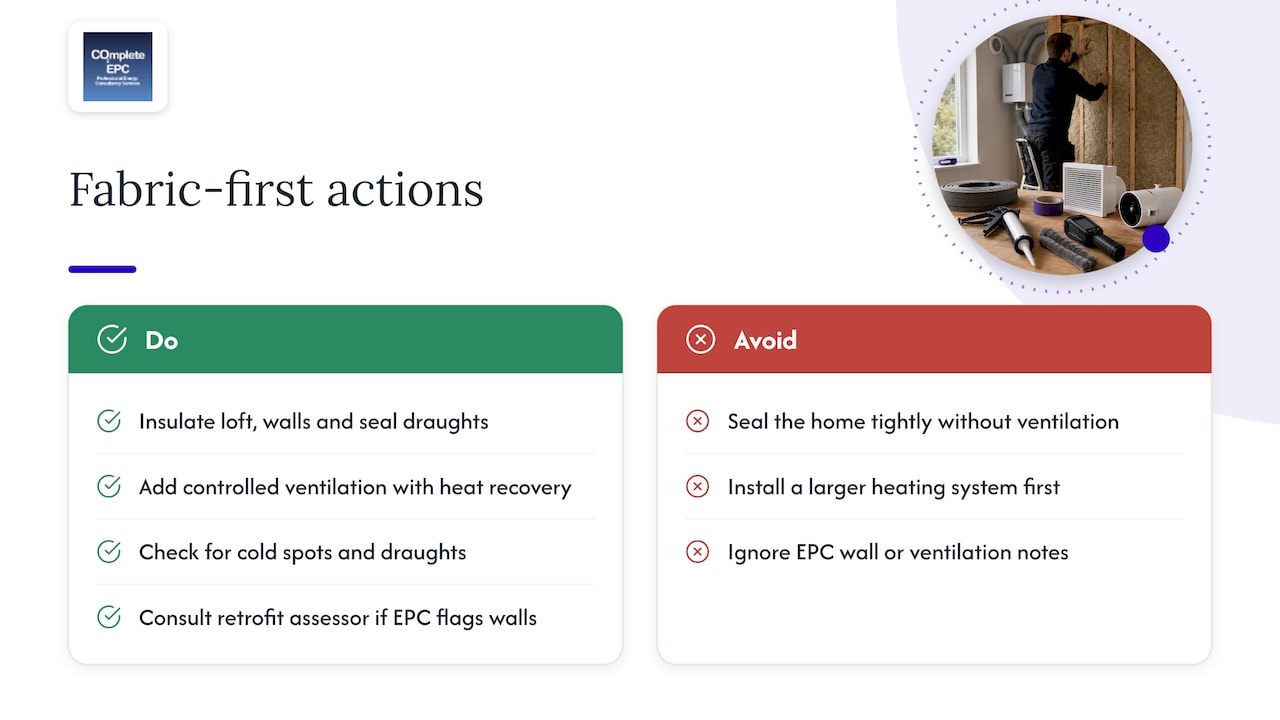
Sealing a home tightly without adding controlled ventilation, ideally with heat recovery, can lead to condensation and stuffiness, so the two should go together.
Check your own home by looking for cold spots, draughts around frames, and thin or patchy loft insulation. If your EPC recommendations mention wall insulation or ventilation upgrades, that is usually a sign to bring in a retrofit assessor before committing to a heating system upgrade.
Pro Tip: Fix draughts and top up loft insulation before quoting for a new boiler or heat pump: the heating system you need may turn out smaller and cheaper.
Heating and hot water: choosing between boilers and heat pumps
Condensing boilers remain familiar, cheaper to install and straightforward to size. Heat pumps run on electricity, tend to work best in homes with decent insulation and lower flow temperatures, and can reduce running costs when properly commissioned, as Energy Saving Trust notes for typical air source installations which usually involve several thousand pounds in costs.
Getting the heat loss calculation right matters more than the brand of equipment. An undersized or poorly commissioned heat pump will struggle in cold weather, while one with weather compensation and a correctly set flow temperature performs far more consistently, an outcome the Carbon Trust’s guidance on heat pump performance ties directly to installation and commissioning quality rather than the unit itself.
Before signing off any heating upgrade, insist on these checks:
- A room-by-room heat loss calculation, not a rule-of-thumb estimate.
- Written confirmation of design flow temperature and weather compensation settings.
- A commissioning report showing measured performance, not just installation sign-off.
Radiator upgrades or underfloor heating become worthwhile mainly when existing radiators are undersized for a lower-temperature heat pump system.
Generation and storage options: solar PV, batteries and thermal stores
Solar PV cuts the electricity a home needs to import, and batteries let households use that generated power during the evening rather than exporting it cheaply and buying it back later. Electrical batteries, thermal stores and heat batteries all store energy, but in different forms: electrical batteries hold electricity directly, thermal stores hold heated water for later use, and heat batteries store heat in materials designed to release it on demand.
- Electrical batteries suit homes with solar PV or access to a cheaper overnight tariff.
- Thermal stores work well alongside heat pumps that need buffering against fluctuating demand.
- Heat batteries suit properties without space for a hot water cylinder.
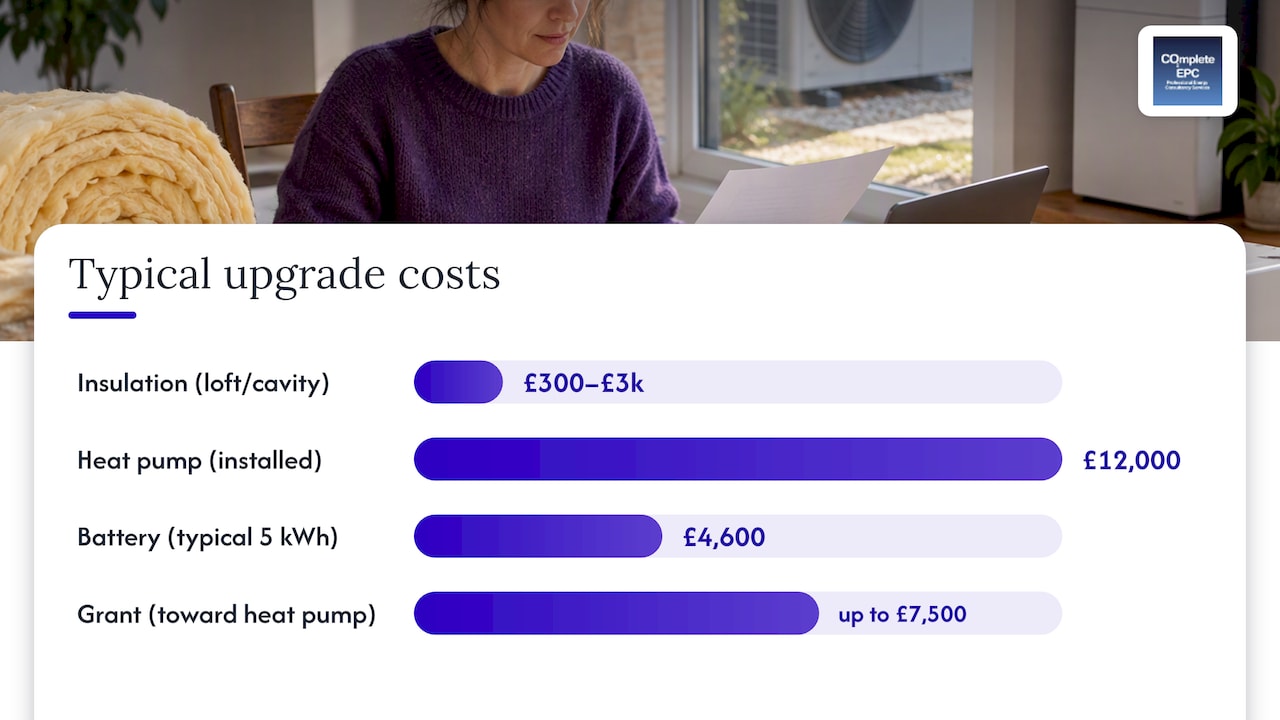
A typical 5 kWh home battery costs around £4,600 and lasts roughly 10 to 12 years, according to Energy Saving Trust, which notes that batteries pay back fastest when paired with solar PV or a time-of-use tariff rather than installed alone.
Controls, meters and tariffs that cut waste
Smart meters give households near real-time visibility of consumption, which helps spot waste that would otherwise go unnoticed. Smart thermostats automate heating schedules and, when paired with a heat pump, can maintain steadier, more efficient flow temperatures than manual controls.
Time-of-use tariffs change the economics of both batteries and heat pumps, since cheaper overnight rates make it worthwhile to charge a battery or run a heat pump’s hot water cycle outside peak hours.
Before agreeing to any smart control installation, ask your installer:
- Which app or platform will you use to view and export your own usage data.
- Whether the thermostat integrates with your heat pump’s weather compensation settings.
- What happens to your data and controls if the installer’s business changes or closes.
Costs, typical savings and what payback looks like
Costs vary by property, but representative ranges help with budgeting. Loft and cavity wall insulation typically cost a few hundred to a few thousand pounds depending on access and property type. Heat pumps run around £12,000 installed, with some households eligible for grants up to £7,500 toward that cost. Batteries add around £4,600 for a typical 5 kWh unit, as noted above.
Government NEED analysis found that solid wall and cavity wall insulation deliver sustained gas savings over five years, with combinations of measures producing higher median savings than any single measure installed alone. That variability means payback periods differ significantly between homes, depending on existing insulation levels, occupancy patterns and local fuel prices.
As a worked example: a home that combines loft insulation with draught-proofing before installing a correctly sized heat pump will typically see a shorter combined payback than one that installs the heat pump first and retrofits insulation afterwards, because the heating system needed is smaller from the outset.
How to plan and install an energy saving system properly
A sensible sequence avoids wasted spend and poor performance:
- Measure first: get an EPC or home energy audit to identify your biggest opportunities.
- Prioritise fabric improvements: insulation, draught-proofing and ventilation.
- Select and size heating or generation equipment based on the improved fabric.
- Add smart controls to manage the new system efficiently.
- Commission and verify performance rather than assuming it from the spec sheet.
When vetting installers, ask for MCS accreditation, a written commissioning report, and expected seasonal performance figures (SCOP or SPF) for heat pumps. Get at least three quotes and compare them on design detail, not just headline price.
Pro Tip: A retrofit assessor or professional EPC assessment earns its cost back quickly if it stops you buying an oversized heat pump or insulating in the wrong order.
An assessor’s view on sequencing whole-home upgrades
Homeowners often reach for the most visible upgrade first, usually solar panels or a heat pump, before checking whether their fabric can support it. An EPC or SAP calculation exists precisely to catch that mistake early, flagging where insulation gaps or ventilation issues would undermine a new heating system before money is spent. Choosing a consultant-led assessment makes most sense whenever a home is having multiple upgrades done together, since sequencing errors compound rather than cancel out.
— Danny
Book a domestic EPC or SAP calculation with a qualified energy performance assessor
Planning any of the upgrades above starts with knowing where your home currently stands, and that is exactly what a Domestic Energy Performance Certificate from Complete EPC provides: a clear rating, recommended measures and a benchmark to plan against.
- A Domestic EPC gives you the recommended measures and potential rating your retrofit plan should aim for.
- A SAP Calculation supports new builds, conversions or extensions where compliance and design efficiency both matter.
- Qualified assessors handle the assessment, so the report reflects your property’s actual condition rather than assumptions.
If you’re planning fabric, heating or generation upgrades, book a SAP Calculation or Domestic EPC with Complete EPC to get a clear starting point before you spend on anything else.
Sources
- Building fabric guide — Carbon Trust
- Domestic NEED impact of measures — June 2025
- Air source heat pumps — Energy Saving Trust
FAQ
What counts as an energy saving system in a home?
An energy saving system is the combination of building fabric improvements, efficient heating and hot water, controls, and optional generation or storage working together. No single device qualifies alone: the term describes how these parts interact to reduce overall consumption.
Should I insulate my home before installing a heat pump?
Yes, fabric improvements like insulation and draught-proofing should generally come first, since they reduce the heating system’s workload. The Carbon Trust’s fabric-first guidance notes this allows smaller, more efficient heating systems to be specified afterwards.
How much does a home battery cost and how long does it last?
A typical 5 kWh home battery costs around £4,600 and lasts roughly 10 to 12 years, according to Energy Saving Trust. Batteries tend to pay back fastest when paired with solar PV or a time-of-use tariff rather than installed on their own.
What government schemes support energy efficiency upgrades?
Several UK schemes, including ECO, GBIS, HUG and the Boiler Upgrade Scheme, support insulation and low-carbon heating installations. Government figures show that a large number of measures were installed under supported schemes recently, with eligibility varying by scheme and location.
Why do I need an EPC before planning upgrades?
An EPC gives a standardised A to G rating along with recommended measures and a potential rating if cost-effective improvements are made. It acts as the starting benchmark for any retrofit plan, showing which upgrades are likely to deliver the most improvement for your property.