
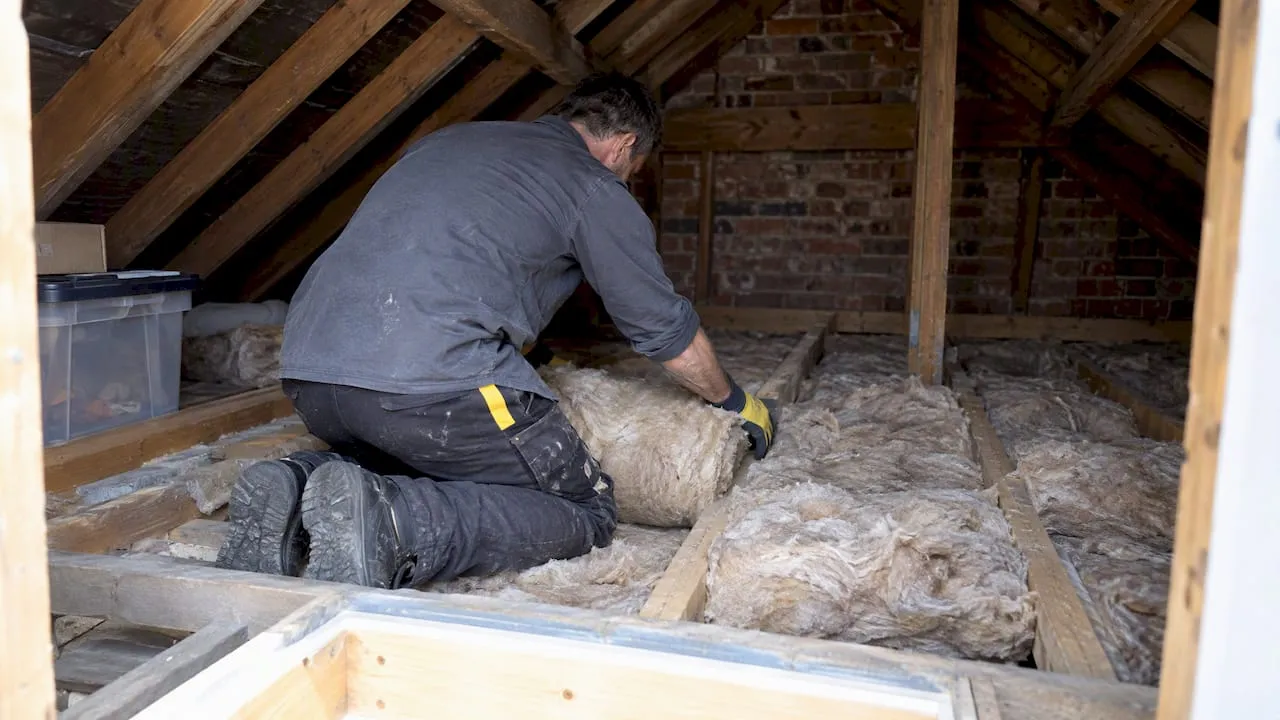
An ‘E’ EPC rating sits just below the average on the A to G energy efficiency scale, and for landlords in England and Wales it is the legal minimum a rented property must hold under MEES. The fastest, most cost-effective way to lift a property above E is usually fabric first: loft or cavity wall insulation, draught-proofing and basic heating controls, before spending on bigger plant like boilers or renewables.
TL;DR:
- Installing attic or cavity wall insulation, along with draught-proofing and heating controls, provides the most cost-effective way to raise an EPC rating above E.
- The £3,500 cost cap determines when landlords can register exemptions if they cannot achieve an E rating after improvements, with a move towards a C rating by 2030 requiring higher spending.
- Prioritizing fabric measures over plant upgrades typically delivers a faster, cheaper, and more reliable upgrade to the EPC rating.
- Re-certify only after completing all planned improvements with documented evidence, as re-assessment before that risks invalidating exemptions or requiring retrospective evidence.
- A qualified assessor can help ensure the certificate and recommendations support compliance while guiding cost-effective upgrade choices.
Table of Contents
- What an EPC ‘E’ rating means
- Why an E rating matters for landlords and owners
- Practical improvements that move an E rating up
- How to prioritise works and budget them
- When to re-certify and how exemption evidence works
- Why choose a qualified assessor
- The roadmap most landlords get wrong
- Ready to get your property assessed or certified
- Sources
- FAQ
What an EPC ‘E’ rating means
An EPC rating is an asset rating. It measures the building itself, its insulation, heating system, windows and fixed services, rather than how the current occupants actually use energy. Two identical flats will get the same EPC rating even if one tenant runs the heating constantly and the other barely switches it on.
Every certificate includes a recommendation report, which lists specific, costed measures and the rating a property could reach if the cost-effective ones are carried out, according to the technical notes on EPC rules in England and Wales. This report is where most landlords should start, since it is already tailored to the specific property rather than generic advice.
A few practical points worth knowing about the certificate itself:
- An EPC remains valid for ten years from the date of assessment, not from the date a tenancy begins.
- The property register treats the most recently registered certificate as the valid one, so an older E rating is automatically superseded once a newer assessment is logged.
- The recommendation report separates “quick wins” from measures that are technically possible but not currently cost-effective.
Why an E rating matters for landlords and owners
An E rating is not just a number on a document. Under MEES, private rented properties in England and Wales must achieve at least an E to be legally let, and landlords are expected to make improvements up to a £3,500 cost cap when a property falls below that threshold.
Where the cap is reached and the property still cannot hit E, landlords may register an “all improvements made” exemption, but this requires documented evidence rather than a simple declaration.
- MEES sets a minimum E rating for private rentals in England and Wales, with few exceptions.
- The £3,500 cost cap defines how much a landlord must spend on improvements before an exemption becomes available.
- Government policy is moving toward a C rating target by 2030 for domestic rentals, with a proposed £10,000 cap, and landlords who reach C ahead of that deadline stay compliant until their current EPC expires.
That last point matters for timing. Acting now, while a property is already due works, can avoid a second round of disruption later.
Practical improvements that move an E rating up
Not every improvement on a recommendation report delivers the same value for the money spent. Energy Saving Trust guidance consistently points landlords toward the building’s fabric before its equipment, since insulation and draught-proofing tend to be cheaper and more reliable than swapping plant.
- Loft insulation costs around £750 and is typically one of the cheapest ways to lift a rating, since heat loss through an uninsulated roof is substantial.
- Cavity wall insulation runs at roughly £2,200, while solid wall insulation is far more involved, at an estimated £12,000 to £15,000, reflecting the extra labour of internal or external wall treatments.
- Heating controls, such as thermostatic radiator valves and programmable thermostats, cost around £600 and often improve a rating more cheaply than replacing a working boiler outright.
- Windows and doors rarely offer the best return: A-rated double glazing costs roughly £4,800, a significant outlay for a comparatively modest uplift, so this tends to sit lower on the priority list.
- Renewables such as solar panels (around £7,600) or an air source heat pump (around £12,000) carry higher costs and a more variable impact on the rating, making them better suited to properties that have already dealt with fabric issues.
Among landlords, high-cost plant is often installed before cheaper fabric fixes are addressed, according to Energy Saving Trust guidance on improving EPC ratings, which notes that a fabric-first approach usually produces a faster and cheaper uplift. Spending on a new boiler before fixing an uninsulated loft is a common and avoidable mistake.
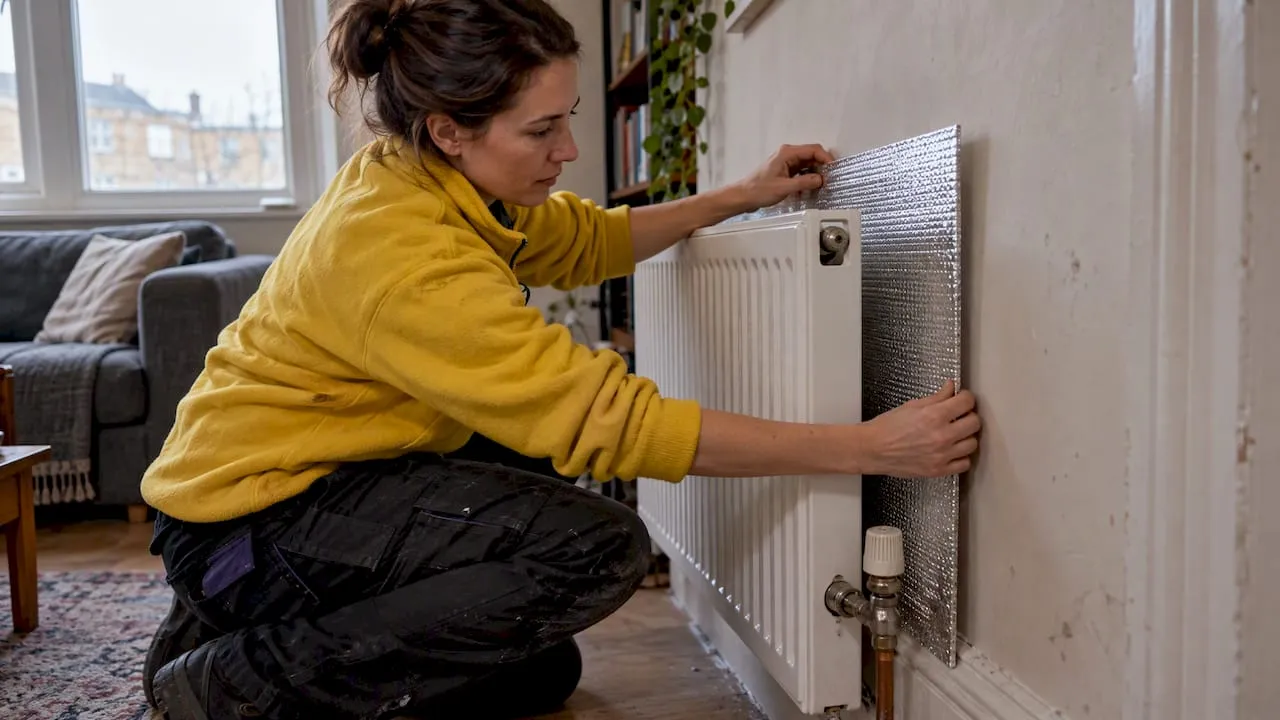
Low-cost measures deserve a mention too. Draught-proofing strips, a hot-water tank jacket and radiator reflector panels cost very little and can be fitted quickly, offering a modest but genuine contribution while bigger works are being planned.
How to prioritise works and budget them
Deciding where to spend first comes down to matching the recommendation report against realistic costs, rather than tackling measures in whatever order feels most obvious.
- Read the EPC recommendation report in full and note every measure listed, including the ones marked as not currently cost-effective.
- Price the cheapest fabric measures first: loft insulation, cavity wall insulation and draught-proofing typically deliver the best return per pound spent.
- Add heating controls once the fabric is sorted, since a well-insulated property gets more benefit from thermostatic valves and programmable heating.
- Only then consider major plant replacement or renewables, where costs rise sharply and the uplift becomes harder to predict.
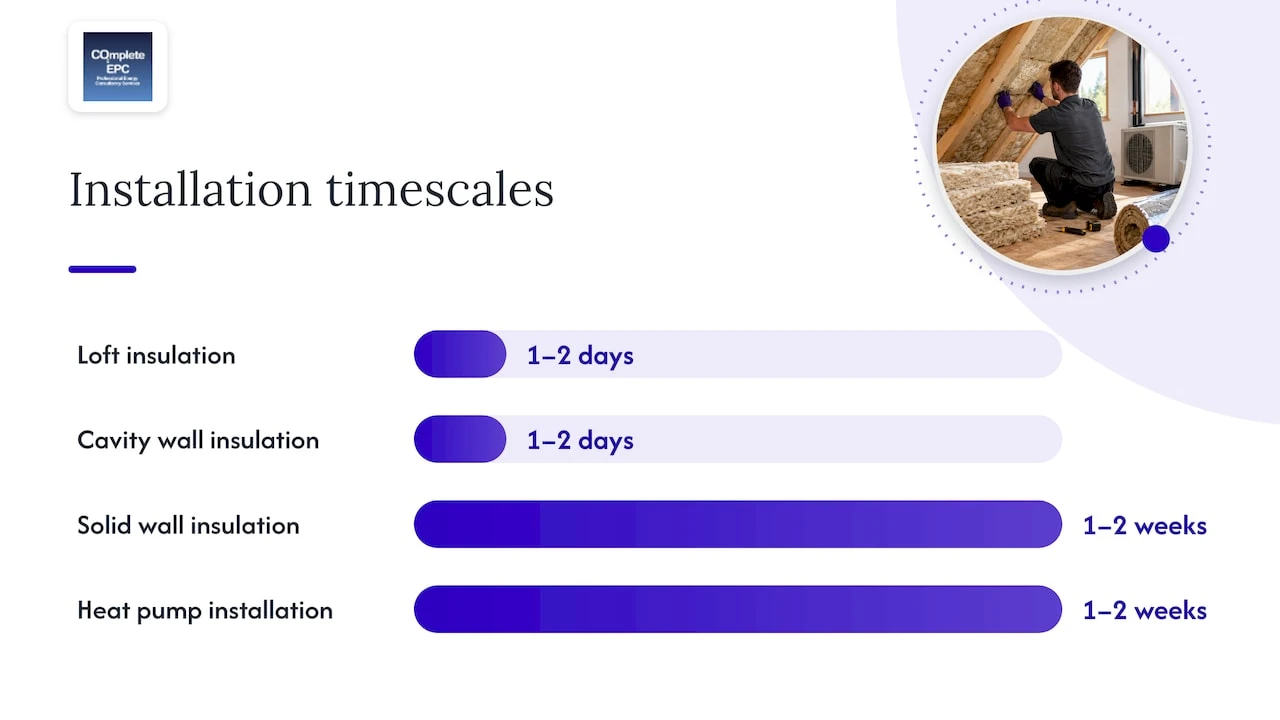
A sensible staged budget might run insulation and draught-proofing in year one, heating controls shortly after, then reassess before committing to a boiler or renewables. Installation timescales vary: loft and cavity insulation are usually completed within a day or two, while solid wall insulation or a heat pump installation can take one to two weeks depending on the property.
Pro Tip: Keep every invoice and dated photograph as each measure is completed. This evidence becomes essential if a future exemption claim or re-certification is ever challenged.
When to re-certify and how exemption evidence works
Timing a new EPC assessment matters as much as the works themselves. Commission a fresh certificate only once every planned improvement is finished and the supporting paperwork, invoices and photographs are in hand.
- If a property reaches the £3,500 cost cap and still cannot achieve E, the “all improvements made” exemption can be registered, but it needs documented proof of each measure carried out, not just a statement of intent.
- Non-domestic properties face a separate “7-year payback” test for exemptions, which is a technical calculation best left to a professional rather than estimated by eye, according to guidance on PRS exemptions and evidence requirements.
- A common and costly mistake is re-certifying before the paper trail is complete, which can undermine an exemption claim later or force landlords to redo evidence-gathering retrospectively.
Why choose a qualified assessor
Getting the certificate right the first time saves landlords from repeating the process. Assessments are carried out covering both residential and non-residential properties, with reports built to support compliance rather than just tick a box.
- Domestic Energy Performance Certificate: for rented homes, sales and standard compliance needs.
- Commercial EPC: for offices, retail units and other non-domestic buildings with their own compliance rules.
- SAP calculations: for new builds, conversions and extensions that need modelling rather than a standard assessment.
A properly prepared report sets out costed recommendations, the potential rating achievable with cost-effective measures, and the kind of detail landlords need if they ever have to demonstrate compliance or apply for an exemption. Complete EPC assessors work directly with landlords to help gather that evidence and decide which upgrades to prioritise first.
The roadmap most landlords get wrong
Too many landlords treat an EPC like a one-off hurdle to clear rather than a document that should guide spending decisions over several years. The instinct is often to chase the biggest, most visible upgrade, usually a new boiler or solar panels, when the recommendation report is quietly pointing at a £750 loft insulation job that would do more for the rating at a fraction of the cost.
The conventional advice to “just get compliant” misses the point that MEES is tightening, not loosening, making retrofitting older commercial buildings for green mark certification more relevant than ever. A property that scrapes past E today with minimal spend may need the same disruptive work again within a few years as the policy moves toward a C target. Spending a bit more now on fabric measures, rather than the cheapest possible fix, tends to hold up better against future requirements.
My view is simple: fix the building before touching the plant, keep every receipt, and treat the recommendation report as a spending plan rather than paperwork to file away.
— Danny
Ready to get your property assessed or certified
If a property needs a certificate, whether for a new tenancy, a sale or to build the evidence base for an exemption claim, booking a proper assessment now avoids delays later.
- Book a Domestic Energy Performance Certificate for rented or sold residential property.
- Arrange a Commercial EPC for offices, retail or other non-domestic buildings.
- Receive clear, costed recommendations alongside the evidence pack needed to support MEES compliance or a future exemption claim.
Qualified assessors work across London and offer competitive rates in the market, with reports designed to support the next steps landlords actually need to take.
Sources
- Domestic private rented property: minimum energy efficiency standard – landlord guidance
- Tips to improve the EPC rating of your home – Energy Saving Trust
- Retrofit explained – Energy Saving Trust
FAQ
What does an E rating mean?
An E rating sits below the midpoint of the EPC’s A to G scale, showing the property is less energy efficient than average. It reflects the building’s fabric and fixed systems rather than how occupants use energy day to day.
What does an EPC rating E mean for a rented property?
For private rented homes in England and Wales, an E rating meets the current legal minimum under MEES. A rating below E means the property cannot legally be let unless a valid exemption is registered.
What rating is better than E?
On the EPC scale, D, C, B and A are all better than E, with A representing the most efficient properties. Government policy is working toward a C rating becoming the expected standard for domestic rentals by 2030, according to the government’s response on privately rented homes.
How much does it cost to improve an E rating?
Costs vary by measure: loft insulation is among the cheapest options at around £750, while cavity wall insulation runs at roughly £2,200. Fabric measures like these generally offer better value than higher-cost options such as heat pumps or solar panels.
When should I book a new EPC after making improvements?
Book a new assessment only once all planned works are finished and evidence such as invoices and photographs has been gathered. Re-certifying too early, before the paper trail is complete, can weaken a future exemption claim or compliance record.