
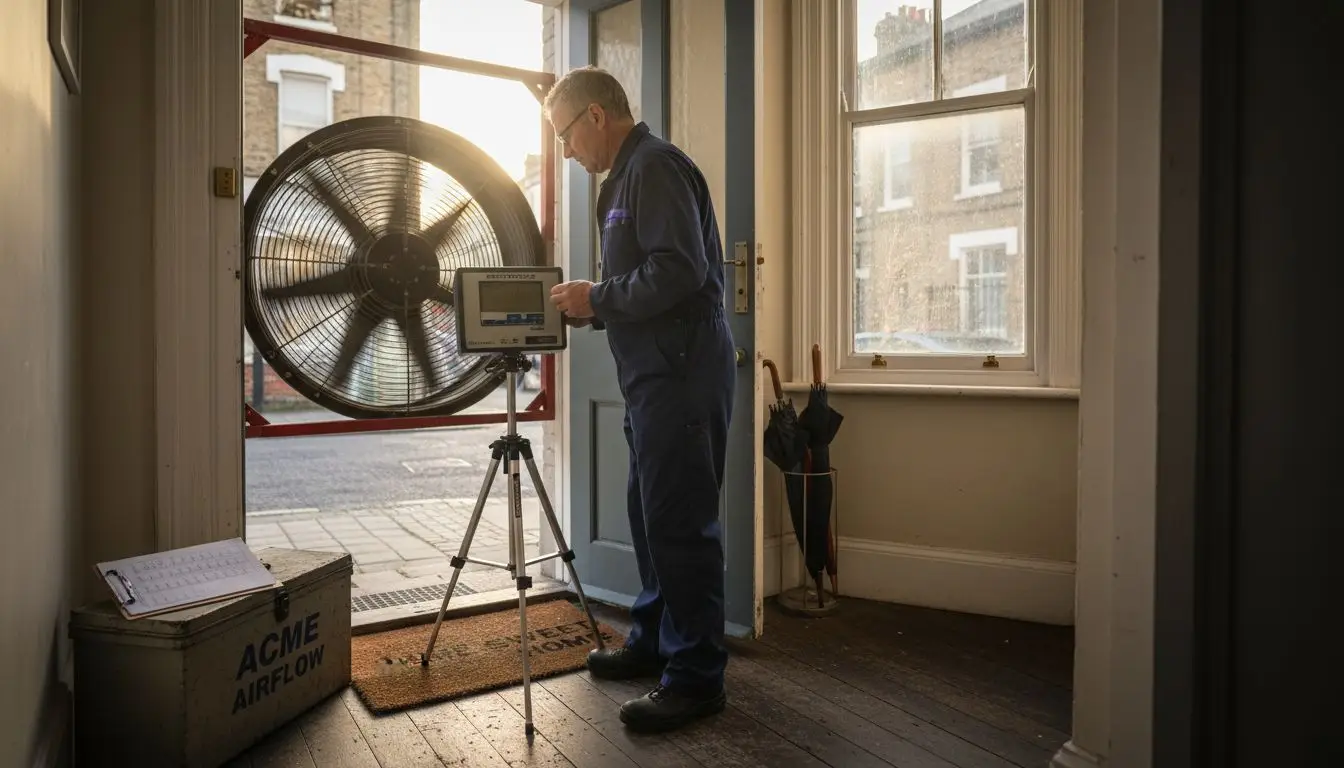
Heating costs in Greater London can quickly rise when properties suffer from hidden draughts and heat loss. For local property owners and landlords, compliance with ever-tightening energy efficiency rules is no longer optional but a practical necessity. Air tightness testing accurately identifies where warm air escapes and cold air enters, helping you address issues before they impact your comfort or your bottom line. Discover how this process not only keeps your property in line with UK regulations but also paves the way for higher value and lower energy bills.
Table of Contents
- Air Tightness Testing Explained for Property Owners
- How Air Tightness Tests Are Conducted
- UK Regulations and Legal Requirements
- Benefits for Energy Efficiency and Costs
- Common Pitfalls and How to Avoid Them
Key Takeaways
| Point | Details |
|---|---|
| Importance of Air Tightness Testing | Essential for identifying air leaks, enhancing energy efficiency, and ensuring compliance with UK regulations. |
| Benefits of Proper Sealing | Achieving excellent air tightness can significantly reduce heating costs and improve property value. |
| Regulatory Compliance | Mandatory testing is required for new builds and major renovations to meet strict UK regulatory standards. |
| Common Pitfalls to Avoid | Engaging certified professionals and conducting thorough pre-test preparations are crucial for accurate assessment results. |
Air Tightness Testing Explained for Property Owners
Air tightness testing represents a critical diagnostic procedure for understanding a property’s energy performance and structural integrity in London’s competitive property market. This assessment measures the rate of air leakage through a building’s envelope, providing property owners with essential insights into potential energy inefficiencies and areas requiring improvement.
The purpose of air tightness testing is multifaceted, focusing on several key objectives:
- Identifying uncontrolled air infiltration points
- Measuring heat loss through building fabric
- Assessing potential energy efficiency improvements
- Ensuring compliance with UK Building Regulations
Understanding the principles behind air infiltration in buildings helps property owners recognise the significant impact of seemingly minor structural gaps. These small openings can lead to substantial heat loss, increased energy consumption, and reduced occupant comfort.
Typically, professional assessors conduct air tightness tests using sophisticated equipment that pressurises and depressurises the building, measuring air permeability rates. The test results are expressed in cubic metres of air leakage per hour per square metre of building envelope at a standard pressure differential.
Property owners should note that modern building regulations increasingly emphasise air tightness as a critical component of energy efficiency. UK building regulations mandate specific air permeability standards that properties must meet, making these tests not just recommended but often legally required.
Key benefits of achieving excellent air tightness include:
- Reduced heating costs
- Improved thermal comfort
- Enhanced property energy rating
- Minimised environmental impact
- Potential increase in property value
Pro tip: Before conducting an air tightness test, seal obvious gaps around windows, doors, and utility penetrations to potentially improve your initial test results and reduce overall testing costs.
To clarify the practical impact of air tightness testing, here is a summary of its key business and environmental outcomes:
| Outcome Type | Impact on Property Owners | Broader Environmental Impact |
|---|---|---|
| Financial Savings | Lower heating bills annually | Reduced national energy demand |
| Occupant Comfort | Stable indoor temperatures | Improved public health |
| Property Value | Enhanced sale/rental attractiveness | Supports sustainable development |
| Legal Compliance | Facilitates smooth transactions | Enforces energy efficiency policy |
How Air Tightness Tests Are Conducted
Air tightness testing is a precise scientific procedure that requires specialised equipment and meticulous preparation to accurately assess a building’s energy performance. Blower door testing represents the primary method for evaluating air leakage in residential and commercial properties across the United Kingdom.
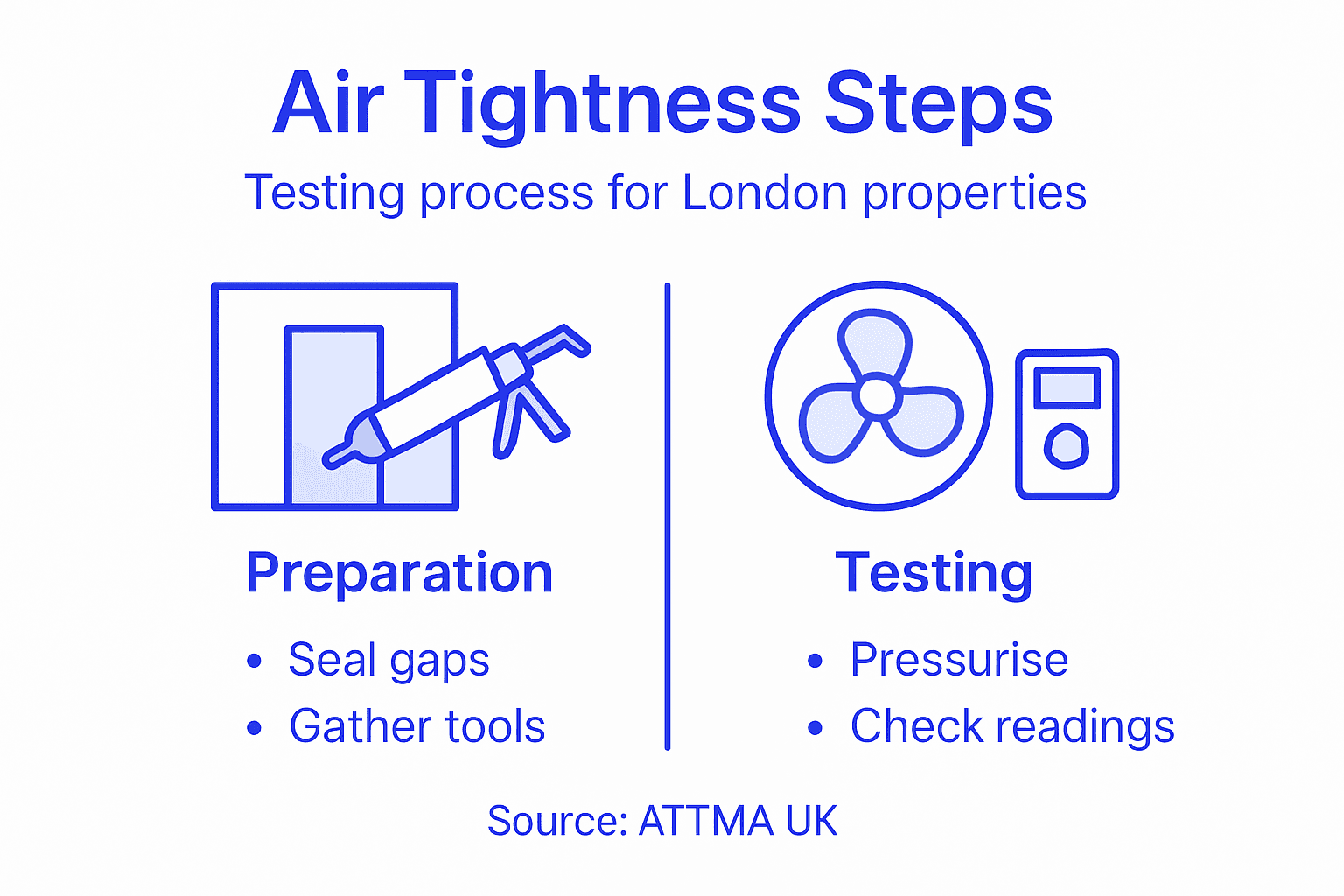
Blower door testing methodology involves several critical preparation and measurement steps:
- Sealing all external ventilation openings
- Mounting a calibrated fan in an external doorway
- Creating controlled pressure differences
- Measuring air flow rates at multiple pressure levels
- Recording comprehensive leakage data
The testing process requires extensive preparation to ensure accurate results. Technicians must systematically seal potential air leakage points while maintaining a controlled testing environment. Air permeability measurement typically occurs at a standard pressure differential of 50 Pascals, which simulates extreme wind conditions and provides a standardised assessment of building envelope performance.
During the test, sophisticated equipment generates precise pressure differences between interior and exterior environments. Specialised fans create either positive or negative pressure, allowing assessors to measure the volume of air escaping through unintended openings. The resulting data provides a quantitative measure of the building’s air tightness, expressed in cubic metres of air leakage per hour per square metre of building envelope.
Key equipment used in air tightness testing includes:
- Calibrated blower door fan
- Digital pressure measurement devices
- Smoke pencils for visualising air leakage
- Thermal imaging cameras
- Computerised data logging systems
Pro tip: Request a detailed report with thermal imaging and specific leakage location recommendations to maximise the value of your air tightness testing investment.
Below is a quick reference comparing calibrated equipment used in air tightness tests and their measurement roles:
| Equipment Type | Primary Measurement Function | Example Application |
|---|---|---|
| Blower door fan | Pressurises building envelope | Detects overall air permeability |
| Digital pressure sensor | Records accurate pressure levels | Analyses pressure differentials |
| Smoke pencil | Visualises air leakage locations | Identifies hidden draughts |
| Thermal camera | Reveals thermal loss points | Maps insulation performance |
UK Regulations and Legal Requirements
Air tightness testing in the United Kingdom is governed by stringent legal frameworks designed to enhance building energy efficiency and reduce carbon emissions. Building Regulations 2010 specifically outline the mandatory requirements for pressure testing and energy performance assessment across residential and commercial properties.
Key regulatory requirements for air tightness testing include:
- Compliance with Regulation 43 of Building Regulations
- Testing by registered and approved professionals
- Submission of test results to local building control authorities
- Adherence to British Standards testing procedures
- Mandatory reporting within seven days of testing
Authorised testing schemes play a crucial role in ensuring compliance. The Air Tightness Testing and Measurement Association (ATTMA) provides critical oversight, certifying professionals and establishing standardised testing protocols. Air tightness testing procedures must follow precise methodologies to validate energy performance assessments.
Property owners and developers must understand that these regulations are not merely advisory but legally enforceable. Failure to comply can result in significant penalties, including potential restrictions on property transactions and mandatory remedial work. The regulations apply comprehensively to new constructions, major renovations, and substantial property modifications across England and Wales.
Critical legal considerations for property owners include:
- Mandatory testing for new building projects
- Certification requirements for testing professionals
- Specific pressure testing standards
- Timely reporting to local authorities
- Potential financial penalties for non-compliance
Pro tip: Engage a certified air tightness testing professional who can provide comprehensive documentation and guidance on meeting regulatory requirements efficiently.
Benefits for Energy Efficiency and Costs
Air tightness testing offers substantial economic and environmental advantages for London property owners, delivering tangible benefits across multiple dimensions of building performance. Air permeability improvements can dramatically reduce energy consumption and associated heating costs.
Key financial and environmental benefits include:
- Reduction of heating energy costs by up to 30%
- Minimisation of unwanted air infiltration
- Enhanced thermal comfort for occupants
- Lower carbon emissions
- Increased property value
- Improved building sustainability
The economic rationale for air tightness testing is compelling. Research demonstrates that strategic draught-proofing and air sealing can yield significant energy savings, with most property owners experiencing measurable reductions in their annual heating expenditure. By preventing uncontrolled air leakage, buildings maintain consistent internal temperatures more efficiently, reducing the workload on heating systems.

Beyond immediate cost savings, air tightness testing supports broader environmental objectives. The UK government’s commitment to achieving net-zero carbon emissions by 2050 relies significantly on improving building energy performance. Property owners who invest in comprehensive air tightness measures contribute directly to national sustainability goals while simultaneously protecting their financial interests.
Financial considerations for property owners include:
- Potential energy bill reductions
- Increased property market attractiveness
- Compliance with evolving environmental regulations
- Long-term infrastructure preservation
- Potential access to green energy incentives
Pro tip: Combine air tightness testing with additional energy efficiency measures to maximise your potential cost savings and environmental impact.
Common Pitfalls and How to Avoid Them
Air tightness testing requires meticulous attention to detail to ensure accurate results and meaningful energy efficiency improvements. Common testing challenges can significantly undermine the effectiveness of the entire assessment process if not carefully managed.
Key pitfalls property owners and professionals should be aware of include:
- Inadequate pre-test building preparation
- Incomplete sealing of potential air leakage points
- Improper equipment calibration
- Overlooking ventilation system integration
- Insufficient professional training
- Neglecting comprehensive documentation
Preparation challenges represent the most critical aspect of successful air tightness testing. Professional testers must meticulously seal all intentional ventilation openings while ensuring that the building’s envelope remains intact and representative of its actual operational state. Testing equipment and protocols demand precise calibration and strict adherence to established methodological standards.
Ventilation presents a nuanced challenge in air tightness assessments. While reducing uncontrolled air leakage is crucial, property owners must simultaneously maintain adequate air exchange to prevent moisture accumulation and ensure healthy indoor environments. Balancing energy efficiency with proper ventilation requires strategic planning and expert consultation.
Critical strategies for avoiding air tightness testing pitfalls include:
- Engaging certified professional testers
- Conducting thorough pre-test site inspections
- Using calibrated, high-precision testing equipment
- Implementing comprehensive sealing techniques
- Maintaining detailed testing documentation
- Integrating proper mechanical ventilation systems
Pro tip: Request a comprehensive post-testing report that includes specific recommendations for addressing any identified air leakage points and potential improvement strategies.
Enhance Your Property’s Energy Performance with Expert Support
Understanding the impact of air tightness testing on London properties highlights key challenges such as identifying uncontrolled air leakage, ensuring compliance with UK Building Regulations, and achieving lower energy costs. Property owners often face uncertainty in preparation and testing accuracy, risking costly penalties or missed opportunities to enhance thermal comfort and value. Terms like “blower door testing” and “air permeability” are vital to grasp but can be technical and difficult to navigate without professional guidance.
At Complete EPC, we specialise in helping you overcome these obstacles. Our experienced assessors provide comprehensive energy performance certificates alongside detailed recommendations to improve your building’s airtightness and overall efficiency. We make legal compliance straightforward while helping you unlock financial savings and boost property appeal. Visit us at Complete EPC to benefit from expert advice and competitive pricing. Don’t delay ensuring your property meets all requirements — request your professional EPC service today and transform air tightness challenges into lasting energy gains.
Discover how we simplify the complex process of air tightness and energy assessments by exploring our professional energy certification services and secure your property’s future value and comfort now.
Frequently Asked Questions
What is air tightness testing and why is it important?
Air tightness testing is a diagnostic procedure that measures air leakage through a building’s envelope. It’s important because it helps identify energy inefficiencies, ensures compliance with building regulations, and can lead to reduced heating costs and improved occupant comfort.
How is an air tightness test conducted?
An air tightness test is primarily conducted using a method called blower door testing, where a calibrated fan is used to create pressure differences. This process measures the volume of air escaping from the building’s envelope to assess overall air permeability.
What are the benefits of achieving good air tightness in a property?
Achieving excellent air tightness can lead to significant benefits such as reduced heating costs, improved thermal comfort, enhanced energy ratings, decreased carbon emissions, and even potential increases in property value.
What regulations govern air tightness testing?
Air tightness testing is governed by UK Building Regulations, specifically Regulation 43, which mandates testing by approved professionals, reporting of test results to local authorities, and adherence to British Standards testing procedures.
Recommended
- Thermal Efficiency: Impact on EPC Ratings and Costs
- Passive House Explained: Boosting London Property Value
- Energy Efficiency Barriers – Overcoming Obstacles in London
- 7 Essential Energy Saving Tips for Landlords in London
- The Deadly Cost of a Quick Closing: Why Home Inspections Can No Longer Be Optional