
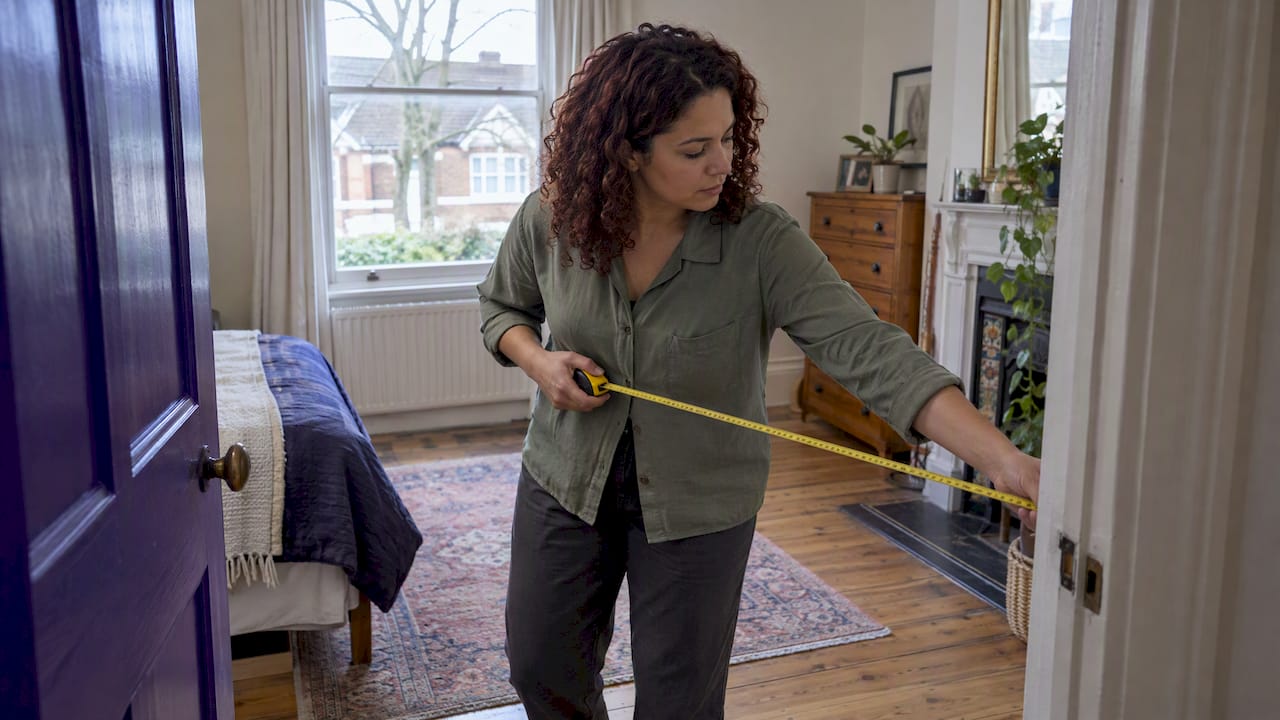
An EPC assessor is an accredited professional who visits a property, records how it is built and heated, enters those findings into government-approved software and lodges the resulting Energy Performance Certificate on the national register. They also attach a recommendation report that lists the improvements most likely to raise the rating. Only an accredited assessor can produce a valid EPC, so the certificate you hand to a buyer, tenant or letting agent is only as good as the assessment behind it.
This guide walks through the job step by step: what the assessor does before, during and after the visit, what they will and will not look at, what qualifications they need, and how you can help the assessment go smoothly.
TL;DR
- An EPC assessor inspects the property, records measurements and construction details, runs them through approved software and lodges the certificate on the national register.
- Assessments are evidence-based and non-invasive: the assessor records what they can see or prove, not what they assume.
- Assessors must be accredited through an approved scheme and may only work in the areas their qualification covers.
- A typical domestic visit takes a couple of hours and the certificate usually follows within about seven days.
- You can speed things up and avoid a lower rating by gathering documents and giving access to every room, the loft and the boiler.
Table of Contents
- What an EPC assessor actually does
- The EPC process from booking to certificate
- What happens during the site visit
- What is in the assessor’s report
- Qualifications and accreditation
- Can you assess your own property?
- How to prepare so the rating reflects your home
- Why the assessor matters for landlords and sellers
- Our perspective
- Need an assessor in London?
- FAQ
- Sources
What an EPC assessor actually does
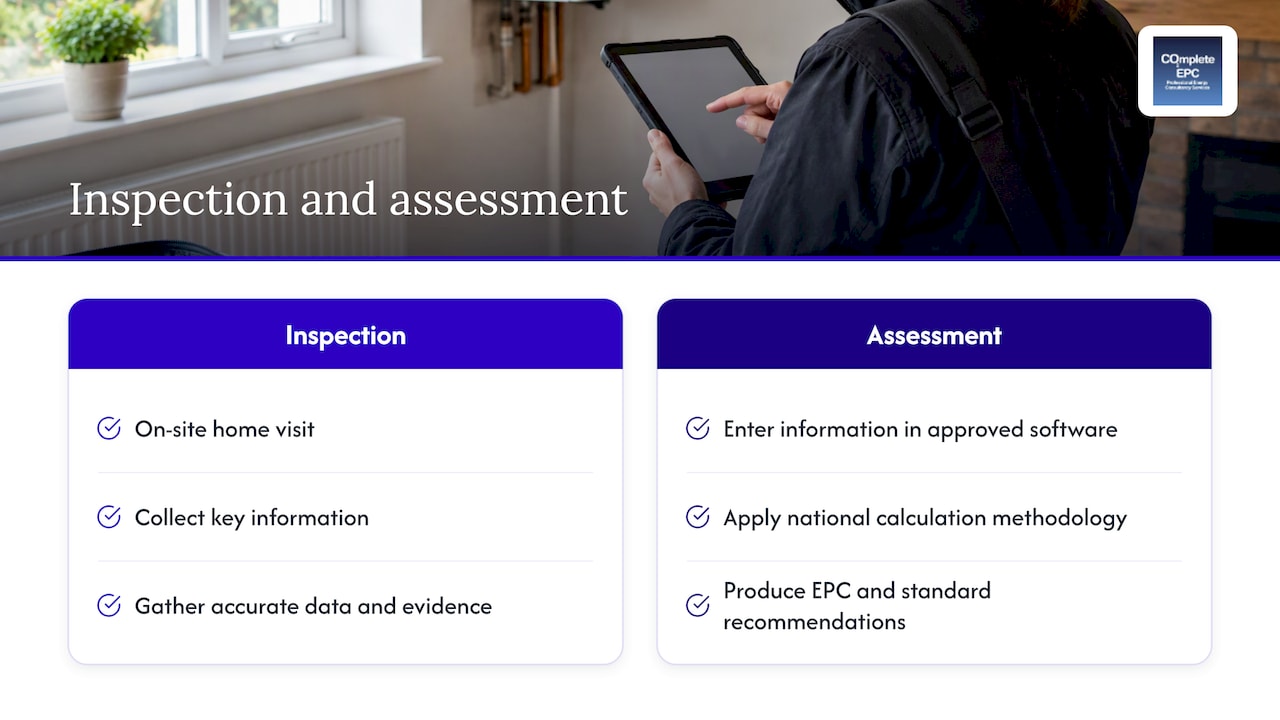
The job has two halves that people often blur together. The first is the inspection: the on-site visit. The second is the assessment: entering the information into the national calculation methodology through government-approved software. The National Occupational Standards for energy assessors draw exactly this line, and it is a useful one, because a good certificate needs both halves done properly.
In practice, an assessor’s core role is to visit the home, collect the key information, use accredited software to produce the EPC, and provide standard recommendations for improving the building’s energy efficiency.
The assessor does not set the rating by opinion. The software applies a fixed method to the data, so the assessor’s skill lies in collecting accurate data and knowing what evidence supports each entry.
The legal responsibility
The assessor carries a defined duty. According to the Northern Ireland Department of Finance, the energy assessor must carry out the assessment with reasonable care and skill, produce the EPC and a recommendation report, and enter the certificate onto the national register before giving it to the person who commissioned it. The same page notes that accredited assessors are the only people able to produce an EPC.
The duty is spelled out under Northern Ireland’s rules, but the pattern is the same across the UK nations: assess, produce, lodge, then hand over.
The EPC process from booking to certificate
Here is the sequence you can expect when you instruct an assessor for a home.
- Booking and scoping. The assessor confirms the address, property type, approximate size and any extensions or conversions, and tells you what to have ready.
- The site visit. The assessor walks the property, measures rooms and records construction and services.
- Data entry and calculation. Back at the desk, the findings go into approved software, which produces the rating and recommendations.
- Quality checks and lodging. The certificate is lodged on the national register, and accreditation schemes audit a sample of assessors’ work.
- Delivery. You receive the certificate and recommendation report, usually as a PDF, and the certificate is available on the register.
The NHIC guide to the EPC says an assessor will typically take a couple of hours to assess a property and usually provides the certificate within seven days. Larger or more complex homes take longer on site, and commercial buildings are a different scale of job altogether.
What happens during the site visit
The national standards require assessors to carry out a visual inspection, record the property’s measurements and critical features, and identify any circumstances that prevent an inspection from being completed. In a home, that normally means working through the following.
Dimensions and layout
The assessor measures each room and floor, sketches or confirms the floor plan, and notes extensions, conservatories and any part of the building that is heated differently from the rest. Floor area and heat loss area are central to the calculation.
Construction and insulation
They record the age and type of the walls, roof and floors, and look for evidence of insulation. Loft insulation is checked by looking at the loft where it is safely accessible. Cavity wall insulation is harder to see, so documentation matters. A guarantee or installer certificate can be the difference between the assessor recording insulation and recording none. If you have had specialist insulation fitted, keep the paperwork: for example, guidance on certificates for hybrid multifoil insulation shows the kind of documentation that supports a claim about installed insulation.
Windows and doors
The assessor notes the glazing type (single, double or triple), the frame material and the approximate age, and counts doors and openings.
Heating, hot water and controls
They record the boiler or heat source, its fuel, the type of emitters (radiators or underfloor heating), and the controls: programmer, room thermostat and thermostatic radiator valves. They also note the hot water cylinder and its insulation. A boiler badge or data plate is useful evidence, so make sure the assessor can reach it.
Lighting and renewables
The proportion of low-energy lighting counts toward the score. Solar panels, heat pumps and similar installations are recorded and, where required, supported by evidence such as commissioning paperwork.
Photographs and evidence
Assessments are evidence-based and non-invasive. According to Elmhurst Energy, assessors take photographs for auditing purposes, but not of personal items or whole rooms. The photographs are there so the data can be checked later, not to catalogue your belongings. If you are uneasy, ask the assessor beforehand what they will photograph and why.
Non-invasive also means the assessor will not lift floors, drill walls or open sealed areas. Where they cannot see something, they follow the rules for unknown or unverifiable features, which usually default to a cautious assumption based on the age of the property.
What is in the assessor’s report
The output has two parts that work together.
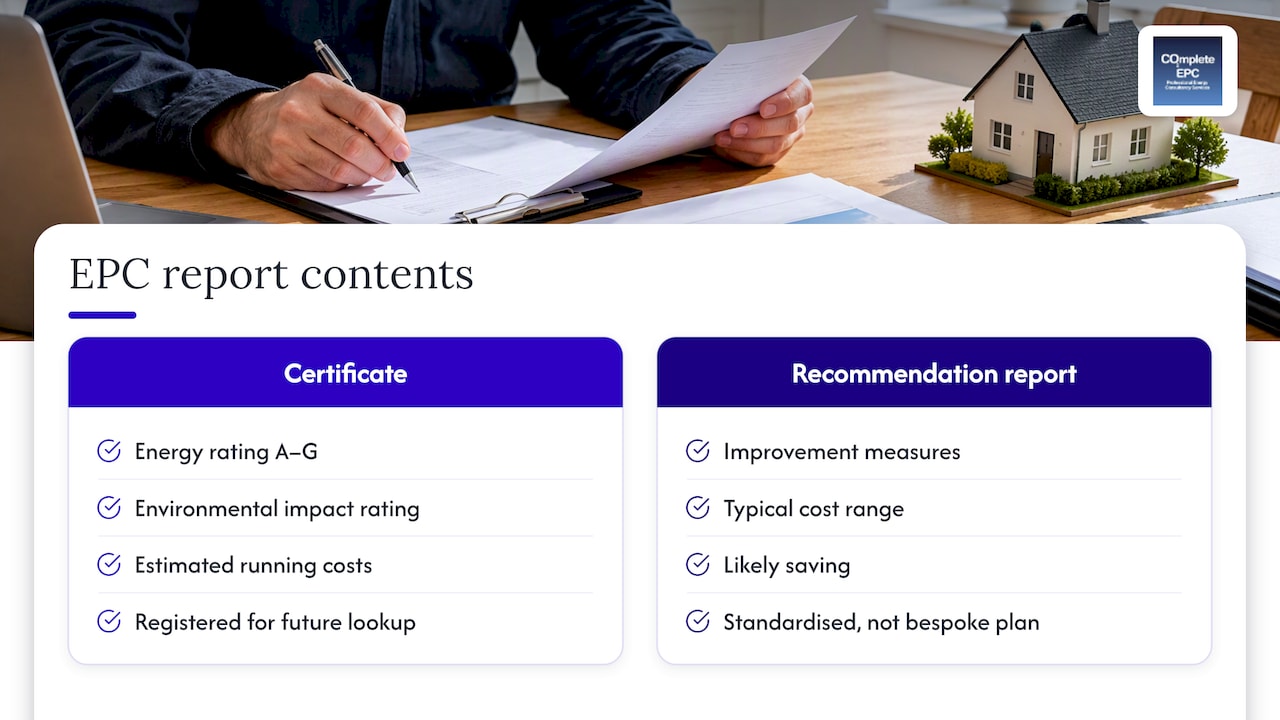
The certificate gives the property an energy efficiency rating from A (most efficient) to G (least efficient), plus an environmental impact rating and estimated running costs. The certificate is lodged on the register, so future owners and tenants can look it up.
The recommendation report lists improvement measures in a standard format: what to do, the typical cost range and the likely saving. These come from the software, so they are standardised rather than a bespoke retrofit plan. They are a good starting point, not a design.
The official statistics technical notes state that EPCs are valid for 10 years. A new certificate is needed when you sell, let or construct a building and the existing one has expired, so a valid certificate can often be reused for a new tenancy or sale within that period. If you have made significant improvements, a fresh assessment can show the higher rating, which we cover in our guide to the post-improvement EPC.
Qualifications and accreditation
Anyone can read about energy efficiency, but only an accredited assessor can lodge an EPC. Accreditation schemes exist to make sure assessors are competent. The Northern Ireland Department of Finance explains that these schemes safeguard consumers by ensuring assessors have the right skills, and that an assessor may only carry out inspections in the areas covered by their current qualification and accreditation.
That last point is practical. An assessor accredited for ordinary dwellings is not automatically qualified to certify a large commercial building, and a new-build SAP calculation is another specialism again. When you hire, check that the assessor’s accreditation matches your property type.
Domestic and non-domestic assessors
A domestic energy assessor (DEA) works mainly on homes. Commercial work needs a non-domestic energy assessor, and larger or more complex buildings can need higher-level qualifications. Our commercial EPC service covers offices, shops and other non-domestic premises.
How the UK nations differ
The role is recognisably the same across the UK, but the rules around it are set nation by nation. In Scotland, for example, the Scottish EPC Accreditation Scheme requires accreditation organisations to verify that assessors hold qualifications from recognised awarding bodies, or have met the requirements for accreditation of prior experiential learning as determined by Scottish Ministers. Approved organisations must also ensure members have the skills and knowledge to certify under the Energy Performance of Buildings (Scotland) Regulations 2025. Northern Ireland operates its own register arrangements.
If your property is outside England, check the rules and the register for that nation before you instruct anyone. The assessors we work with serve London, so this article’s practical advice focuses on England.
Can you assess your own property?
No. You can use online tools to estimate what rating your home might get, and that is a sensible way to plan improvements. But an EPC that counts for a sale or letting must be produced by an accredited assessor and lodged on the register. A home-made estimate cannot be lodged and will not satisfy a buyer, a lender or a letting agent.
What you can do is make the assessor’s job easier and the result more accurate, which brings us to preparation.
How to prepare so the rating reflects your home
An assessor can only credit what they can see or evidence. A little preparation often prevents a lower score than the home deserves.
- Give access everywhere: every room, the loft hatch, the boiler cupboard and any extensions or outbuildings that are part of the dwelling.
- Clear the loft hatch and boiler area so the assessor can inspect them safely.
- Gather paperwork: FENSA or similar window certificates, cavity wall and loft insulation guarantees, boiler installation or service records, and solar panel or heat pump commissioning documents.
- Know the dates: when extensions, conversions or loft rooms were added, and whether building control signed them off.
- Check the bulbs: the number of fixed low-energy light fittings is counted, so a quick tally helps.
- Leave the heating controls visible: the thermostat and programmer should be easy to find.
If you are a landlord with several units, send each assessor a short list per property. It saves return visits.
Common reasons a visit stalls
The national standards expect assessors to identify circumstances that prevent an inspection from being completed. In practice, that is usually a locked room, a loft that cannot be reached safely, or an occupant who cannot give access to the boiler. Telling your assessor about any of these when you book avoids a wasted trip.
Why the assessor matters for landlords and sellers
For a seller, the EPC is a legal document that must be available to buyers. For a landlord, it also underpins compliance with minimum energy efficiency standards for rented homes, and a rating that is lower than it should be could limit what you can do with the property. Where the assessor has had the evidence to credit your insulation, glazing and heating properly, the rating is more likely to reflect the real state of the property.
An accurate certificate also gives you something practical: the recommendation report shows which improvements the method rewards, so you can plan upgrades knowing what to expect.
Our perspective
We see the same pattern on many jobs. Properties are rarely rated badly because the assessor was unfair; they are rated badly because the evidence was missing on the day. A loft that was insulated years ago with no paperwork, a boiler tucked behind a locked door, a window upgrade with no certificate. The assessor must record what can be shown, so the best thing an owner can do is treat the visit as a short evidence-gathering exercise.
We also think the assessor’s job is wider than producing a number. A good assessor explains why the rating came out as it did, which recommendations are worth the money for that particular building, and when a property needs something beyond an EPC, such as a SAP calculation for a new build or conversion, or a commercial assessment for business premises. That is how we approach it: qualified assessors, clear reports and honest advice on next steps, for homeowners, landlords, estate agents and solicitors across London.
— Danny
Need an assessor in London?
If you need a certificate for a sale, a letting or a business property, we provide domestic EPCs and commercial EPCs across London. For new builds, extensions and conversions we also carry out SAP calculations. Tell us about your property through the Complete EPC website and we will confirm what you need and the next step.
FAQ
How long does an EPC inspection take?
A typical domestic assessment takes a couple of hours on site, according to the NHIC, and the certificate usually follows within about seven days. A small flat is quicker, and a large or much-extended house takes longer. Tell the assessor about extensions and conversions when you book.
Does the assessor need to go in every room?
Yes. The assessor measures the property and records its features, so they need access to every room, plus the loft and the heating system. If a space cannot be inspected, the assessment has to rely on cautious assumptions, which can lower your rating.
Is an EPC assessor the same as a domestic energy assessor?
A domestic energy assessor is an assessor who specialises in homes. Other assessors work on non-domestic buildings, and each may only inspect the areas their own qualification and accreditation cover. Choose one whose accreditation matches your property type.
Can I choose any assessor, and does my rating change between assessors?
You can choose any accredited assessor. Because the software applies a fixed method, two competent assessors with the same evidence should reach very similar results. Differences usually come from what evidence was available on the day, which is why preparation matters.
Sources
- Day in the Life of a DEA in 2026, Elmhurst Energy
- Undertake energy performance inspections, National Occupational Standards
- Domestic EPC Assessment: What to Expect, Elmhurst Energy
- Energy assessors and accreditation schemes, Department of Finance Northern Ireland
- Accreditation of EPC assessors, Scottish Government
- Guide to the Energy Performance Certificate, NHIC
- Energy Performance of Buildings Certificates in England and Wales: technical notes, GOV.UK
- Hybrid multifoil insulation certificates