

TL;DR:
- A domestic EPC rates a property’s energy efficiency on a scale from A to G and is legally required before marketing. Assessments are non-intrusive, typically take 30 minutes to hours, and cost between £65 and £120; upgrades like insulation and heating controls can significantly improve ratings. Meeting MEES standards requires landlords to ensure properties reach at least band E now and band C by 2030 to avoid fines or rental restrictions.
A domestic EPC, formally known as an Energy Performance Certificate, is an official document that rates a residential property’s energy efficiency on a scale from A to G, where A is the most efficient and G the least. EPCs must be commissioned from accredited domestic energy assessors in England, Wales, and Northern Ireland, and remain valid for 10 years from the date of issue. The certificate also shows estimated annual energy costs, carbon dioxide emissions, and a “potential” rating that indicates how much the property could improve with recommended upgrades. Whether you are selling, letting, or newly building a residential property in the UK, a valid energy performance certificate is a legal requirement before marketing begins.
What does a domestic EPC assessment involve?
The EPC certification process is a non-intrusive, on-site inspection carried out by a qualified domestic energy assessor. A typical inspection lasts between 30 minutes and a few hours, depending on the size and complexity of the property. The assessor visually examines insulation in the loft and walls, the heating system, hot water provision, window glazing, and fixed lighting. No drilling, testing, or removal of fixtures is required.

After the visit, the assessor uploads the collected data to the national EPC register and issues the certificate digitally. You can access your certificate through the government’s EPC register at any time using your property’s postcode. Regional differences do apply: in England, Wales, and Northern Ireland, certificates are produced by accredited individual assessors, whereas Scotland uses Approved Organisations accredited by the Scottish Government to issue certificates rather than sole traders. This distinction matters if you own property north of the border, as the commissioning process can take longer and requires verifying the issuing organisation’s credentials before booking.
EPC costs typically range between £65 and £120, though prices vary by location and property type. London properties often sit at the higher end of that range due to assessor demand. Shopping around is worthwhile, but always confirm the assessor holds current accreditation before booking.
- Confirm the assessor is accredited via the Landmark, Elmhurst Energy, or ECMK registers before booking.
- Clear access to the loft hatch, boiler, and fuse box before the assessor arrives.
- Gather any documentation for recent upgrades such as insulation certificates or boiler installation records.
- Book at least two weeks before your intended marketing date to avoid delays.
Pro Tip: If you have recently installed loft insulation or a new boiler, gather the installation certificates before the assessment. Assessors can only credit improvements they can verify, so documented evidence directly improves your rating.
What do EPC ratings mean for energy costs and emissions?
EPCs rate properties from A to G, showing estimated energy costs and CO2 emissions alongside a potential rating based on recommended improvements. The rating reflects the property’s fabric and systems, not the occupant’s behaviour. Two identical terraced houses on the same street can carry different ratings if one has cavity wall insulation and the other does not. This is one of the most misunderstood aspects of domestic energy assessments: the certificate measures the building, not how you use it.
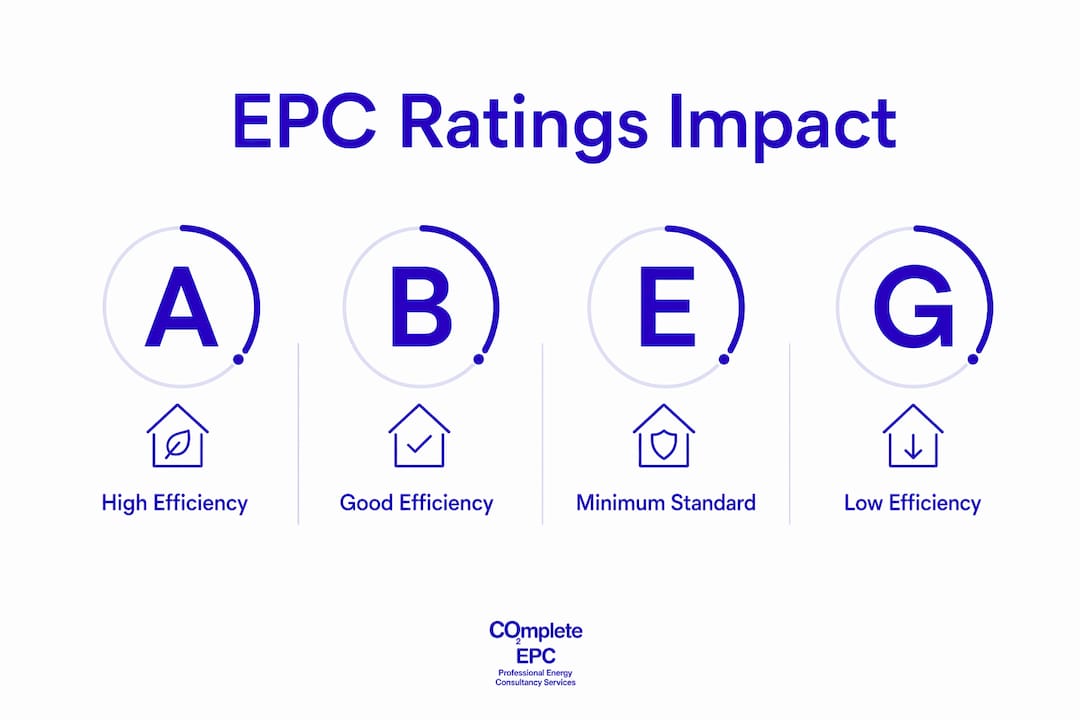
The table below summarises what each band typically means in practical terms:
| EPC band | Energy efficiency | Typical annual energy cost | CO2 impact |
|---|---|---|---|
| A | 92 or above (SAP score) | Lowest running costs | Minimal emissions |
| B | 81 to 91 | Low running costs | Low emissions |
| C | 69 to 80 | Moderate costs | Moderate emissions |
| D | 55 to 68 | Above average costs | Above average emissions |
| E | 39 to 54 | High running costs | High emissions |
| F | 21 to 38 | Very high costs | Very high emissions |
| G | 1 to 20 | Highest running costs | Highest emissions |
The “potential” rating shown on every certificate is particularly useful. It tells you the band your property could reach if you acted on the recommended improvements listed in the report. Those recommendations are modelled estimates, not guarantees. Upgrading a home’s energy efficiency may not automatically translate into the expected EPC band unless the upgrades match the assessor’s assumptions. A post-upgrade reassessment is the only way to confirm your new official rating.
Common recommendations you will see in EPC reports include:
- Loft insulation to 270mm depth, often the single highest-impact measure for older properties.
- Cavity wall insulation, which can shift a D-rated property into band C territory.
- Heating controls such as a programmer, room thermostat, and thermostatic radiator valves.
- Replacing an old gas boiler with an A-rated condensing model or, increasingly, a heat pump.
- Double or triple glazing to reduce heat loss through windows.
What are the legal requirements for landlords under MEES?
The Minimum Energy Efficiency Standards, known as MEES, set the legal baseline for rental properties in England and Wales. Private rented properties must meet a minimum EPC band E for qualifying tenancies, a rule that has applied since April 2020. The government has confirmed that this threshold will tighten to band C by October 2030, giving landlords a defined window to act.
Critically, MEES enforcement requires both a valid EPC and a qualifying tenancy type for the minimum band to apply. Not every tenancy falls under MEES, but most assured shorthold tenancies do. Assuming your property is exempt without checking is a costly mistake.
Non-compliance carries serious financial consequences. Fines can reach up to £30,000 per property in England and Wales for landlords who let properties below the minimum band without a registered exemption. Exemptions do exist, for example where the cost of improvements exceeds a defined cap or where a third party such as a tenant refuses consent for works. These exemptions must be registered on the PRS Exemptions Register and are not automatic.
Here is a practical compliance checklist for landlords:
- Locate your current EPC on the government register and note the expiry date.
- Confirm the band meets the current minimum of E or above.
- If the band is F or G, commission improvements and obtain a new EPC before the next tenancy begins.
- Plan for band C compliance by 2030 and identify which improvements are needed now.
- Register any valid exemption on the PRS Exemptions Register if improvements are genuinely not feasible.
- Track EPC expiry dates, tenancy renewal dates, and exemption validity in a single compliance log.
Pro Tip: Set a calendar reminder 12 months before your EPC expires. Renewing early gives you time to act on any recommendations before the certificate lapses mid-tenancy, which can create compliance gaps.
How can you improve your EPC rating cost-effectively?
The most cost-effective EPC improvements address the building fabric first, before any technology upgrades. Loft insulation, cavity wall insulation, and draught-proofing deliver the highest rating gains per pound spent in most UK properties. Smart thermostats and solar panels attract attention, but they rarely shift a D-rated property to C on their own without the fabric work already in place.
EPC recommendations provide cost-effective upgrade options that can improve ratings and reduce energy bills, though the order in which you tackle them matters. Start with the measures listed as “high impact” in your EPC report. These are ranked by the assessor’s modelling and represent the best return on investment for your specific property type.
- Loft insulation costs between £300 and £500 for a typical semi-detached home and can reduce heat loss by up to 25%.
- Cavity wall insulation typically costs £400 to £800 and is one of the fastest ways to move up a rating band.
- Boiler replacement with an A-rated condensing model costs more, typically £2,000 to £3,500, but delivers long-term bill savings and a measurable rating improvement.
- Smart heating controls add value but work best when the underlying insulation is already adequate.
After completing significant upgrades, commission a new EPC. Your current certificate will not update automatically. Only a fresh domestic energy assessment will reflect the improvements and provide the updated rating you need for compliance or marketing purposes.
Pro Tip: If you are planning phased improvements over several years, ask your assessor which single measure would push you into the next band. Sometimes one targeted upgrade, such as cavity wall insulation, is enough to move from E to D or D to C, which has immediate compliance and marketing value.
How does your EPC rating affect property value and rental appeal?
A strong EPC rating is increasingly a commercial asset, not just a legal formality. Buyers and tenants in 2026 are more aware of energy costs than at any previous point, and a band C or above signals lower bills and a well-maintained property. Properties rated F or G face a shrinking rental market as MEES tightens, and some mortgage lenders now apply preferential rates to properties rated C or above.
For landlords, the connection between EPC rating and rental yield is direct. A property that cannot legally be let without improvement works is a property generating no income. Investing in upgrades ahead of the 2030 deadline avoids the scenario of a forced void period. For sellers, a higher rating can support a stronger asking price and reduce the likelihood of buyers negotiating down on the basis of anticipated energy costs.
- Communicate your EPC rating clearly in property listings. Tenants searching online can filter by energy rating on major portals.
- Highlight specific improvements you have made, such as new insulation or a heat pump, as these reassure buyers and tenants about future running costs.
- Use the EPC rating guide from Completeepc to understand how your current rating compares with similar properties in your area.
Key takeaways
A domestic EPC is a legal requirement and a practical tool: understanding your rating, acting on recommendations, and tracking compliance deadlines protects both your income and your property’s long-term value.
| Point | Details |
|---|---|
| Legal requirement | EPCs are mandatory before marketing any property for sale or rent in the UK. |
| MEES compliance | Landlords in England and Wales must meet band E now and band C by October 2030. |
| Certification process | Assessments are non-intrusive, take 30 minutes to a few hours, and cost £65 to £120. |
| Improve fabric first | Loft and cavity wall insulation deliver the highest rating gains per pound spent. |
| Reassess after upgrades | A new EPC is needed after improvements to reflect your updated official rating. |
Why I treat EPCs as a management tool, not a tick-box exercise
From working with property owners and landlords across London, the pattern I see most often is this: the EPC gets ordered at the last minute, the assessor arrives to find the loft hatch blocked and no boiler documentation to hand, and the resulting rating is lower than it should be. That lower rating then follows the property for up to 10 years.
The landlords who manage this well treat their EPC the same way they treat their gas safety certificate. It goes in the diary well in advance, the property is prepared, and any recent improvements are documented and ready to show the assessor. Scheduling assessments early and preparing properties for accessible inspection are the two simplest ways to avoid delays and underscored ratings.
The other misunderstanding I encounter regularly is around validity. Many landlords assume a 10-year-old EPC is still usable for a new tenancy. It may be legally valid, but it will not reflect any improvements made since issue, and it will not support a MEES compliance argument if the property has changed. A proactive renewal, especially after upgrades, gives you an accurate picture and a defensible compliance record.
The 2030 band C deadline is close enough to plan for now. Landlords who start identifying and phasing improvements today will avoid the cost and disruption of rushed works in 2028 and 2029 when assessor availability will tighten and contractor prices will rise.
— Danny
Get your domestic EPC sorted with Completeepc
Completeepc provides accredited domestic energy assessment services for property owners and landlords across London. Whether you need a new certificate for a sale or let, a renewal ahead of a tenancy, or guidance on meeting MEES requirements, the team at Completeepc handles the process from booking to certificate delivery. All assessors are fully accredited, reports are clear and actionable, and turnaround is fast. For landlords planning ahead of the 2030 band C deadline, Completeepc also offers advice on home efficiency upgrades that will move your property up the rating scale. Contact Completeepc today for a straightforward consultation and competitive pricing on your domestic EPC assessment.
FAQ
What is a domestic EPC and when is it required?
A domestic EPC is an official certificate rating a residential property’s energy efficiency from A to G. It is legally required before marketing any property for sale or rent in the UK, and must be issued by an accredited assessor.
How long does a domestic EPC last?
A domestic EPC is valid for 10 years from the date of issue. However, if you carry out significant energy efficiency improvements, commissioning a new assessment is advisable to reflect the updated rating.
What is the minimum EPC rating for rented properties in England?
Private rented properties in England and Wales must currently meet a minimum of band E under MEES regulations. This requirement will tighten to band C by October 2030, and non-compliance can result in fines of up to £30,000 per property.
How much does a domestic EPC cost in the UK?
A domestic EPC typically costs between £65 and £120, depending on property size and location. London properties often sit at the higher end of this range due to assessor demand.
Can I improve my EPC rating after the assessment?
Yes. Acting on the recommendations in your EPC report, particularly fabric improvements such as loft and cavity wall insulation, can raise your rating. A new assessment is needed after upgrades to obtain an updated official certificate.