

Energy efficiency delivers four benefits at once: lower energy bills, reduced greenhouse gas emissions, warmer and healthier homes, and stronger local economies through jobs and resilience. Upgrading 13 million UK homes to EPC C by 2030 could save consumers £24 billion on energy bills while unlocking wider social and economic gains.
TL;DR:
- Improving energy efficiency can generate over £24 billion in energy bill savings for UK households and businesses by 2030, with wider social and economic benefits.
- Most cost-effective measures, like loft insulation and draught proofing, have payback periods under three years and are recommended to be prioritized first.
- A full retrofit program to EPC C could produce nearly £40 billion in cumulative economic gains, combining bill savings, health improvements, and job creation.
- Energy Performance Certificates provide tailored, actionable recommendations ranked by payback, helping owners achieve quick wins and long-term savings.
- The biggest improvements often come from simple measures like insulation, rather than costly upgrades such as new windows, especially when supported by grants and assessments.
Table of Contents
- What are the main energy efficiency advantages?
- Where do these benefits show up in practice?
- How much can you actually save?
- Which measures should you prioritise first?
- How do EPCs help you capture these benefits?
- Who benefits most, and what should you do first?
- What I’ve learned assessing London properties
- Book an EPC assessment with Complete EPC
- Sources
- FAQ
What are the main energy efficiency advantages?
Energy efficiency rarely delivers a single win. It stacks benefits across four distinct categories, and understanding which one matters most to you shapes where to spend first.
Environmental gains come from avoided emissions. Every unit of gas or electricity you don’t use is a unit that doesn’t need generating, and academic modelling on the multiple benefits of efficiency programmes consistently shows that emissions reductions scale with how broadly measures are deployed, not just how deep they go in any single building.
Economic gains split two ways. Households and businesses see direct bill reductions, while the wider economy captures a second, larger benefit. Modelling by Figus et al. on broad energy efficiency programmes finds that retrofit spending circulates through local labour markets, lifting employment and GDP well beyond what bill savings alone would suggest.
Health and social gains are easy to underestimate. Cold homes drive winter illness, and retrofits that keep properties warmer can cut cold-related NHS winter peak patients by up to 30%, saving around £600 million annually.
Resilience gains show up at the system level: lower peak demand, less exposure to volatile fuel prices, and a more secure grid. Local energy programmes demonstrate this directly, stabilising electricity prices for entire communities while creating local jobs.
- Lower bills for households and businesses
- Avoided carbon emissions supporting climate targets
- Fewer cold-related illnesses and reduced NHS pressure
- Job creation through retrofit and installation work
- Reduced peak demand and improved energy security
Nearly £40 billion in cumulative economic benefits could follow from a full home retrofit programme to EPC C by 2030, according to the same parliamentary analysis — a figure that folds bill savings, health gains, and job creation into one number.
Where do these benefits show up in practice?
The advantages of energy efficiency look different depending on where you apply them. Here’s how they break down by setting:
- Homes. Insulation cuts heat loss through walls and roofs, delivering the biggest single comfort improvement; this homeowner’s guide on what causes home energy loss explains why such improvements are vital for saving energy. New boilers and heat pumps reduce ongoing fuel use, while upgraded windows reduce draughts and noise alongside emissions.
- Commercial buildings. Efficient HVAC and lighting controls cut operating costs directly, and ENERGY STAR guidance shows these measures also improve asset value and tenant retention.
- Industry. Process efficiency and waste heat recovery lower emissions intensity per unit produced, which increasingly affects competitiveness as carbon reporting tightens.
- Local government programmes. Targeted grants and area-based retrofits create local installation jobs while lifting housing stock quality street by street.
How much can you actually save?
The scale of savings depends on the measure, but the direction is consistent: efficiency pays, and it keeps paying for years. The NEED report tracks median gas savings across common measures and how well they hold up over time.
| Measure | Typical median gas saving | Persistence over years |
|---|---|---|
| Solid wall insulation | Highest of all measures tracked | Well sustained |
| Cavity wall insulation | Strong, second only to solid wall | Well sustained |
| New condensing boiler | Around 2% | Declines modestly |
| Loft insulation top-up | Moderate | Well sustained |
Insulation savings tend to hold steady because the physical fabric improvement doesn’t degrade quickly, while mechanical measures like boilers can lose some efficiency as components age. That’s the rebound effect in miniature: real-world savings sometimes trail laboratory estimates because people heat homes slightly more once bills fall. Even accounting for that, multiple-benefits frameworks still find substantial net gains once health, jobs, and emissions are added to the ledger.
£24 billion in projected consumer bill savings by 2030 sits alongside these measure-level figures as the aggregated national picture — individual results vary by property and measure combination.
Which measures should you prioritise first?
Not every improvement deserves the same urgency. Prioritising by payback period, disruption, and grant eligibility gets you the biggest early wins without unnecessary upheaval.
- Short payback (under 3 years): loft top-ups, draught proofing, LED lighting swaps, heating controls.
- Medium payback (3 to 8 years): cavity wall insulation, boiler replacement, window upgrades.
- Long payback (8 years plus): solid wall insulation, heat pumps, full building envelope retrofits.
Grant schemes and local authority programmes often shift these bands, covering some or all of the cost for eligible households and cutting effective payback dramatically.
Pro Tip: Start with the short-payback list even if you’re planning a bigger retrofit later. Quick wins fund confidence, and some, like draught proofing, reduce heat loss enough to change what size heat pump you actually need.
Beyond the numbers, non-financial returns matter too: higher asset value, better tenant satisfaction, and readiness for tightening compliance rules all follow from the same improvements.
How do EPCs help you capture these benefits?
An Energy Performance Certificate rates a property from A to G and lists specific, prioritised recommendations with indicative payback categories, turning abstract advantages into a concrete action list. It’s a legal requirement when selling, letting, or constructing a property, and it remains valid for ten years.
The certificate only delivers value when experienced assessors translate raw building data into recommendations that actually make sense for that specific property. A qualified assessor considers wall construction, heating type, and tailors recommendations to the building’s age, orientation, and fabric, then rank them by realistic payback.
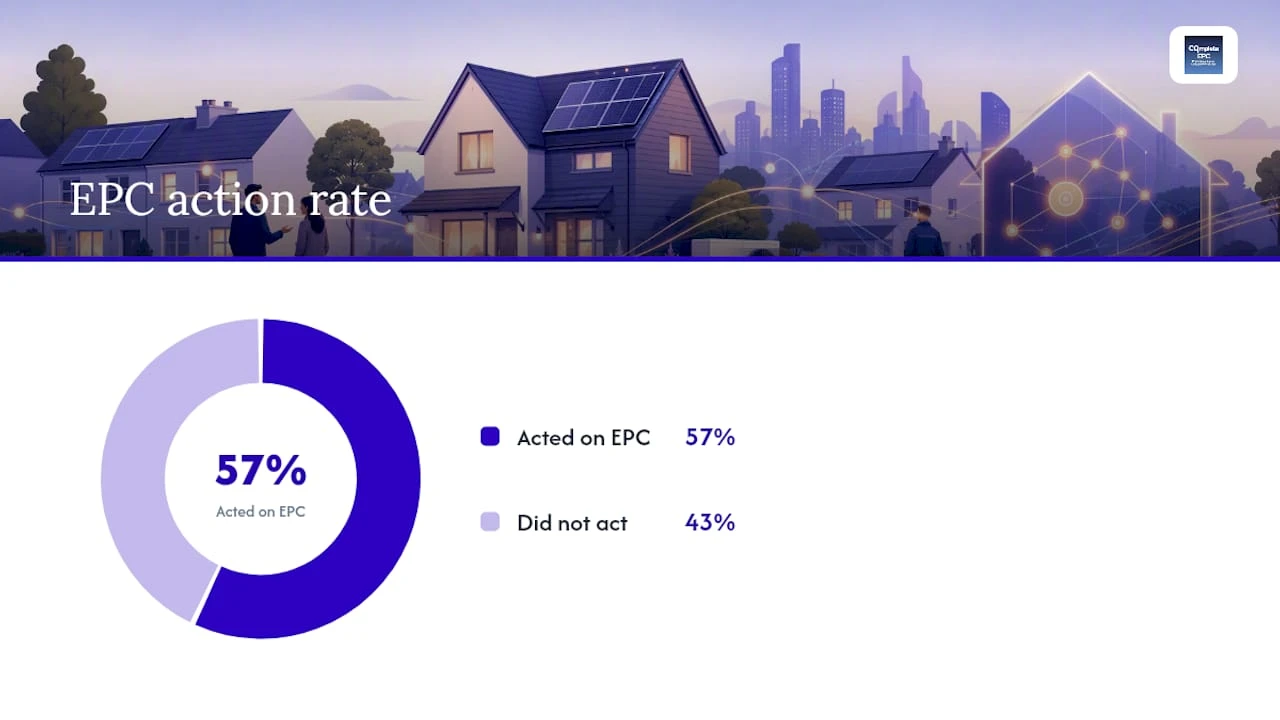
The evidence that this works is strong: 57% of people who remembered reading their EPC went on to act on its recommendations.
- A–G rating benchmarking the property against comparable stock
- Tailored improvement recommendations with indicative costs
- Payback categorisation to help you prioritise
- A ten-year valid document usable across sale, letting, or grant applications
Who benefits most, and what should you do first?
Households with high bills, landlords facing compliance deadlines, SMEs managing operating costs, and public bodies running housing stock all capture real value here. The fastest route to benefits: commission an assessment, act on short-payback measures first, and check grant eligibility before committing to bigger work. Remember, the payoff isn’t only lower bills. It’s better health, stronger local jobs, and a more resilient energy system too.
What I’ve learned assessing London properties
Having assessed hundreds of London properties, the pattern is consistent: the biggest wins are rarely the flashiest ones. A £30 tank of loft insulation topping up thin coverage often outperforms expensive glazing in payback terms, yet homeowners fixate on windows because they’re visible.
Government reviews on the EPB regulations back this up: certificates work best as transparency tools, nudging owners toward action once recommendations are clear and tied to something concrete, like a mortgage application or a sale. That’s the gap most homeowners don’t see until an assessor points it out directly. If you want that clarity for your own property, Complete EPC can help.
— Danny
Book an EPC assessment with Complete EPC
Complete EPC turns the advantages covered above into a delivered report, not just a concept. Every Domestic Energy Performance Certificate includes an A to G rating, prioritised recommendations, and indicative payback bands specific to your property, so you know exactly where the short-payback wins are before you spend a penny on the long-term ones.
For landlords, estate agents, and business owners managing non-domestic buildings, the Commercial EPC service covers the same ground for retail units, offices, and industrial space, with recommendations that account for how the building is actually used.
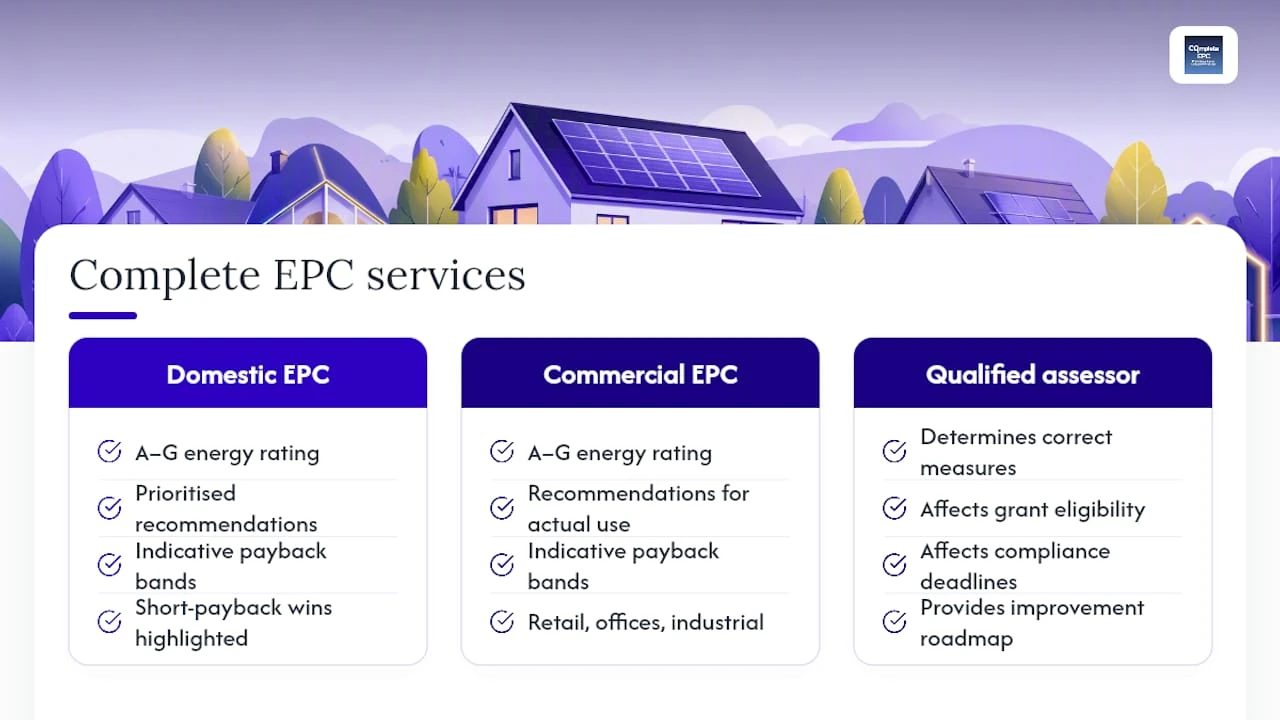
Choosing a qualified assessor matters because grant eligibility and compliance deadlines often hinge on getting the right measure, in the right order, on paper. Book an assessment today and get your property’s improvement roadmap within days.
Sources
- Parliamentary report (energy efficiency benefits)
- NEED report (June 2026)
- Gov
- EPA: Local energy efficiency benefits and opportunities
- Figus et al., making the case for broad energy efficiency programmes
FAQ
What are the main advantages of improving energy efficiency?
The core advantages are lower energy bills, reduced greenhouse gas emissions, better health from warmer homes, and local economic gains including job creation and improved energy security.
What are the benefits of renewable energy compared with energy efficiency?
Renewable energy generates cleaner power, while energy efficiency reduces how much power you need in the first place; most experts treat them as complementary rather than competing approaches, with efficiency typically offering faster payback.
How many benefits does conserving energy actually offer?
Beyond the four broad categories, conserving energy also delivers practical wins like lower maintenance costs, reduced strain on ageing infrastructure, greater comfort, and reduced exposure to price shocks when fuel costs spike.
What are the disadvantages of solar energy alongside its advantages?
Solar energy reduces bills and emissions but carries upfront installation costs, weather-dependent output, and limited generation in winter months, which is why pairing it with fabric efficiency measures often produces better overall returns.
How does an EPC help me capture energy efficiency advantages?
An EPC rates your property from A to G and lists prioritised, costed recommendations, giving you a clear roadmap rather than a guess; Complete EPC’s Domestic Energy Performance Certificate service delivers this directly for London properties.