

Nearly half of British property owners feel uncertain about meeting new energy efficiency regulations, yet the stakes have never been higher. These guidelines affect everyone from landlords in London to homeowners across the United Kingdom, reshaping what it means to own or rent a building responsibly. This guide explains the latest rules, why they matter for the environment and your wallet, and how making smart upgrades now can save money while supporting ambitious climate goals.
Table of Contents
- What Energy Efficiency Regulations Mean
- Changes In EPC Methodology RdSAP 10
- Raising Minimum Standards In PRS
- Compliance Costs And Cost Caps
- Enforcement And Exemptions Rules
Key Takeaways
| Point | Details |
|---|---|
| Energy Efficiency Regulations | New regulations in the United Kingdom require properties to meet specific energy performance standards, aiming to reduce carbon emissions and improve sustainability. |
| RdSAP 10 Changes | The updated RdSAP 10 methodology enhances energy assessments, providing more accurate evaluations of properties’ energy efficiency. |
| Private Rented Sector Reforms | By 2030, rental properties must achieve a minimum Energy Performance Certificate rating of C, prompting landlords to invest in energy efficiency improvements. |
| Compliance and Financial Planning | A cost cap of £10,000 for compliance ensures that property owners can afford necessary upgrades while benefiting financially in the long term. |
What Energy Efficiency Regulations Mean
Energy efficiency regulations are comprehensive government guidelines designed to reduce carbon emissions and improve building performance across the United Kingdom. These regulations establish mandatory standards for property owners, requiring them to meet specific energy performance criteria that minimise environmental impact and decrease energy consumption. By implementing these rules, the government aims to transform building energy standards and support the nation’s ambitious net-zero emissions targets.
At their core, these regulations mandate that properties achieve specific energy performance levels, which are assessed through Energy Performance Certificates (EPCs). Property owners must demonstrate their buildings meet minimum efficiency standards, which typically involve measures such as improving insulation, upgrading heating systems, and installing more energy-efficient technologies. The goal is not merely compliance but creating a systematic approach to reducing carbon footprint and promoting sustainable building practices.
The implications for London property owners are significant. New build properties must now produce substantially lower carbon emissions, with recent government mandates requiring approximately 30% lower CO2 output compared to previous construction standards. This means property developers and owners must integrate advanced energy-efficient technologies and design principles from the outset. Regulatory requirements for new homes are becoming increasingly stringent, reflecting the UK’s commitment to environmental sustainability and climate change mitigation.
For existing property owners, these regulations represent both a challenge and an opportunity. While upgrading properties to meet new energy efficiency standards requires investment, it also offers long-term benefits such as reduced energy costs, increased property value, and contribution to environmental conservation. Property owners who proactively adapt to these regulations will not only ensure legal compliance but also position themselves advantageously in an increasingly environmentally conscious real estate market.
Changes In EPC Methodology RdSAP 10
The Reduced Standard Assessment Procedure (RdSAP) version 10 represents a significant evolution in energy performance assessment methodology for properties across the United Kingdom. This updated framework introduces more sophisticated and precise techniques for evaluating a building’s energy efficiency, reflecting the growing complexity of modern construction and sustainability standards. Property owners and assessors will need to understand SAP calculation nuances to navigate these emerging assessment protocols effectively.
Key modifications in RdSAP 10 include enhanced computational algorithms that provide more granular insights into energy consumption patterns. The methodology now incorporates more detailed parameters such as improved thermal modelling, more accurate heat loss calculations, and advanced recognition of renewable energy technologies. These changes mean that Energy Performance Certificates (EPCs) will offer more comprehensive and contextualised assessments, potentially revealing more opportunities for energy efficiency improvements in residential and commercial properties.
The transition to RdSAP 10 also emphasises more robust data collection processes. Assessors will be required to gather more precise information about building fabric, heating systems, ventilation, and historical energy consumption. This shift towards data-driven assessment methods ensures that EPCs reflect real-world performance more accurately, moving beyond theoretical calculations to provide more meaningful insights into a property’s actual energy dynamics.
For London property owners, these methodological changes represent both a challenge and an opportunity. While the new assessment framework may initially seem more complex, it ultimately provides a more transparent and detailed understanding of a building’s energy performance. By embracing these comprehensive SAP calculation guidelines, property owners can gain deeper insights into potential energy efficiency upgrades, potentially reducing long-term operational costs and improving their property’s environmental credentials.
Raising Minimum Standards In PRS
The Private Rented Sector (PRS) is undergoing a significant transformation with ambitious new energy efficiency regulations designed to address carbon emissions and fuel poverty. Proposed government regulations aim to raise the minimum Energy Performance Certificate (EPC) rating for rental properties to a mandatory level C by 2030, representing a substantial upgrade from current standards.

These new standards will have profound implications for landlords across London and the United Kingdom. Property owners will be required to invest in substantial energy efficiency improvements, which may include upgrading insulation, replacing heating systems, installing double or triple glazing, and implementing renewable energy technologies. The minimum energy efficiency standards consultation indicates that landlords will need to proactively assess and potentially retrofit their properties to meet these increasingly stringent requirements.
The rationale behind these raised standards extends beyond mere regulatory compliance. By driving improvements in the energy performance of privately rented homes, the government seeks to achieve multiple interconnected objectives. These include reducing carbon emissions, alleviating fuel poverty, lowering energy bills for tenants, and creating more sustainable housing stock. Landlords who embrace these changes early will not only avoid potential penalties but also enhance their property’s marketability and long-term value.
Implementation of these regulations will be phased, allowing landlords time to plan and budget for necessary upgrades. However, the message is clear: the era of energy-inefficient rental properties is coming to an end. Property owners who take a proactive approach, investing in energy efficiency improvements now, will be best positioned to navigate these changing regulatory landscapes, potentially avoiding more costly retrofits in the future and contributing to the United Kingdom’s broader environmental sustainability goals.
Compliance Costs And Cost Caps
The implementation of new energy efficiency regulations brings significant financial considerations for property owners, with the government carefully balancing regulatory requirements and economic feasibility. Impact assessments for energy performance regulations reveal a nuanced approach to managing compliance costs, recognising the potential financial burden on property owners while maintaining ambitious environmental targets.
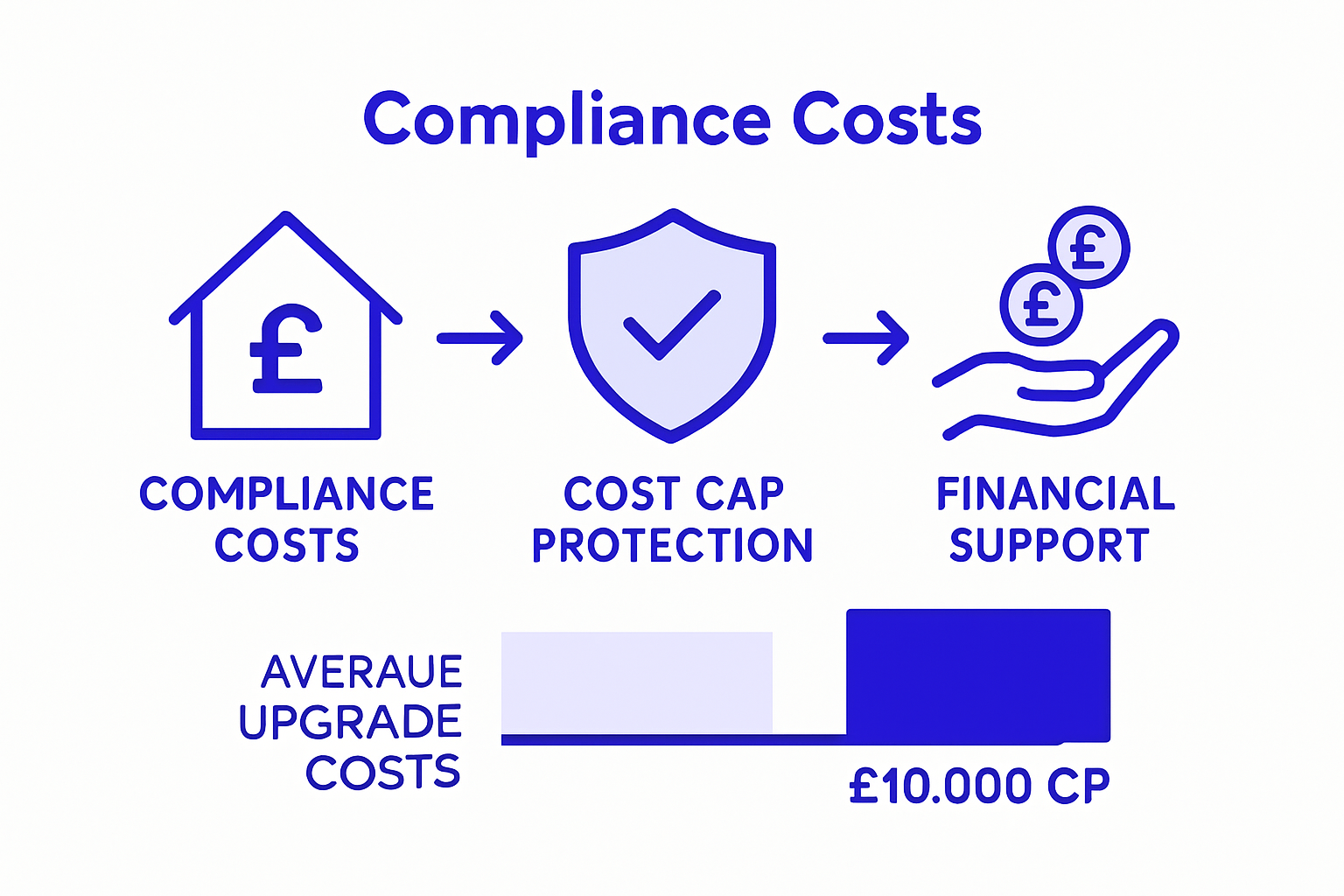
To mitigate the financial impact, the government has proposed a structured cost cap mechanism for property improvements. This approach means landlords will not be required to invest beyond a predetermined financial threshold, typically around £10,000 per property. The cost cap is designed to ensure that energy efficiency upgrades remain economically viable, preventing excessive financial strain while still driving meaningful improvements in building performance. Property owners can expect to be exempt from further investment if the total cost of recommended upgrades exceeds this predefined limit.
The financial strategy encompasses multiple support mechanisms to ease the transition. These include potential government grants, tax incentives, and low-interest financing options for energy efficiency improvements. The goal is to create a balanced approach that encourages investment without creating undue hardship for property owners. Landlords will need to carefully assess their properties, prioritise cost-effective improvements, and potentially phase upgrades to manage their financial commitments effectively.
Understanding the compliance landscape requires a strategic approach. Property owners should anticipate that while initial investments may seem substantial, the long-term benefits include reduced energy costs, increased property values, and alignment with evolving regulatory standards. Government consultations on energy performance standards indicate a commitment to supporting property owners through this transition, recognising that collaborative and financially sustainable approaches are key to achieving broader environmental objectives.
Enforcement And Exemptions Rules
The enforcement of new energy efficiency regulations represents a critical mechanism for ensuring compliance across the Private Rented Sector. Government consultations on enforcement strategies reveal a comprehensive approach that balances stringent requirements with practical considerations for property owners.
Penalties for non-compliance will be substantial, potentially including significant financial fines and restrictions on property lettings. Landlords who fail to meet the minimum Energy Performance Certificate (EPC) rating of C by the specified deadline could face penalties ranging from £5,000 to £30,000, depending on the severity and duration of non-compliance. These financial consequences are designed to motivate proactive property improvements and ensure meaningful progress towards energy efficiency goals.
The regulations also incorporate a nuanced exemption framework to address unique circumstances. Detailed EPC exemption guidelines outline specific scenarios where landlords might be temporarily excused from compliance requirements. These exemptions typically include properties with prohibitively expensive improvement costs, listed buildings with architectural restrictions, or properties where tenants consistently refuse necessary modifications. Landlords must register these exemptions through an official process, providing documented evidence to support their claim.
Navigation of these enforcement and exemption rules requires careful planning and proactive management. Property owners should maintain comprehensive documentation, conduct regular energy assessments, and develop a strategic approach to property upgrades. The overarching objective remains clear: transitioning the Private Rented Sector towards more sustainable, energy-efficient housing while providing reasonable flexibility for property owners facing genuine challenges in meeting the new standards.
Navigate Energy Efficiency Regulations with Confidence and Expert Support
London property owners face mounting challenges to meet new energy efficiency regulations by 2025. The complexities of updated EPC standards, evolving cost caps, and strict enforcement rules create urgent pressure to act swiftly. These changes demand accurate assessments, clear guidance on necessary upgrades, and reliable compliance solutions to avoid costly penalties and unlock long-term savings.
At Complete EPC, we specialise in helping property owners, landlords, and estate agents across London seamlessly comply with these demanding energy performance requirements. Our team of qualified assessors delivers precise EPC evaluations combined with clear recommendations for improvement. With our expertise in SAP calculations for London properties and deep understanding of government regulations, we help you navigate the new legislative landscape confidently and cost-effectively.
Don’t wait until the final deadline jeopardises your property’s value or your legal standing. Explore how our tailored EPC services can ensure you meet the rising standards while enhancing your asset’s market appeal. Take control of your compliance journey now by visiting Complete EPC and securing your professional energy assessment today.
Frequently Asked Questions
What are the new energy efficiency regulations for property owners in London?
The new energy efficiency regulations mandate that properties achieve a minimum Energy Performance Certificate (EPC) rating of C by 2030, requiring significant improvements in energy efficiency.
How will the changes in EPC methodology affect my property?
The updated RdSAP 10 methodology provides more precise assessments of energy performance, offering deeper insights into energy consumption patterns and identifying potential areas for improvement in your property.
What costs should landlords expect when upgrading their properties for compliance?
Landlords are expected to face compliance costs, but there is a cost cap of around £10,000 per property to ensure that improvements remain economically viable. Financial support options may also be available.
What penalties do landlords face for non-compliance with the new regulations?
Landlords who fail to meet the minimum EPC rating may face significant financial penalties ranging from £5,000 to £30,000, depending on the severity and duration of non-compliance.
Recommended
- 7 Essential EPC Compliance Tips for London Property Owners – Complete EPC
- 7 Steps for Better Energy Efficiency in London Properties
- Energy Efficiency Steps for London Properties Made Simple
- 7 Essential EPC Improvement Recommendations for London Homes – Complete EPC
- The Essential Guide to Saving Energy at Home – Projector Display
- Diesel Engine Emission Standards 2025: What Technicians Need to Know – My WordPress
- Éclairage urbain LED : une révolution durable et connectée pour la vil