

TL;DR:
- Energy efficiency solutions reduce building energy use and costs while enhancing sustainability.
- Most London property owners see significant savings by combining fabric improvements, AI technology, and monitoring after ensuring proper benchmarking and compliance.
Energy efficiency solutions are methods and technologies that reduce energy consumption and costs while improving building sustainability. For London property owners and businesses, the right approach can cut utility bills by 15–30% within 12 months using smart energy management platforms. Industry protocols such as the International Performance Measurement and Verification Protocol (IPMVP) and UK Building Regulations Part L set the standards for measuring and achieving these gains. Whether you manage a Victorian terrace or a commercial office block, the path to lower bills and better compliance starts with understanding which solutions deliver the strongest return.
What are the most effective energy efficiency technologies?
The fabric-first approach is the most reliable starting point for any building. Sealing air leaks, upgrading insulation, and replacing single-glazed windows address the root cause of heat loss before you spend money on new systems. Fabric-first improvements can reduce heating and cooling demand by around 10% before any system replacement takes place. That saving compounds once you layer in better equipment on top.

AI-driven HVAC optimisation is the most impactful technology upgrade for commercial and mixed-use buildings. These systems read real-time occupancy data and adjust ventilation and temperature automatically. AI-powered HVAC systems can reduce energy use by 20–40% in commercial buildings by matching output to actual demand rather than fixed schedules. The payback period is typically less than 12 months because the software layers onto existing building management infrastructure without major civil works.
Smart energy management platforms add a further layer of control by aggregating data from meters, sensors, and equipment into a single dashboard. Property managers can spot anomalies, track consumption trends, and act before waste becomes a habit. AI-based optimisation solutions typically integrate with existing building management systems and pay for themselves within 12 months through autonomous adjustments.
| Technology | Typical saving | Upfront cost | Payback period |
|---|---|---|---|
| Fabric improvements (insulation, sealing) | ~10% on heating/cooling | Low to medium | 2–5 years |
| AI-driven HVAC optimisation | 20–40% on HVAC energy | Medium | Under 12 months |
| Smart energy management platform | 15–30% on total utility costs | Low (software) | ~6 months |
| LED lighting retrofit | 50–70% on lighting energy | Low | 1–3 years |
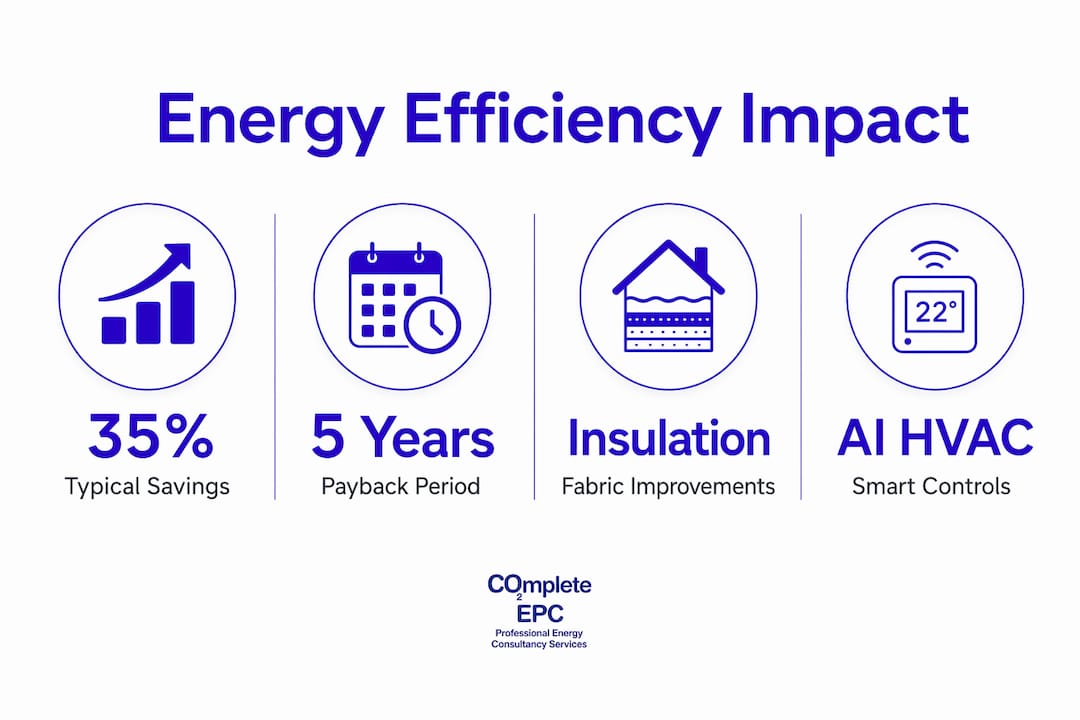
Pro Tip: Start with a fabric survey before investing in any technology. Spending on smart controls in a poorly insulated building is like fitting a high-efficiency boiler in a room with no roof.
How can property owners benchmark and verify energy savings?
Benchmarking is the process of comparing your building’s energy use against a reliable baseline. Without a proper baseline, you cannot tell whether a drop in consumption reflects a genuine improvement or simply a mild winter. Benchmarking against similar properties is critical to identify real inefficiencies and drive meaningful optimisation.
A credible baseline must account for three variables:
- Weather normalisation. Heating degree days and cooling degree days adjust consumption figures for seasonal temperature variation, so you compare like with like across years.
- Occupancy and operational hours. A building running at 60% occupancy uses less energy for reasons unrelated to efficiency. Your baseline must reflect normal operating conditions.
- Sub-metering. Separating HVAC, lighting, and plug loads lets you pinpoint where waste occurs rather than managing a single blended figure.
The IPMVP provides four measurement and verification options, ranging from whole-building metering to isolated retrofit measurement. Most London commercial landlords use Option C (whole-facility metering) because it captures all interactions between systems and requires no additional sub-metering infrastructure.
Without a data-driven baseline that accounts for occupancy, weather, and operations, it is impossible to verify savings accurately or justify capital investment to stakeholders. Continuous monitoring closes this gap by flagging anomalies in real time rather than waiting for quarterly bills to reveal a problem.
Pro Tip: Set your baseline over a full 12-month period to capture seasonal variation. A baseline built on summer data alone will understate winter heating costs and skew every comparison that follows.
What simple practices improve building energy efficiency?
Low-cost behavioural changes and routine maintenance deliver observable savings with no capital outlay. The following actions are ranked by impact.
-
Adjust thermostat schedules. Shifting thermostat settings by 4–5.5°C for 8 hours daily saves up to 10% annually on heating and cooling bills. Programme setback temperatures for nights and weekends when buildings are unoccupied.
-
Change HVAC filters on schedule. Blocked filters force fans to work harder, increasing electricity draw and reducing air quality. Regular minor maintenance such as changing filters and cleaning refrigerator coils prevents efficiency drops and costly system failures.
-
Seal gaps around windows and doors. Draught-proofing is one of the cheapest interventions available. A tube of sealant and an afternoon’s work can noticeably reduce heat loss in older London properties.
-
Switch to LED lighting. LED lamps use a fraction of the electricity consumed by halogen or fluorescent alternatives and last significantly longer. Pair them with occupancy sensors in corridors, stairwells, and meeting rooms to eliminate waste from lights left on in empty spaces.
-
Use window treatments and external shading. South-facing windows in London offices can generate significant solar gain in summer, pushing air conditioning loads higher. Blinds, external louvres, or solar control film reduce cooling demand without affecting daylight quality.
-
Audit plug loads. Computers, monitors, and kitchen appliances left on standby consume energy continuously. A building-wide policy of switching off at the socket, enforced by smart power strips, removes this hidden load.
How do renewable energy solutions complement efficiency efforts?
Renewable energy solutions work best when layered on top of a building that already consumes less. Fitting solar panels to a poorly insulated property simply generates electricity to heat a leaky building. Get the efficiency baseline right first, then size your renewable system to meet the reduced demand.
| Renewable technology | Best suited to | Key consideration for London |
|---|---|---|
| Solar photovoltaic (PV) panels | Flat-roof commercial buildings, south-facing residential roofs | Planning permission required in conservation areas |
| Air source heat pumps | Properties replacing gas boilers | Performance drops below -5°C; rare in London but worth noting |
| Ground source heat pumps | Properties with garden space or car parks | Higher upfront cost; strong long-term ROI |
| Small-scale wind turbines | Rural or exposed urban sites | Limited viability in dense London boroughs due to turbulence |
Solar PV is the most practical renewable option for most London commercial properties. Flat roofs on office blocks and retail units offer unobstructed south-facing area, and the UK government’s Smart Export Guarantee (SEG) pays building owners for surplus electricity exported to the grid. Air source heat pumps qualify for support under the Boiler Upgrade Scheme, making them financially accessible for residential landlords replacing ageing gas boilers.
Renewables also reduce a building’s dependence on grid electricity, which carries a carbon intensity that varies by time of day. Pairing solar PV with a battery storage system allows property owners to use self-generated power during peak tariff periods, cutting bills further.
What are the regulatory requirements for London properties?
Energy Performance Certificates (EPCs) are the primary regulatory instrument for energy efficiency in the UK. Every property marketed for sale or let must hold a valid EPC, rated on a scale from A (most efficient) to G (least efficient). The Minimum Energy Efficiency Standards (MEES) regulations require EPC compliance for landlords at a minimum band E for most privately rented properties, with proposals to raise this threshold to band C in coming years.
The regulatory picture for London property owners includes several key points:
- MEES enforcement. Landlords who let properties below the minimum EPC rating face financial penalties. The MEES regulations set out the compliance framework and available exemptions.
- Commercial properties. Non-domestic buildings must display their EPC rating publicly. Failure to obtain a valid certificate before marketing a property is a legal offence.
- Property value. Windows, doors, and building fabric are rated as very or somewhat important by 86% of property professionals for buyer appeal, confirming that energy efficiency improvements directly affect market value.
- BREEAM certification. Commercial developers and investors increasingly seek BREEAM accreditation as evidence of sustainable building practice, which supports premium valuations and attracts institutional tenants.
Energy efficiency improvements serve as a marketing and property valuation tool, not just an operational cost measure. A higher EPC rating is a quantified, independently verified signal of quality that buyers and tenants can compare across properties.
Key takeaways
The most effective approach to energy efficiency in London properties combines fabric improvements, data-driven monitoring, and regulatory compliance to deliver verified, lasting cost reductions.
| Point | Details |
|---|---|
| Start with the fabric | Seal leaks and upgrade insulation before investing in technology to maximise every pound spent. |
| Use AI and smart platforms | AI-driven HVAC and energy management software can cut energy costs by 15–40% with payback under 12 months. |
| Establish a proper baseline | Normalise for weather and occupancy before measuring savings; without this, no improvement can be verified. |
| Layer in renewables strategically | Solar PV and heat pumps deliver strongest ROI when added to an already efficient building. |
| Stay ahead of MEES and EPC rules | Regulatory thresholds are rising; a current EPC assessment protects value and avoids penalties. |
What I have learned from London’s energy efficiency gap
Working across London’s property sector, the pattern I see most often is property owners who invest in technology before addressing the basics. A landlord fits a smart thermostat in a flat with single-glazed windows and wonders why the bills barely move. The technology is sound; the building is not ready for it.
The second gap is verification. Property owners make changes and assume the savings are there because the bills feel lower. A mild winter can produce the same result. Without a baseline adjusted for weather and occupancy, you are guessing. The IPMVP exists precisely because guessing is not good enough when capital is at stake.
My honest view is that the EPC is underused as a planning tool. Most property owners see it as a compliance box to tick. The recommendations section of a well-prepared EPC is actually a prioritised retrofit roadmap, written by a qualified assessor who has inspected the specific building. That is genuinely useful information, and most owners file it away without acting on it. If you have a current EPC, read the recommendations. If you do not have one, get one before you spend a penny on upgrades.
— Danny
How Completeepc helps London property owners meet efficiency standards
Completeepc provides qualified EPC assessments for both residential and commercial properties across London, giving property owners the verified data they need to plan improvements and meet legal obligations. Whether you need a domestic EPC for a rental property or a commercial EPC for an office or retail unit, Completeepc’s assessors deliver accurate, compliant certificates at competitive rates. Every report includes specific improvement recommendations tied to your building’s actual performance, not generic advice. Contact Completeepc to arrange an assessment and get a clear picture of where your property stands and what it will take to improve its rating.
FAQ
What are energy efficiency solutions for buildings?
Energy efficiency solutions are technologies and practices that reduce the energy a building consumes without reducing comfort or output. Common examples include insulation upgrades, AI-driven HVAC controls, LED lighting, and smart energy management platforms.
How much can London property owners save on energy bills?
Smart energy management platforms can reduce utility costs by 15–30% within 12 months, while AI-driven HVAC optimisation can cut HVAC energy use by 20–40% in commercial buildings.
What is the minimum EPC rating required to let a property in London?
Under the MEES regulations, most privately rented properties in England must hold a minimum EPC rating of band E. Proposals to raise this to band C are under consultation, making early improvement planning advisable.
How do I verify that energy efficiency improvements are actually working?
Establish a data-driven baseline that accounts for weather, occupancy, and operational hours before making changes, then compare post-improvement consumption against that baseline using a recognised protocol such as the IPMVP.
Do renewable energy solutions require planning permission in London?
Solar PV panels on residential roofs often qualify as permitted development, but properties in conservation areas or listed buildings typically require planning permission. Always check with your local London borough before installation.