
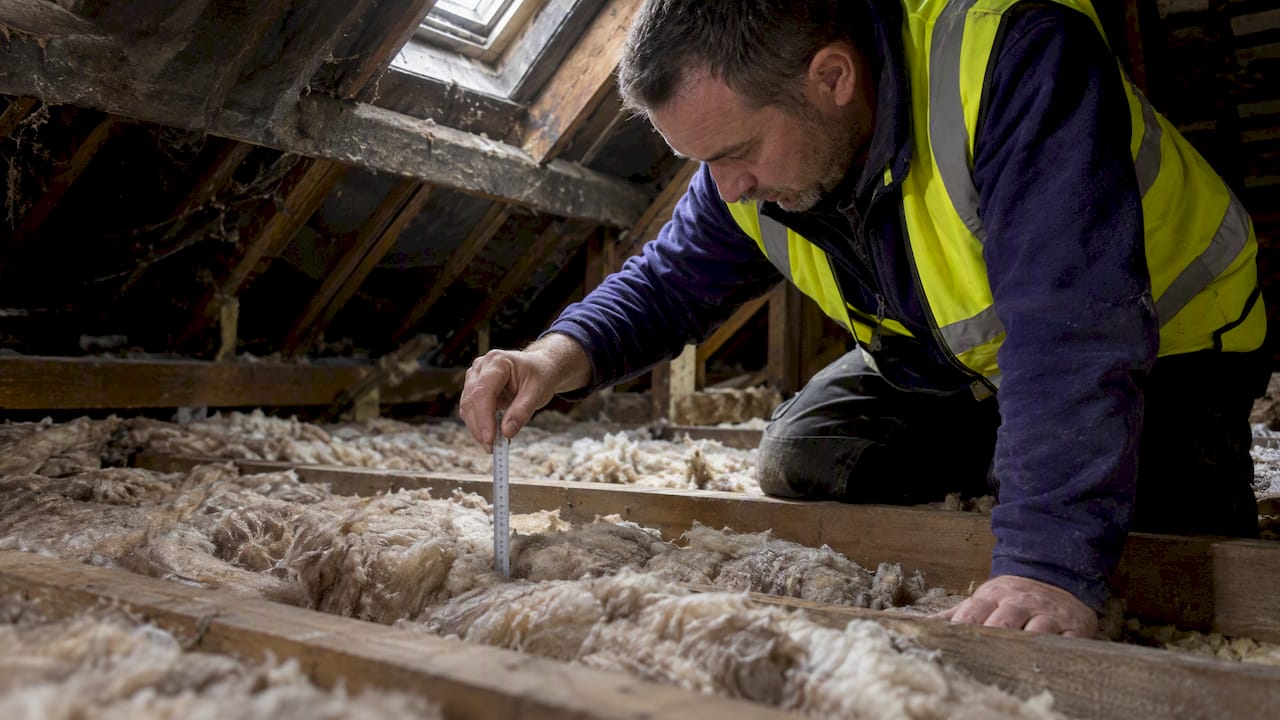
Start with fabric-first: insulation and draught-proofing deliver the biggest, quickest improvements to energy use and to most EPC ratings. Once the building envelope is sorted, move on to efficient heating and smart controls, then consider solar panels or battery storage if your circumstances suit them. Grants can cover part of the cost, and an updated EPC should follow once the works are finished.
TL;DR:
- Top up loft insulation to around 270 mm where it is thin or missing, and keep photographs, invoices, and specifications so assessors can count it.
- Cavity walls are usually straightforward to insulate, but solid walls, exposed or coastal sites, and listed homes warrant specialist assessment to avoid moisture problems.
- Install permanent seals around doors, windows, loft hatches, and unused chimneys, and plan ventilation alongside insulation to reduce condensation risk as air leakage falls.
- Heat pumps can be around four times more efficient than gas boilers, but their lower flow temperatures require good insulation and effective draught proofing.
- Check grant eligibility before work begins, because many schemes require a preinstallation EPC and rules vary; installers often handle applications and paperwork.
Table of Contents
- Loft, roof, floor and wall insulation: where to start
- Draught-proofing and glazing: low-cost wins with quick payback
- Heating systems and controls: boilers, heat pumps and smart controls
- Renewables and storage: solar PV, batteries and integration
- Ventilation and moisture: how to avoid problems when insulating
- Funding, grants and incentives: how to reduce upfront costs
- EPC: what it records, when to update it and how to make improvements count
- Prioritising measures: a short fabric-first decision framework
- Why hire a qualified assessor or retrofit adviser
- Practical sequencing from a practising assessor
- How we can help with your next energy performance step
- FAQ
- Sources
Loft, roof, floor and wall insulation: where to start
Loft insulation remains the single most cost-effective upgrade for most homes. Topping up to around 270mm where it has thinned or is missing cuts heat loss through the roof substantially, and the work itself takes a day or two for a typical semi.
Wall insulation is more nuanced. Cavity walls are usually straightforward to fill, but solid walls, commonly found in older or period properties, need external or internal insulation, both more disruptive and more expensive. Exposed, coastal or listed properties often need a specialist assessment before any wall insulation goes ahead, since the wrong approach can trap moisture.
Floor insulation pays off best under suspended timber floors and in colder ground-floor rooms, though lifting floorboards adds time and cost compared with loft work.
Whatever you insulate, keep the paperwork:
- Before-and-after photographs of loft, wall or floor insulation while it is still accessible
- Installer invoices and product specification sheets
- Any certificates confirming the materials and thickness used
Without this evidence, an assessor will typically ignore non-visible improvements and revert to age-based assumptions when producing your EPC.
Draught-proofing and glazing: low-cost wins with quick payback
Before spending on anything structural, seal the gaps. Draught-proofing is cheap, quick and, when done with permanent products, can be recognised in an EPC assessment.
- Fit brush or wiper seals to external doors and letterboxes.
- Seal gaps around window frames and skirting boards with permanent sealant rather than temporary strips.
- Check and renew seals on loft hatches, which are a common and overlooked draught source.
- Consider chimney draught excluders where a fireplace is unused.
Glazing is a bigger decision. Double glazing offers a meaningful step up from single glazing for both comfort and EPC score, while triple glazing adds a further but smaller improvement, usually justified only in new builds or very cold, exposed locations given the extra cost. For most retrofit projects, well-fitted double glazing combined with thorough draught-proofing gives the best balance of cost and benefit.
Heating systems and controls: boilers, heat pumps and smart controls
Fabric improvements come before heating upgrades for a practical reason: heat pumps run at lower flow temperatures than gas boilers and depend on a well-insulated, well-sealed building to deliver comfortable results. Heat pumps can be around four times more efficient than a gas boiler, but that efficiency only shows up once heat loss has been minimised.
If your boiler is old or failing, replacing it is often the right short-term move. If you are planning further ahead and your property is well-insulated with radiators or underfloor heating sized appropriately, a heat pump becomes a realistic option.
- Smart thermostats and zone controls reduce wasted heating in unoccupied rooms.
- Thermostatic radiator valves (TRVs) let you fine-tune temperature room by room.
- Annual servicing keeps any heating system running at its rated efficiency and supports accurate EPC data.
Pro Tip: Get your loft, walls and draught-proofing sorted first: a heat pump installed into a beauty, under-insulated home rarely performs as well as the same system in a fabric-first retrofit.
Renewables and storage: solar PV, batteries and integration
Solar panels cut how much electricity you draw from the grid, and a well-sized battery lets you store daytime generation for use in the evening, improving self-consumption rather than exporting it for a lower return.
- Battery storage tends to make most financial sense with larger panel arrays, higher evening electricity use, or an electric vehicle charging at home.
- Systems should be installed by an MCS-certified installer and properly commissioned, which also matters for warranty and insurance purposes.
- Check your home insurance policy reflects the new equipment and keep commissioning certificates on file.
For a closer look at how solar and storage work together in a retrofit, Smart Home Technical Ltd has put together a practical guide to solar retrofits worth reading before you commit to a system size.
Ventilation and moisture: how to avoid problems when insulating
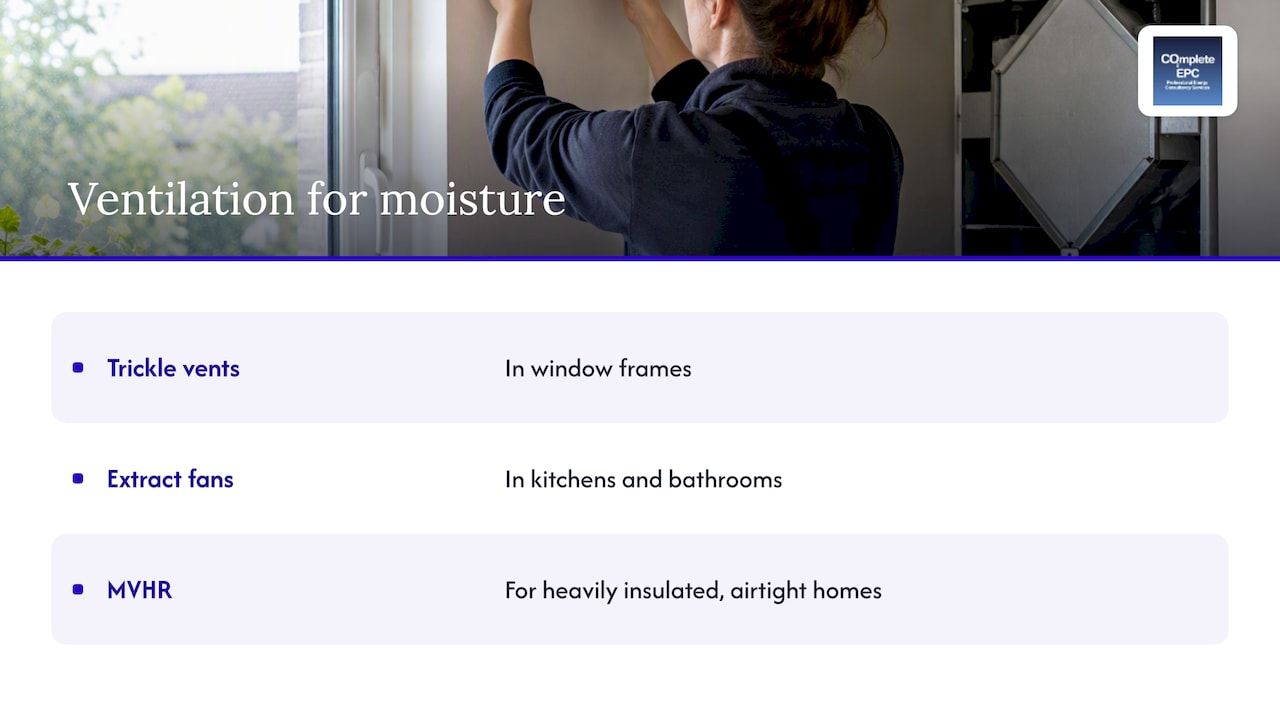
Sealing up a building without thinking about airflow creates its own problems. Loft insulation and internal wall insulation both reduce incidental air leakage, which can raise condensation risk if ventilation is not addressed alongside it. Trickle vents in window frames, extract fans in kitchens and bathrooms, and, for heavily insulated and airtight homes, mechanical ventilation with heat recovery (MVHR) all help manage moisture. Coordinate ventilation changes with your insulation installer so the two are planned together rather than as an afterthought.
Funding, grants and incentives: how to reduce upfront costs
Several schemes exist to offset the cost of retrofit work, and most expect a whole-house approach rather than a single isolated measure.
- The Boiler Upgrade Scheme offers an upfront grant towards an air source heat pump, with your MCS-certified installer handling eligibility checks and the application.
- ECO and local Warm Homes grants typically fund insulation and heating measures together, aimed at lower-income or less efficient homes.
- Many schemes require a pre-installation EPC, so check your current rating before applying.
Pro Tip: Ask your installer early whether a scheme applies to your property: eligibility rules and documentation requirements vary and installers usually handle the paperwork as part of the job.
EPC: what it records, when to update it and how to make improvements count
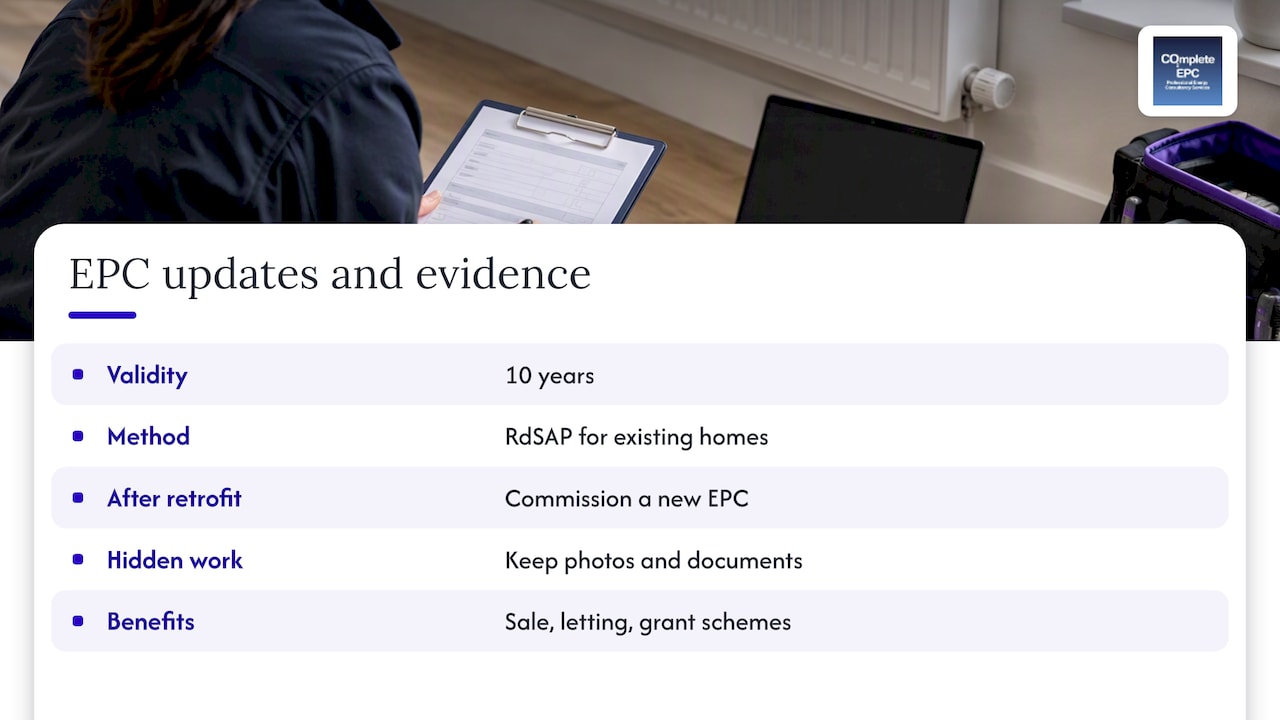
An EPC is valid for 10 years and uses the RdSAP methodology for existing homes, a standardised set of assumptions about construction, insulation and systems. Once you have completed retrofit work, commission a new EPC so the improvements are reflected in your rating rather than left on file as outdated assumptions. Assessors inspect visible fabric and systems during a visit, which is why photographic and documentary evidence matters for anything hidden behind plasterboard or floorboards. An improved EPC supports a sale, a letting, and eligibility for several grant schemes.
Prioritising measures: a short fabric-first decision framework
A sensible sequence saves money and avoids wasted effort on the wrong measure first.
- Check your current EPC and read the recommendations it already lists.
- Fix low-cost items: draught-proofing, loft top-up, heating controls.
- Tackle insulation gaps: walls and floors where cost-effective.
- Upgrade heating once the fabric is sorted.
- Consider solar PV and battery storage if your roof and usage pattern suit it.
| Stage | Typical timeline | Typical cost range |
|---|---|---|
| Draught-proofing and controls | Days | Low |
| Loft insulation top-up | A day or two | Low to medium |
| Wall or floor insulation | Weeks | Medium to high |
| Heat pump installation | Weeks | High |
| Solar PV and battery | Days to weeks | Medium to high |
If your budget is limited, prioritise the loft and controls first. If you have solid walls or live in a conservation area, bring in a retrofit assessor before committing to a method.
Why hire a qualified assessor or retrofit adviser
A qualified assessor produces an accurate EPC, checks the SAP or RdSAP inputs against what is actually installed, and captures the evidence needed for non-visible measures to count. We carry out domestic and commercial EPCs, alongside SAP calculations, TM59 overheating assessments and dynamic simulation modelling for more complex buildings. DIY measures such as draught-proofing suit most homeowners without professional input, but anything affecting your EPC rating, a grant application, or a sale or letting benefits from a proper assessment first.
Practical sequencing from a practising assessor
We consistently see the same mistake: homeowners replace a boiler or install a heat pump before dealing with insulation, then wonder why bills barely move. Insulate and draught-proof first, add efficient heating and controls second, and treat solar or storage as the final layer once the fabric is doing its job.
— Danny
How we can help with your next energy performance step
Whichever stage you are at, we can confirm what your property needs and record it properly. Our services cover:
- Domestic Energy Performance Certificate assessments for homeowners and landlords
- Commercial EPC for business premises and compliance deadlines
- SAP Calculations for new builds, conversions and extensions
- Post-works EPC reassessments once your retrofit is complete
We capture the evidence your retrofit needs for an accurate rating and can talk you through how a post-works EPC supports a grant application, a sale or a letting. Get in touch to book a domestic EPC or a commercial EPC and get a clear picture of where your property stands.
FAQ
What are three examples of energy efficiency measures?
Loft insulation, draught-proofing, and upgrading to a more efficient heating system with smart controls are three widely used examples. Each reduces wasted heat or energy use without changing how the building is occupied.
Is an energy rating of D good for a house?
A Band D is a mid-range rating, better than E, F or G but below the average for English housing, where the median EPC score sits around Band C. Insulation and heating upgrades are the usual route to moving from D into C or higher.
Can I sell my house without an EPC?
No, a valid Energy Performance Certificate is a legal requirement before marketing a property for sale in England and Wales. Your EPC remains valid for 10 years, so an existing certificate may already cover the sale.
Is 100% energy efficiency possible?
No building can reach total energy efficiency, since some heat loss and energy use are unavoidable in any occupied home. The realistic goal is to minimise waste through a fabric-first approach: insulation and draught-proofing first, then efficient heating and, where suitable, renewables.