
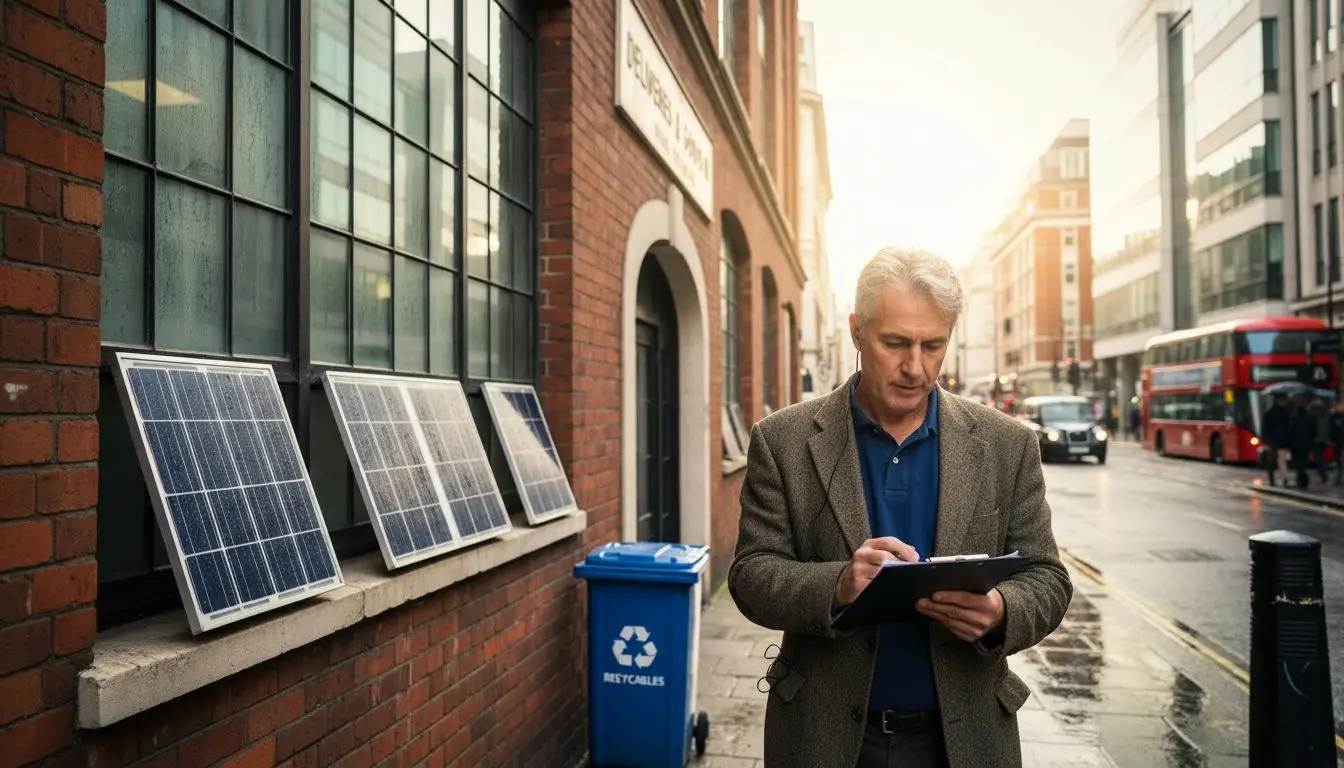
Most british households face rising utility costs as energy prices continue to climb. With energy efficiency becoming a national priority, property owners across the United Kingdom are searching for ways to cut expenses and reduce their carbon footprint. Modern energy saving technologies have helped property owners lower annual energy bills by up to 30 percent while supporting sustainable living in cities such as London. Learning about these practical innovations can lead to real savings and a smaller environmental impact.
Table of Contents
- What Are Energy Saving Technologies?
- Main Types Used In UK Properties
- How Technology Improves EPC Ratings
- Installation Costs And Return On Investment
- Key Mistakes And Compliance Issues
Key Takeaways
| Point | Details |
|---|---|
| Energy Efficiency Technologies | Implementing technologies such as smart thermostats and LED lighting can significantly reduce energy costs and environmental impact. |
| Financial Incentives | Government grants can lower the initial investment for technologies like air source heat pumps, enhancing their accessibility for property owners. |
| EPC Improvement | Upgrading with advanced technologies directly enhances Energy Performance Certificate ratings, potentially increasing property value. |
| Regulatory Compliance | Property owners must navigate planning permissions and building regulations carefully to avoid legal challenges and ensure effective installations. |
What Are Energy Saving Technologies?
Energy saving technologies represent sophisticated systems and solutions designed to reduce energy consumption and minimise environmental impact across residential and commercial properties. These innovative approaches encompass a wide range of strategies and devices aimed at improving efficiency, reducing utility costs, and supporting sustainable living in urban environments like London.
The Energy Technology List (ETL) highlights the diverse landscape of energy-efficient technologies, showcasing over 8,000 independently verified products spanning 62 technological categories. These technologies range from smart thermostats and LED lighting to advanced insulation materials and renewable energy systems. By implementing such technologies, property owners can significantly decrease their energy expenditure while contributing to broader environmental conservation efforts.
Government initiatives are actively supporting technological advancements in this domain. The UK government and Ofgem have outlined ambitious plans to integrate smart technologies and data systems, with potential system management cost reductions estimated at £10 billion annually by 2050. These technologies not only promise financial benefits but also create employment opportunities, with projections suggesting up to 24,000 new jobs in the energy efficiency sector.
Pro Tip for Energy Efficiency: Conduct a comprehensive energy audit of your property to identify specific technologies that can deliver the most significant cost savings and performance improvements.
Main Types Used in UK Properties
The Energy Technology List (ETL) reveals a comprehensive landscape of energy-saving technologies specifically tailored for UK properties. These technologies span multiple categories, addressing various aspects of energy consumption and efficiency across residential and commercial settings. Understanding these technologies is crucial for property owners seeking to reduce energy costs and minimise environmental impact.
Primary energy-saving technologies in UK properties include advanced heating systems, intelligent lighting solutions, and innovative insulation technologies. Air source heat pumps represent a particularly significant development, offering efficient heating alternatives for residential properties. These systems can cost between £12,000 to £15,000 for installation, with potential government grants reducing the financial burden. Other notable technologies include smart thermostats, LED lighting systems, and renewable energy integration solutions that help properties become more energy-efficient and environmentally responsible.

The technological categories encompass sophisticated systems across multiple domains. Heating technologies like condensing boilers, heat pumps, and smart radiator controls provide precise temperature management. Lighting technologies include LED bulbs, motion sensors, and intelligent control systems that automatically adjust illumination based on occupancy and natural light conditions. Insulation technologies such as advanced double-glazing, wall cavity insulation, and reflective materials help maintain consistent internal temperatures while reducing energy consumption.
Pro Tip for Energy Efficiency: Prioritise a comprehensive energy assessment before investing in technologies, identifying the most impactful solutions specific to your property’s unique characteristics and energy consumption patterns.
The table below summarises major energy-saving technologies commonly adopted in UK properties, highlighting their typical applications and expected benefits:
| Technology | Typical Use | Key Benefit |
|---|---|---|
| Air Source Heat Pumps | Residential heating | Lower running costs |
| Smart Thermostats | Temperature control | Finer energy management |
| LED Lighting Systems | Lighting upgrades | Reduced electricity usage |
| Advanced Insulation | Walls, windows, lofts | Improved temperature stability |
| Battery Storage Systems | Solar energy retention | Maximised onsite energy use |
How Technology Improves EPC Ratings
Modern energy-saving technologies play a crucial role in enhancing a property’s Energy Performance Certificate (EPC) ratings, offering property owners multiple strategies to improve their energy efficiency and reduce carbon emissions. By implementing sophisticated technologies from the Energy Technology List, homeowners can systematically upgrade their property’s environmental performance and potentially increase its market value.
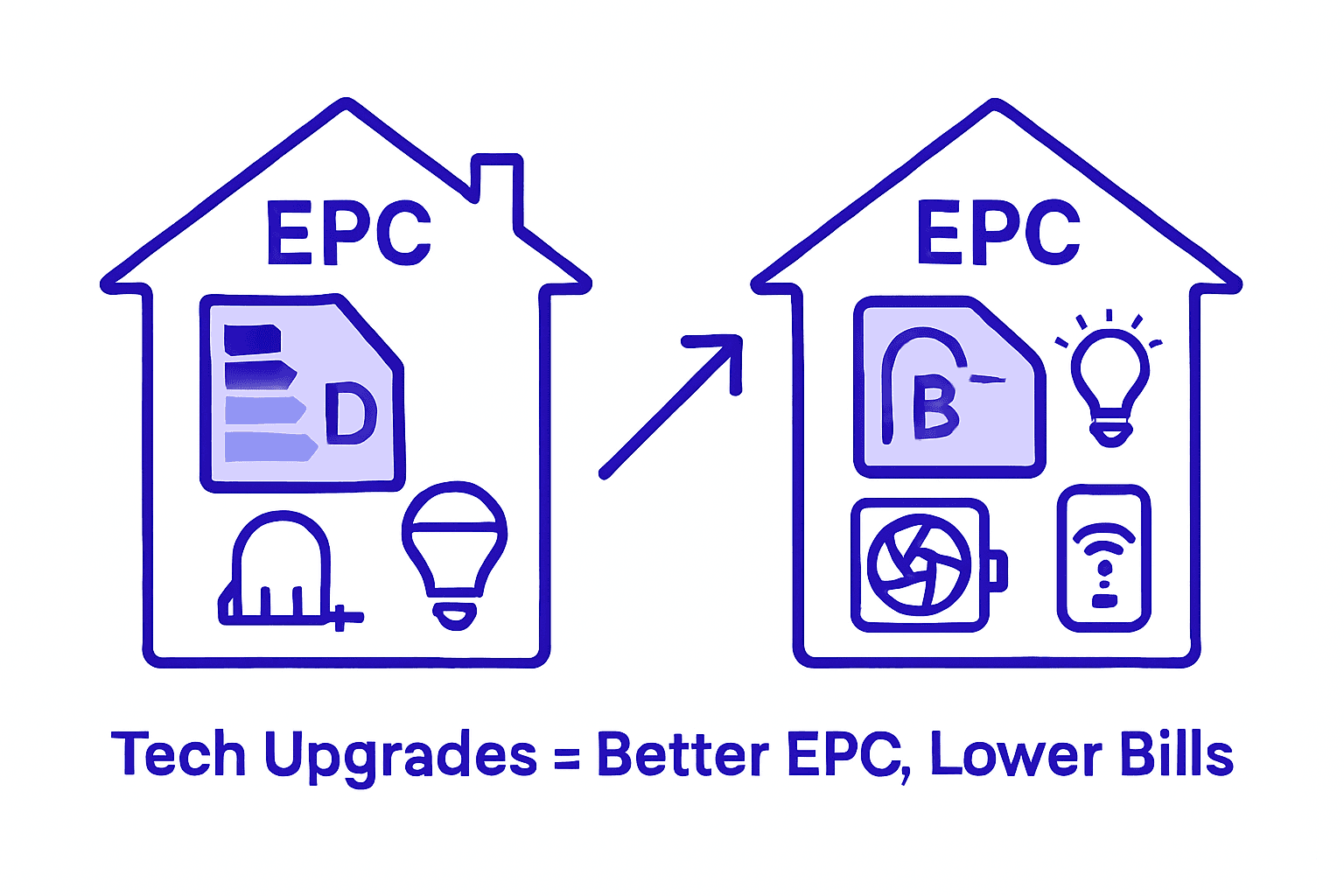
Air source heat pumps represent a transformative technology that significantly impacts EPC ratings. These advanced heating systems provide efficient thermal management while substantially reducing reliance on traditional fossil fuel-based heating methods. By transitioning to such technologies, properties can achieve lower carbon emissions, improved energy efficiency, and higher EPC ratings. The installation typically costs between £12,000 to £15,000, with potential government grants offsetting a portion of the initial investment.
Technological interventions that directly influence EPC ratings include smart heating controls, high-efficiency LED lighting systems, advanced insulation materials, and renewable energy integrations. Smart thermostats enable precise temperature management, reducing unnecessary energy consumption. LED lighting solutions consume significantly less electricity compared to traditional bulbs, while technologies like double-glazing and wall cavity insulation help maintain consistent internal temperatures. Each of these technological upgrades contributes incrementally to improving a property’s overall energy performance rating.
Pro Tip for EPC Rating Improvement: Conduct a comprehensive energy audit to identify the most impactful technological upgrades tailored to your specific property’s characteristics and existing energy infrastructure.
Installation Costs and Return on Investment
Energy-saving technologies represent significant financial investments, with upfront costs balanced against long-term economic benefits. Air source heat pump systems exemplify this complex financial calculation, typically requiring an initial investment between £12,000 and £15,000. Fortunately, government grants can substantially offset these expenses, potentially reducing installation costs by up to £7,500 and making advanced energy technologies more accessible to property owners.
Battery energy storage systems offer another compelling investment opportunity, with installation costs ranging from £300 to £600 per kilowatt-hour. These sophisticated technologies provide an attractive financial proposition, delivering an expected return on investment between 10% and 18% annually. The typical payback period spans 6 to 10 years, depending on factors such as energy consumption patterns, system efficiency, and individual property characteristics. Homeowners can optimise their financial outcomes by carefully selecting technologies that align with their specific energy usage requirements.
The economic calculus of energy-saving technologies extends beyond immediate financial considerations. Implementing these solutions can significantly enhance property value, reduce ongoing energy expenditures, and contribute to broader environmental sustainability goals. Factors influencing return on investment include the property’s existing energy infrastructure, local energy tariffs, installation quality, and the specific technologies selected. Well-insulated properties with strategic technology implementations can achieve substantial long-term savings, potentially offsetting initial installation expenses through reduced energy consumption and improved efficiency.
Here is a quick comparison of installation costs and payback potential for two key technologies:
| Technology | Initial Cost Range | Payback Period | Typical Returns |
|---|---|---|---|
| Air Source Heat Pump | £12,000 – £15,000 | 7–12 years | Increased EPC |
| Battery Storage | £300–£600 per kWh | 6–10 years | 10–18% p.a. ROI |
Pro Tip for Investment Evaluation: Calculate your potential energy savings by comparing current utility expenses against projected costs after technology installation, considering both direct financial returns and increased property valuation.
Key Mistakes and Compliance Issues
Recent planning permission reforms have significantly altered the landscape of energy-saving technology installations, introducing new complexities for property owners. Navigating these regulatory changes requires careful attention to detail and proactive compliance management. Misunderstanding or overlooking these regulations can result in costly legal challenges, project delays, and potential financial penalties.
Heat pump installations represent a prime example of the intricate compliance landscape. From 29 May 2025, new government regulations will streamline installation processes, particularly for properties in dense urban settings like flats and terraced homes. However, property owners must remain vigilant about specific requirements, including technical specifications, energy efficiency standards, and local planning restrictions. Common mistakes include failing to obtain necessary permissions, inadequate system design, and non-compliance with building regulations.
Key compliance issues extend beyond initial installation. Energy-saving technologies must meet stringent performance standards, with ongoing maintenance and documentation critical to maintaining regulatory compliance. Property owners should be aware of potential pitfalls such as improper system sizing, inadequate insulation integration, and failure to update Energy Performance Certificates (EPCs) following technological upgrades. These oversights can compromise both the legal standing and the practical effectiveness of energy-saving investments.
Pro Tip for Regulatory Compliance: Consult with a certified energy assessment professional before implementing any major technological upgrades to ensure full compliance with current building regulations and maximise potential energy efficiency benefits.
Unlock Greater Savings with Expert Energy Efficiency Support in London
Energy saving technologies like air source heat pumps and smart thermostats can dramatically lower your energy bills and improve your property’s EPC rating. However, understanding which solutions best suit your unique London property and ensuring compliance with evolving regulations can feel overwhelming. Many property owners face challenges in navigating installation costs, government grant eligibility, and achieving maximum energy efficiency benefits.
At Complete EPC, we specialise in helping landlords, estate agents, and property owners across London obtain accurate Energy Performance Certificates that reflect the latest in energy-saving technology advancements. Our experienced assessors provide detailed reports with tailored recommendations designed to enhance your property’s efficiency and market value. Don’t miss out on reducing your running costs and boosting your EPC rating—start your energy assessment today and take confident steps toward smarter saving. Visit Complete EPC now to get started and secure the most competitive rates for your energy certification needs.
Frequently Asked Questions
What are the main types of energy-saving technologies used in properties?
The primary energy-saving technologies include air source heat pumps, smart thermostats, LED lighting systems, and advanced insulation technologies that enhance efficiency and reduce energy costs.
How do energy-saving technologies improve EPC ratings?
Energy-saving technologies like air source heat pumps and smart heating controls significantly enhance Energy Performance Certificate (EPC) ratings by improving energy efficiency and reducing carbon emissions in properties.
What are the installation costs associated with energy-saving technologies?
Installation costs for technologies like air source heat pumps typically range from £12,000 to £15,000. Government grants may offset these costs by up to £7,500, making them more accessible.
What common mistakes should property owners avoid when implementing energy-saving technologies?
Property owners should avoid mistakes such as failing to obtain necessary permissions, improper system sizing, and not keeping Energy Performance Certificates updated after technology upgrades.
Recommended
- 7 Smart Cost-Saving Energy Solutions for London Properties
- The Key to Managing Utility Costs in London Homes – Complete EPC
- Making Every Drop Count: Water Efficiency Tips for London Homes – Complete EPC
- Unlocking Sustainable Living: Boosting Water Efficiency in London Homes – Complete EPC
- 7 Vorteile von wiederaufladbaren Batterien – accu.blog