

Nearly 90% of British tenants now factor energy efficiency into their rental decisions. For property owners in Central London, understanding what an Energy Performance Certificate offers is no longer optional. EPC ratings directly influence rental values, legal compliance, and the ability to attract eco-conscious tenants. This guide explains why smart landlords treat EPC assessments as more than a box to tick, turning them into a key strategy for improving property value and staying ahead in the competitive London market.
Table of Contents
- What Is an EPC and Why It Matters
- EPC Ratings and Tenant Decision-Making
- Legal Requirements for Landlords in London
- How EPC Improvements Increase Property Appeal
- Common EPC Pitfalls Landlords Should Avoid
Key Takeaways
| Point | Details |
|---|---|
| EPC Importance | An Energy Performance Certificate is essential for property marketing in the UK, helping landlords attract tenants and ensuring compliance with legal energy efficiency standards. |
| Tenant Decision-Making | Modern tenants consider EPC ratings crucial for assessing energy costs and environmental impact, which influences their rental choices. |
| Improving EPC Ratings | Landlords can enhance property appeal and rental value by investing in energy efficiency upgrades, aligning with tenant demand for sustainable living. |
| Avoiding EPC Pitfalls | Landlords must remain vigilant about EPC expiry and ensure quality assessments to leverage the certificate as a strategic asset for property management. |
What Is an EPC and Why It Matters
An Energy Performance Certificate (EPC) represents a critical document for property owners and tenants in the United Kingdom, providing a comprehensive assessment of a building’s energy efficiency. These certificates rate property energy performance using a standardised scale ranging from A (most efficient) to G (least efficient), offering potential renters or buyers transparent insights into a property’s energy consumption and potential running costs.
The significance of an EPC extends far beyond a simple rating. For landlords and property managers, these certificates serve as a crucial tool for attracting environmentally conscious tenants and demonstrating property value. Energy performance directly impacts utility expenses, with higher-rated properties typically offering lower energy bills and reduced carbon emissions. Potential tenants increasingly view EPCs as a key decision-making factor, using the information to assess not just rental costs but the long-term financial implications of their housing choices.
Legal requirements in the United Kingdom mandate that property owners obtain an EPC before marketing a property for sale or rent. This regulation ensures transparency and supports national sustainability goals by encouraging property improvements and energy-efficient upgrades. The certificate helps buyers and tenants compare energy use across different properties, providing a standardised metric for understanding potential energy consumption and environmental impact.
Pro Tip: Request an updated EPC assessment before listing your property, as a high-efficiency rating can significantly increase your rental attractiveness and potentially justify a higher rental price point.
EPC Ratings and Tenant Decision-Making
Modern tenants are increasingly sophisticated in their property selection process, with Energy Performance Certificates playing a pivotal role in their decision-making strategy. Landlords can leverage EPC ratings as a powerful marketing tool to attract environmentally conscious and financially savvy renters who prioritise energy efficiency and long-term living costs.
The nuanced impact of EPC ratings extends beyond simple environmental considerations. Potential tenants now recognise that a high-efficiency rating directly translates to lower utility expenses and reduced carbon footprint. This awareness means properties with superior energy performance certificates become more attractive, potentially commanding higher rental prices and experiencing shorter vacancy periods. Younger generations, in particular, demonstrate a strong preference for sustainable living spaces that align with their environmental values.
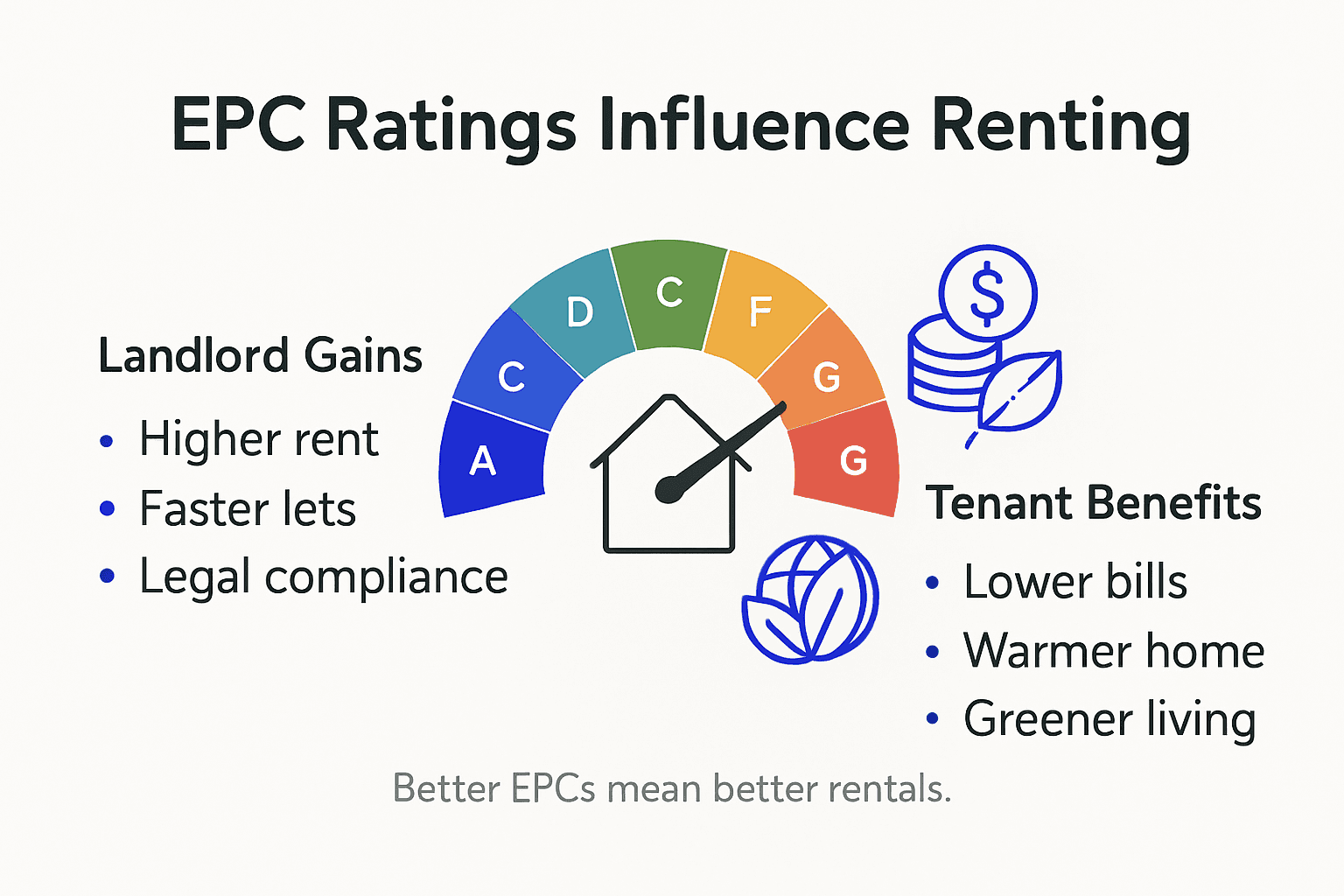
Tenants typically evaluate several key factors when interpreting EPC ratings. They examine potential annual energy costs, understand the property’s thermal performance, and assess recommended improvement areas. A comprehensive EPC provides transparent insights into insulation quality, heating systems, and potential energy-saving modifications. This detailed information empowers tenants to make informed choices about their living environment, balancing comfort, cost-effectiveness, and environmental responsibility.
Pro Tip: Position your property’s EPC rating prominently in rental listings, highlighting specific energy-efficiency features that demonstrate value beyond mere numbers, such as potential annual savings or green technology installations.
The following table highlights how a higher EPC rating influences both landlords and tenants in practical terms:
| EPC Rating Impact | Benefit for Landlords | Benefit for Tenants |
|---|---|---|
| Higher rental values | Opportunity to command premium rent | Reduced long-term energy costs |
| Shorter vacancy periods | Attracts more rental interest | Increased comfort and warmth |
| Market competitiveness | Stands out in listings | Lower utility bills |
| Sustainability appeal | Appeals to eco-conscious renters | Supports environmental values |
Legal Requirements for Landlords in London
Navigating the complex landscape of legal requirements for rental properties in London demands a thorough understanding of Energy Performance Certificate regulations. Landlords must ensure their properties meet minimum energy efficiency standards before marketing or leasing their properties, with strict compliance measures in place to enforce these crucial environmental and consumer protection guidelines.
The Minimum Energy Efficiency Standard (MEES) Regulations establish a clear benchmark for rental properties, mandating that all domestic and commercial properties achieve a minimum EPC rating of E or above. This legal requirement applies to both new tenancy agreements and existing tenancy renewals, meaning landlords cannot legally rent out properties falling below this energy performance threshold unless they have registered a specific exemption. Non-compliance can result in substantial financial penalties, with local authorities empowered to issue fines that can reach thousands of pounds.
Landlords in London face additional scrutiny due to the city’s progressive environmental regulations. Beyond the basic EPC rating requirement, property owners must provide tenants with a valid Energy Performance Certificate at the commencement of each tenancy, ensuring transparency about the property’s energy efficiency. This documentation not only satisfies legal obligations but also serves as a critical tool for potential tenants to understand their prospective home’s energy consumption, potential utility costs, and environmental impact.
Pro Tip: Proactively conduct an energy efficiency assessment before listing your property, identifying potential improvements that can elevate your EPC rating and demonstrate your commitment to both legal compliance and tenant comfort.
How EPC Improvements Increase Property Appeal
Property owners in London can significantly enhance their rental marketability by strategically improving their Energy Performance Certificate (EPC) ratings. Upgrading property energy efficiency directly impacts tenant attraction and rental potential by addressing the growing market demand for sustainable and cost-effective living spaces. Tenants are increasingly sophisticated in their property selection, prioritising homes that promise lower utility expenses and reduced environmental impact.

The financial implications of EPC improvements are substantial and multifaceted. Properties with higher energy efficiency ratings can command premium rental prices, with market research indicating potential annual tenant savings of approximately £240 when moving from an E to a C-rated property. These improvements not only make the property more attractive but also demonstrate the landlord’s commitment to both tenant comfort and environmental responsibility. Modern renters particularly value properties that align with their sustainability goals, making energy-efficient homes significantly more competitive in the London rental market.
Strategic EPC improvements encompass a range of targeted interventions, from upgrading insulation and installing more efficient heating systems to implementing smart home technologies. These enhancements go beyond mere compliance, transforming properties into desirable, future-proof living spaces. Landlords who invest in energy efficiency improvements can expect shorter vacancy periods, more discerning tenants, and potentially higher rental yields. The cumulative effect of these upgrades extends beyond immediate financial benefits, contributing to long-term property value and marketability.
Pro Tip: Prioritise cost-effective energy improvements that deliver the most significant EPC rating boost, such as loft insulation, double glazing, and modern heating controls, to maximise your property’s rental appeal and potential returns.
Common EPC Pitfalls Landlords Should Avoid
Navigating the complex landscape of Energy Performance Certificates requires landlords to be vigilant about potential missteps that can compromise their property’s rental potential. Understanding EPC compliance rules for London property owners is crucial to avoiding costly mistakes that could result in legal penalties, reduced rental appeal, and missed market opportunities.
One of the most frequent pitfalls is neglecting timely EPC renewal and assessment. Many landlords mistakenly assume their existing certificate remains valid indefinitely, overlooking the fact that Energy Performance Certificates expire after ten years. This oversight can lead to unexpected compliance issues when marketing a property, potentially causing delays in tenancy agreements and creating unnecessary administrative burdens. Additionally, landlords often underestimate the importance of obtaining a comprehensive and accurate assessment, which requires engaging a qualified and accredited energy assessor who can provide a detailed and legally compliant evaluation.
Another critical error involves treating the EPC as a mere bureaucratic requirement rather than a strategic tool for property improvement. Landlords who view the certificate as a box-ticking exercise miss significant opportunities to enhance their property’s energy efficiency, reduce operational costs, and increase tenant attractiveness. The most successful property owners approach EPC assessments proactively, using the recommendations as a roadmap for targeted improvements that can boost their property’s rating, reduce energy consumption, and ultimately increase rental value.
Below is a summary of common EPC pitfalls for landlords and strategies to avoid them:
| Pitfall | Risk Involved | How to Avoid |
|---|---|---|
| Letting certificate expire | Legal non-compliance and delays | Track and renew every 10 years |
| Poor-quality assessment | Inaccurate efficiency rating | Use qualified energy assessors |
| Ignoring recommended improvements | Missed rental premium and savings | Prioritise cost-effective upgrades |
| Treating EPC as box-ticking | Lost market advantage | Implement strategic improvements |
Pro Tip: Schedule your EPC assessment well in advance of listing your property, and treat the recommendations as a strategic investment rather than an administrative expense, focusing on improvements that deliver both immediate energy efficiency gains and long-term rental market advantages.
Maximise Tenant Attraction with Expert EPC Services
Understanding the critical role of an Energy Performance Certificate (EPC) in boosting rental appeal can transform the way landlords approach property marketing. This article highlights common challenges like legal compliance, optimising energy efficiency ratings, and leveraging EPCs to attract eco-conscious tenants who prioritise lower energy costs and sustainable living. Landlords aiming to stand out in the competitive London rental market must ensure their properties not only meet minimum standards but also showcase strong energy performance to command higher rents and reduce vacancy periods.
Complete EPC specialises in helping property owners and landlords overcome these challenges by delivering accurate, professionally conducted EPC assessments tailored to your needs. Our qualified assessors provide detailed reports with practical recommendations to improve energy efficiency and enhance your EPC rating. Acting now means you can capitalise on the growing tenant demand for energy-efficient homes and strengthen your portfolio’s value. Discover how easy compliance and strategic improvements can be by visiting Complete EPC today.
Unlock the full potential of your rental property by exploring our comprehensive EPC services designed specifically for London landlords. Don’t let outdated or low ratings hold you back. Get started with expert guidance and guaranteed lowest rates now and make your property a preferred choice for discerning tenants.
Frequently Asked Questions
What is an Energy Performance Certificate (EPC)?
An Energy Performance Certificate (EPC) is a document that assesses a building’s energy efficiency, rating it on a scale from A (most efficient) to G (least efficient).
Why are EPC ratings important for attracting tenants?
EPC ratings are crucial for attracting tenants as they indicate potential energy costs and environmental impact, with higher-rated properties generally offering lower utility bills and a smaller carbon footprint.
How can landlords improve their EPC ratings to enhance rental appeal?
Landlords can improve their EPC ratings by making strategic upgrades, such as enhancing insulation, installing energy-efficient heating systems, and adopting smart home technologies, which can also justify higher rental prices.
What are the legal requirements regarding EPCs for landlords?
Landlords must ensure their properties have a valid Energy Performance Certificate before marketing them for rent, and the properties must meet minimum energy efficiency standards, typically requiring a rating of E or above.