

Over 85 percent of British property listings now require an Energy Performance Certificate by law. This simple piece of paper carries real weight for anyone looking to sell, rent, or invest in real estate across London or other parts of the United Kingdom. Understanding the facts and clearing up common misconceptions about EPCs can prevent costly mistakes while opening the door to practical energy savings and stronger property market appeal.
Table of Contents
- Epcs Defined And Common Misconceptions
- Domestic And Commercial EPC Variations
- Legal Obligations For London Properties
- Step-By-Step EPC Application Process
- Common Pitfalls And How To Avoid Them
Key Takeaways
| Point | Details |
|---|---|
| Understanding EPCs | Energy Performance Certificates are mandatory for all property transactions, offering insights into energy efficiency. |
| Legal Responsibilities | Property owners must obtain a valid EPC before marketing a property, with potential penalties for non-compliance. |
| Assessment Variations | Domestic and commercial EPCs differ in their assessment methodologies, requiring specific expertise for each type. |
| Application Process | The EPC application involves contacting an accredited assessor, scheduling an inspection, and preparing for the assessment. |
EPCs Defined And Common Misconceptions
An Energy Performance Certificate (EPC) is an official document that provides crucial insights into a property’s energy efficiency and environmental impact. Rated on a scale from A (most efficient) to G (least efficient), these certificates offer property owners and potential buyers a clear understanding of a building’s energy performance. Understanding what an EPC covers is essential for anyone involved in property transactions.
Contrary to popular belief, EPCs are not optional documents but legal requirements when selling or renting residential and commercial properties. Many property owners mistakenly assume these certificates are unnecessary, but they are mandatory for both domestic and non-domestic buildings during construction, sale, or lease. The certificate not only provides an energy rating but also includes practical recommendations for improving a property’s energy efficiency.
Key misconceptions about EPCs include:
- Believing they are only required for residential properties
- Thinking the assessment is a one-time requirement
- Assuming the certificate has no real-world value
In reality, EPCs serve multiple purposes beyond legal compliance. They offer valuable insights into potential energy cost savings, highlight areas for improvement, and can significantly impact a property’s market value. By providing a comprehensive overview of a building’s energy performance, these certificates play a crucial role in promoting more sustainable and energy-efficient properties across London and the United Kingdom.
Domestic And Commercial EPC Variations
The world of Energy Performance Certificates (EPCs) is not a one-size-fits-all landscape, with significant variations between domestic and commercial property assessments. Domestic and commercial EPCs employ distinctly different methodological approaches to evaluate energy efficiency, reflecting the unique characteristics of residential and business properties.

Domestic EPCs primarily focus on residential buildings, utilising the Standard Assessment Procedure (SAP) to analyse factors such as insulation quality, heating systems, and overall building fabric. These assessments typically involve evaluating a home’s thermal properties, windows, roof insulation, and heating efficiency. Commercial EPCs, by contrast, require a more complex approach due to the diverse nature of business premises, demanding specialised assessments by accredited non-domestic energy assessors who can navigate the intricate energy requirements of different commercial spaces.
Key differences between domestic and commercial EPCs include:
- Assessment methodology
- Complexity of evaluation
- Specific criteria for measurement
- Expertise required for assessment
The ultimate goal remains consistent across both property types: providing a transparent, standardised method of understanding and improving energy performance. Whether for a small residential flat or a large commercial warehouse, EPCs play a critical role in promoting energy efficiency and supporting the United Kingdom’s broader sustainability objectives.
Legal Obligations For London Properties
Property owners in London face specific legal responsibilities regarding Energy Performance Certificates (EPCs), which are not optional but mandatory requirements for property transactions. Property owners must obtain valid EPCs when constructing, selling, or renting buildings, ensuring compliance with national energy efficiency regulations.
The legal landscape surrounding EPCs is complex and carries significant consequences for non-compliance. Property owners must secure a valid EPC before marketing a property for sale or rent, with potential penalties including substantial financial fines. These certificates must be obtained from accredited assessors and remain valid for ten years, providing potential buyers or tenants with transparent information about a property’s energy efficiency and potential running costs.
Key legal obligations include:
- Obtaining an EPC before marketing a property
- Ensuring the certificate is less than ten years old
- Displaying the EPC rating prominently when selling or renting
- Maintaining the certificate’s availability for prospective buyers or tenants
Understanding these legal requirements is crucial for London property owners, as non-compliance can result in financial penalties and potential complications during property transactions. The EPC serves not just as a legal document, but as a valuable tool for improving energy efficiency and reducing environmental impact across the city’s diverse property landscape.
Step-By-Step EPC Application Process
Obtaining an Energy Performance Certificate (EPC) requires a systematic approach that property owners must carefully navigate. Property owners should begin by contacting an accredited energy assessor who will conduct a comprehensive on-site evaluation, ensuring a thorough assessment of the property’s energy performance characteristics.
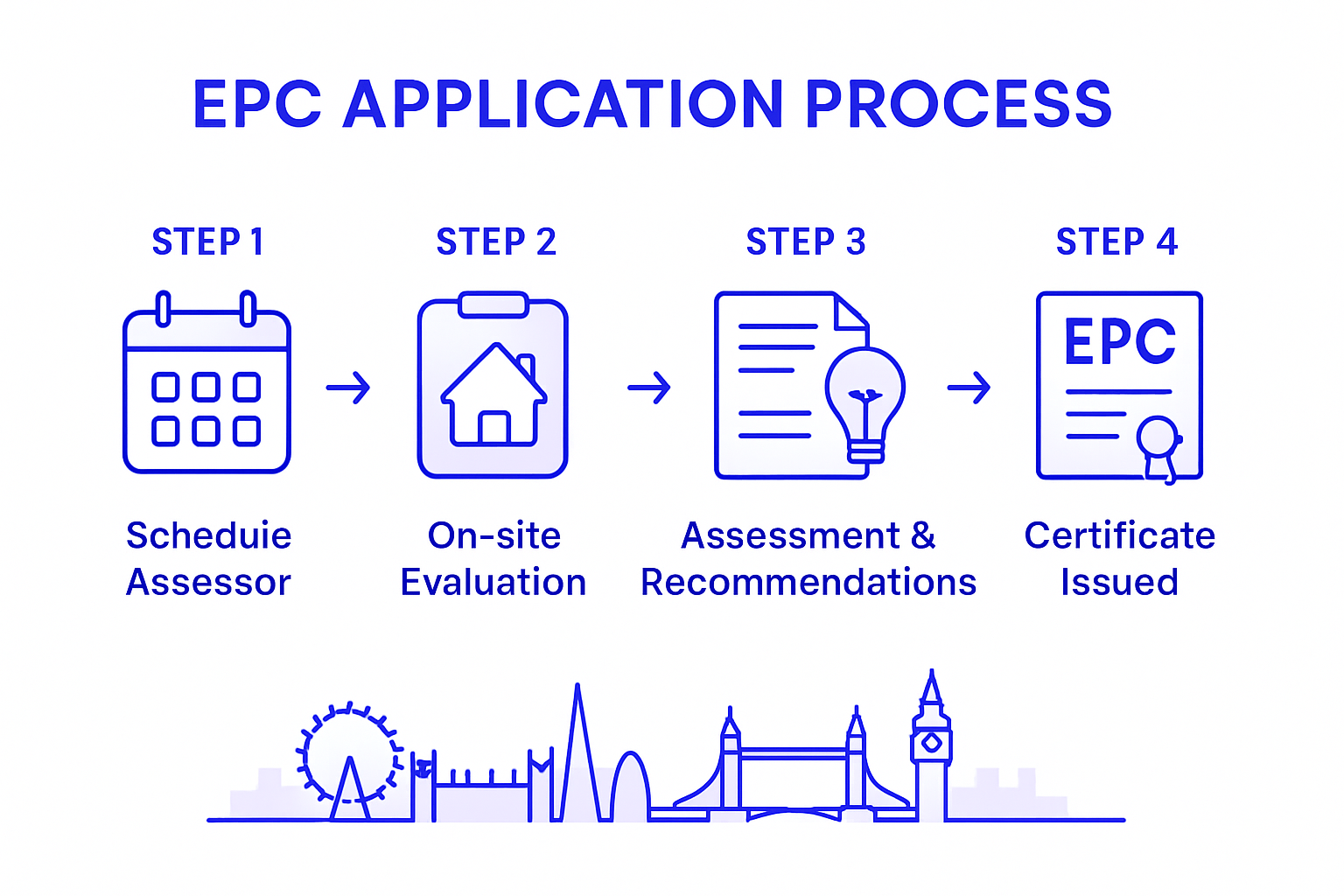
The EPC application process typically involves several critical stages. Initially, property owners must schedule an appointment with a qualified assessor who will perform a detailed inspection of the building. During this assessment, the professional will examine key elements such as heating systems, insulation, windows, and overall building construction. The assessor will collect precise measurements, analyse energy consumption patterns, and document the property’s thermal efficiency, creating a comprehensive profile that determines the final energy performance rating.
Key steps in the EPC application process include:
- Researching and selecting an accredited energy assessor
- Scheduling a property inspection
- Preparing documentation and property access
- Undergoing the comprehensive energy assessment
- Receiving the final EPC certificate
- Reviewing recommendations for potential energy improvements
Successful completion of the EPC process provides property owners with a valuable document that not only satisfies legal requirements but also offers insights into potential energy efficiency upgrades. The certificate serves as a crucial tool for understanding a property’s environmental impact and can potentially increase its market value by demonstrating energy-conscious attributes.
Common Pitfalls And How To Avoid Them
Navigating the Energy Performance Certificate (EPC) process can be challenging, with several potential stumbling blocks that property owners frequently encounter. Misunderstandings about the certification process can lead to unnecessary complications, delays, and potential financial penalties for non-compliance.
One of the most significant challenges is selecting an appropriate and accredited energy assessor. Property owners often make the mistake of choosing the cheapest option without verifying the assessor’s credentials, which can result in substandard assessments that may not meet legal requirements. Additionally, many individuals fail to prepare their property adequately before the assessment, overlooking simple improvements that could significantly enhance the energy efficiency rating.
Common pitfalls to be aware of include:
- Hiring unqualified or non-accredited energy assessors
- Failing to gather necessary property documentation in advance
- Neglecting basic property maintenance and energy efficiency improvements
- Underestimating the time required for a comprehensive assessment
- Ignoring recommendations provided in the EPC report
- Allowing the EPC certificate to expire without renewal
Successful EPC navigation requires proactive preparation and a thorough understanding of the process. Property owners should invest time in researching qualified assessors, preparing their property meticulously, and treating the EPC as a valuable opportunity to improve their building’s energy performance rather than viewing it as a mere bureaucratic requirement. By approaching the EPC process with diligence and attention to detail, property owners can transform a potentially stressful experience into a constructive pathway towards improved energy efficiency and potential cost savings.
Simplify Your EPC Application Process with Expert Support
The article outlines key challenges property owners face during the Energy Performance Certificate application, including selecting an accredited energy assessor and preparing for a thorough on-site evaluation. If you feel overwhelmed by the technical details or want to avoid common pitfalls such as delays or invalid certificates, it is essential to work with a trusted partner who understands London’s legal EPC obligations and the nuanced differences between domestic and commercial assessments.
At Complete EPC, we specialise in making the EPC process straightforward and stress-free. With our qualified assessors and competitive pricing, you gain more than just compliance – you receive detailed insights on energy efficiency improvements that can boost your property’s value and reduce running costs. Whether you are a landlord, estate agent, or property owner, our team is ready to guide you through every step from booking your assessment to receiving your certificate.
Don’t wait until the last minute or risk costly fines. Discover how our expert service can help you meet legal requirements smoothly and transform your property’s energy performance today. Start your journey with Complete EPC and ensure your EPC application is handled the right way from the start.
Frequently Asked Questions
What is the process for obtaining an Energy Performance Certificate (EPC)?
To obtain an EPC, you should begin by contacting an accredited energy assessor to schedule a comprehensive on-site evaluation of your property. The assessor will then inspect key elements like heating systems and insulation to determine the property’s energy performance rating.
How long is an EPC valid for once obtained?
An EPC is valid for a period of ten years. Property owners should ensure the certificate remains current, as it must be valid when the property is marketed for sale or rent.
What steps should I take to prepare for an EPC assessment?
Before your EPC assessment, ensure you have all necessary property documentation ready, maintain the property well, and consider making basic energy efficiency improvements like insulating your home better, which can help enhance your rating.
What happens if I do not obtain a valid EPC before selling or renting my property?
Failing to obtain a valid EPC can lead to significant financial penalties, as it is a legal requirement. Additionally, not having an EPC can complicate property transactions, delaying or hindering sales or rentals.
Recommended
- How to Apply for an EPC Certificate in London – Complete EPC
- The Essential London Guide to Energy Performance Certificates: Save Money and the Environment – Complete EPC
- London’s Ultimate Guide to Energy Performance Certificates: Enhance Your Property’s Efficiency – Complete EPC
- Understanding the EPC Certificate Process in London – Complete EPC