

Nearly one in three British commercial buildings could face steep penalties if they fail to meet new energy performance rules. For London property managers, understanding these regulations is not just about legal compliance but also about driving property value and minimising energy expenses. This guide shows how smart energy strategies combined with a strong focus on British compliance standards can help you secure long-term savings while supporting environmental goals.
Table of Contents
- EPC Ratings And Their Role Explained
- UK EPC Regulations For Commercial Buildings
- Key Energy Saving Strategies For 2025
- Complying With MEES: Legal Duties And Risks
- Maximising Value And Cutting Costs With EPC
Key Takeaways
| Point | Details |
|---|---|
| EPC Ratings Are Essential | Energy Performance Certificates are crucial for assessing a building’s energy efficiency and optimising property investments in London. |
| Regulatory Compliance is Mandatory | Since 2008, EPCs have been required for properties being sold or rented, with penalties for failing to comply. |
| Strategic Upgrades Enhance Value | Targeted upgrades in lighting, insulation, and heating can improve EPC ratings and reduce operational costs significantly. |
| Prepare for Future Standards | Businesses must anticipate upcoming MEES deadlines, with stricter energy efficiency ratings required by 2027 and 2030. |
EPC Ratings and Their Role Explained
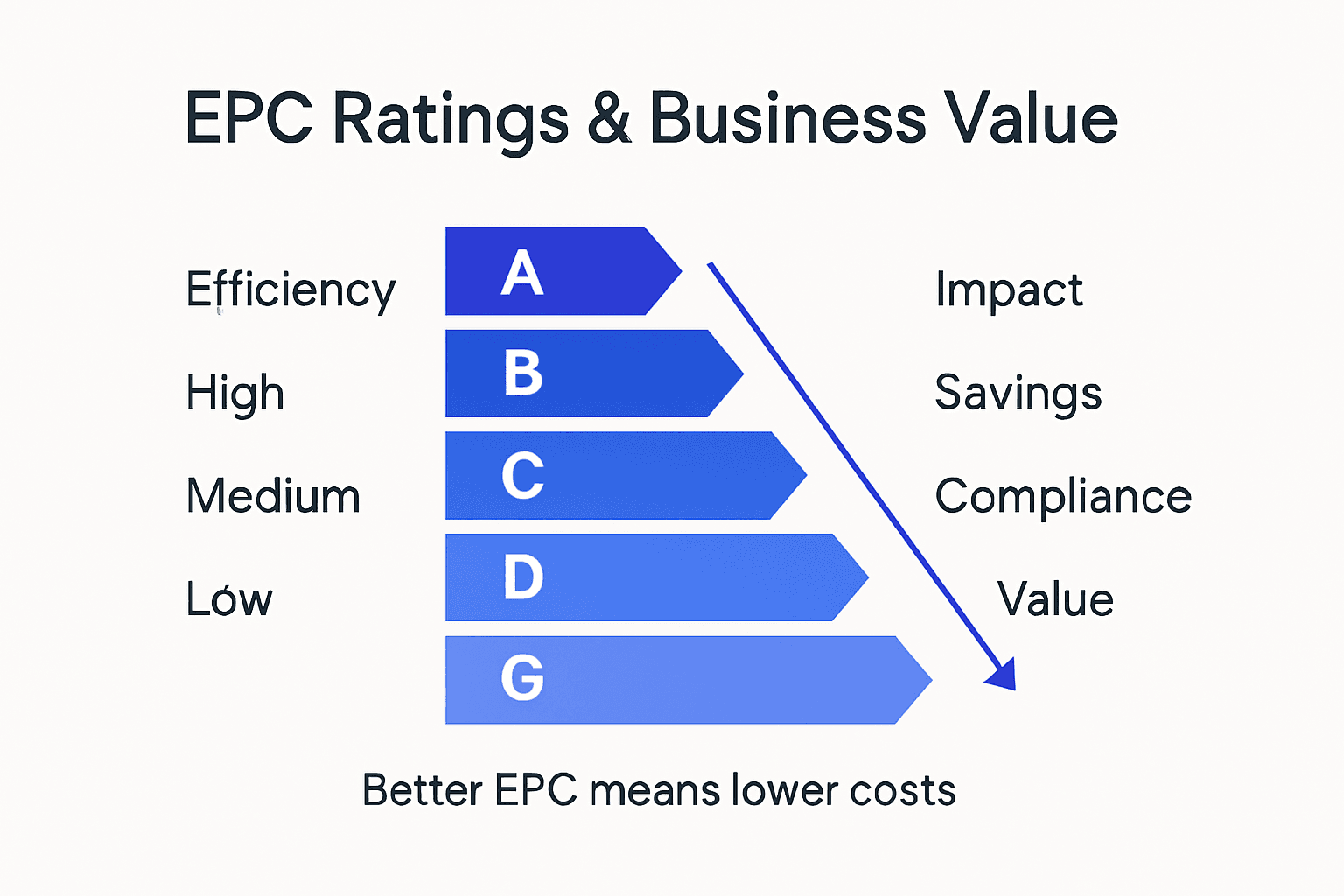
Energy Performance Certificates (EPCs) are crucial documents that provide a comprehensive assessment of a building’s energy efficiency, presenting critical insights for London firms seeking to optimise their property investments. The certificates rate properties on a scale from A (most efficient) to G (least efficient), offering a clear visual representation of energy performance. Energy performance assessments) help businesses understand their current energy consumption and identify potential improvements.
These ratings are determined through a detailed evaluation of multiple factors including building insulation, heating systems, windows, lighting, and overall thermal performance. For commercial properties in London, an EPC provides more than just a rating – it serves as a strategic tool for reducing operational costs and enhancing environmental sustainability. Businesses can leverage these assessments to make informed decisions about energy upgrades, potentially reducing long-term energy expenses and improving their corporate environmental profile.
The legal implications of EPCs are significant for London firms. Since 2008, these certificates have been mandatory for properties being sold or rented, with potential penalties for non-compliance. Commercial properties must achieve a minimum energy efficiency standard, typically an E rating or higher, to be legally lettable. This regulatory framework encourages businesses to invest in energy-efficient technologies and building improvements, driving a broader transition towards more sustainable commercial infrastructure.
Here is a summary of EPC rating bands and their business implications:
| EPC Rating | Energy Efficiency Level | Market Impact for Businesses |
|---|---|---|
| A | Most efficient | Maximises asset value and attractiveness |
| B | Highly efficient | Strong compliance with future standards |
| C | Good efficiency | Meets upcoming minimum legal targets |
| D | Moderate efficiency | May require future upgrades |
| E | Minimum legal standard | Meets current requirements but may risk future non-compliance |
| F | Poor efficiency | Cannot be let; urgent action needed |
| G | Least efficient | Non-compliant and high operational costs |
Professional Recommendation: Conduct a comprehensive energy audit alongside your EPC assessment to identify targeted opportunities for improving your building’s energy performance and reducing operational costs.
UK EPC Regulations for Commercial Buildings
Understanding the UK’s Energy Performance Certificate (EPC) regulations is critical for commercial property owners and managers in ensuring legal compliance and avoiding potential financial penalties. Commercial property EPC requirements are comprehensive, mandating certificates for buildings being sold, rented, or constructed. These regulations apply to most commercial premises, with specific guidelines that businesses must carefully navigate.
The regulatory framework establishes clear standards for energy efficiency, with significant implications for commercial property transactions. Buildings over 500 square metres that are frequently visited by the public must display their EPC prominently. Non-compliance can result in substantial financial penalties, with fines reaching up to £5,000 depending on the building’s rateable value. Some notable exemptions exist, including listed buildings, temporary structures used for less than two years, places of worship, and small detached buildings.
Key aspects of the regulations include mandatory EPC disclosure during property transactions, a requirement to maintain a minimum energy efficiency rating, and the certificate’s validity period of 10 years. Commercial property owners must proactively manage their energy performance, as the regulations are designed to encourage ongoing improvements in building energy efficiency. This approach supports broader national goals of reducing carbon emissions and promoting sustainable commercial infrastructure.
Professional Recommendation: Conduct a comprehensive energy audit every two to three years to stay ahead of regulatory changes and maintain optimal energy efficiency in your commercial property.
Key Energy Saving Strategies for 2025
As London firms prepare for increasingly stringent environmental regulations, understanding the critical energy saving strategies for 2025 becomes paramount. UK emissions reduction approaches emphasise a comprehensive transformation of energy consumption across commercial and industrial sectors. The primary focus lies in electrification of heating and transport systems, significant improvements in building insulation, and accelerated adoption of renewable energy technologies.
Businesses must prioritise strategic investments in energy-efficient infrastructure, with particular attention to emerging technologies like heat pumps, smart building management systems, and low-carbon heating solutions. The 2025 landscape demands a holistic approach, integrating advanced technologies with operational changes that minimise energy waste. Key strategies include upgrading existing building infrastructure, implementing intelligent energy monitoring systems, and transitioning towards decentralised renewable energy generation.
The financial implications of these strategies extend beyond immediate cost savings. By proactively adopting energy-efficient technologies, London firms can position themselves at the forefront of sustainability, potentially accessing government incentives, reducing long-term operational expenses, and enhancing their corporate environmental credentials. The transition requires a multifaceted approach, combining technological innovation, strategic investment, and a commitment to continuous improvement in energy management practices.
Professional Recommendation: Conduct a comprehensive energy audit and develop a phased implementation plan for sustainable technologies, prioritising investments with the highest return on energy efficiency.
Complying with MEES: Legal Duties and Risks
The Minimum Energy Efficiency Standards (MEES) represent a critical regulatory framework that London property owners and managers must navigate with precision and strategic planning. MEES regulations for commercial properties have evolved significantly, introducing increasingly stringent requirements for energy performance across England and Wales. From April 2023, commercial premises cannot be legally let if their Energy Performance Certificate (EPC) rating falls below an E grade, with more ambitious targets mandating a C rating by 2027 and a B rating by 2030.
The financial and legal consequences of non-compliance are substantial, with potential penalties reaching up to £150,000 and significant reputational damage. Property owners must conduct thorough assessments of their existing portfolio, identifying properties that do not meet current energy efficiency standards and developing comprehensive upgrade strategies. While some exemptions exist based on cost-effectiveness, technical feasibility, and consent issues, these are narrowly defined and require rigorous documentation and proof.
Successful MEES compliance demands a proactive and strategic approach. This involves not just meeting current standards, but anticipating future regulatory requirements, investing in energy-efficient technologies, and developing a long-term property improvement roadmap. Landlords and property managers must maintain valid EPCs, track upcoming renewal dates, and implement systematic upgrades that align with legal deadlines. The objective extends beyond mere regulatory compliance – it represents an opportunity to enhance property value, reduce operational costs, and demonstrate corporate environmental responsibility.
The table below compares key UK EPC and MEES regulatory deadlines for commercial properties:
| Year | Regulatory Standard | Minimum EPC Rating Required | Key Implications for Businesses |
|---|---|---|---|
| 2023 | MEES enforcement | E | Properties below E cannot be let |
| 2027 | Anticipated requirements | C | Upgrades vital for letting and compliance |
| 2028 | Legal target | C | Older standards phased out |
| 2030 | Future national goal | B | Major investment in efficiency expected |
Professional Recommendation: Develop a comprehensive energy efficiency audit and strategic upgrade plan at least 18 months before upcoming MEES deadline to ensure smooth compliance and minimise potential financial risks.
Maximising Value and Cutting Costs with EPC
Energy Performance Certificates (EPCs) have transformed from simple regulatory requirements into strategic tools for London firms seeking to optimise their property investments and reduce operational expenses. Commercial EPC improvement strategies offer businesses a comprehensive approach to enhancing energy efficiency, property value, and long-term financial performance. The potential benefits extend far beyond mere compliance, presenting opportunities for significant cost reductions and competitive advantage.
Businesses can implement targeted upgrades to improve their EPC ratings, focusing on critical areas such as lighting, insulation, heating systems, and ventilation. Transitioning to LED lighting, enhancing building insulation, upgrading heating infrastructure, and integrating renewable technologies can dramatically reduce energy consumption. These improvements not only lower utility expenses but also increase property marketability, making buildings more attractive to potential tenants and investors who prioritise energy-efficient spaces.

The strategic value of a high EPC rating transcends immediate financial benefits. As regulatory standards become increasingly stringent, with targets mandating EPC ratings of C by 2028 and B by 2030, proactive investment in energy efficiency becomes a critical business imperative. Forward-thinking organisations recognise that these improvements represent long-term investments in sustainability, operational resilience, and competitive positioning. By systematically addressing energy performance, London firms can simultaneously reduce operational costs, enhance property values, and contribute to broader environmental sustainability goals.
Professional Recommendation: Develop a comprehensive energy efficiency roadmap that prioritises upgrades with the highest return on investment and aligns with upcoming regulatory requirements.
Enhance Your Property’s Energy Efficiency and Cut Costs Today
London firms face pressing challenges such as meeting MEES regulations, improving EPC ratings, and reducing escalating energy expenses. The article highlights critical pain points like compliance with legal energy standards, avoiding costly penalties, and positioning your commercial property for long-term sustainability and value maximisation. These challenges demand expert guidance on obtaining accurate Energy Performance Certificates and identifying actionable improvements.
Complete EPC offers precisely that expertise to help you navigate these complexities with confidence. Our professional assessors deliver detailed EPC reports tailored to your building’s unique profile, pinpointing energy efficiency upgrades that can significantly lower operational costs and enhance market appeal. We guarantee the lowest rates in the UK for EPC services combined with seamless support designed for landlords, estate agents, solicitors, and property owners throughout London.
Discover how you can stay ahead of regulatory deadlines and unlock real savings with a comprehensive energy audit and certified EPC assessment from Complete EPC. Don’t wait until non-compliance risks threaten your business — take action now and partner with a trusted consultancy focused on your property’s energy performance. Visit Complete EPC to book your assessment today and secure your path to greater energy savings and compliance.
Frequently Asked Questions
What is an Energy Performance Certificate (EPC)?
An Energy Performance Certificate (EPC) is a document that provides an assessment of a building’s energy efficiency, rating it on a scale from A (most efficient) to G (least efficient).
Why is an EPC important for London firms?
An EPC helps businesses understand their energy consumption and identify potential improvements, allowing them to make informed decisions about energy upgrades, reduce operational costs, and enhance their sustainability efforts.
What are the legal implications of having a low EPC rating?
Since 2008, EPCs have been mandatory for properties being sold or rented. Commercial properties must meet a minimum energy efficiency standard, typically an E rating or higher, to be legally lettable. Lower ratings can lead to penalties and limit property usability.
What strategies can London firms use to improve their EPC ratings?
Firms can improve their EPC ratings by upgrading insulation, installing energy-efficient lighting and heating systems, and incorporating renewable energy technologies. These upgrades can significantly reduce energy costs and enhance property marketability.
Recommended
- 7 Practical Office Energy Saving Tips for London Properties
- The Essential London Guide to Energy Performance Certificates: Save Money and the Environment – Complete EPC
- EPC Costs in London: What Should You Expect? – Complete EPC
- The Commercial EPC Handbook for London Businesses: Increase Your Energy Savings – Complete EPC
- 7 Key Benefits of Sustainable Heating for Homes and Business – Skan Plumbing & Heating
- Cost to Move House UK 2025: Guide for Homeowners and Businesses | Schott Removals