

Most british landlords are often surprised to learn that failing to meet energy performance certificate (EPC) requirements can lead to fines of up to £5,000. With ongoing changes in housing regulations, understanding EPC rules for houses in multiple occupation can feel confusing and even risky. Knowing exactly what is required will help you protect your investment, avoid legal headaches, and create a safer home for your tenants.
Table of Contents
- Step 1: Identify HMO EPC Legal Requirements
- Step 2: Gather Property and Tenant Information
- Step 3: Book a Qualified EPC Assessment
- Step 4: Enable the Energy Assessor’s Inspection
- Step 5: Review and Implement EPC Recommendations
- Step 6: Verify and Register Your EPC Compliance
Quick Summary
| Key Insight | Explanation |
|---|---|
| 1. Ensure Your HMO Meets EPC Standards | All HMOs must have an EPC rating of at least E before being rented. Confirm current rating and improve if needed. |
| 2. Collect Comprehensive Property Data | Gather details about occupants and tenancy agreements to support the EPC assessment process effectively. |
| 3. Hire a Qualified EPC Assessor | Search for accredited assessors with HMO experience, comparing quotes to secure the best service. |
| 4. Prepare for the Inspection Thoroughly | Ensure all property areas are accessible and have relevant documents ready for the energy assessor. |
| 5. Follow EPC Recommendations for Improvements | Implement energy efficiency upgrades and track changes to maintain compliance and improve property value. |
Step 1: Identify HMO EPC Legal Requirements
Navigating the legal landscape of energy performance certificates (EPCs) for houses in multiple occupation (HMOs) requires a systematic understanding of current regulations. As specified by gov.uk, the Domestic Minimum Energy Efficiency Standard (MEES) Regulations mandate that all domestic private rented properties, including HMOs, must possess an EPC rating of at least E before being let.
To effectively identify HMO EPC legal requirements, you will need to review several key aspects. First, assess whether your property falls under the HMO definition: typically a property rented to three or more unrelated individuals who share facilities like bathrooms or kitchens. Next, verify the property’s current EPC rating through a professional assessment. If the rating is below E, you must undertake energy efficiency improvements before legally renting out the property. gov.uk suggests that proposed reforms may even extend requirements to situations where individual rooms within an HMO are rented out.
A critical warning for landlords: non-compliance can result in significant financial penalties. Potential fines range from £1,000 to £5,000 depending on the property’s rateable value and duration of non-compliance. Always consult a professional EPC assessor who understands the nuanced legal requirements for HMOs to ensure you remain fully compliant.
Step 2: Gather Property and Tenant Information
Preparing for your HMO energy performance certificate requires meticulous documentation and information gathering. gov.uk recommends landlords carefully determine whether their property falls under the Minimum Energy Efficiency Standard (MEES) regulations by thoroughly assessing tenancy arrangements and existing documentation.
Start by compiling comprehensive details about your property and tenants. Collect specific information including total number of occupants, room configurations, shared facilities, and current tenancy agreements. Verify the property type classification as an HMO by confirming it houses three or more unrelated individuals sharing kitchen or bathroom spaces. According to Reading Council, you must also prepare to provide tenants with a copy of the energy performance certificate at the beginning of their tenancy.
A practical tip for landlords: create a dedicated folder containing all relevant property documentation, including floor plans, tenancy agreements, previous energy assessments, and utility bill records. This organised approach will streamline the EPC assessment process and demonstrate your commitment to regulatory compliance.
 Your next step will involve scheduling a professional EPC assessment to evaluate your property’s current energy efficiency rating.
Step 3: Book a Qualified EPC Assessment
Booking a professional energy performance certificate assessment is a critical step in ensuring your HMO meets legal requirements. gov.uk recommends landlords search through the official government portal to locate an accredited assessor specifically qualified to evaluate houses in multiple occupation.
To secure the most appropriate assessment, start by researching certified EPC assessors with specific experience in HMO properties. Request comprehensive quotes and compare their credentials carefully. According to AXA, EPC assessments typically range between £60 and £120, so obtaining multiple quotes will help you secure a competitive price. When contacting potential assessors, provide detailed information about your property including total floor area, number of rooms, and specific HMO configuration to ensure an accurate assessment.
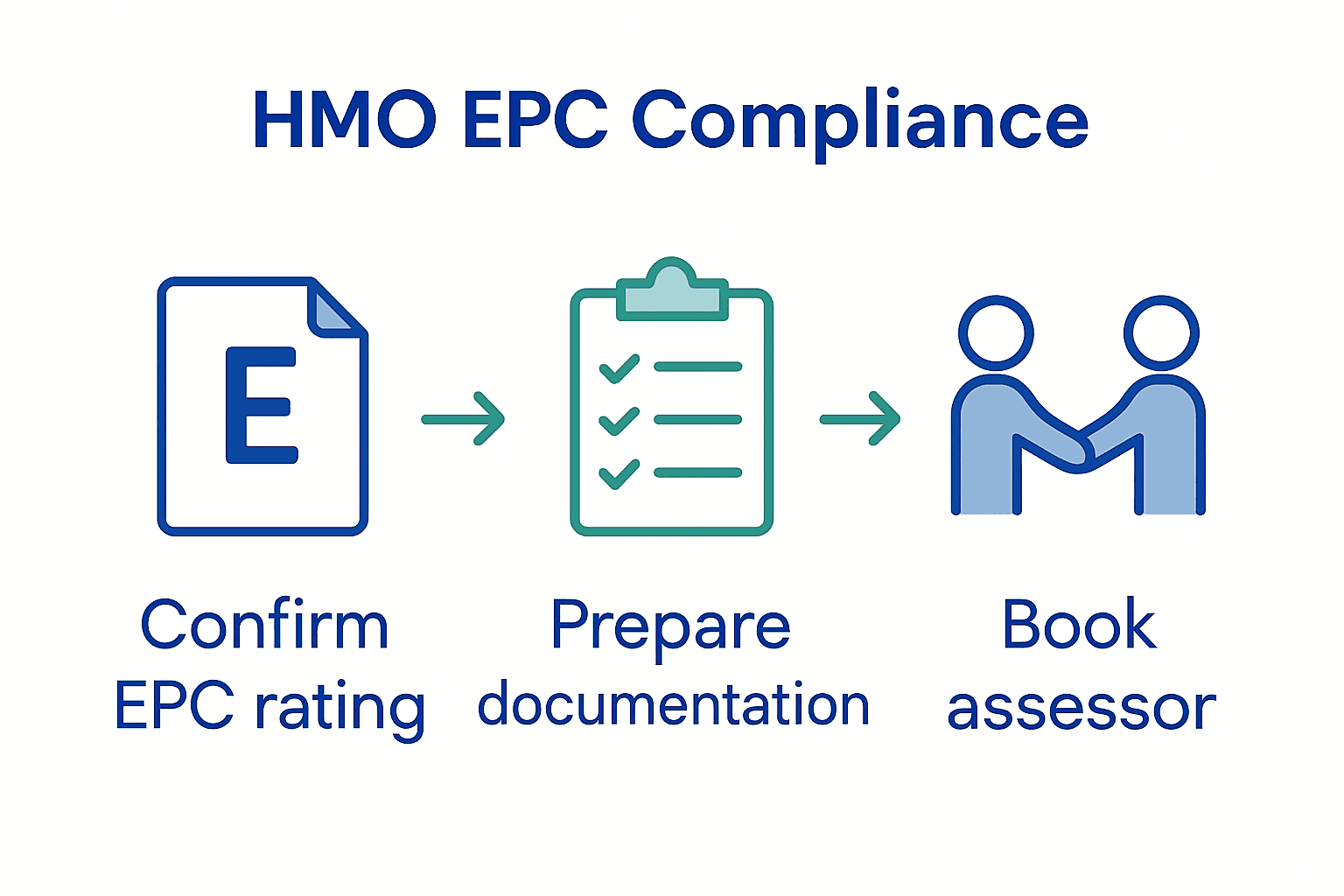
A crucial tip for landlords: choose an assessor accredited by recognised bodies like the Royal Institution of Chartered Surveyors (RICS) or the British Standards Institution (BSI). This ensures your EPC will be professionally conducted and legally recognised. Your next step will involve preparing your property for the upcoming energy performance assessment by gathering all relevant documentation and ensuring access to all areas of the property.
Step 4: Enable the Energy Assessor’s Inspection
Preparing for your HMO energy performance certificate inspection requires careful planning and coordination. gov.uk confirms that the assessment reflects the fixed services installed in your property, making thorough preparation essential.
According to Letting a Property, the energy assessor will conduct a comprehensive examination of multiple property elements including insulation, heating systems, windows, doors, lighting, and any renewable energy installations. To facilitate a smooth inspection, ensure all areas of the property are accessible and prepare documentation such as previous energy bills, heating system specifications, and details of any energy efficiency improvements you have made. Clear communication with the assessor about the property’s unique HMO configuration will help them conduct a more accurate evaluation.
A critical tip for landlords: be present during the assessment if possible. This allows you to provide immediate clarification about the property’s features and answer any questions the assessor might have. Your proactive approach can significantly streamline the inspection process and potentially improve the accuracy of your energy performance certificate. After the inspection, the assessor will provide a detailed report that outlines your property’s current energy efficiency rating and recommendations for potential improvements.
Step 5: Review and Implement EPC Recommendations
gov.uk emphasises the importance of landlords strategically selecting energy efficiency measures to improve their property’s EPC rating. Understanding and implementing these recommendations is crucial for maintaining legal compliance and enhancing your HMO’s overall energy performance.
According to Letting a Property, common upgrades to boost your EPC rating include installing LED lighting, improving loft and cavity wall insulation, adding smart thermostats, and considering renewable technologies like solar panels or heat pumps. Prioritise recommendations based on cost effectiveness and potential energy savings. Begin by creating a structured action plan that categorises improvements from low cost options like draught proofing and lighting upgrades to more significant investments such as heating system replacements or wall insulation.
A strategic tip for landlords: investigate available government grants and energy efficiency funding programmes that might offset your improvement costs. Some upgrades can be completed relatively inexpensively and can significantly impact your property’s energy performance rating. By methodically addressing the recommended improvements, you will not only enhance your HMO’s compliance but potentially increase its market value and attractiveness to prospective tenants. Your next step will involve tracking and documenting these energy efficiency improvements for future EPC assessments.
Step 6: Verify and Register Your EPC Compliance
gov.uk provides a straightforward method for landlords to verify their property’s EPC status by searching for a PDF copy using the property postcode. This crucial step ensures you have accurate documentation and can demonstrate your commitment to legal compliance for your HMO property.
According to Reading Council, a key legal requirement is providing tenants with a copy of the EPC at the start of their tenancy. Ensure you maintain digital and physical copies of your EPC certificate, storing them securely and making them readily accessible. Review the certificate thoroughly to confirm all property details are accurate and the energy efficiency rating meets the minimum standards for rental properties.
A critical tip for landlords: create a dedicated compliance folder that includes your EPC certificate, improvement records, and tenant communication logs. This systematic approach will not only help you stay organised but also provide quick evidence of your compliance if requested by local authorities or housing regulators. By maintaining meticulous records and proactively managing your property’s energy performance, you protect yourself from potential legal challenges and demonstrate professional property management standards.
Secure Full EPC Compliance for Your HMO Property Today
Ensuring your HMO meets all legal requirements for energy performance certificates is essential to avoid costly fines and enhance your property’s value. The challenge lies in navigating complex regulations, gathering detailed property information, and choosing experienced assessors who understand the unique needs of HMOs. You want a clear, professional solution that guarantees accurate assessments and practical recommendations so you can confidently meet the Minimum Energy Efficiency Standard and protect your investment.
Complete EPC specialises in providing expert EPC services tailored for HMOs across London. With qualified assessors and competitive rates, we simplify the entire process from booking your assessment to implementing improvement recommendations. Whether you are preparing for the inspection or need help interpreting the report, our team offers seamless support designed to save you time and stress. Start your journey towards full legal compliance and improved energy efficiency by visiting Complete EPC now. Take control of your HMO’s energy performance and secure your tenants’ confidence with a trusted partner by your side.
Frequently Asked Questions
What are the legal EPC requirements for HMO landlords?
The legal requirements mandate that all houses in multiple occupation (HMOs) must possess an energy performance certificate (EPC) rating of at least E before being let. Ensure that you review your property’s EPC rating and undertake necessary improvements if it falls below this standard.
How do I determine if my property qualifies as an HMO?
A property qualifies as a house in multiple occupation if it is rented to three or more unrelated individuals who share facilities such as bathrooms or kitchens. Assess your tenancy arrangements and confirm the property configuration to determine if it meets this definition.
What steps should I take to prepare for an EPC assessment?
To prepare for an EPC assessment, gather all relevant property documentation, including tenant agreements, utility bills, and previous energy assessments. Organise this information in a dedicated folder to streamline the assessment process and ensure all areas of the property are accessible.
How can I improve my property’s EPC rating?
Improving your property’s EPC rating can involve several measures such as installing LED lighting, enhancing insulation, or adding renewable energy sources. Prioritise low-cost, high-impact improvements and begin with simple measures like draught proofing to boost your rating.
What should I do after receiving my EPC assessment report?
After receiving your EPC assessment report, review the recommendations for improvements and create an action plan for implementation. Track and document any upgrades you make to ensure compliance with legal requirements and to potentially enhance the property’s market value.
How do I verify my EPC compliance with local authorities?
You can verify your EPC compliance by searching for the certificate using your property’s postcode to confirm its status. Maintain digital and physical copies readily accessible to demonstrate compliance at the start of each tenancy.
Recommended
- EPC Certificates for Rentals: Complete UK Guide – Complete EPC
- 7 Essential EPC Compliance Tips for London Property Owners – Complete EPC
- Complete Guide to EPC and Legal Compliance UK – Complete EPC
- Everything London Landlords Need to Know About Commercial EPC Certificates – Complete EPC
- What Is Pre Tenancy Cleaning? Complete Overview – LUSTRA
- Retail Signage Compliance Guide 2025 for London Businesses – PromoSigns.co.uk