

Did you know that failing to display a valid Energy Performance Certificate in property ads can lead to a fine of £500 or more? Knowing when and how to get an EPC is vital whether you plan to sell or rent out your property. Taking the proper steps early safeguards you from legal trouble and helps you understand your property’s energy rating, setting you up for a smoother transaction.
Table of Contents
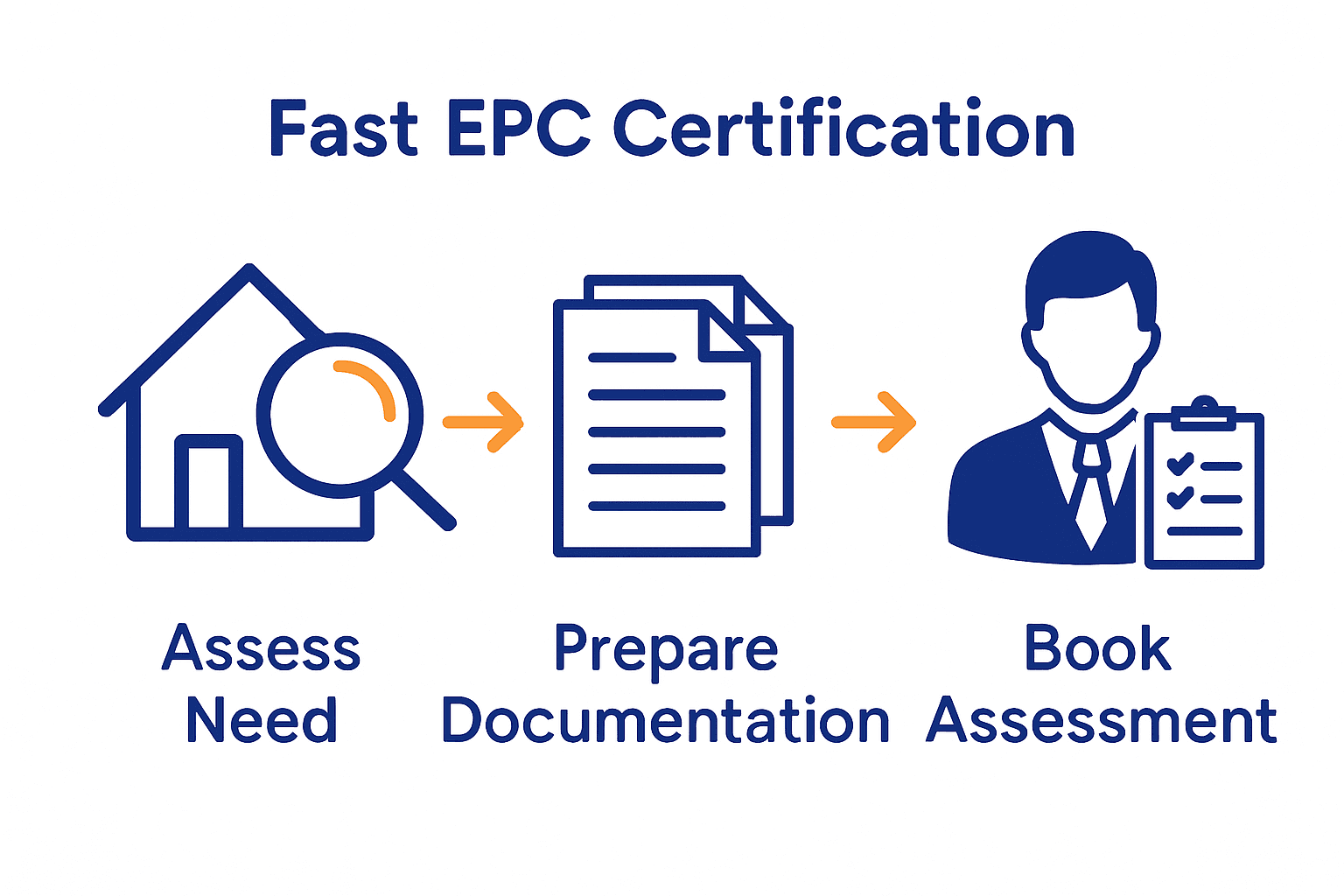
- Step 1: Assess Whether Your Property Needs An EPC
- Step 2: Gather Property Documentation And Details
- Step 3: Book A Certified EPC Assessor For Inspection
- Step 4: Review And Receive The Official EPC Report
- Step 5: Take Actionable Steps Based On EPC Recommendations
Quick Summary
| Key Point | Explanation |
|---|---|
| 1. Obtain an EPC to market property | An Energy Performance Certificate is mandatory when selling or renting a property. Obtain it before advertising to avoid penalties. |
| 2. Gather necessary property documentation | Collect ownership documents, utility bills, and architectural plans to facilitate an efficient EPC assessment. Organizing this information is key. |
| 3. Book a certified energy assessor | Ensure your assessor is accredited to produce a legally valid EPC. Schedule the assessment during daylight for thorough evaluation. |
| 4. Review EPC for improvement recommendations | Examine your property’s energy rating and suggestions for efficiency upgrades in the EPC to enhance market value. |
| 5. Implement energy efficiency improvements | Follow the EPC recommendations to increase your property’s energy efficiency and market attractiveness, starting with cost-effective upgrades. |
Step 1: Assess whether your property needs an EPC
This step helps you determine if your property requires an Energy Performance Certificate before putting it on the market. Understanding your legal obligations can save you time and potential penalties.
You’ll need an EPC if you are selling or renting out a property. According to gov.scot, an EPC is mandatory when advertising a property for sale, and you must include the rating in all property advertisements. Failing to provide this information could result in a penalty charge notice of £500 or more.
To assess your property’s EPC requirements, start by checking these key indicators:
- Are you planning to sell your property?
- Are you preparing to rent out your property?
- Has your existing EPC expired (they are valid for 10 years)?
If you answer yes to any of these questions, you’ll need to obtain a new EPC. As gov.uk confirms, the certificate must be commissioned before marketing the property and produced by an accredited energy assessor.
Pro Tip: Always have your EPC ready before listing your property to avoid last minute complications.
Once you’ve confirmed you need an EPC, your next step will be finding a qualified energy assessor who can evaluate your property’s energy efficiency and provide the necessary documentation.
Step 2: Gather property documentation and details
In this step, you will prepare all the necessary documentation and property details required for a smooth and efficient Energy Performance Certificate assessment. Proper preparation can significantly streamline the entire process.
According to gov.uk, your EPC will include specific property information such as your property address, type, inspection date, certificate serial number, and total floor area. The total floor area is calculated as the space within your property’s external walls.
To prepare effectively, collect the following documentation:
Here’s a summary of essential documents and details to prepare for your EPC assessment:
| Document Type | Purpose | Example Details |
|---|---|---|
| Ownership documents | Confirm legal possession | Title deeds Land registry records |
| Building floor plans | Show layout and dimensions | Room sizes Floor areas |
| Utility bills | Demonstrate recent energy usage | Gas/electricity bills Water bills |
| Architectural drawings | Identify construction features | Extension plans Improvement records |
| Energy upgrade information | Evidence of prior improvements | New boiler Loft insulation receipts |
| System and insulation details | Assess technical specifications | Heating type Glazing Roof insulation |
- Property ownership documents
- Building floor plans
- Recent utility bills
- Architectural drawings or home improvement records
- Information about previous energy efficiency upgrades
As recommended by easyepc.org, focus on gathering comprehensive details about your property’s technical specifications. This includes information about:
- Heating systems and their age
- Type and condition of wall and roof insulation
- Window glazing type
- Solar panel or renewable energy installations
- Boiler efficiency ratings
Pro Tip: Organize your documents in a single folder to make the assessment process smoother and faster.
Having these details ready will help your energy assessor conduct a more accurate evaluation and potentially improve your property’s energy performance rating.
 Your next step will be scheduling the actual EPC assessment with a certified professional.
Step 3: Book a certified EPC assessor for inspection
In this step, you will find and schedule a professional energy assessor to conduct your property’s Energy Performance Certificate inspection. Choosing the right assessor is crucial for obtaining an accurate and legally valid certificate.
According to gov.uk, your EPC must be produced by an accredited energy assessor who is a member of a government-approved accreditation scheme. This ensures the reliability and official recognition of your certificate.
To book a certified EPC assessor, follow these practical steps:
- Research accredited energy assessment professionals in your area
- Check their credentials and government accreditation status
- Request quotes from multiple assessors
- Compare pricing and available time slots
- Verify their experience with properties similar to yours
Partneresi explains that the assessment involves a qualified professional visiting your property to evaluate energy performance. During this inspection, the assessor will thoroughly examine:
- Heating systems
- Insulation quality
- Window configurations
- Overall building structure
- Potential energy efficiency improvements
Pro Tip: Schedule your assessment during daylight hours to ensure the assessor can thoroughly inspect all property features.
Prepare your property by ensuring all areas are accessible and have relevant documentation ready. The typical assessment takes between 45 to 60 minutes, depending on your property’s size and complexity. Your next step will involve understanding what happens during the actual property inspection.
Step 4: Review and receive the official EPC report
In this step, you will receive and carefully examine your Energy Performance Certificate, understanding its critical details and potential recommendations for improving your property’s energy efficiency. This document provides valuable insights into your building’s energy performance.
According to gov.uk, your EPC will display an energy efficiency rating on an A-G scale. This rating offers a clear visual representation of your property’s current energy performance, with A being the most efficient and G the least efficient.
When reviewing your EPC report, focus on these key elements:
- Overall energy efficiency rating
- Potential improvement rating
- Detailed recommendations for energy savings
- Estimated costs for suggested improvements
- Potential energy bill savings
Pay special attention to the recommendations section, which outlines specific steps you can take to enhance your property’s energy performance. These suggestions can help you reduce energy consumption and potentially increase your property’s market value.
easyepc.org confirms that your EPC remains valid for 10 years and can be reused multiple times within that period. This means you can use the same certificate for different property transactions without additional assessments.
Pro Tip: Keep your EPC in a safe digital and physical location, as you might need to reference it during property sales or rentals.
Once you have reviewed the report, consider creating an action plan to implement the recommended energy efficiency improvements. Your next step will involve understanding how to use your EPC effectively in property transactions.
Step 5: Take actionable steps based on EPC recommendations
In this step, you will transform the insights from your Energy Performance Certificate into practical improvements that can enhance your property’s energy efficiency and potentially increase its market value. Strategic implementation of these recommendations can yield significant long term benefits.
According to gov.uk, the EPC recommendations might also indicate your eligibility for financial support through schemes like the Green Deal, which can help offset improvement costs.
Prioritize your improvement actions based on these criteria:
- Potential energy savings
- Initial investment required
- Complexity of implementation
- Long term property value impact
- Potential return on investment
easyepc.org confirms that implementing these recommendations can significantly improve your property’s energy efficiency rating, making it more attractive to potential buyers or tenants.
Consider these common improvement strategies:
- Upgrading loft and wall insulation
- Installing double or triple glazed windows
- Replacing an old boiler with a more efficient model
- Adding solar panels or renewable energy systems
- Sealing draughts and improving overall building envelope
Pro Tip: Start with low cost improvements that offer quick wins before investing in more expensive upgrades.
Create a phased implementation plan that spreads out improvements over time, balancing immediate energy savings with long term investment strategy. Your next step will involve researching specific contractors and getting detailed quotes for your chosen improvements.
Get Your EPC Quickly and Confidently with Complete EPC
Navigating the energy performance certificate process for your property sale can feel overwhelming. From understanding legal requirements to finding a certified assessor and reviewing complex recommendations the journey often raises questions and anxiety. With the pressure of potential penalties for missing or outdated EPCs and the desire to boost your property’s market value every step matters. Complete EPC understands these challenges and offers a streamlined solution tailored for London property owners, landlords, estate agents, and solicitors.
Why wait and risk delays or fines? Our team of qualified assessors delivers fast, accurate EPC assessments at the lowest prices guaranteed in the UK market. We ensure your certificate meets all legal standards and comes with clear improvement advice to help you reduce energy costs and increase your property appeal. Discover more about our services and how we ease your compliance worries by visiting Complete EPC. Ready to secure your certificate today with expert guidance and swift scheduling Visit Complete EPC’s homepage now and take the first simple step towards a smoother property transaction.
Frequently Asked Questions
What is an EPC and why do I need it for property sale?
An Energy Performance Certificate (EPC) is a document that indicates the energy efficiency of a property. You need an EPC to legally market your property for sale, as it must be included in all advertisements.
How can I assess if my property needs a new EPC?
To determine if you need a new EPC, check if you plan to sell or rent your property, or if your existing EPC has expired after 10 years. If any of these apply, obtain a new certificate before listing your property.
What documents do I need to prepare for the EPC assessment?
You should gather ownership documents, building floor plans, recent utility bills, and any previous energy upgrade information. Organizing these details will help the energy assessor evaluate your property’s efficiency accurately.
How do I find a certified assessor for my EPC?
Research accredited energy assessors in your area and compare their credentials and quotes. Booking a certified assessor is crucial to ensure your EPC is officially recognized and legally valid.
What should I expect during the EPC assessment inspection?
During the assessment, the certified energy assessor will evaluate key aspects of your property, including heating systems, insulation quality, and overall structure. Make sure all areas of your property are accessible to facilitate a thorough inspection.
How can I improve my property’s EPC rating based on the report?
After reviewing your EPC, consider implementing suggested improvements such as upgrading insulation or installing energy-efficient windows. Start with low-cost strategies that offer quick energy savings before tackling larger projects.