

Over half of Central London rental properties risk noncompliance under strict British energy regulations each year. For property owners and landlords, keeping pace with evolving EPC rules is about more than just ticking a legal box. A clear, efficient workflow not only safeguards your investment but can also unlock sustainable savings and greater tenant appeal.
Table of Contents
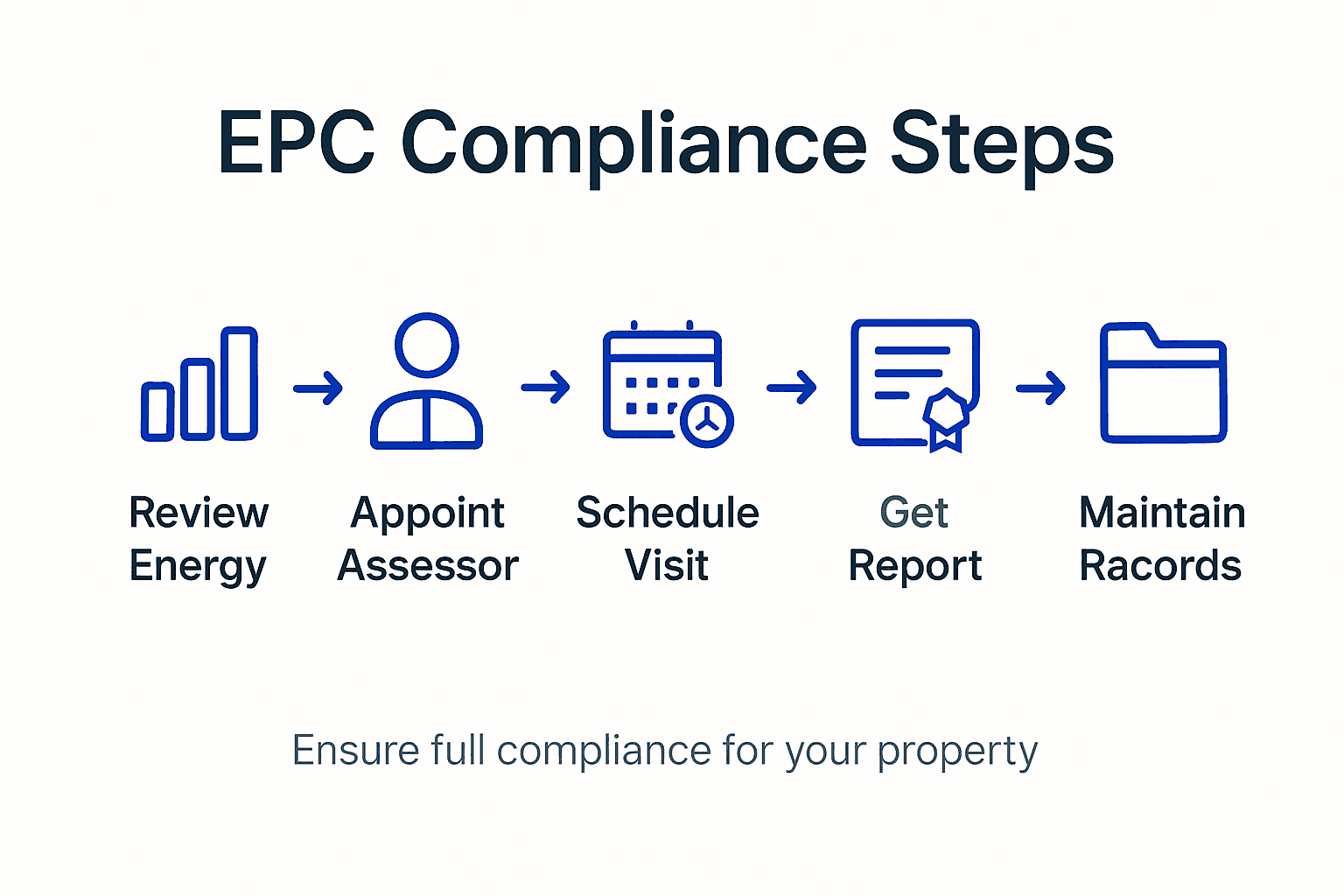
- Step 1: Review Property Energy Requirements
- Step 2: Appoint A Qualified EPC Assessor
- Step 3: Schedule And Facilitate Onsite Assessment
- Step 4: Review EPC Report For Compliance
- Step 5: Document And Evidence Legal Compliance
Quick Summary
| Key Point | Explanation |
|---|---|
| 1. Review Energy Requirements Thoroughly | Begin with a detailed energy performance assessment to understand your property’s efficiency and regulatory requirements. |
| 2. Choose a Qualified EPC Assessor | Select an accredited assessor with experience in London properties to ensure compliance with energy efficiency standards. |
| 3. Prepare for the Onsite Assessment | Gather relevant documentation and ensure clear access to key areas of your property for a comprehensive evaluation. |
| 4. Carefully Review the EPC Report | Examine your EPC report for accuracy and recommendations, focusing on compliance with Minimum Energy Efficiency Standards. |
| 5. Document and Maintain Compliance Records | Keep a well-organised portfolio of your EPC documents and improvement records to demonstrate compliance and facilitate future evaluations. |
Step 1: Review property energy requirements
Reviewing energy requirements represents a critical initial phase for London property owners seeking legal compliance with energy performance standards. This process involves carefully examining your property’s current energy efficiency status and understanding the specific regulatory expectations that apply to your specific building type.
Beginning this review requires a systematic approach. Start by obtaining a comprehensive energy performance assessment that evaluates your property’s existing energy infrastructure. The evaluation should cover multiple aspects including insulation quality, heating systems, windows, and overall building envelope performance. Property owners will want to benchmark their current energy efficiency against UK Green Building Council standards, paying close attention to key metrics like carbon emissions, energy demand, and potential retrofit opportunities.
Documenting your findings meticulously is crucial. Create a detailed record of your property’s current energy performance, noting areas requiring immediate improvement and potential long term upgrades. This documentation will serve as your roadmap for future compliance and help you prioritise energy efficiency investments strategically.
Here is a summary of key aspects commonly evaluated during a property energy performance assessment:
| Aspect Evaluated | Impact on Efficiency | Typical Issues Found |
|---|---|---|
| Insulation quality | Reduces heat loss | Poor loft or wall insulation |
| Heating systems | Lowers energy consumption | Inefficient or outdated boiler |
| Windows | Improves thermal performance | Single glazing, draughts |
| Building envelope | Prevents energy waste | Gaps, weak external walls |
Expert Tip: Request a professional energy assessment that provides both current performance ratings and specific recommendations for improving your property’s energy efficiency.
Step 2: Appoint a qualified EPC assessor
Appointment of a qualified Energy Performance Certificate (EPC) assessor is a critical step in ensuring legal compliance for your London property. This process involves identifying and selecting an accredited professional who can accurately evaluate your property’s energy efficiency and provide the necessary documentation.

To begin, you must locate an assessor registered on the official government energy assessment register. Qualified energy assessors are strictly regulated to maintain consistent and legally compliant evaluation standards across domestic and commercial properties. When selecting an assessor, verify their credentials by checking their current accreditation status, professional qualifications, and experience with properties similar to yours. Look for assessors who specialise in London properties and understand the specific regional energy efficiency requirements.
During the selection process, request quotes from multiple accredited assessors and compare their services. Consider factors such as their turnaround time, level of detailed reporting, and reputation within the London property market. Ensure they are capable of providing a comprehensive assessment that meets all current UK energy performance regulations.
Expert Tip: Always request proof of current accreditation and ask to see sample EPC reports before making your final selection.
Step 3: Schedule and facilitate onsite assessment
Scheduling and facilitating an onsite Energy Performance Certificate (EPC) assessment requires careful preparation and coordination with your chosen assessor. This critical step involves arranging a comprehensive property inspection that will determine your building’s energy efficiency rating.
The onsite assessment is a non invasive process) that involves a systematic examination of your property’s key energy performance features. Your assessor will need complete access to all areas of the property, including loft spaces, utility rooms, and external areas. Prepare by gathering relevant documentation such as previous energy bills, recent renovation records, and proof of any insulation or heating system upgrades. These documents can provide additional context and potentially improve your property’s energy efficiency rating.
Prior to the assessment, ensure your property is ready for inspection. Clear access to important areas like boilers, windows, and wall cavities will help the assessor conduct a thorough evaluation. Remove any obstructions that might prevent a comprehensive examination, and be prepared to answer detailed questions about your property’s construction, heating systems, and energy consumption patterns.
Expert Tip: Compile a folder with all relevant property documentation and maintenance records to streamline the assessment process and provide the assessor with comprehensive information.
Step 4: Review EPC report for compliance
Reviewing your Energy Performance Certificate (EPC) report is a crucial step in ensuring your London property meets legal energy efficiency standards. This process involves carefully examining the assessment details, understanding your property’s current rating, and identifying potential improvements to maintain regulatory compliance.
Legal responsibilities for property owners require a thorough examination of the EPC report to verify compliance with the Minimum Energy Efficiency Standards (MEES). Pay close attention to the energy rating, which typically ranges from A (most efficient) to G (least efficient). Properties with ratings below E cannot be legally rented out, so understanding your current classification is paramount. Scrutinise the recommendations section, which provides specific suggestions for improving your property’s energy performance, potentially helping you avoid potential financial penalties and increase your property’s market value.
The following table compares EPC rating bands and their implications for London properties:
| EPC Band | Efficiency Level | Legal Rental Status | Typical Recommendations |
|---|---|---|---|
| A–B | Very high efficiency | Fully compliant | None or minor upgrades |
| C–D | Moderate efficiency | Compliant | Improve insulation, upgrade lighting |
| E | Minimum standard | Lettable, but risky | Consider heating upgrades |
| F–G | Poor efficiency | Cannot be let legally | Major refurbishments required |
While reviewing the report, cross reference the information with your property’s actual characteristics. Check that all details about construction, heating systems, insulation, and other energy-related features are accurate. Any discrepancies could impact the validity of your certificate and potentially lead to compliance issues. Consider consulting with your EPC assessor if you notice any inconsistencies or require clarification about the recommendations provided.
Expert Tip: Create a prioritised action plan based on the EPC recommendations, focusing first on improvements that offer the most significant energy efficiency gains and potential cost savings.
Step 5: Document and evidence legal compliance
Documenting and evidencing legal compliance is the final crucial step in your Energy Performance Certificate (EPC) workflow, ensuring you have comprehensive proof of meeting regulatory requirements for your London property. This process transforms your assessment into a tangible record of energy efficiency commitment.
Obtaining and securely retaining official certification documentation) involves more than simply filing away your EPC. You must create a systematic approach to documenting your property’s energy performance journey. This means maintaining digital and physical copies of your current EPC, storing all related assessment documents, and keeping a chronological record of any energy efficiency improvements made to the property. Ensure these documents are easily accessible, as they may be required during property transactions, rental agreements, or potential regulatory inspections.
Compile a comprehensive compliance portfolio that goes beyond the basic certificate. Include detailed records of energy improvement works, professional assessor reports, and any supporting evidence demonstrating your property’s progress towards higher energy efficiency standards. Pay special attention to documenting the date of issue, validity period, and any recommendations implemented from previous assessments. This meticulous approach not only demonstrates your commitment to legal compliance but also provides a clear audit trail that can be valuable during future property evaluations or potential sales.
Expert Tip: Create a dedicated digital and physical folder specifically for EPC related documents, with clear labelling and chronological organisation to ensure quick retrieval when needed.
Ensure Seamless EPC Legal Compliance for Your London Property
Navigating the complex EPC legal compliance workflow can be challenging, especially when it comes to reviewing energy requirements, appointing qualified assessors, scheduling onsite assessments, and documenting your energy performance. London property owners and landlords face pressure to meet Minimum Energy Efficiency Standards while avoiding costly penalties and improving property values. To overcome these challenges, you need a trusted partner who understands every step from energy performance assessments to final certification.
Complete EPC specialises in providing expert guidance and low-cost, reliable Energy Performance Certificates tailored for London properties. Our qualified assessors deliver detailed, accurate reports that help you meet legal obligations swiftly and confidently. Benefit from professional support with prioritised improvement recommendations, thorough documentation, and hassle-free scheduling provided all in one place. Take control of your property’s energy efficiency journey today by visiting Complete EPC and discover how our seamless service makes legal compliance straightforward.
Get started with your compliance workflow now and experience peace of mind with trusted EPC expertise at Complete EPC. Learn more about our professional EPC assessments and how we can help you avoid risks by clicking here.
Frequently Asked Questions
What are the first steps in reviewing energy requirements for my property?
Begin by obtaining a comprehensive energy performance assessment that evaluates your property’s energy efficiency status. Document your findings to identify areas for immediate improvement and potential long-term upgrades, enabling you to comply with energy performance standards.
How do I choose a qualified EPC assessor for my property?
Select an accredited Energy Performance Certificate (EPC) assessor by checking their registration on the official government energy assessment register. Request quotes from multiple assessors and compare their services to ensure you are choosing someone experienced with properties similar to yours.
What should I prepare for the onsite EPC assessment?
Gather relevant documentation, including previous energy bills and information about any insulation or heating upgrades. Ensure your property is accessible to the assessor by removing obstructions and clearing access to key areas such as boilers and windows, facilitating a thorough inspection.
How do I review my EPC report for compliance?
Carefully examine the EPC report, focusing on your property’s energy rating and the recommendations provided for improvements. This assessment will help you understand your compliance status and create a prioritised plan for enhancements that could increase your property’s market value.
What documents should I maintain to evidence legal compliance?
Compile a compliance portfolio that includes your current EPC, assessment documents, and records of any energy efficiency improvements made. Ensure these documents are organised and easily accessible, as they may be required during property transactions or inspections.