

TL;DR:
- EPC Rating C signifies above-average energy efficiency with a SAP score between 69 and 80. Landlords are encouraged to prioritize fabric improvements like insulation to meet the 2030 minimum standard and avoid fines. Acting early benefits from lower costs, better tenant attraction, and improved market value.
EPC Rating C is defined as a Standard Assessment Procedure (SAP) score between 69 and 80, placing a property in the above-average energy efficiency bracket for the UK. For landlords and property owners, this rating is fast becoming the number to hit. Approximately 18% of UK homes currently score Band C, and the Government has signalled that Band C will become the mandatory minimum for private rentals by october 2030. Understanding what is EPC rating C means today determines whether you face compliance costs or avoid them entirely.
What is EPC rating C and how does it compare to other bands?
EPC Rating C sits in the middle of the A to G scale used across England, Wales, and Northern Ireland. Band A represents the most efficient properties, while Band G covers the least efficient. Band C occupies a position that most modern and well-maintained properties can realistically reach.

The SAP score system makes the differences between bands concrete and measurable. Here is how the three most relevant bands compare for landlords:
| Band | SAP score | Typical annual energy cost |
|---|---|---|
| B | 81–91 | Below £800 |
| C | 69–80 | £800–£1,200 |
| D | 55–68 | £1,200–£1,800 |
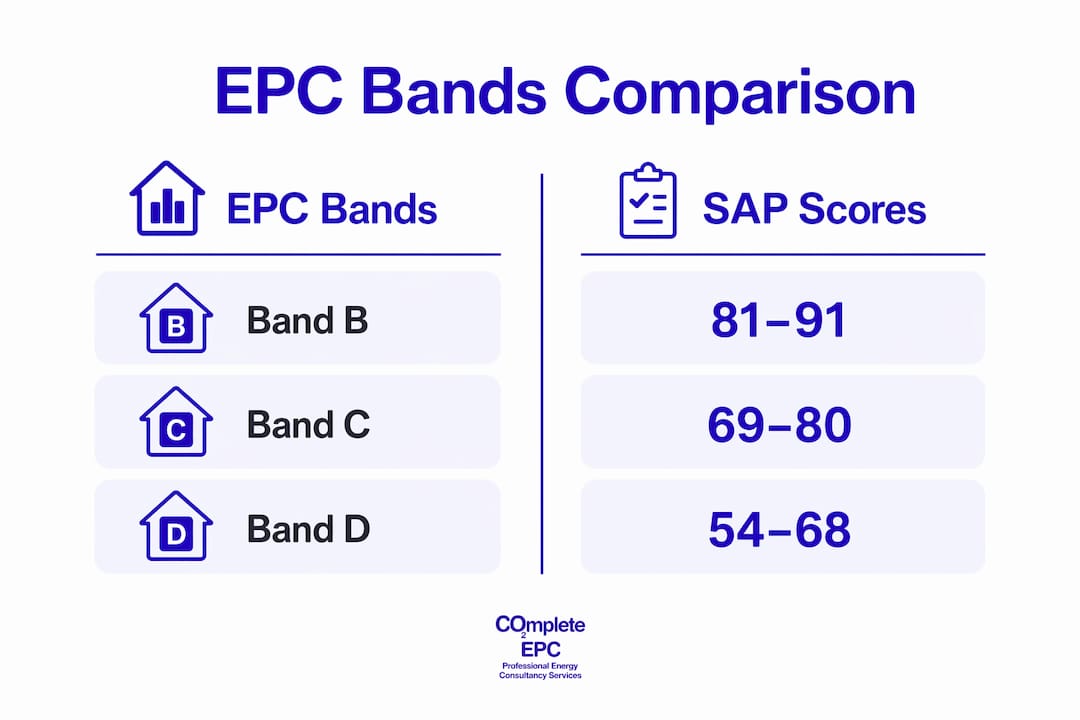
The cost gap between Band D and Band C is significant. A tenant in a Band C property pays up to £600 less per year on energy bills than one in a Band D property. That saving makes Band C properties more attractive to renters, which directly benefits landlords through lower void periods and stronger tenant retention.
Band C also carries weight with mortgage lenders. Lenders increasingly prefer properties rated C or above, linking the rating to market value and financing options. A property stuck at Band D or below may face restricted mortgage products or lower valuations at the point of sale.
Which improvements typically move a property to EPC rating C?
The most cost-effective route to Band C follows a fabric-first approach. This means addressing the building’s structure before upgrading heating systems or installing renewable technology.
The key fabric-first upgrades are:
- Loft insulation: Costs typically range from £300 to £600 and can lift a property by 2–3 bands when combined with other measures.
- Cavity wall insulation: Costs range from £400 to £1,500 depending on property size and wall type. This single measure often delivers the largest SAP point gain.
- Solid wall insulation: More expensive than cavity wall, but necessary for pre-1920s properties without a cavity. Internal or external installation is possible.
- LED lighting: A low-cost upgrade that yields 1–5 SAP points. Quick to install and immediately measurable on the certificate.
- Hot water cylinder jacket: Costs under £20 and adds a small but real SAP contribution for properties with older uninsulated cylinders.
For heating system upgrades, the Boiler Upgrade Scheme offers up to £7,500 for heat pump installation. A heat pump can boost a rating by 2–3 bands, but it is not always necessary to reach Band C. For properties already sitting at Band D with good insulation, targeted fabric upgrades alone often cross the threshold.
Pro Tip: Check your EPC’s recommendations page before commissioning any work. The certificate lists specific measures with estimated SAP point gains for your property. Use this as your starting checklist before speaking to contractors.
One critical distinction every landlord must understand: your EPC shows both a current rating and a potential rating. The potential rating assumes all recommended upgrades are completed. Legal compliance depends entirely on your current rating, not the potential one. A property showing a potential of Band B but a current rating of Band E is still non-compliant today.
What are the consequences of not achieving EPC rating C for landlords?
The regulatory stakes for landlords are rising. The current Minimum Energy Efficiency Standards (MEES) require all privately rented properties in England and Wales to hold at least a Band E rating. Non-compliance already carries penalties of up to £5,000. The proposed upgrade to Band C as the minimum standard would increase those penalties significantly.
Under proposed future regulations, landlords face:
- Fines of up to £30,000 for failing to meet the new Band C minimum once it takes effect.
- Inability to legally let a property that falls below the required standard.
- Potential difficulty selling a non-compliant property as buyers factor in upgrade costs.
The financial case for acting now is clear. Retrofit costs spread over several years are far lower than a single £30,000 penalty. Landlords who wait until 2029 to begin upgrades will face higher contractor demand, longer lead times, and less access to grant funding.
Band C properties also attract better tenants. Renters are increasingly aware of energy costs, and a certified Band C rating signals lower bills and a well-maintained property. This translates to faster lettings and fewer disputes over heating adequacy. The EPC’s role in London’s property market has grown considerably as both tenants and buyers use ratings as a shortlisting criterion.
How to prioritise energy improvements for your specific property
Generic EPC software recommendations are a starting point, not a plan. EPC recommendations are generated by standard software models and do not substitute for bespoke retrofit advice. A Victorian terrace, a 1970s semi-detached, and a modern flat each require a different upgrade sequence.
A practical prioritisation process looks like this:
- Get a current EPC assessment. Confirm your exact SAP score and identify how many points separate you from Band C. A property at 65 needs only 4 points. A property at 55 needs 14.
- Review the certificate’s improvement measures. Each recommendation includes an estimated SAP contribution. Rank them by points gained per pound spent.
- Address fabric before systems. Insulation upgrades deliver permanent gains. Heating system upgrades on a poorly insulated property waste energy and money.
- Check grant eligibility. The ECO4 scheme and the Boiler Upgrade Scheme both offer funding that can dramatically reduce retrofit costs. Eligibility depends on property type, tenure, and occupant circumstances.
- Consult a qualified retrofit assessor for older properties. EPC software cannot fully capture the complexities of heritage-listed or unusual construction. A bespoke assessment prevents costly mistakes.
Pro Tip: Focus on reaching Band C as your immediate target, not your property’s full potential rating. Incremental upgrades aligned with building type are more financially sensible than attempting a full retrofit in one step. One band at a time is a sound strategy.
The difference between EPC and SAP assessments matters here too. A SAP assessment provides a more detailed picture of energy performance and is worth commissioning for larger or more complex properties before committing to major retrofit spend.
Key takeaways
EPC Rating C requires a SAP score of 69–80, and landlords who act now on fabric-first upgrades will meet the proposed 2030 minimum standard while avoiding fines of up to £30,000.
| Point | Details |
|---|---|
| Band C defined | A SAP score of 69–80 marks a property as above-average in energy efficiency. |
| Cost advantage | Band C properties cost tenants up to £600 less per year in energy bills than Band D. |
| Compliance deadline | Band C is expected to become the mandatory minimum for private rentals by october 2030. |
| Fabric first | Loft and cavity wall insulation deliver the highest SAP gains at the lowest cost per point. |
| Current vs potential | Legal compliance depends on the current EPC rating, not the potential rating shown on the certificate. |
Why I think most landlords are leaving this too late
Working in the EPC sector, I see the same pattern repeatedly. Landlords acknowledge the 2030 deadline, note it is still a few years away, and decide to revisit the issue closer to the time. That is a costly mistake, and not just because of the fines.
The retrofit supply chain is already under pressure. Qualified installers for cavity wall insulation, solid wall insulation, and heat pump systems are booking months in advance in many parts of London. When the 2029 rush begins, prices will rise and availability will shrink. Landlords who act in 2026 and 2027 will pay less and have more choice.
There is also a grant timing issue. Schemes like ECO4 and the Boiler Upgrade Scheme have finite budgets and eligibility windows. Waiting means risking the loss of funding that could cover a significant portion of your retrofit costs. I have seen landlords save thousands by acting early and combining multiple grant streams.
My honest view is that Band C is not a burden. It is a market advantage. Properties with a certified Band C rating let faster, attract more reliable tenants, and hold their value better at sale. The landlords who treat this as a compliance exercise will spend the minimum and still face costs. The ones who treat it as a property investment will come out ahead.
— Danny
How Completeepc helps landlords achieve EPC compliance
Completeepc provides professional domestic EPC assessments for landlords and property owners across London, carried out by qualified assessors with extensive industry experience. Whether you need to confirm your current rating, understand your upgrade options, or meet a letting agent’s compliance requirements, Completeepc delivers accurate certificates with clear improvement recommendations. The service covers all property types, from single-let flats to HMO portfolios. Completeepc also offers guidance on MEES regulations and minimum energy efficiency standards, helping you plan ahead rather than react under pressure. Book your assessment today and know exactly where your property stands.
FAQ
What SAP score is needed for EPC rating C?
A property needs a SAP score between 69 and 80 to achieve EPC Rating C. Scores are calculated using the Standard Assessment Procedure, which accounts for insulation, heating systems, windows, and lighting.
Is EPC rating C a legal requirement for landlords?
EPC Rating C is not yet a legal requirement, but it is expected to become the mandatory minimum for privately rented properties in England and Wales by october 2030. The current legal minimum is Band E.
What is the cheapest way to improve an EPC rating to C?
Loft insulation and cavity wall insulation offer the highest SAP point gains at the lowest cost, typically ranging from £300 to £1,500 depending on property size. LED lighting and hot water cylinder jackets provide smaller gains at minimal cost.
What is the difference between current and potential EPC rating?
The current rating reflects the property’s energy performance as it stands today. The potential rating shows what the property could achieve if all recommended upgrades were completed. Only the current rating counts for legal compliance.
Do mortgage lenders care about EPC rating C?
Mortgage lenders increasingly prefer or require properties rated Band C or above. A lower rating can restrict financing options and affect property valuations at the point of sale.