

TL;DR:
- An EPC rating measures a property’s energy efficiency on a scale from A to G, legally required in the UK for sales and rentals. The assessment involves a visit, data collection, and software calculation of current and potential performance based on insulation, heating, glazing, and building fabric. Improving key features like insulation and heating can significantly boost ratings and reduce energy costs, making properties more attractive to tenants and buyers.
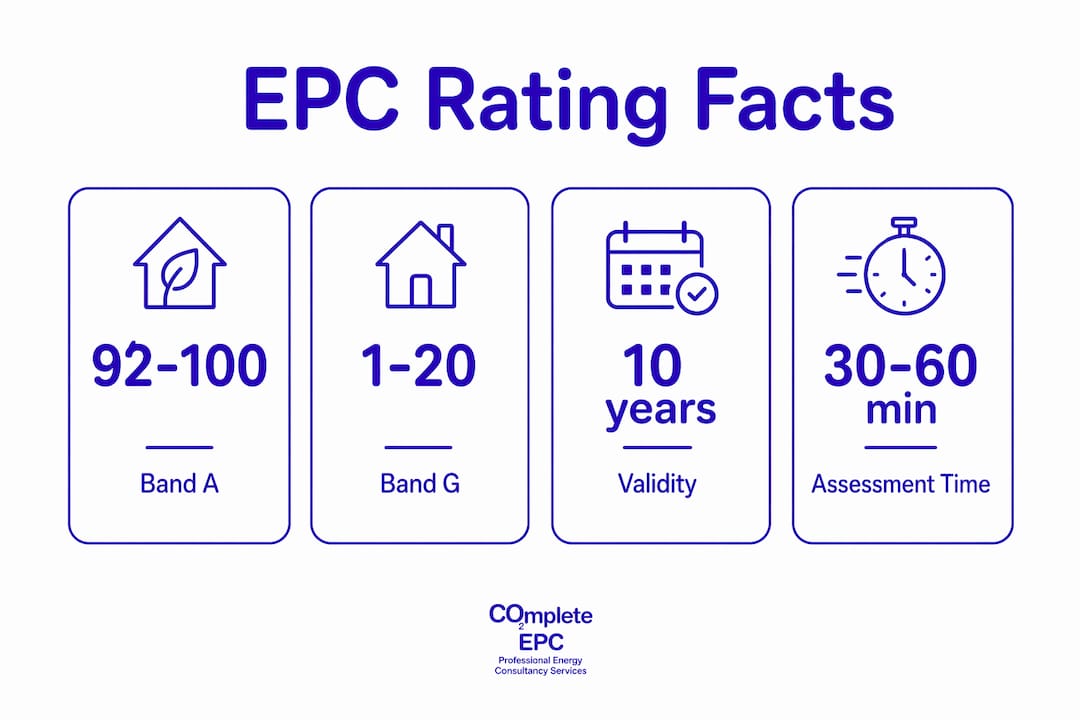
An EPC rating is the official measure of a property’s energy efficiency, scored on a standardised A to G scale and legally required for any property sold or rented in the UK. The full term is Energy Performance Certificate, and the rating it carries tells buyers, tenants, and landlords how much energy a building is likely to use under standard conditions. Ratings are valid for 10 years and must be issued by an accredited assessor following a standardised methodology. The Ministry of Housing, Communities and Local Government oversees the EPC framework, making this a regulated document with real legal weight, not just an advisory report.
How is an EPC rating calculated?
The assessment process is more thorough than most property owners expect. A qualified assessor visits the property and conducts a structured walk-through that typically takes 30–60 minutes. During that visit, the assessor collects internal and external measurements, takes photographs, and records details about the building’s construction and systems.
The assessor evaluates the following elements:
- Insulation — loft, wall, and floor insulation type and thickness
- Heating system — boiler age, type, and controls
- Ventilation — natural or mechanical, and its impact on heat loss
- Glazing — single, double, or triple glazed windows
- Lighting — proportion of low-energy fittings
- Building fabric — wall construction, roof type, and floor area
All of this data feeds into approved software that generates a floor plan and computes the rating using either the SAP (Standard Assessment Procedure) or RdSAP (Reduced Data SAP) methodology. SAP is used for new builds, while RdSAP applies to existing homes. The software applies standardised fuel prices and occupancy assumptions to produce a score that allows fair comparison between properties.
One nuance worth understanding: electric heating often scores lower than gas heating in EPC calculations, not because it is less efficient in practice, but because the model uses higher assumed fuel costs for electricity. This affects many modern homes fitted with heat pumps, which can be genuinely efficient but receive a lower band than their real-world performance would suggest.
Pro Tip: If your property uses electric heating or a heat pump, ask your assessor to confirm how the fuel cost assumptions affect your score. A future revision to the SAP methodology may change this calculation significantly.
What do EPC ratings A to G mean?
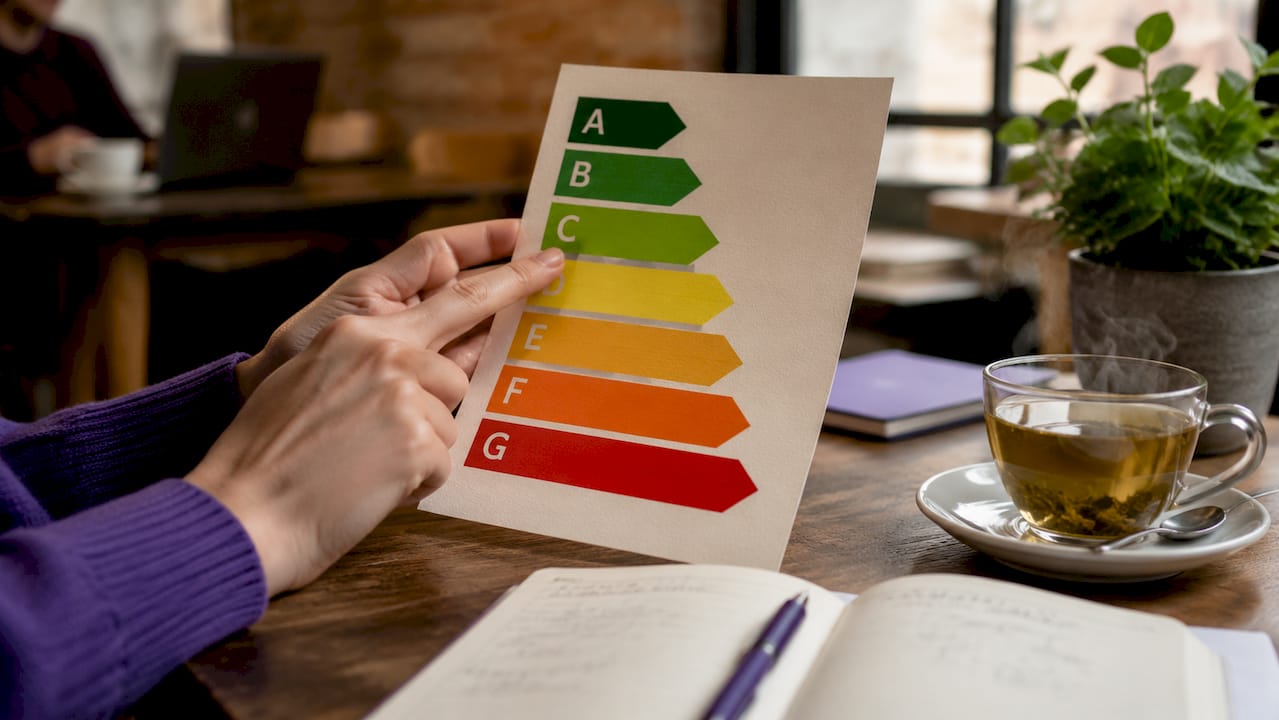
The EPC scale runs from A to G, with each band representing a range of points. A is the most efficient and G is the least. The table below shows the full breakdown.
| Band | Points range | Typical property type |
|---|---|---|
| A | 92–100 | New build, highly insulated |
| B | 81–91 | Modern well-insulated home |
| C | 69–80 | Post-1990 semi-detached |
| D | 55–68 | Average UK property |
| E | 39–54 | Older or poorly insulated home |
| F | 21–38 | Pre-1940 solid-wall property |
| G | 1–20 | Unimproved historic building |
The majority of UK properties fall into band D or E. That is not a failure. It simply reflects the age and construction of the existing housing stock.
Every EPC certificate shows two ratings: a current rating and a potential rating. The current vs potential rating distinction is one of the most useful parts of the document. The current rating reflects the property as it stands today. The potential rating shows what the property could achieve if all the recommended improvements were carried out. A wide gap between the two signals that relatively affordable upgrades could deliver a meaningful improvement.
The certificate also shows estimated annual energy costs and CO2 emissions. These figures are modelled, not measured. They assume a standard household occupancy and usage pattern, so your actual bills may differ. Common misconceptions include treating the EPC as a live energy bill forecast or assuming a high rating guarantees low bills regardless of how the property is used.
Why do EPC ratings matter for landlords and homeowners?
EPC ratings carry direct legal and financial consequences. Any property marketed for sale or rent must have a valid EPC in place before it goes to market. Failing to obtain one is a legal offence.
For landlords, the stakes are higher. The Minimum Energy Efficiency Standards (MEES) require that rental properties meet at least band E before a tenancy can be granted or renewed. This regulation has applied since april 2018 for new tenancies and has since been extended. Landlords who let a property below band E without a valid exemption face financial penalties. The EPC exemption register exists for specific cases, but exemptions are narrow and time-limited.
The financial impact extends beyond compliance. Properties with higher EPC ratings attract lower energy bills, which makes them more appealing to cost-conscious tenants and buyers. Research consistently shows that energy efficiency is a growing factor in buyer decision-making, particularly as energy prices remain elevated. A property sitting at band D that could reach band C with targeted upgrades may command a higher asking price and sell faster.
For homeowners not planning to sell or let, the EPC still provides a useful framework. The recommended improvements listed in the certificate represent a prioritised route to reducing your carbon footprint and cutting running costs. The role of EPCs in London’s property market has grown considerably as sustainability becomes a mainstream concern for buyers and lenders alike.
What improvements raise an EPC rating most effectively?
EPC reports include a list of recommended measures, ranked by their potential impact on the rating. The most commonly suggested upgrades are:
- Loft insulation — one of the highest-impact, lowest-cost improvements available for most UK homes
- Cavity wall or solid wall insulation — significant heat loss reduction, particularly in pre-1980 properties
- Boiler replacement — upgrading to a modern condensing boiler can move a property up by one full band
- Double glazing — reduces heat loss and improves comfort, with a moderate rating impact
- Low-energy lighting — a quick win with a small but measurable effect on the score
- Heating controls — adding a programmer and thermostatic radiator valves improves efficiency without major cost
Prioritise improvements that offer the best return for compliance first. If your property sits at band F and you need to reach band E for a rental, focus on the measures your EPC report identifies as highest impact. Aesthetic renovations such as kitchen refits or bathroom upgrades do not affect the EPC score at all.
The EPC model does not account for occupant behaviour or appliance usage. A household that leaves windows open all winter will pay more than the EPC estimate, regardless of the band. This is a known limitation of the methodology. Treat the certificate as a comparison tool and a guide to improvement potential, not a precise prediction of your bills.
Once improvements are complete, you can commission a new assessment. The updated certificate will reflect the changes and may unlock compliance or support a higher asking price. Completeepc provides EPC assessments for domestic properties across London, with qualified assessors who can advise on which improvements will have the greatest effect before you commit to any work.
For homeowners curious about how EPC methodology compares to other energy assessments, the EPC vs SAP assessment guide explains the differences clearly.
Pro Tip: Commission a new EPC only after all planned improvements are complete. Each assessment costs money, and a partial upgrade may not move you into the next band. Plan the full scope of work first, then book the reassessment.
Key takeaways
An EPC rating is a standardised, legally required measure of energy efficiency that directly affects compliance, running costs, and property value for UK homeowners and landlords.
| Point | Details |
|---|---|
| Rating scale is A to G | Band A scores 92–100 points; band G scores 1–20; most UK homes fall in band D or E. |
| Two ratings on every certificate | The current rating shows today’s performance; the potential rating shows what targeted improvements could achieve. |
| MEES compliance is mandatory | Landlords must hold at least band E or face financial penalties under Minimum Energy Efficiency Standards. |
| Electric heating can lower scores | Standardised fuel price assumptions mean electric systems often score below gas, regardless of real efficiency. |
| Improvements should be prioritised strategically | Focus on insulation, boiler upgrades, and glazing before aesthetic work to maximise rating impact per pound spent. |
EPCs are snapshots, not scorecards: a perspective from experience
The single biggest mistake I see homeowners and landlords make is treating the EPC as a live measure of how well their property performs. It is not. The EPC is a modelled snapshot of potential energy use under standardised conditions. A family of five who heat every room all day will spend far more than the certificate suggests, even in a band B property.
What the EPC does exceptionally well is give you a consistent basis for comparison. You can compare two properties on the same street, or the same property before and after improvements, using the same methodology. That consistency is genuinely useful when making investment decisions.
My advice to landlords facing MEES compliance deadlines is to treat the recommended improvements as a prioritised investment list, not a bureaucratic burden. Loft insulation in a Victorian terrace typically costs a few hundred pounds and can shift a property from band F to band E. That single measure removes the compliance risk and reduces tenant energy bills. Both outcomes support a better landlord-tenant relationship.
For homeowners, the potential rating on your certificate is worth studying carefully. If your property scores 58 (band D) today but could reach 74 (band C) with two or three targeted upgrades, that gap represents real money and real market value. Treat the EPC as a strategic guide to energy improvements rather than a compliance checkbox, and it becomes one of the most useful documents your property generates.
— Danny
How Completeepc supports your EPC compliance and improvement goals
Completeepc provides domestic EPC certificates for homeowners and landlords across London, issued quickly by qualified and accredited assessors. Every certificate includes a full breakdown of your current and potential rating, along with prioritised improvement recommendations. Whether you need a certificate for a property sale, a new tenancy, or a compliance review, Completeepc delivers accurate assessments at competitive rates. The team also advises on which improvements will have the greatest impact on your rating before you spend on upgrades. For commercial properties, commercial EPC assessments are available with the same standard of service.
FAQ
What is an EPC rating in the UK?
An EPC rating is an official measure of a property’s energy efficiency, scored from A (most efficient, 92–100 points) to G (least efficient, 1–20 points). It is legally required for any property sold or rented in the UK and remains valid for 10 years.
How long does an EPC assessment take?
A standard domestic EPC assessment takes 30–60 minutes on site. The assessor measures the property, records details about insulation, heating, and glazing, and inputs the data into approved software to generate the certificate.
What is the minimum EPC rating for a rental property?
Under the Minimum Energy Efficiency Standards (MEES), landlords must hold at least band E before granting or renewing a tenancy. Letting a property below band E without a valid exemption carries financial penalties.
Does improving my EPC rating lower my energy bills?
A higher EPC rating indicates lower modelled energy use, which generally corresponds to lower bills. However, the EPC is a standardised model and does not account for individual behaviour, so actual savings depend on how the property is used.
How often do I need to renew my EPC?
An EPC is valid for 10 years from the date of issue. You only need a new one if the existing certificate has expired, if you carry out significant improvements and want the rating updated, or if a new certificate is required for a property transaction.