

You need a valid Energy Performance Certificate whenever you construct, sell or let a property, and you must hand it to a prospective buyer or tenant free of charge before they commit. EPCs stay valid for several years, but works that materially change a building’s performance can push you to commission a fresh one sooner. The Minimum Energy Efficiency Standards already stop most F and G rated lets, and tighter deadlines are coming for both domestic and commercial stock. Check your certificate’s expiry date before you market anything.
TL;DR:
- Landlords must check the EPC register and book an assessment for any property without a valid certificate before marketing it for sale or rent.
- Only government-accredited assessors can issue EPCs, and verifying the assessor’s registration on the central register helps prevent duplication.
- Exemptions apply to listed buildings, demolition sites, temporary structures, and small nondomestic buildings under 50 square meters, but larger commercial properties over 500 square meters must display certificates publicly.
- The 2030 deadline requires private rented homes to meet a C rating and commercial buildings over 1,000 square meters to reach a B rating, with costs and payback periods helping manage upgrade feasibility.
- Penalties for non-compliance include fines up to 12.5% of the property’s rateable value or fixed penalties, with enforcement actions requiring prompt replies and proper documentation.
Table of Contents
- When is an EPC legally required? Triggers and timing
- Who must supply the EPC, and who’s allowed to issue one?
- Exemptions, display duties and special property types
- MEES: current rules and the reforms landlords must plan for
- Enforcement and penalties: what actually happens if you’re caught out
- A practical compliance checklist you can run this week
- How Completeepc helps you stay compliant
- A publisher’s view on where to focus first
- Book an accredited EPC assessment with Completeepc
- Sources
- FAQ
When is an EPC legally required? Triggers and timing
The statutory duty under the Energy Performance of Buildings Regulations bites at three moments: construction, sale, and the grant of a new lease. The moment a property goes “on the market”, meaning it’s advertised anywhere, print or online, you’re expected to already hold a valid EPC or be actively commissioning one, typically within a specified reasonable timeframe.
GOV.UK’s own guidance on selling a home confirms the certificate must be ordered before marketing starts, not after an offer arrives. In practice, regulators allow a reasonable window: seven days to make reasonable efforts to obtain one, extendable to 21 days if there’s a good reason.
A few points worth pinning down before you list a property:
- An EPC issued within the last several years remains valid, even if energy prices or building regulations have changed since.
- Extensions, new heating systems, or major insulation work can outdate an existing certificate’s assumptions, so commission a new one afterwards.
- A newer EPC always supersedes an older valid one once it’s lodged on the register.
- Marketing without a valid or in-progress EPC is a breach from day one, not from completion.
Who must supply the EPC, and who’s allowed to issue one?
The “relevant person” (usually the owner, or the landlord granting a new tenancy) carries the legal duty to make a valid EPC available, and that duty extends to any agent acting on their behalf. If your estate agent lists a property without checking for a certificate first, the liability still sits with you.
Only assessors accredited through a government-approved scheme can legally issue an EPC. Before booking one, confirm three things:
- The assessor holds current accreditation for domestic or non-domestic assessments, whichever your property needs.
- Their scheme membership is checked against the accreditation body, not just taken on trust from a website.
- The certificate reference number is searchable on the central EPC register once issued.
Pro Tip: Always search the register by postcode before commissioning anything new. Landlords regularly pay for a duplicate EPC simply because nobody checked whether a valid one already existed.
Exemptions, display duties and special property types
Not every building carries the full weight of EPC regulatory requirements. The 2012 Regulations carve out specific exemptions, and getting the wrong one can leave you unprotected if challenged.
- Listed buildings and buildings in conservation areas are exempt where compliance would unacceptably alter their character.
- Buildings due for demolition, with the relevant consents already in place, don’t need a certificate.
- Temporary buildings used for two years or less, and certain low-energy industrial sites and workshops, sit outside the requirement.
- Standalone buildings under 50 square metres that aren’t dwellings are generally exempt.
Larger commercial premises face a separate obligation: buildings over 500 square metres frequently visited by the public must display a valid certificate prominently, typically near the entrance, not filed away in a manager’s office.
HMOs and short-term lets sit in a genuinely unsettled position right now. Treat them cautiously: if you’re letting rooms individually under an HMO licence, commission an EPC for the property as if it were any other letting until further sector-specific guidance lands.
MEES: current rules and the reforms landlords must plan for
The current baseline is that you cannot lawfully let a residential or commercial property rated below a minimum energy performance standard unless a valid exemption is registered; the minimum standard varies depending on the scheme in force.
That baseline is about to move substantially. The government’s response on privately rented homes confirms private rented homes will need to hit a higher standard, broadly equivalent to a C rating, by 1 October 2030, with transitional arrangements for landlords already mid-tenancy.source Commercial landlords face their own requirements: privately rented non-domestic buildings over 1,000 square metres must reach at least a B rating by 2031, where cost-effective.source
Three mechanisms soften the impact:
- A cost cap limits how much you’re required to spend per property before an exemption becomes available.
- A payback test, referenced in sector legal analysis as a seven-year threshold for commercial stock, lets landlords defer works that wouldn’t pay for themselves within a reasonable period.
- You’ll need an EPC commissioned before works start and another after completion, so you can prove the improvement actually happened.
Portfolio landlords with dozens of units should start screening now rather than waiting for 2029.
Enforcement and penalties: what actually happens if you’re caught out
Local authorities (Trading Standards, typically) enforce EPC regulatory requirements, and the penalties differ sharply between dwellings and commercial premises. For non-dwellings, the penalty is calculated as 12.5% of the property’s rateable value, with a minimum of £500 and a maximum of £5,000. Domestic properties face separate fixed penalties, and failing to produce documents when a compliance officer asks carries its own fine.
Breaches can be published, and enforcement notices carry defined windows for you to respond or appeal.
If a notice lands on your desk:
- Check the notice’s stated deadline immediately; missing it narrows your options.
- Gather your existing EPC, any post-works certificate, and invoices for improvement works as evidence.
- If you believe an exemption applies, confirm it was actually registered on the PRS Exemptions Register, not just assumed.
- Respond in writing before the deadline, even if you’re still gathering documents.
A practical compliance checklist you can run this week
Most landlords who fall foul of EPC rules didn’t ignore them deliberately, they simply never ran a proper check. Four steps cover most situations:
- Search the register. Look up your property on the central EPC register by postcode and note the exact expiry date.
- Commission where needed. If there’s no valid certificate, or you’ve completed material works since the last one, book an accredited assessor. MEES compliance for major works often requires a pre-works EPC too.
- Cost out the improvements. Review the recommendation report, price the suggested measures, and track spend against the statutory cost cap. Register an exemption if the numbers don’t stack up.
- Commission the post-works EPC. This is the document that proves compliance if you’re ever challenged, so keep it alongside your invoices, not just on file with your accountant.
Pro Tip: Treat EPC and retrofit assessment fees as a normal allowable expense in your property accounts. They count towards your cost cap calculation, and landlords who track this from the outset avoid scrambling for receipts later.
How Completeepc helps you stay compliant
Completeepc issues domestic and commercial EPCs across London, backed by accredited assessors who understand where MEES exemptions genuinely apply and where they don’t. Every certificate comes with a recommendation report you can actually act on, not a generic list of boilerplate suggestions.
Services that support the compliance steps above include:
- Domestic and commercial EPC assessments with fast turnaround for time-sensitive marketing deadlines.
- SAP calculations for new builds, conversions and extensions.
- Pre-works and post-works EPC commissioning to evidence MEES improvements.
- Cost-cap accounting support, so eligible spend is tracked correctly from the start.
- Portfolio screening for landlords managing multiple properties against the 2030 and 2031 deadlines.
A publisher’s view on where to focus first
Most landlords treat EPC compliance as a paperwork chore to sort out right before marketing. That’s backwards. The 2030 and 2031 deadlines mean the properties at genuine risk, older stock, converted buildings, anything near the F/G threshold, need identifying now, not in a scramble two years out.
If you take one action from this article, make it this: search the central register for every property you own, confirm the expiry date, and book an accredited assessment for anything without a valid certificate. Everything else, exemptions, cost caps, payback tests, only matters once you know where you actually stand.
— Danny
Book an accredited EPC assessment with Completeepc
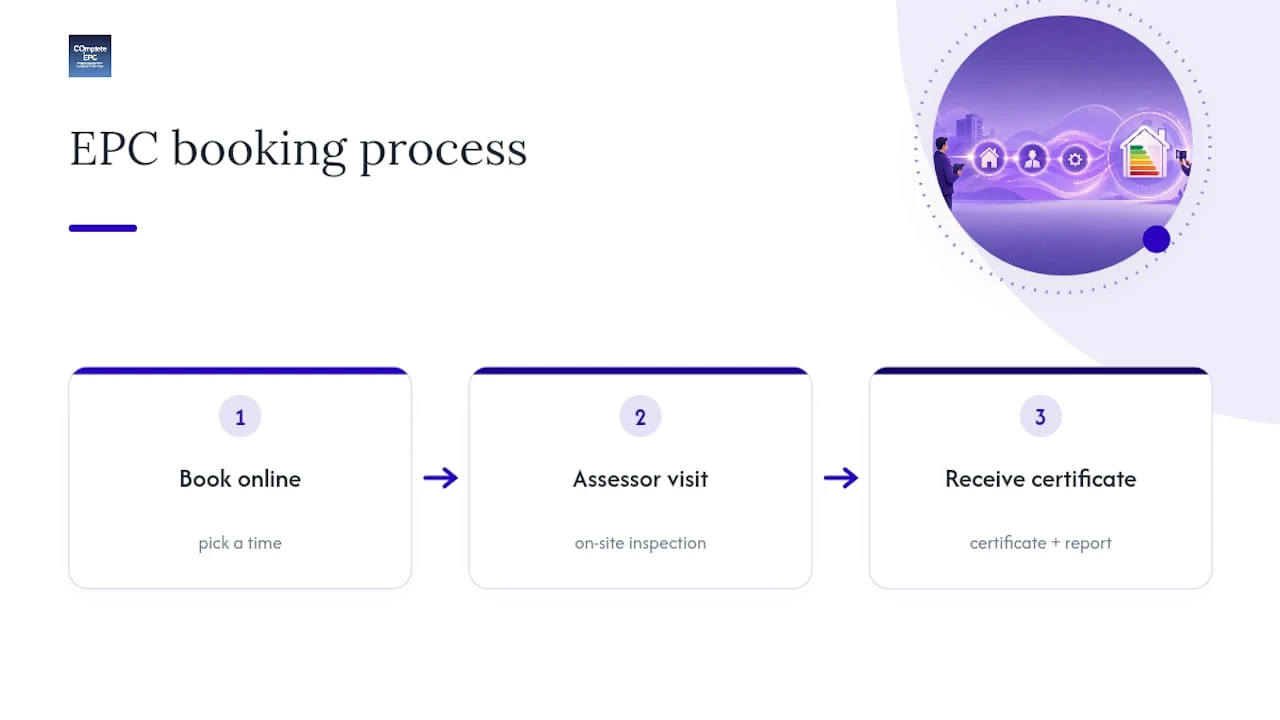
Completeepc is built for landlords who need certainty, not guesswork, on EPC regulatory requirements. Whether you’re letting a single flat or managing a commercial portfolio approaching the 2031 deadline, the process is the same: book online, an accredited assessor visits at a time that suits you, and you receive your certificate with a clear recommendation report, priced competitively against the wider London market.
For residential lets and sales, the domestic EPC service covers standard assessments plus pre and post-works certificates for MEES compliance. For offices, retail units and larger commercial premises, the commercial EPC service handles display duty requirements alongside the certificate itself. Book your assessment today and get ahead of the 2030 deadline before it becomes urgent.
Sources
For the primary legal text and current government positions, go straight to the source rather than relying on secondary summaries.
- The Energy Performance of Buildings (England and Wales) Regulations 2012
- Improving the energy performance of privately rented homes: government response
FAQ
What is the legal requirement for an EPC?
You must have a valid EPC before constructing, selling or letting a property, and provide it free to prospective buyers or tenants under the 2012 Regulations.
What are the new EPC regulations?
The government has confirmed private rented homes must reach a higher standard, broadly a C rating, by 1 October 2030, with commercial buildings over 1,000 square metres required to hit a B rating by 2031.
What are the new EPC regulations for landlords in 2030?
From 1 October 2030, privately rented homes must meet a higher minimum standard than the current E rating, though transitional arrangements and a cost cap will apply to landlords already partway through improvement works.
How often is an EPC required in the UK?
An EPC is valid for 10 years, but you need a new one sooner if you sell, re-let, or complete works that materially change the property’s energy performance.
Does Completeepc issue EPCs that meet these legal requirements?
Yes. Completeepc’s accredited assessors issue both domestic and commercial EPCs that satisfy the statutory duty under the 2012 Regulations, including pre and post-works certificates for MEES compliance.