
If you are selling a home or commercial building in England or Wales, you must have an Energy Performance Certificate (EPC) commissioned before the property is marketed. The certificate lasts 10 years, buyers must be able to see it free of charge, and there is no minimum rating you have to reach to sell. This guide covers the timing, the exemptions, the penalties and the practical steps, with a London seller in mind.
TL;DR
- You must order an EPC before you market the property, unless it is exempt or a valid one already exists. GOV.UK sets out the rule on its selling a home EPC page.
- An EPC is valid for 10 years and can be reused for as many sales or lettings as you like in that period.
- There is no minimum EPC rating for selling. The minimum standards apply to landlords, not sellers.
- Breaching the rules can bring a fixed penalty from trading standards, so do not list first and sort the certificate later.
- Domestic and commercial EPCs follow different rules, so check which one applies to your building.
Table of Contents
- Do you need an EPC to sell?
- When must the EPC be ordered?
- How long is an EPC valid, and can you reuse it?
- Is there a minimum EPC rating to sell?
- What counts as exempt?
- Domestic and commercial sellers: what differs
- Penalties for getting it wrong
- Should you improve the rating before selling?
- What the assessor needs from you
- Our view: order early, and treat the EPC as a sales tool
- Order your EPC with Complete EPC
- Where the rules are heading
- FAQ
- Sources
Do you need an EPC to sell?
Yes. Under the Energy Performance of Buildings (England and Wales) Regulations 2012, the person selling or renting out a building must make a valid EPC available free of charge to prospective buyers or tenants. The same regulations require that certificate to be commissioned before marketing begins if there is no valid one already.

The duty falls on the seller. Estate agents have their own duty not to market a property until an EPC has been commissioned, but that does not move your responsibility onto them. If you are instructing an agent in London, ask on day one whether they expect you to order the certificate or whether they will arrange it, and check that it is booked with an accredited assessor.
This article covers England and Wales. Scotland and Northern Ireland run their own EPC rules, so a seller there should use the guidance for their own nation.
When must the EPC be ordered?
The key word is commissioned. GOV.UK says you must order the EPC before you market the property. That means before the listing goes live on a portal, before a “for sale” board goes up and before you send details to anyone.
Two timing points matter:
- Commission first. The GOV.UK guide for dwellings explains that if no valid EPC exists, one must be commissioned before the building is put on the market.
- The grace period. If the certificate has been commissioned but cannot be obtained within 7 days, a further 21 days is allowed. This is not a licence to market while you look for an assessor. The commission has to exist first.
The EPC must then be made available to anyone who asks about the property, at the earliest opportunity and no later than when a buyer requests information or arranges a viewing. In practice, attach it to your listing or send it with the sales particulars.
A simple order of events
- Decide to sell and check whether a valid EPC already exists.
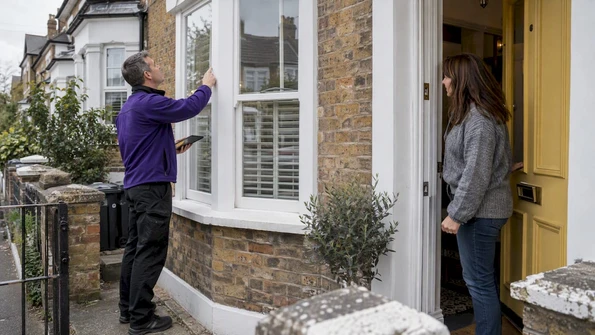
- If not, book an accredited assessor. The assessor visits, measures and records the property.
- The certificate is lodged on the national register and you receive your copy.
- Give the agent the certificate, then go to market.
For most London flats and houses the assessment itself is a short visit, so ordering the EPC at the same time as you choose an agent costs you very little time.
How long is an EPC valid, and can you reuse it?
An EPC is valid for 10 years. According to the GOV.UK guidance, it can be reused as many times as required within that period. If your sale falls through and you relist after two years, you do not need a new certificate. Likewise, if you bought the property recently and the previous owner’s EPC is still in date, it may serve you.
A few practical points:
- Check the expiry date on the certificate before you rely on it.
- You can look up an existing certificate for your address on the government’s EPC register.
- If you have made significant improvements since the last EPC, such as new insulation, a new boiler or double glazing, a fresh assessment can show a better rating. You are not forced to do this, but it can help buyers see the true condition of the property.
Is there a minimum EPC rating to sell?
No. Selling does not require any particular band between A and G. You only need to have the certificate and show it. The minimum energy efficiency standard applies to privately rented homes, which is why many sellers confuse the two.
That said, the rating is visible to every buyer. A property in band F or G will prompt questions about heating costs, and buyers who plan to let the property afterwards need to know the rules for landlords. Those rules are moving upwards. In its January 2026 response on privately rented homes, the government confirmed that private rented homes will need to meet new standards by 1 October 2030, with landlords expected to spend up to £10,000 per property to get there. A buy-to-let investor looking at your flat will take that into account.
What counts as exempt?
Some buildings do not need an EPC for sale. The main ones in the GOV.UK guidance are:
- Listed or protected buildings, where meeting minimum energy requirements would unacceptably alter the character or appearance. GOV.UK says to check with your local authority conservation officer before relying on this. It is not automatic.
- Temporary buildings with a planned use of two years or less.
- Some standalone buildings with a small floor area, and certain places of worship or industrial sites with low energy demand.
- Buildings due for demolition, where specific conditions are met.
Exemptions are narrower than many sellers expect. Many London period homes are in conservation areas without being listed, and conservation area status alone does not make a property exempt. If you are unsure, get written confirmation before you market, because the cost of getting this wrong is higher than the cost of an assessment.
Domestic and commercial sellers: what differs
Domestic and non-domestic EPCs are produced differently and follow different guidance. The domestic guide covers dwellings, while a separate GOV.UK guide for non-dwellings covers shops, offices, warehouses and similar buildings. The non-domestic requirement was introduced in phases from 6 April 2008.
| Domestic (homes) | Commercial (non-dwellings) | |
|---|---|---|
| EPC needed to sell | Yes, unless exempt | Yes, unless exempt |
| Validity | 10 years | 10 years |
| Top band | A | A+ |
| Rating in advertising | Not the general requirement for homes | Required in commercial media adverts |
| Typical sellers | Homeowners, landlords selling up, developers | Owners of offices, retail, industrial units |
If you are selling a building with both residential and commercial parts, such as a shop with a flat above, the assessor needs to work out whether it should be treated as one unit or separate ones. Raise this at booking.
Buildings with air conditioning may also fall under separate inspection duties. If your commercial property has an air conditioning system above the size threshold, ask about a TM44 inspection, as buyers’ solicitors may ask for it.
Penalties for getting it wrong
Local authority trading standards enforce the rules. For homes, the GOV.UK guide sets a fixed penalty of £200 for a breach, such as not commissioning the EPC before marketing or not making it available to buyers. For non-dwellings the penalty is based on rateable value and is considerably higher.
The penalty is only part of the cost. A missing EPC can hold up a listing, delay exchange and give a buyer’s solicitor a reason to question the rest of your paperwork. Conveyancers routinely check for the certificate, so a gap tends to surface at the worst time.
Should you improve the rating before selling?
You do not have to. Some sellers still choose to, particularly where the recommendations on the certificate are cheap. Every EPC includes a list of suggested improvements with indicative costs and the rating you could reach. Look at that list before you list the property.
Common low-cost items that can lift a rating:
- Loft insulation topped up to current recommended depth
- Low-energy lighting throughout
- Heating controls such as a room thermostat and thermostatic radiator valves
- Draught-proofing around doors and windows
Larger changes, such as a heat pump or solar panels, are a bigger decision and may not pay back in time for a sale. If you are weighing solar, this checklist for connecting solar to an EV charger shows what is involved on the electrical side. Make any works before the assessor’s visit, since the EPC records the property as it stands on the day.
A sensible rule: spend on improvements only where the cost is small compared with the effect on buyer confidence, and where you would carry out the work anyway.
What the assessor needs from you
A smoother assessment means a quicker certificate. Have these ready:
- Access to every room, the loft hatch and the boiler or heating controls
- Details of any extension, conversion or loft room, with dates and any building control paperwork
- Evidence of insulation installed, such as an installer’s certificate or guarantee
- Boiler make and model, and any information on solar panels or other renewables
- Window details, including double-glazing certificates (for example FENSA)
Where evidence is missing, the assessor must use default assumptions based on the age of the property, which often means a lower rating than the reality. Good paperwork can lift your result.
Our view: order early, and treat the EPC as a sales tool
We see the same pattern with sellers across London. They treat the EPC as a form to tick once the agent asks, and then find the certificate holds up the listing by a few days. The sellers who go smoothly are the ones who commission before they even meet agents.
We would add three things from our work in domestic and commercial certification:
- Check the recommendations before you list. If the report shows a cheap fix you were planning anyway, do it first and have it recorded.
- Keep your evidence. Insulation certificates and boiler paperwork are what turn assumptions into measured results.
- Look ahead. Energy standards are tightening, mostly for landlords for now. A buyer who plans to let your property will ask what rating it needs to reach, so it helps to know the answer.
An EPC is not a hurdle. It is a short, fixed-cost document that buyers and their solicitors expect to see.
— Danny
Order your EPC with Complete EPC
We provide energy performance certificates for homes and commercial buildings across London, delivered by qualified assessors. If you are selling a home, our domestic EPC service gets you a lodged certificate ready for your agent. If you are selling an office, shop or industrial unit, see our commercial EPC service. To discuss a mixed-use building or ask about timing, start at completeepc.co.uk.
Where the rules are heading
The government has consulted on reforming how EPCs are produced and what they show, and the rented sector is the first area where firm new standards have been set. The January 2026 government response says private rented homes will be assessed against a fabric performance standard plus a second standard on either smart readiness or heating system, and that homes already at C or above before 1 October 2029 remain compliant until that EPC expires.
For a seller, the practical point is simple: the sale rules still centre on having a valid certificate, but what that certificate says will matter more to buyers over time. Before you rely on an old EPC, check GOV.UK for the current position and ask your assessor whether a fresh certificate would serve you better.
FAQ
Is it a legal requirement to have an EPC when selling?
Yes, in England and Wales, unless the building is exempt. The EPC must be commissioned before you market the property and shown free of charge to prospective buyers. The duty is yours as the seller, even if an agent handles the listing.
Can I sell without an EPC if I am a cash buyer’s seller or selling at auction?
No. The rules apply to a sale however it is conducted, and there is no exception for cash buyers. If the property is marketed for auction, the EPC is still required unless an exemption applies. Check with your auctioneer, who will usually ask for it in the legal pack.
Can I get my own EPC certificate?
No. An EPC has to be produced by an accredited energy assessor, who visits the property and lodges the certificate on the national register. You cannot self-certify. You can, however, look up any existing certificate for your address on the government register.
Do I need a new EPC every time I relist?
No. A certificate lasts 10 years and can be used for repeated sales or lettings within that period. A new one is only needed once it expires, or if you choose to reassess after improvements.
What happens if the property has no EPC when the buyer asks?
You risk a penalty from trading standards and a delay to the sale. Commission an assessment immediately and give the buyer the certificate once lodged. Do not market the property further until the commission is in place.
Sources
- Selling a home: Energy Performance Certificates, GOV.UK
- A guide to Energy Performance Certificates for the marketing, sale and let of dwellings, GOV.UK
- A guide to energy performance certificates for the marketing, sale and let of dwellings (PDF), GOV.UK
- A guide to Energy Performance Certificates for the construction, sale and let of non-dwellings, GOV.UK
- The Energy Performance of Buildings (England and Wales) Regulations 2012, legislation.gov.uk
- Improving the energy performance of privately rented homes: government response, GOV.UK