

Every London property comes with its own set of energy challenges, whether you own a Victorian terrace in South London or a modern office near Canary Wharf. Keeping up with evolving regulations and securing a reliable Energy Performance Certificate is crucial if you want to avoid fines and maintain your asset’s appeal. This step-by-step guide helps you navigate each part of the EPC compliance process, making it straightforward to meet legal requirements and boost your property’s value ahead of the 2025 regulatory updates.
Table of Contents
- Step 1: Assess Property Needs For EPC Compliance
- Step 2: Gather Essential Documentation And Information
- Step 3: Book A Qualified EPC Assessor In London
- Step 4: Understand The EPC Assessment And Report Process
- Step 5: Verify EPC Accuracy And Cost-Effectiveness
Quick Summary
| Key Point | Explanation |
|---|---|
| 1. Assess Property Needs Thoroughly | Determine the specific EPC requirements based on property type, age, and condition to avoid expensive last-minute upgrades. |
| 2. Gather Necessary Documentation | Compile relevant records and certificates for heating systems, insulation, and improvements to ensure accurate assessment. |
| 3. Choose a Qualified Assessor | Verify the credentials and experience of your EPC assessor to obtain a reliable evaluation that reflects your property’s value. |
| 4. Understand the Assessment Process | Familiarise yourself with what the EPC assessment entails to prepare effectively and interpret your results correctly. |
| 5. Verify Report Accuracy | Review your EPC report carefully to ensure documented improvements are reflected and evaluate the cost-effectiveness of recommendations. |
Step 1: Assess property needs for EPC compliance
Your first task is understanding what your property actually requires. Every London property has different needs depending on its type, age, and current condition. You’ll want to identify whether you’re dealing with a rental property, owner-occupied home, or commercial space, as these have distinct EPC requirements.
Start by checking your property’s current EPC rating if you have one. If your property was assessed before, that report still matters. You need to understand where you stand relative to the legal standards. The minimum EPC rating of E has been mandatory for rental properties since 2018, but regulations are tightening. If you’re a landlord, knowing this baseline helps you plan upgrades strategically rather than facing rushed, expensive changes later.
Walk through your property systematically. Look at the heating system, insulation quality, windows, doors, and any recent improvements you’ve made. Note which elements are outdated and which are reasonably efficient. This physical assessment gives you a realistic picture before paying for a formal EPC evaluation. You might find that some improvements you’ve already completed could be claimed in your assessment.
Consider your property’s building regulations and when it was constructed. Older properties often require different assessment approaches than newer builds. Victorian terraces in South London behave differently from 1980s semidetached homes or modern city centre flats. Understanding your property type helps an assessor provide accurate recommendations tailored to your actual situation.
Think about your timeline too. Are you selling soon, renting out the property, or simply ensuring compliance? Your urgency shapes how you approach improvements and when you need the assessment completed. This step prevents wasted effort on unnecessary work that won’t affect your EPC rating or your property’s marketability.
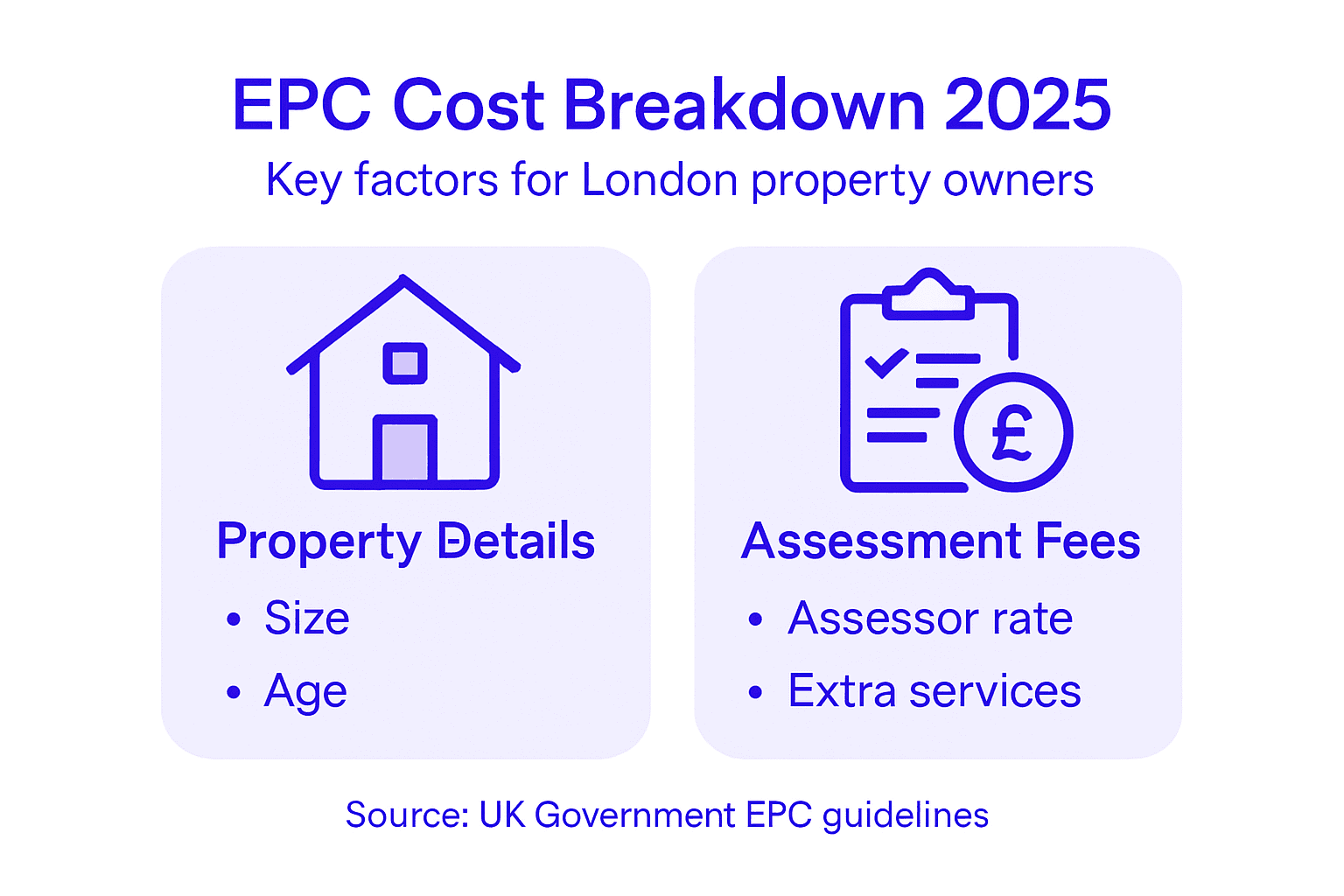
Here’s a summary of key factors that influence the EPC requirements for London properties:
| Property Type | Typical EPC Needs | Unique Assessment Considerations |
|---|---|---|
| Rental Property | Must meet minimum rating E | Regular updates, stricter compliance |
| Owner-Occupied Home | Compliance less urgent | Focus on comfort and personal upgrades |
| Commercial Space | Varies by use and size | Complex systems, specific regulatory standards |
| Historic/Victorian | Challenging insulation | Heritage restrictions, bespoke methods |
| Modern Flat/Semi-Detached | Easier to upgrade | Standardised construction aids assessment |
Professional tip Document your property’s current condition with photos and notes about any recent maintenance or upgrades, as this information helps assessors understand your property’s true efficiency and ensures your EPC reflects actual improvements you’ve made.
Step 2: Gather essential documentation and information
Collecting the right paperwork before your EPC assessment saves time and ensures your rating reflects your property’s true condition. Modern assessments require detailed supporting evidence, particularly for any improvements you’ve made. Without proper documentation, those upgrades simply won’t count towards your rating.
Start by gathering all records related to your heating system. Find your boiler service certificates, manufacturer details, and any recent maintenance records. If you’ve installed a new boiler, heat pump, or smart heating controls, keep these documents close. Energy assessors now need manufacturer data for heating systems to accurately reflect your property’s efficiency, so clarity on what you’ve installed makes a genuine difference.
Look for insulation certificates and any evidence of roof, wall, or floor insulation work. If you’ve added cavity wall insulation or loft insulation, these documents prove what’s actually been installed. Without the supporting evidence, assessors can’t account for these improvements. Similarly, if you have solar panels, battery storage, or heat recovery systems, dig out the installation certificates and technical specifications.
Compile information about your windows and doors. Note the type of glazing (double, triple, secondary), frame materials, and condition. If you’ve recently replaced windows, keep that paperwork. Assessors will examine these details closely, particularly for flats and mid-terrace properties where heat loss through glazing significantly impacts ratings.
Organise any other relevant home improvement records you’ve kept. Planning permissions, building regulation certificates, or receipts for upgrades all help paint a complete picture. Think about when your property was built too, as this affects how assessments are conducted. Having everything in one folder before your assessor arrives streamlines the process and ensures nothing gets overlooked.
Professional tip Create a simple document folder containing photos of your heating system, insulation, windows, and any certificates or receipts, then share it with your assessor when booking to speed up the appointment and improve accuracy.
Step 3: Book a qualified EPC assessor in London
Finding the right assessor matters more than you might think. Not all assessors are equal, and booking someone without checking their credentials could mean paying for an assessment that doesn’t reflect your property’s true efficiency. Your goal here is to identify a qualified professional who understands London properties and delivers accurate results.

Start by verifying that any assessor you consider holds current accreditation. This is non-negotiable. An accredited energy assessor in London has completed proper training and maintains ongoing professional standards. Ask potential assessors about their accreditation body and how long they’ve been registered. If they’re vague about this, move on to someone else.
Check their experience with your property type. A London flat assessor may have different expertise than someone who primarily handles Victorian terraces or modern houses. Look for assessors who’ve worked extensively with properties similar to yours, as they’ll understand the quirks and challenges of your specific building type. Experience matters because it translates to more accurate assessments.
Compare pricing carefully, but don’t choose based on cost alone. The cheapest option often cuts corners, leading to incomplete assessments or missed documentation. Ask what’s included in their fee and whether they offer transparent reporting. Reputable assessors provide detailed findings with clear recommendations for improvement.
When you contact them, be specific about your property. Mention its age, size, type, and any recent improvements you’ve made. This helps assessors give accurate quotes and confirm they’re right for your situation. Book well in advance rather than last minute, especially during busy seasons. Most assessors require access to your full property and time to inspect carefully, so allow at least two to three weeks when possible.
Professional tip Check whether your assessor is willing to review your documentation before the visit and ask about their turnaround time for delivering your final EPC report, as this varies significantly between providers.
Step 4: Understand the EPC assessment and report process
Knowing what happens during your assessment and what your report contains helps you prepare properly and interpret your results accurately. The process has changed significantly, and understanding the new methodology means you’ll know what to expect when your assessor arrives.
Your assessor will conduct a thorough inspection of your property, examining heating systems, insulation, windows, ventilation, and any smart controls you’ve installed. They’ll take precise measurements and gather detailed information about your building’s characteristics. The updated EPC assessment process involves detailed data collection by assessors checking for heat losses, window specifications, and new technologies like solar panels or battery storage. The physical inspection typically takes around 10 minutes but may extend longer for complex properties with multiple systems or unusual layouts.
During the visit, your assessor will ask questions about your property’s age, construction type, and any improvements you’ve made. This is where your documentation becomes invaluable. They’ll cross-reference your certificates and records against their observations to ensure accuracy. Be present during the assessment if possible, as you can answer questions about heating system details, insulation specifications, or recent upgrades that might not be obvious from inspection alone.
Once completed, your assessor will produce an EPC report containing an A-G energy rating for your property. The report includes detailed energy cost estimates, showing what you’d typically spend annually on heating, cooling, and hot water. You’ll also receive tailored recommendations for improvements, prioritised by cost-effectiveness and impact on your rating. Modern EPC reports provide reflection of a property’s energy efficiency helping you understand where your property stands and what actions matter most.
Your final report is valid for ten years and is what you’ll use for lettings, sales, or compliance purposes. Keep multiple copies stored safely, as you may need them for future transactions or regulatory checks.
To clarify what your EPC report covers, here is an overview of its main sections and what each provides:
| Section | What It Contains | Why It Matters |
|---|---|---|
| Property Rating (A–G) | Shows overall energy efficiency | Indicates compliance and value |
| Estimated Energy Costs | Annual spending breakdown | Helps plan future improvements |
| Recommendations | Tailored upgrade advice | Prioritises best-value actions |
| Improvement Impact | Projected rating after upgrades | Guides effective spending choices |
Professional tip Ask your assessor to explain the key sections of your report before they leave, particularly the recommendations section, so you understand which improvements will genuinely impact your rating and energy costs.
Step 5: Verify EPC accuracy and cost-effectiveness
Your EPC report is only valuable if it accurately reflects your property’s true energy performance. Verifying its accuracy ensures you’re making informed decisions about improvements and that your rating genuinely supports your property’s value and compliance. This step involves reviewing the report critically and checking that all your documented improvements are properly accounted for.
Start by reviewing every detail in your report against what your assessor actually observed. Check that your property type, construction date, heating system, insulation specifications, and window types are all correctly recorded. If anything seems wrong, contact your assessor immediately. Errors at this stage are easier to correct than they are once the report is registered. Compare the energy cost estimates against your actual utility bills to see if they align reasonably with your real-world spending patterns.
Verify that all your documented improvements are reflected in the assessment. This is critical because evidence-based data collection improves EPC accuracy by reflecting real-world home performance more closely. If you provided certificates for new windows, insulation, or a modern heating system, these should be visible in the recommendations section and should influence your overall rating. If they’re not included, ask your assessor why and request corrections if necessary.
Evaluate the cost-effectiveness of the recommended improvements. Your report should prioritise upgrades by their impact on your rating versus installation cost. Some recommendations might significantly boost your rating at modest expense, whilst others could be expensive for minimal gain. Focus your attention and budget on the improvements that deliver the best value. A well-constructed EPC helps you understand which actions genuinely matter for your property.
Compare your EPC rating against similar London properties to understand where you stand. Properties with ratings of C or D typically command stronger rental prices and sale values. If your rating is lower, the recommendations section should guide realistic improvements you can make. Keep your final report safe, as it’s legally required for lettings and useful for sales transactions.
Professional tip Request your assessment data in digital format from your assessor, as this helps you track which improvements have been documented and makes it easier to update your EPC if you make further enhancements to your property.
Take Control of Your EPC Costs and Compliance Today
Understanding the complexities of EPC compliance and cost management for London properties can feel overwhelming. From meeting the minimum EPC rating requirements to gathering the right documentation and choosing a qualified assessor, the process is filled with challenges that risk costly delays or inaccuracies. At Complete EPC, we recognise these pain points and specialise in delivering accurate, up-to-date energy performance certificates tailored specifically to London’s diverse property landscape. Our expert team ensures your EPC reflects all recent improvements so you can confidently plan cost-effective upgrades and meet legal obligations without stress.
Make your journey smoother and more affordable by partnering with professionals who understand the nuances of EPC regulations and property types in London. Start by booking a thorough assessment with one of our qualified experts or learn more about how we keep EPC services competitively priced and reliable by visiting Complete EPC. Don’t wait until the last minute—secure your EPC today and unlock the benefits of improved energy efficiency, increased property value, and legal compliance. Act now to ensure your property’s energy certification is in trusted hands.
Frequently Asked Questions
What is the average cost of obtaining an EPC for a London property in 2025?
Obtaining an Energy Performance Certificate (EPC) for a London property typically costs between £60 and £120, depending on various factors like property size and type. To ensure accuracy, compare quotes from several accredited assessors.
How can I prepare my property to reduce EPC assessment costs?
To reduce costs, ensure that your property is in good condition before the assessment. Conduct a thorough inspection to identify and resolve any obvious issues like draughts or inadequate insulation, potentially saving you ~20% on your reporting fees.
Are there any additional costs associated with improving my EPC rating?
Yes, improving your EPC rating can incur additional costs for upgrades like insulation, new heating systems, or double glazing. Budget for these improvements by researching expected costs and prioritising those that offer the best return on investment to enhance your rating.
How long is an EPC valid, and when should I consider getting a new one?
An EPC is valid for ten years, but obtaining a new certificate is advisable if you make significant improvements to your property or if regulations change. Review your EPC every few years to ensure compliance with current standards and to reflect any upgrades made.
What factors can significantly impact the cost of my EPC assessment?
Several factors can impact EPC assessment costs, including the property’s age, size, and construction type. To get an accurate estimate, provide detailed information about your property to assessors, allowing them to give tailored quotes.
How will the E rating requirement affect my future property decisions?
Meeting the minimum E rating is essential, especially for rental properties, as regulations are tightening. Plan any necessary upgrades in advance, as failing to comply could lead to costly penalties or make your property less attractive to potential tenants.