

TL;DR:
- A home energy audit evaluates how a property uses and loses energy, helping reduce bills and improve efficiency. DIY inspections identify visible issues, while professional assessments provide detailed diagnostics using advanced tools like blower door tests and thermographic scans. Proper preparation and prioritizing cost-effective improvements are essential to maximizing savings and meeting legal standards in London.
A home energy audit is a diagnostic evaluation of how your property uses and loses energy, identifying exactly where heat escapes, appliances underperform, and bills inflate unnecessarily. Known formally as a residential energy assessment, this process can cut energy bills by 5–30% annually, which translates to meaningful savings for London households facing some of the UK’s highest energy costs. A DIY version takes 2–4 hours and costs nothing beyond your time. A professional assessment uses tools like blower door tests, infrared thermographic cameras, and RESNET HERS ratings to deliver evidence-based recommendations your insurer, local authority, or mortgage lender will recognise.
What is a home energy audit and which type do you need?
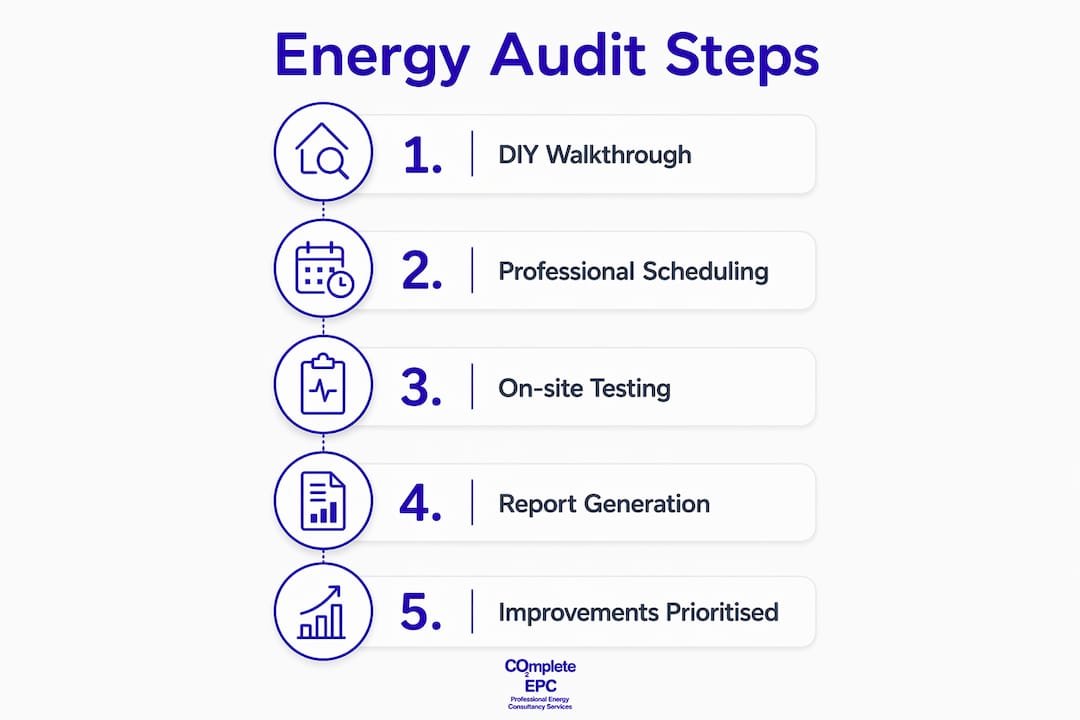
A home energy audit splits into two distinct tiers: the DIY walkthrough and the professional assessment. Each serves a different purpose, and choosing the wrong one wastes either money or opportunity.
DIY audits are the logical first step for most London homeowners. You inspect your property room by room, checking for draughts around window frames and skirting boards, examining loft insulation depth, and reviewing your energy bills for seasonal spikes. DIY audits typically take 2–4 hours and require no specialist equipment beyond a torch and a notepad. The limitation is clear: you can spot visible problems, but you cannot measure air leakage rates or detect hidden insulation gaps behind plasterboard.
Professional audits fill that gap with diagnostic rigour. Professional assessments cost between £200 and £1,100 depending on depth, with standard BPI-equivalent audits at the lower end and full rater assessments at the higher end. They last 2–3 hours on site and produce a written report with prioritised recommendations.
| Audit Type | Typical Cost | Duration | Best For |
|---|---|---|---|
| DIY walkthrough | Free | 2–4 hours | Spotting visible issues, low-cost fixes |
| Standard professional | £200–£500 | 2–3 hours | Detailed diagnostics, rebate eligibility |
| Full rater assessment | £500–£1,100 | 3+ hours | Certification, mortgage green deals, landlord compliance |
DIY audits identify visible issues like draughts and insulation gaps, but professional audits are recommended when you need accuracy, certification, or eligibility for government schemes. For London landlords, a professional assessment is often the only route to meeting Minimum Energy Efficiency Standards (MEES) obligations and avoiding penalty notices.
Pro Tip: Start with a DIY audit to build your list of known problems, then share that list with your professional assessor. You will get a more focused report and better value for the assessment fee.
What technologies do professional auditors use?
Professional energy assessors do not simply walk around with a clipboard. They use calibrated equipment that reveals what the naked eye cannot detect, and understanding these tools helps you evaluate whether an assessor is doing a thorough job.
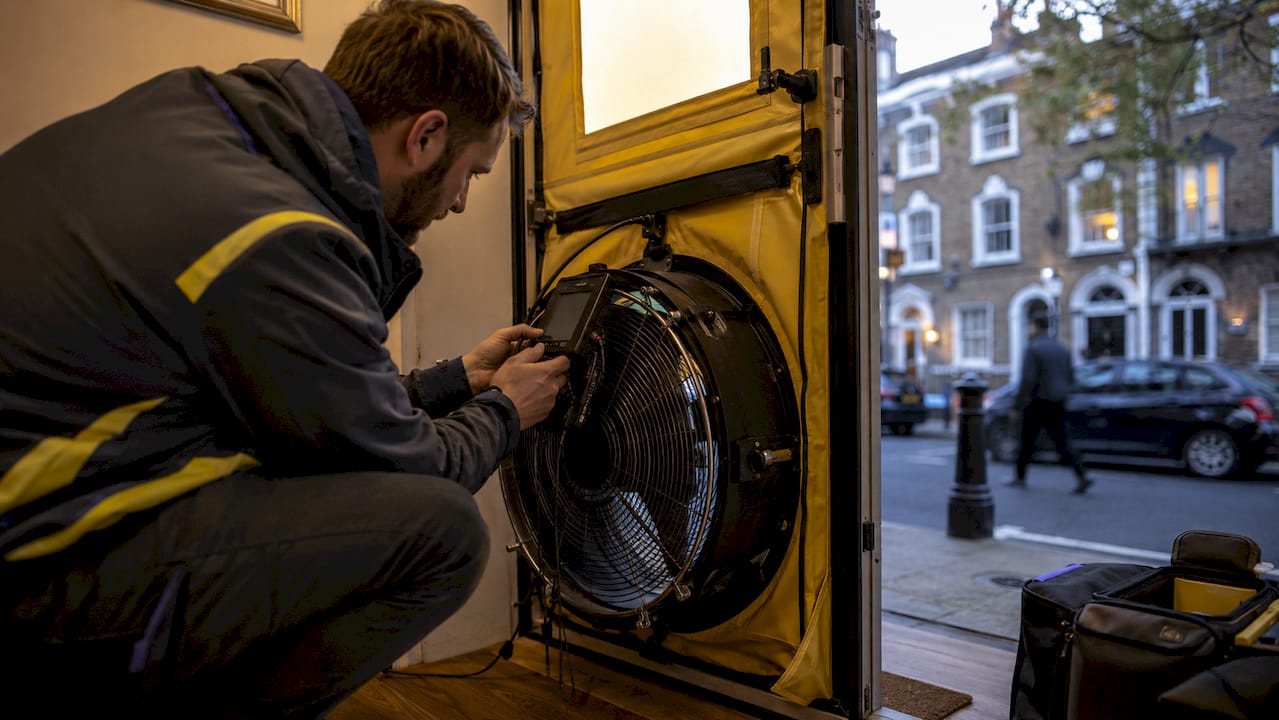
Blower door testing is the cornerstone of any credible professional audit. The assessor fits a large fan into an external doorframe and depressurises the property. This reveals the total air leakage rate of the building envelope. High leakage means your heating system works harder than necessary to maintain temperature, which is a direct driver of inflated bills in older London terraces and Victorian conversions.
Infrared thermographic scanning uses a thermal camera to map surface temperatures across walls, ceilings, and floors. Cold patches on internal walls indicate missing or degraded insulation. Warm patches around window frames or electrical sockets reveal air infiltration paths. Professional assessments include room-by-room inspection, blower door tests, and infrared thermographic scans to identify heat loss, insulation gaps, and air leaks. This level of detail simply cannot be replicated with a visual inspection alone.
Additional diagnostic methods include:
- Duct leakage testing: Measures how much conditioned air escapes through poorly sealed ductwork before reaching living spaces.
- Appliance efficiency assessment: Checks boiler output, hot water cylinder performance, and white goods energy ratings against current standards.
- Combustion safety testing: Confirms that gas appliances are not producing dangerous carbon monoxide levels, which is a legal requirement for rental properties.
A credible professional audit begins with gathering evidence and avoids being a sales pitch, focusing on comprehensive diagnostics of insulation, HVAC, and air leakage. Be cautious of any assessor who spends more time recommending specific products than explaining diagnostic findings. That is a sign the audit is commercially motivated rather than evidence-based.
Pro Tip: Ask your assessor to show you the blower door reading and thermal images during the visit. A good professional will explain what they mean on the spot, not just bury them in a report you receive two weeks later.
How to prepare for a professional home energy audit
Preparation directly affects the quality of your audit report. Assessors who arrive to a well-prepared property produce more targeted recommendations. Those who spend the first 30 minutes gathering basic information produce generic ones.
Follow these steps before your assessor arrives:
- Gather 12 months of energy bills. Seasonal patterns in your gas and electricity consumption tell the assessor where the biggest losses occur. Digital statements from your supplier work equally well.
- Note comfort and condensation issues. Write down which rooms feel cold in winter, where condensation appears on windows, and whether any walls feel damp. These observations guide the assessor toward problem areas immediately.
- List known draughts and inefficiencies. Identify gaps around letterboxes, loft hatches, pipework penetrations, and skirting boards. Your list becomes part of the audit checklist.
- Set your home to its normal temperature. Standard preparation includes setting home temperature to normal and allowing auditor access to all rooms and utility areas. Do not turn the heating up or down to impress the assessor. Accurate readings depend on typical operating conditions.
- Arrange access to all areas. The assessor needs to reach your loft, any basement or cellar, the boiler cupboard, the hot water cylinder, and every room including storage spaces. Clear access paths in advance.
- Secure pets during the blower door test. The depressurisation process can distress animals and interfere with readings if doors are opened mid-test.
- Communicate your priorities upfront. Homeowners should engage auditors with past energy bills and a list of known issues to guide and tailor the assessment effectively. Tell the assessor whether your primary concern is reducing bills, improving comfort, meeting landlord compliance requirements, or increasing your property’s EPC rating before sale.
London properties present specific challenges worth flagging in advance. Victorian and Edwardian terraces often have solid walls with no cavity, which limits insulation options. Flats in converted period buildings may share heating systems with neighbours. Listed building status restricts certain external modifications. Mentioning these constraints at the start saves time and produces more realistic recommendations.
How to use audit results to prioritise improvements
An audit report is only useful if you act on it. The best reports do not just list problems. They rank solutions by cost, impact, and payback period so you can make decisions based on your budget and timeline.
Audit reports ideally include cost-benefit analyses that help homeowners rank improvements by impact, cost, and payback time. That structure matters because not every recommendation delivers equal value. Draught-proofing a Victorian sash window costs under £100 and pays back within one heating season. External wall insulation on a solid-wall terrace costs £8,000–£15,000 and takes 10–20 years to recover through bill savings alone.
Start with low-cost, high-impact fixes:
- Draught-proofing doors, windows, and loft hatches
- Adding a hot water cylinder jacket if your cylinder is unlagged
- Fitting thermostatic radiator valves (TRVs) to individual rooms
- Replacing incandescent or halogen bulbs with LED equivalents
Mid-range improvements worth modelling:
- Loft insulation top-up to the recommended 270mm depth
- Cavity wall insulation where applicable
- Boiler replacement or controls upgrade
Larger investments requiring financial planning:
- Solid wall insulation (internal or external)
- Heat pump installation
- Solar photovoltaic panels
For London landlords, the energy rating improvement steps required to meet MEES regulations should be treated as non-negotiable priorities. Properties rated below EPC band E cannot legally be let, and the government has signalled tighter thresholds ahead. Your audit report provides the evidence base for any works you carry out, which is also what you need to claim exemptions or apply for grant funding through schemes like the Great British Insulation Scheme.
Pro Tip: Ask your assessor to model the EPC rating improvement for each recommended measure. Some upgrades move you one full band; others barely register. Knowing this before you spend money prevents costly surprises.
Key takeaways
A professional home energy audit, combined with a clear action plan, is the most reliable way to reduce energy waste and meet compliance obligations in London properties.
| Point | Details |
|---|---|
| DIY audits are a useful starting point | A 2–4 hour walkthrough identifies visible issues and costs nothing before committing to a professional assessment. |
| Professional audits use calibrated tools | Blower door tests and infrared cameras reveal hidden air leakage and insulation failures that visual checks miss. |
| Preparation improves report quality | Gathering 12 months of bills and noting comfort issues helps the assessor produce targeted, relevant recommendations. |
| Prioritise by payback period | Start with draught-proofing and insulation top-ups before committing to larger investments like heat pumps or solid wall insulation. |
| Landlords face compliance obligations | London rental properties must meet MEES standards, and audit findings provide the evidence base for required upgrades or exemptions. |
What i have learned after years of energy assessments
The most common mistake I see London homeowners make is treating an energy assessment as a shopping list rather than a diagnostic report. They read the recommendations, pick the most expensive item, and assume that one upgrade will solve everything. It rarely does.
A good audit views the home as an interconnected system rather than just an equipment checklist. A new boiler installed in a poorly insulated, draughty property will still underperform. The sequence of improvements matters as much as the improvements themselves. Seal the building envelope first, then right-size your heating system to the reduced heat demand.
The second pattern I notice is homeowners dismissing DIY audits as too basic to bother with. That is a missed opportunity. Walking your own property with fresh eyes, checking every window seal and loft hatch, gives you context that makes the professional report far more useful. You stop being a passive recipient of findings and start being an informed participant in the process.
Finally, watch for assessors who arrive with a preferred product range. Certified professionals provide rigorous diagnostics that qualify homeowners for government rebates. An assessor whose report happens to recommend only the products their parent company sells is not giving you an independent assessment. Ask upfront whether the assessor has any commercial relationships with contractors or suppliers. The answer tells you a great deal about the quality of advice you are about to receive.
— Danny
Get a professional energy assessment for your london property
If your audit findings point toward an EPC rating improvement or you need a certificate for a property transaction, Completeepc provides professional domestic EPC services across London, carried out by qualified assessors with extensive local experience. Whether you are a homeowner preparing for sale, a landlord meeting MEES obligations, or a buyer wanting clarity on a property’s energy performance, Completeepc delivers accurate assessments at competitive rates. For commercial properties, Completeepc also offers commercial EPC assessments with fast turnaround times. Contact Completeepc today for a quote and take the next step toward lower bills, better compliance, and a more energy-efficient property.
FAQ
What is a home energy audit?
A home energy audit is a systematic review of how a property uses and loses energy, identifying inefficiencies in insulation, heating systems, and air leakage. It produces a prioritised list of improvements to reduce bills and improve comfort.
How long does a professional home energy audit take?
Professional audits typically last 2–3 hours on site, with standard assessments at the lower end and full rater audits taking longer. You receive a written report with recommendations after the visit.
Do i need a professional audit or will a DIY audit suffice?
A DIY audit is sufficient for identifying obvious issues like draughts and poor insulation. A professional audit is necessary if you need certification, want to qualify for government grant schemes, or must demonstrate compliance with MEES regulations as a landlord.
How much does a professional home energy audit cost in the UK?
Professional assessments range from approximately £200 for a standard audit to over £1,000 for a full rater assessment. The cost reflects the depth of diagnostics, the tools used, and the detail of the final report.
How does a home energy audit relate to an EPC?
An energy audit identifies inefficiencies and recommends improvements, while an Energy Performance Certificate (EPC) formally rates a property’s energy efficiency on a scale from A to G. Audit findings often inform the works needed to improve an EPC rating before a sale or letting.