

TL;DR:
- Insulation, especially loft and cavity wall types, offers the best value for improving EPC ratings at low cost. Upgrading heating systems with condensing boilers or heat pumps significantly boosts scores and benefits from government grants. Planning upgrades in sequence and using certified installers ensures compliance and maximizes energy efficiency improvements.
An Energy Performance Certificate (EPC) is the official measure of a property’s energy efficiency, rated on a scale from A (most efficient) to G (least efficient). Knowing how to improve your house energy rating matters more than ever in 2026, with EPC C compliance now a legal target for private landlords and a clear financial benefit for homeowners. The right upgrades reduce bills, raise property value, and keep you on the right side of the law. This guide covers the most effective measures, their costs, available grants, and how to plan your improvements in the right order.
Which insulation improvements offer the best value for boosting EPC ratings?
Insulation is the single most cost-effective category of improvement for raising an EPC score. It reduces heat loss directly, which the EPC methodology rewards with significant point gains. The key is choosing the right type for your property.
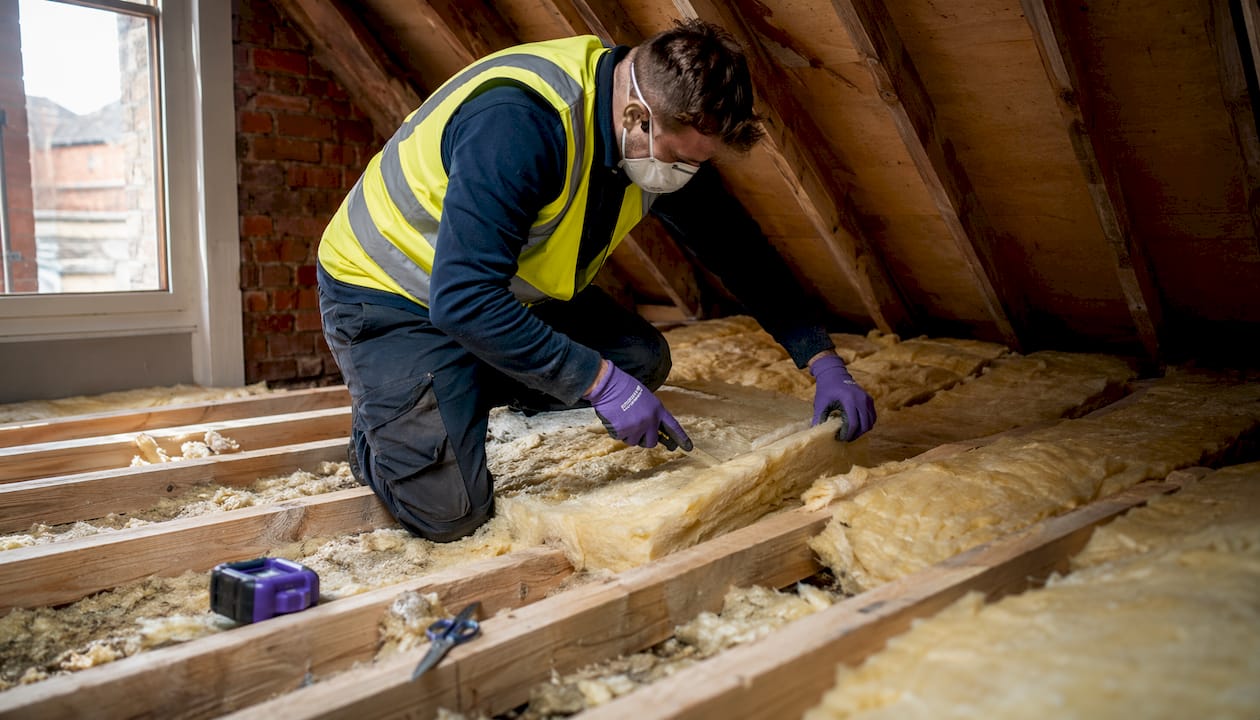
Loft insulation is the starting point for most homes. Loft insulation costs £300–£600 and adds 5–10 EPC points, with a payback period under three years. That ratio of cost to gain is hard to beat with any other single measure.
Cavity wall insulation suits properties built after the 1920s with a hollow gap between the inner and outer brick layers. It delivers a similar EPC point gain to loft insulation and may be available at no cost through the ECO4 scheme or the Great British Insulation Scheme for eligible low-income households. Eligibility depends on household income and existing energy efficiency levels.
Solid wall insulation applies to older properties with solid brick or stone walls. It costs significantly more than cavity wall insulation, typically running into several thousand pounds, but it delivers the largest EPC point gains of any insulation type. External wall insulation is the more common approach for occupied homes, as it avoids disruption to interior rooms.
| Insulation type | EPC points gained | Approximate cost | Grant available |
|---|---|---|---|
| Loft insulation top-up | 5–10 | £300–£600 | ECO4, Great British Insulation Scheme |
| Cavity wall insulation | 5–10 | £500–£1,500 | ECO4, Great British Insulation Scheme |
| Solid wall insulation | 10–20 | £8,000–£22,000 | ECO4 (income-eligible) |
| Floor insulation | 2–5 | £500–£2,000 | Limited |
Pro Tip: Prioritise loft and cavity wall insulation before any other upgrade. They deliver the highest EPC point gain per pound spent and have the shortest payback periods.
How can heating system upgrades improve your house energy rating effectively?
Heating accounts for the largest share of a home’s energy use, so upgrading the system produces a measurable EPC improvement. The two main routes are replacing an ageing boiler or switching to a heat pump.
A new condensing gas boiler plus smart controls can improve an EPC rating by up to 15 points, at a cost of £2,500–£4,500 without grants. That improvement is significant enough to move a property from band E to band D in many cases. Smart heating controls, such as programmable thermostats and thermostatic radiator valves, add further points at a fraction of the cost.
Heat pumps represent the longer-term direction of travel for home heating. The Boiler Upgrade Scheme offers £7,500 towards heat pump installation, which substantially reduces the upfront cost. Heat pumps score well under the EPC methodology because they use electricity to move heat rather than burning fuel, giving them a high efficiency rating.
Heating upgrade options and their EPC impacts:
- Replace old boiler with A-rated condensing boiler: up to 15 EPC points gained; cost £2,500–£4,500
- Install air source heat pump: 20+ EPC points gained; cost £8,000–£15,000 before the £7,500 Boiler Upgrade Scheme grant
- Add smart thermostat and zone controls: 2–5 EPC points gained; cost £150–£500
- Install thermostatic radiator valves: 1–3 EPC points gained; cost £100–£300
- Ground source heat pump: highest EPC gain of all heating options; cost £15,000–£35,000 before grants
Pro Tip: MCS certification for heat pump installers and TrustMark registration for insulation contractors are non-negotiable. Using an unregistered installer disqualifies you from grant funding and may void warranties.
You can find useful context on boiler installation criteria when evaluating heating contractors, particularly around system compatibility and installation standards.
What affordable low-cost measures can you take to raise your EPC quickly?
Not every improvement requires a large budget. Several low-cost measures add EPC points and lower energy bills with minimal disruption.
Switching to LED lighting costs £100–£300 and adds 2–5 EPC points. LEDs use around 75% less energy than traditional incandescent bulbs and last significantly longer. Draught-proofing doors, windows, and letterboxes costs a similar amount and adds 1–3 EPC points by reducing uncontrolled heat loss.
A hot water cylinder jacket costs under £30 and adds a modest EPC improvement for homes with an uninsulated cylinder. It is one of the few genuine DIY jobs on this list. Fitting low-flow shower heads and tap aerators reduces hot water demand, which also feeds into the EPC calculation.
Low-cost measures compared:
- LED lighting throughout: 2–5 EPC points; £100–£300; DIY or professional
- Draught-proofing doors and windows: 1–3 EPC points; £100–£300; DIY or professional
- Hot water cylinder jacket: 1–2 EPC points; under £30; DIY
- Low-flow shower heads: 1–2 EPC points; £20–£80; DIY
- Chimney balloon (for unused fireplaces): 1–2 EPC points; £20–£40; DIY
| Measure | EPC points | Approximate cost | DIY possible? |
|---|---|---|---|
| LED lighting | 2–5 | £100–£300 | Yes |
| Draught-proofing | 1–3 | £100–£300 | Yes |
| Hot water cylinder jacket | 1–2 | Under £30 | Yes |
| Chimney balloon | 1–2 | £20–£40 | Yes |
| Low-flow shower head | 1–2 | £20–£80 | Yes |
These measures work best as a package. Individually, each adds only a few points. Combined, they can shift a property by a full EPC band without major works.
How to plan and track your energy efficiency upgrades
A structured plan prevents wasted spending and compliance gaps. The order in which you carry out improvements matters as much as the improvements themselves.
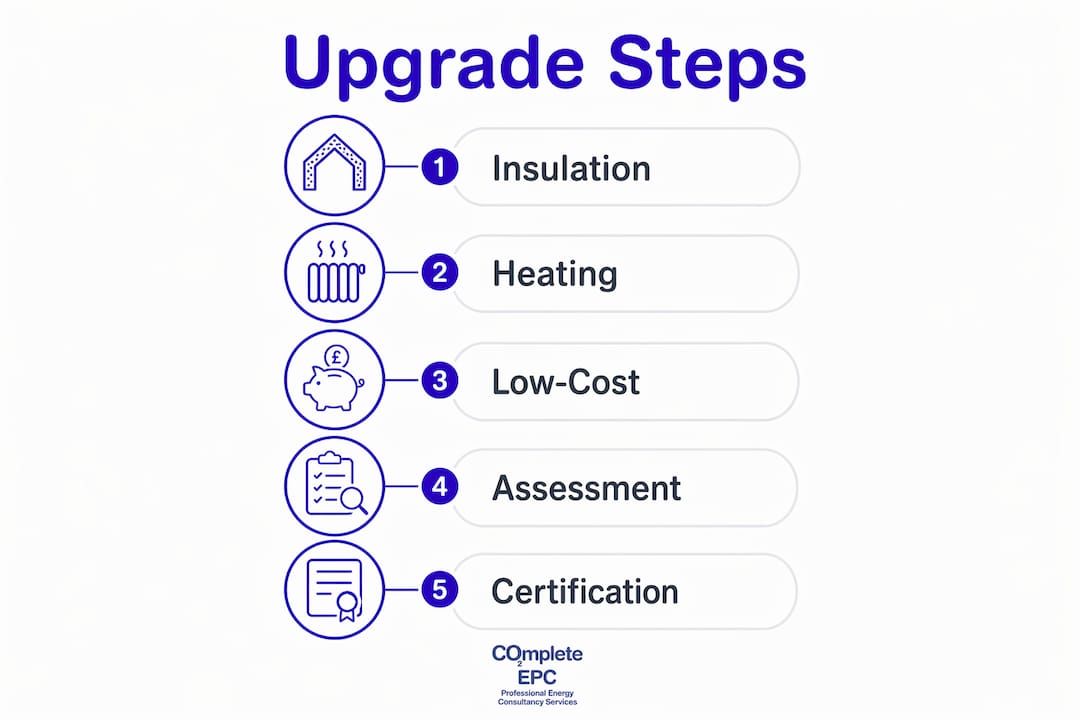
- Commission an initial EPC assessment. A qualified assessor identifies your current band and lists the specific measures that will deliver the greatest point gains for your property type. This is the foundation of any credible upgrade plan.
- Prioritise fabric upgrades first. Insulation and draught-proofing reduce heat loss before you upgrade the heating system. Installing a heat pump in a poorly insulated home wastes money and underperforms on the EPC.
- Check grant eligibility before committing to any contractor. ECO4 and the Great British Insulation Scheme have specific eligibility criteria. Confirming eligibility before signing contracts avoids losing access to free or subsidised work.
- Use certified installers for all grant-funded work. MCS and TrustMark registration are required for grant claims. Keep all certificates, invoices, and installation records.
- Commission a post-upgrade EPC assessment. A post-retrofit EPC is required to verify the new rating and evidence compliance. For landlords, this cost counts within the £10,000 statutory cap on total improvement spending.
The EPC assessment process itself is straightforward, but the sequencing of upgrades around it determines whether you achieve the target band efficiently or spend money on measures that deliver less than expected. Landlords should also note that from 2026, a new EPC methodology using the Home Energy Model (HEM) introduces dual metrics covering fabric performance and heating system efficiency, giving more than one compliance path to EPC C.
For landlords managing multiple properties, the energy efficiency tips for landlords resource covers portfolio-level planning in more detail.
Key takeaways
Improving your house energy rating requires a sequenced approach: insulation first, heating second, and low-cost measures throughout, with certified installers and verified EPC assessments at each stage.
| Point | Details |
|---|---|
| Insulation delivers the best return | Loft and cavity wall insulation add 5–10 EPC points each at the lowest cost per point. |
| Heating upgrades move the needle most | A new condensing boiler or heat pump can add up to 15–20 points and attract significant grant funding. |
| Low-cost measures add up | LED lighting, draught-proofing, and cylinder jackets combined can shift a property by a full EPC band. |
| Certified installers are mandatory | MCS and TrustMark registration are required for grant eligibility; unregistered work disqualifies claims. |
| Post-upgrade EPC is a legal requirement | Landlords must commission a new EPC after works; the cost counts within the £10,000 compliance cap. |
What I’ve learned about EPC improvements after years in the field
The most common mistake I see is homeowners and landlords jumping straight to a heat pump or solar panels because they sound impressive. The EPC methodology does not reward ambition. It rewards heat retention. A property with poor insulation and a shiny new heat pump will score worse than a well-insulated home with a decent condensing boiler.
Fabric first is not a slogan. It is the correct technical sequence. Every pound spent on insulation reduces the size of heating system you need, which reduces the cost of the heating upgrade itself. Getting that order wrong costs money twice.
The other pattern I see regularly is landlords leaving EPC compliance until the final year before a deadline. The 1 October 2030 deadline for private rented homes to reach EPC C sounds distant. It is not. Grant funding is finite, certified installers are already booking months ahead, and the new HEM methodology from 2026 changes how scores are calculated. Starting now gives you time to plan properly, access grants, and avoid rushed decisions.
One more thing worth saying plainly: the £10,000 cost cap is a ceiling, not a target. Many properties reach EPC C for considerably less, particularly if they qualify for ECO4 or the Great British Insulation Scheme. Get the initial EPC done, understand what your specific property needs, and build a plan from there.
— Danny
How Completeepc supports your EPC compliance
Completeepc provides domestic EPC assessments for homeowners and landlords across London, carried out by qualified assessors with extensive field experience. Whether you need a baseline assessment to identify the most effective upgrades or a post-retrofit certificate to evidence compliance, Completeepc delivers accurate results at competitive rates. The service covers all property types, from flats and terraced houses to larger family homes, and assessors provide clear recommendations alongside the certificate. If you are working towards the 2030 EPC C requirement or simply want to understand your property’s current position, Completeepc offers a reliable and straightforward route to certification.
FAQ
What is an EPC rating and how is it calculated?
An EPC rating is an official measure of a property’s energy efficiency, scored from 1 to 100 and banded from A to G. The score reflects insulation levels, heating system efficiency, glazing, and lighting, assessed by a qualified domestic energy assessor.
How many EPC points does loft insulation add?
Loft insulation adds 5–10 EPC points at a cost of £300–£600, making it the most cost-effective single upgrade available to most homeowners.
Do landlords need a new EPC after completing energy improvements?
Yes. A post-retrofit EPC assessment is required to verify the updated rating and evidence compliance. The cost of this assessment counts within the £10,000 statutory improvement cap for private rented properties.
What grants are available for energy efficiency improvements in 2026?
The Boiler Upgrade Scheme offers £7,500 towards heat pump installation. The ECO4 scheme and the Great British Insulation Scheme offer free or discounted insulation to eligible low-income households.
When must private rented homes reach EPC C?
Private rented homes must reach EPC C by 1 October 2030, with a maximum landlord investment of £10,000 including EPC assessment costs.