

You can reduce your energy bill in three ways: use less energy, stop it escaping from your home, and pay a fair price for what you do use. The cheapest wins come from habits and controls. The biggest long-term savings come from fixing the building itself. This guide takes them in that order, so you can start today and plan the bigger jobs properly.
TL;DR
- Start with free changes: lower thermostat settings, wash at 30°C, switch off standby and close curtains at dusk.
- Heating is usually the biggest slice of a winter bill, so draughts, insulation and heating controls matter more than any gadget.
- Know your numbers first: check 12 months of kWh use, then fix the biggest drain before buying anything.
- An EPC lists recommended improvements for your property and can point you towards grants you may qualify for.
- If you are struggling to pay, talk to your supplier early rather than waiting for arrears to build.
Table of Contents
- Start by finding out where your energy goes
- Free changes that cut your bill this week
- Low-cost fixes that pay back quickly
- What to do first: a sensible order of work
- Bigger improvements: insulation, glazing and appliances
- Use your EPC as a plan, not just a certificate
- Landlords and businesses: where the bill is also a compliance issue
- Our perspective: fix the building, then the habits
- Get the right assessment for your property
- If you are struggling to pay your bill
- FAQ
- Sources
Start by finding out where your energy goes
Before you change anything, look at your bills. The Energy Institute suggests reviewing at least 12 months of consumption in kWh, so you can see the winter peak, the summer baseload and any expensive peak-time use. That baseload is the energy your home burns when nobody is doing anything: fridge, router, standby devices, an old immersion heater on a timer that never switches off.
Three quick checks are worth doing:
- Compare like with like. Put this winter’s monthly kWh next to the same months last year. A rise with no change in routine suggests a fault, a leak of heat, or an appliance on its way out.
- Read your meter. If you have a smart meter, the in-home display shows what is running right now. Walk around switching things off and watch the number fall. Energy Saving Trust notes that a smart meter helps you monitor and reduce consumption.
- Note the big users. Energy Saving Trust says washing machines, dishwashers and tumble dryers tend to use the most energy among typical appliances. In US government guidance, heating can account for almost half of a typical winter energy bill, and the same pattern holds in most UK homes that heat with gas.
Savings vary with your home, your appliances and how you live. Ofgem is clear that savings depend on the dwelling, the systems and how they are used, so treat any figure below as a guide rather than a promise.
Free changes that cut your bill this week
These cost nothing and need no landlord permission.
Heat what you use, when you use it
Turn radiators down or off in rooms nobody uses, and close those doors. Lowering the thermostat by a degree or so is the single easiest change. Australia’s energy department puts it at 5% to 10% more heating or cooling energy for each extra degree, and although that is an Australian figure, the physics applies in a London flat too. Ofgem also advises turning down radiators in empty rooms.
Close the curtains at night
Ofgem says closing curtains at night helps stop warm air escaping through windows. Thick or lined curtains do more than thin ones. Keep them clear of radiators so heat is not trapped behind the fabric.
Wash smarter
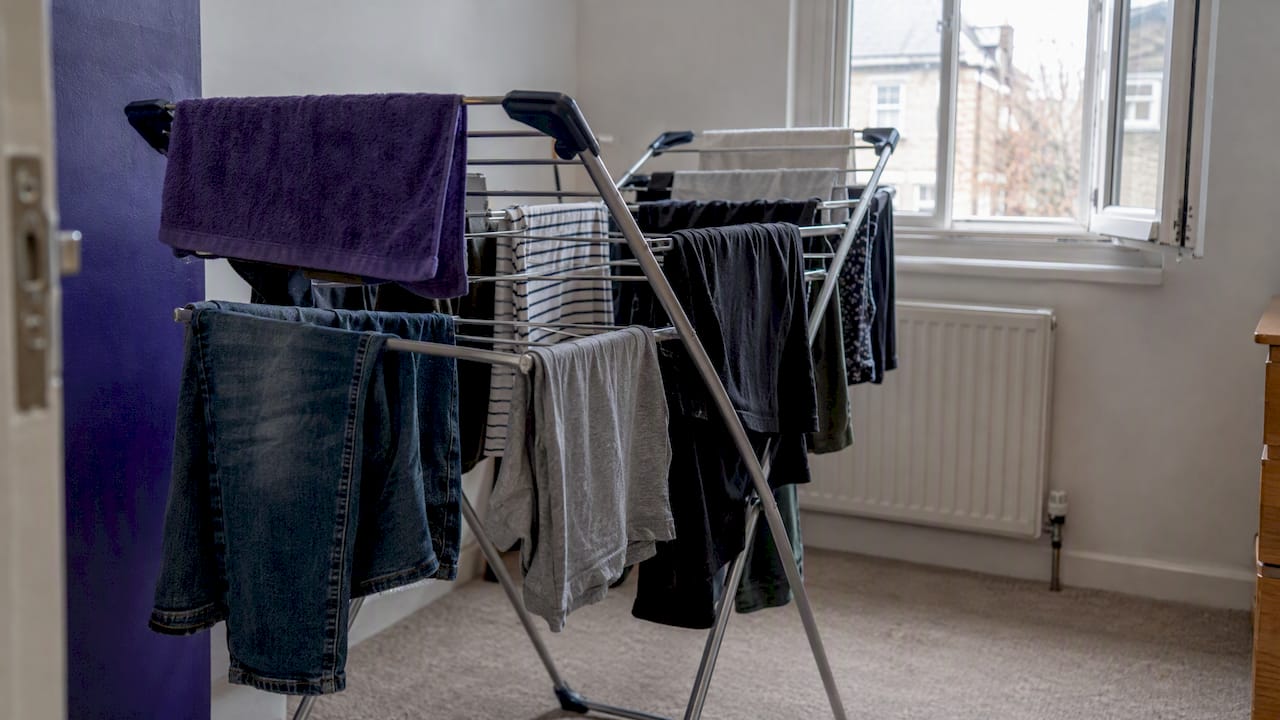
Ofgem recommends washing clothes at 30°C, with full loads and shorter cycles. Skip the tumble dryer when you can: a clothes airer in a ventilated room costs nothing to run, and a tumble dryer sits among the hungriest appliances in the house.
Shorter showers, fewer baths
Energy Saving Trust reports that swapping one bath a week for a four-minute shower saves about £10 a year in Great Britain. The saving is modest, but showers also cut the load on your boiler if you have a family queueing for hot water each morning.
Switch off at the plug
The same Energy Saving Trust page estimates that switching appliances off at the plug saves about £45 a year in Great Britain. Group your TV, console, soundbar and set-top box on one extension lead with a switch, and you will actually do it.
Use the cheaper hours if your tariff allows
If you are on a time-of-use tariff, shift flexible jobs such as the dishwasher or washing machine into the cheaper window. Australia’s energy department frames this well: when you use energy can matter as much as how much you use. It only pays off if your tariff really has cheaper periods, so check your own rates first.
Low-cost fixes that pay back quickly
These need a small outlay, often under what a month’s heating costs in winter.
- Draught-proofing. Strips round doors and windows, brushes for letterboxes, and covers for keyholes and unused chimneys. Do not block vents or air bricks: rooms with open-flued appliances and kitchens and bathrooms need ventilation. US Department of Energy guidance says sealing uncontrolled air leaks can save 10% to 20% on heating and cooling. That is a US estimate, so expect your result to differ.
- Hot water tank jacket. If you have a cylinder, insulating it is a cheap job that Ofgem lists among its recommendations. Water heating can make up 14% to 25% of home energy use according to the US Department of Energy.
- LED bulbs. Replace the bulbs you use most first: kitchen, living room, hallway.
- Radiator reflector foil and bleeding. Foil behind radiators on external walls reflects heat back into the room. Bleeding trapped air makes radiators heat evenly.
- Heating controls. A programmable thermostat, room thermostat or thermostatic radiator valves let you heat to a schedule. ENERGY STAR says a certified smart thermostat can cut heating and cooling bills by more than 8% in US homes. Results here will depend on how badly your current controls waste heat.
- Annual boiler service. A boiler running poorly burns more gas for the same warmth. Annual maintenance of heating equipment is standard advice from the US Department of Energy, and a Gas Safe engineer also checks it is safe.
If your home is heated by oil rather than gas, the buying side matters as much as the burning side. A heating oil budget plan spreads the cost across the year, which can help you plan for winter.
What to do first: a sensible order of work
It is tempting to jump to solar panels or a heat pump. The Energy Institute recommends a different sequence: safety and urgent repairs first, then controls and draught reduction, then insulation and the building fabric, then heating and hot water, and finally generation, storage and flexible tariffs. The logic is simple. A well-insulated, draught-free home needs a smaller heating system, and a smaller system costs less to buy and to run.
| Step | What it covers | Typical effort |
|---|---|---|
| 1 | Safety checks and urgent repairs (leaks, damp, faulty wiring or gas appliances) | Professional visit |
| 2 | Controls and draught-proofing | DIY or a small job |
| 3 | Loft, wall and floor insulation, glazing | Installer, possible grants |
| 4 | Boiler, heat pump, hot water cylinder | Installer, larger spend |
| 5 | Solar, battery, smart tariffs | Installer, larger spend |
Bigger improvements: insulation, glazing and appliances
Once the quick fixes are done, the building itself is where the lasting savings sit.
Insulation
Loft insulation is usually the most cost-effective starting point because heat rises. Cavity wall insulation suits many homes built from the 1920s onwards, while solid-wall homes, common in older London streets, need internal or external insulation, which costs more and may need planning or building regulations sign-off. Get an assessment before choosing, since the wrong method on the wrong wall can cause damp.
Glazing
Double glazing cuts heat loss through windows, but it is rarely the cheapest saving per pound spent. If you cannot afford replacement windows, secondary glazing, heavy curtains and draught strips on the existing frames deliver part of the benefit. Listed buildings and conservation areas, which are widespread in London, may restrict window changes, so check with your local council first.
Appliances
When something fails, replace it with a model sized to your household. Energy Saving Trust advises choosing an appropriately sized, higher-rated appliance, because a much larger model can use more energy even with a better rating. US ENERGY STAR-labelled products can cut energy bills by up to 30% according to the US Department of Energy, but in the UK, read the energy label on the model you are buying.
Heating system
If your boiler is old, ask a qualified installer about a modern condensing boiler or a heat pump. The government’s household energy page points to the Boiler Upgrade Scheme, the Energy Company Obligation, the Great British Insulation Scheme and the Home Upgrade Grant. Eligibility rules and funding change, so check the current criteria on the official page before you commit.
Use your EPC as a plan, not just a certificate
Many owners only think about an energy performance certificate when they sell or rent. It is more useful than that. Ofgem’s guidance directs households to use EPC recommendations and look into efficiency grants. An EPC gives your property a rating from A to G and lists the improvements that would raise it, in a sensible order, with estimated costs.
If you are a London homeowner, landlord or buy-to-let investor, a fresh assessment shows what the building really loses heat through, which turns guesswork into a shopping list. You can read about our domestic EPC service or, for offices, shops and other non-domestic premises, our commercial EPC service.
Landlords and businesses: where the bill is also a compliance issue
For rented homes, the tenant pays the bill but the landlord controls the building. A poor EPC rating can limit your ability to let a property under minimum energy efficiency rules, and the rules have been tightening, so check the current position on GOV.UK before you plan works. Practical steps for landlords:
- Get an up-to-date EPC and read the recommendations list.
- Do the cheap measures first: loft insulation, draught-proofing, efficient lighting, better controls.
- Budget larger works across several years, ahead of any rating deadline.
- Keep records of what you installed and when.
Businesses have extra levers. Offices and shops with air conditioning may need regular inspections, and an inspection often shows over-cooling, poor controls or leaking systems that cost real money every month. Our TM44 air conditioning inspection covers this. Lighting schedules, heating timers and out-of-hours loads are the other usual culprits, and a 12-month look at half-hourly data usually finds them.
Our perspective: fix the building, then the habits
We see the same pattern across London properties. People turn the thermostat down and unplug chargers, which helps, but the property is still losing heat through an uninsulated loft, gappy sash windows or an unlagged cylinder. Habits are worth having, yet they are the smaller lever compared with the fabric of the building.
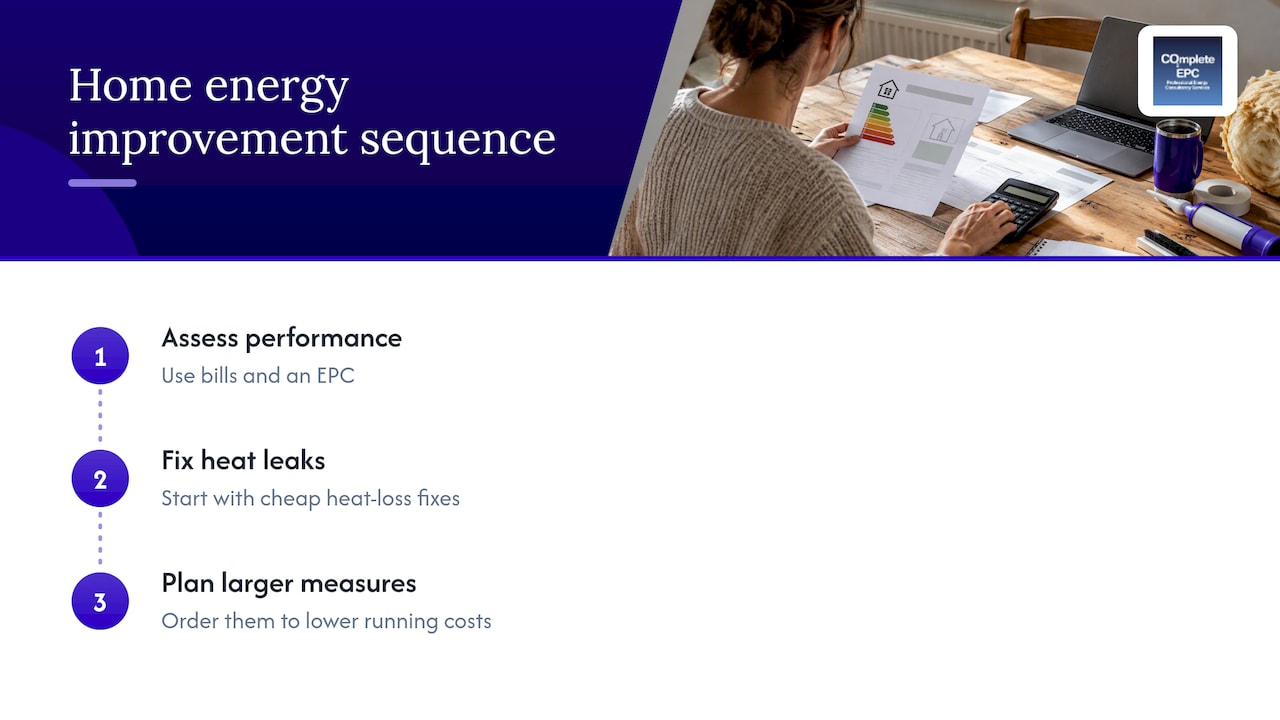
Our advice is to treat a home like a system. First, find out how it performs, using the bills and an EPC. Second, fix the cheap leaks of heat. Third, plan the larger measures in the order that makes each one cheaper to run. We would rather you spend £30 on draught-proofing and a cylinder jacket this autumn than spend thousands on a new heating system that has to work against a leaky house.
And if you are a landlord, remember that an EPC is a document you will need anyway. Use it as the first page of your improvement plan rather than a box to tick.
— Danny
Get the right assessment for your property
If you own, let or manage property in London, we provide domestic and commercial EPCs, SAP calculations for new builds, conversions and extensions, and related compliance reports. Our assessors give you a clear report with recommended improvements, so you know which measure to do first. Prices are quoted per property, so get in touch through our site with your address and we will confirm what you need.
If you are struggling to pay your bill
Energy Saving Trust’s advice to anyone finding bills hard is to contact your supplier promptly, seek expert advice, consider a different tariff, use a smart meter and reduce consumption. Suppliers have obligations to help customers in difficulty, and early contact gives you more options than waiting. The GOV.UK household energy page also lists help such as the Warm Home Discount. Check the current eligibility rules there, since they change.
FAQ
What uses the most electricity in a home?
In most homes, heating (including electric heating and immersion heaters) and water heating dominate, followed by cold appliances that run all day. Among appliances you switch on, Energy Saving Trust says washing machines, dishwashers and tumble dryers tend to use the most energy. Your smart meter display will show which is true in your home.
How can I reduce my gas bill?
Lower the thermostat, heat only the rooms you use, draught-proof, insulate the loft and hot water tank, and service the boiler each year. Fixing heat loss gives bigger and longer-lasting savings than habits alone. Check your EPC for the measures that suit your home.
Will a smart meter lower my bill?
A smart meter does not cut energy use by itself. It shows what you are using and what it costs, so you can act on it, and it can enable time-of-use tariffs. Energy Saving Trust lists it as one of the tools for reducing consumption.
Are there grants for insulation or a new heating system?
Government schemes such as the Great British Insulation Scheme, the Energy Company Obligation, the Home Upgrade Grant and the Boiler Upgrade Scheme are listed on GOV.UK. Eligibility depends on your income, property and tenure, and the details change, so use the official page to check what is open to you now.
Sources
- Save money on your energy bill, Ofgem
- Help with your energy bills, Energy Saving Trust
- Household energy, GOV.UK
- Home energy, Energy Institute
- Reduce your energy bills, energy.gov.au
- Home Energy Checklist, US Department of Energy
- Energy Saver guide 2022, US Department of Energy
- Low- to No-Cost Tips for Saving Energy at Home, ENERGY STAR