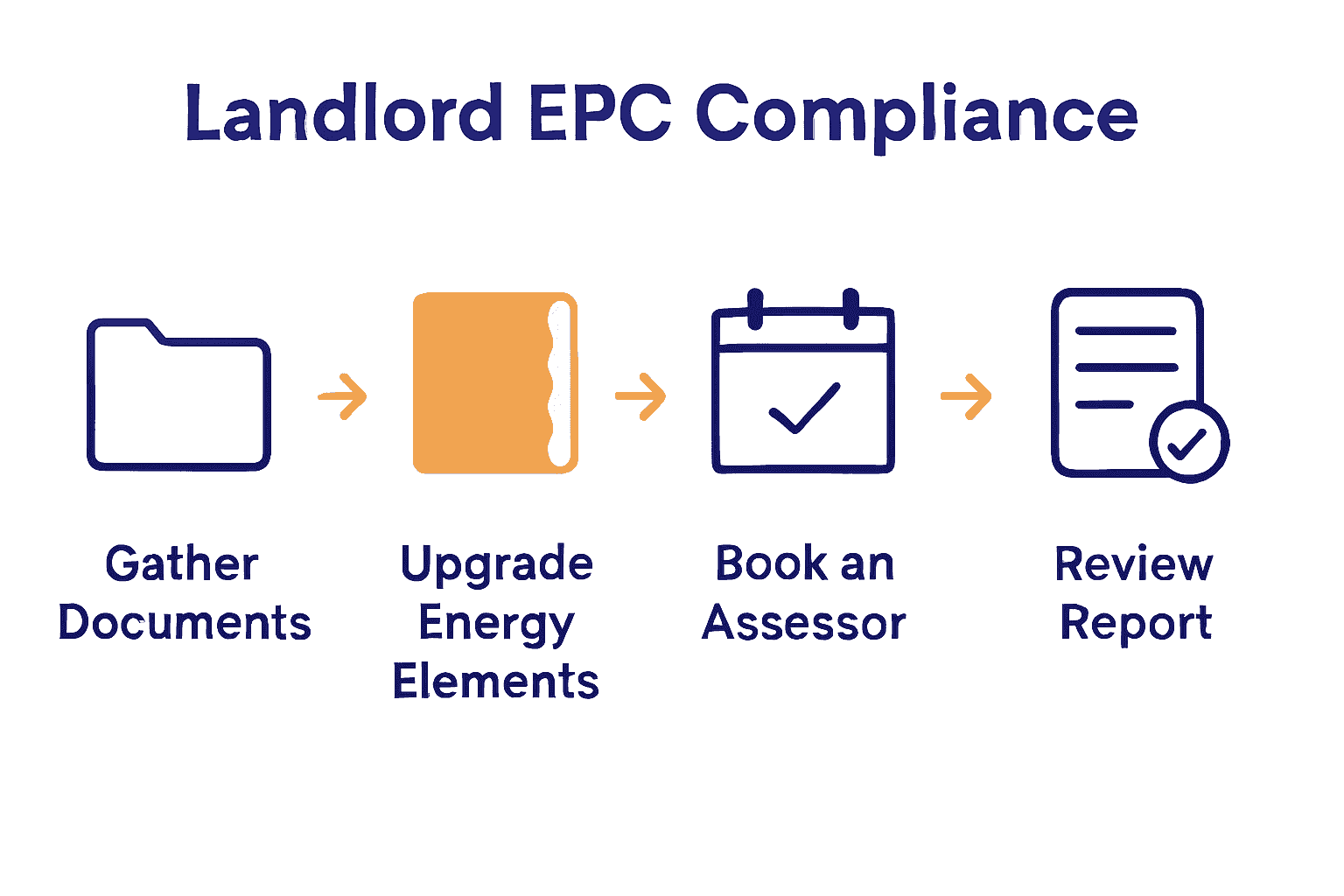

Did you know that over 65 percent of rental properties in the UK need energy efficiency upgrades to meet legal standards? With rules tightening and tenants seeking lower utility bills, getting your property ready for an EPC assessment is more important than ever. Taking the right steps now helps avoid legal issues and can make your property stand out as a smart, energy efficient choice for renters.
Table of Contents
- Step 1: Gather Essential Property Documentation
- Step 2: Inspect And Upgrade Energy Efficiency Elements
- Step 3: Book A Certified EPC Assessor Visit
- Step 4: Review The EPC Report For Compliance
- Step 5: Implement Recommendations For Higher Ratings
Quick Summary
| Key Point | Explanation |
|---|---|
| 1. Gather essential property documentation | Compile key documents like Energy Performance Certificate and Gas Safety Certificate to support compliance. |
| 2. Inspect and upgrade energy efficiency elements | Evaluate and enhance insulation, heating systems, and lighting to improve energy performance and reduce costs. |
| 3. Book a certified EPC assessor visit | Schedule an accredited assessor to evaluate your property’s energy efficiency before new tenancy starts. |
| 4. Review the EPC report for compliance | Analyze the assessment report to identify your property’s efficiency rating and necessary improvements. |
| 5. Implement recommendations for higher ratings | Prioritize and execute recommended upgrades for energy efficiency, aiming to enhance your property’s rating effectively. |
Step 1: Gather essential property documentation
Preparing for an EPC assessment means collecting all the necessary documentation that will help streamline the process and demonstrate your property’s compliance. You’ll want to compile a comprehensive set of records that showcase your property’s current condition and safety standards.
According to gov.uk, you must have several critical documents ready. These include a valid Energy Performance Certificate, a Gas Safety Certificate, and an Electrical Installation Condition Report (EICR). As nrla.org.uk recommends, ensure your EPC is current and displays the energy rating prominently.
Start by gathering these key documents in a single organised folder:
- Current Energy Performance Certificate
- Most recent Gas Safety Certificate
- Electrical Installation Condition Report
- Property floor plans
- Building regulations certificates
- Any historical maintenance records
ProTip: Make digital and physical copies of all documents. Store them securely but ensure they are easily accessible for your EPC assessor. Having everything prepared in advance will make the assessment process smoother and faster.
Step 2: Inspect and upgrade energy efficiency elements
Your mission is to transform your property into an energy efficient powerhouse that meets EPC standards and reduces utility costs. This step involves a systematic evaluation of your property’s current energy performance and identifying strategic upgrades.
According to landlordassociation.org.uk, key improvements include installing loft or cavity wall insulation, upgrading to double glazing, enhancing heating systems, and switching to LED lighting. Gov.uk emphasises that landlords are required to improve properties with an EPC rating below E by implementing targeted energy efficiency measures.
Start your inspection with these critical areas:
- Check current wall and loft insulation quality
- Evaluate window and door sealing
- Assess heating system efficiency
- Review lighting fixtures and potential LED replacements
- Examine potential draught points
- Investigate potential solar or renewable energy installations

Warning: Prioritise improvements that deliver the most significant energy efficiency gains. Not all upgrades offer equal value, so focus on changes that provide substantial EPC rating improvements and long term cost savings. Your next step will involve consulting with an energy efficiency professional who can provide detailed recommendations tailored to your specific property.
Step 3: Book a certified EPC assessor visit
You are about to take the most critical step in obtaining your property’s Energy Performance Certificate: scheduling a professional assessment. This visit will determine your property’s energy efficiency rating and provide crucial recommendations for improvements.
According to nrla.org.uk, landlords should commission an EPC from a registered assessor before each new tenancy begins. As landlordassociation.org.uk confirms, the assessment will be conducted by an accredited domestic energy assessor who will inspect your property to ensure it meets the minimum rating requirements.
Here are practical steps to book your EPC assessment:
- Research accredited EPC assessors in your local area
- Request quotes from multiple assessors
- Check their professional credentials and certification
- Confirm availability and scheduling options
- Prepare your property documentation
- Ensure access to all rooms and key property areas
Warning: Book your assessment well in advance of any property letting or sale. Assessors can be in high demand, and delays could impact your property marketing timeline. Your next step will involve preparing your property for the actual assessment day and ensuring everything is accessible and ready for inspection.
Step 4: Review the EPC report for compliance
With your EPC assessment completed, it is time to carefully analyse the report and understand its implications for your property. This critical review will reveal your property’s energy efficiency status and highlight potential improvement areas.
According to landlordassociation.org.uk, properties are rated from A (most efficient) to G (least efficient). Gov.uk emphasises that landlords must ensure their properties meet the minimum energy efficiency standard of EPC band E. If your property falls below this rating, you will need to take immediate action.
When reviewing your EPC report, focus on these key elements:
- Verify the overall energy efficiency rating
- Review detailed recommendations for improvement
- Check potential cost savings from suggested upgrades
- Identify mandatory changes required for compliance
- Assess the estimated energy costs
- Understand the environmental impact rating
Warning: If your property is rated F or G, you cannot legally rent it out without making necessary improvements or registering a specific exemption. Your next step will involve creating a strategic plan to address any deficiencies and bring your property up to the required energy efficiency standards.
Step 5: Implement recommendations for higher ratings
Your EPC report has provided a roadmap to improved energy efficiency. Now comes the crucial phase of transforming those recommendations into tangible property upgrades that will boost your energy rating and reduce long-term utility costs.
According to landlordassociation.org.uk, key improvements include installing loft or cavity wall insulation, upgrading to double glazing, enhancing heating systems, and switching to LED lighting. Gov.uk encourages landlords to implement these energy efficiency measures to meet or exceed the minimum property standards.
Prioritise your improvements using this strategic approach:
- Start with most cost effective upgrades
- Target insulation improvements first
- Replace inefficient heating systems
- Upgrade windows and doors
- Install smart thermostats
- Replace traditional lighting with LED alternatives
- Consider renewable energy options
Warning: Some improvements require professional installation. Always obtain multiple quotes and verify contractor credentials to ensure quality work that genuinely improves your property’s energy performance. Your next step will involve scheduling these improvements and tracking their impact on your future EPC rating.
Take Control of Your Landlord EPC Compliance Today
Navigating the detailed steps in the “Landlord EPC Checklist” can feel overwhelming. Gathering essential documents, upgrading energy efficiency measures, and booking certified assessors are critical yet time-sensitive tasks. Many landlords worry about meeting legal energy standards while keeping costs manageable. If you recognise the pressure of ensuring your property has a valid and up-to-date EPC rating and want to avoid costly delays or penalties, you are not alone.
Complete EPC understands these challenges and offers expert support throughout the EPC journey. With our team of qualified assessors serving London properties, we provide quick, accurate, and competitively priced Energy Performance Certificates designed to help you meet the minimum energy efficiency standards without hassle. From initial consultation to detailed improvement recommendations, our professional services simplify compliance, letting you focus on what matters most.
Ready to secure your property’s EPC and safeguard your tenancy plans? Visit Complete EPC now and take the first step towards effortless compliance with confidence.
Frequently Asked Questions
How do I gather essential property documentation for the EPC assessment?
Start by collecting key documents such as a current Energy Performance Certificate, a Gas Safety Certificate, and an Electrical Installation Condition Report. Organize these documents in a single folder to streamline the assessment process.
What upgrades should I prioritize to improve my property’s energy efficiency before the EPC assessment?
Focus on improvements that yield significant efficiency gains, like enhancing insulation or upgrading to double glazing. Target the most cost-effective upgrades first, such as improving insulation within the next few months to boost your EPC rating.
How can I find and book a certified EPC assessor for my property?
Research local accredited EPC assessors and request quotes from multiple candidates. Confirm their credentials and schedule an assessment well in advance of your leasing or selling timeframe to avoid delays.
What should I do if my EPC rating falls below the minimum required standard?
If your property is rated F or G, you must make necessary improvements before it can be legally rented out. Create a strategic plan that focuses on upgrading insulation and heating systems to move your rating to at least an E within a specified timeframe.
How can I effectively implement the recommendations from my EPC report?
Transform the recommendations into action by prioritizing cost-effective improvements such as upgrading insulation and switching to LED lighting. Schedule these upgrades and monitor their impact on your energy efficiency rating to ensure compliance.
How often do I need to update my Energy Performance Certificate?
You should obtain a new EPC before every new tenancy begins, ensuring compliance with current regulations. Regularly review and update your certificate, especially after making significant energy efficiency improvements.