

Every London landlord knows energy bills can drain profits and frustrate tenants. With heat loss through the roof accounting for about 25% of your home’s energy waste, loft insulation becomes more than just a comfort upgrade. It is a cost-effective solution that improves energy efficiency, boosts property value, keeps tenants satisfied, and helps you meet strict EPC regulations without breaking the bank.
Table of Contents
- Loft Insulation Defined And Its Importance
- Comparison Of Loft Insulation Types
- How Loft Insulation Improves Efficiency
- Epc Rules And Landlord Duties In The Uk
- Costs, Savings, And Mistakes To Avoid
Key Takeaways
| Point | Details |
|---|---|
| Loft Insulation Reduces Heat Loss | Insulating your loft can prevent around 25-30% of heat loss, significantly lowering heating costs while improving comfort. |
| Environmental and Financial Benefits | Loft insulation is a cost-effective investment that reduces energy bills and increases property value with minimal maintenance. |
| EPC Compliance for Landlords | Landlords must meet minimum EPC standards, and loft insulation is a practical way to achieve compliance and avoid penalties. |
| Professional Installation is Recommended | Professional insulation ensures proper installation depth and ventilation, avoiding costly mistakes that can undermine effectiveness. |
Loft Insulation Defined and Its Importance
Loft insulation is an extra layer of material added to your roof space to reduce heat loss through the loft. It works by trapping warm air inside your home during winter months, keeping rooms warmer and reducing your heating costs.
Your loft is one of the biggest culprits for energy waste. Heat loss through the roof accounts for around 25% of heat loss in uninsulated homes, which means a quarter of your heating energy simply escapes upwards into the atmosphere.
This is why loft insulation matters so much for London properties. A well-insulated loft prevents that costly escape route, keeping your heating bills lower and your home more comfortable year-round.
Why Loft Insulation Works
Loft insulation operates on a simple principle: it slows down the movement of heat. Materials like mineral wool, polyester, and natural wool contain tiny air pockets that trap heat and resist its movement through the roof space.
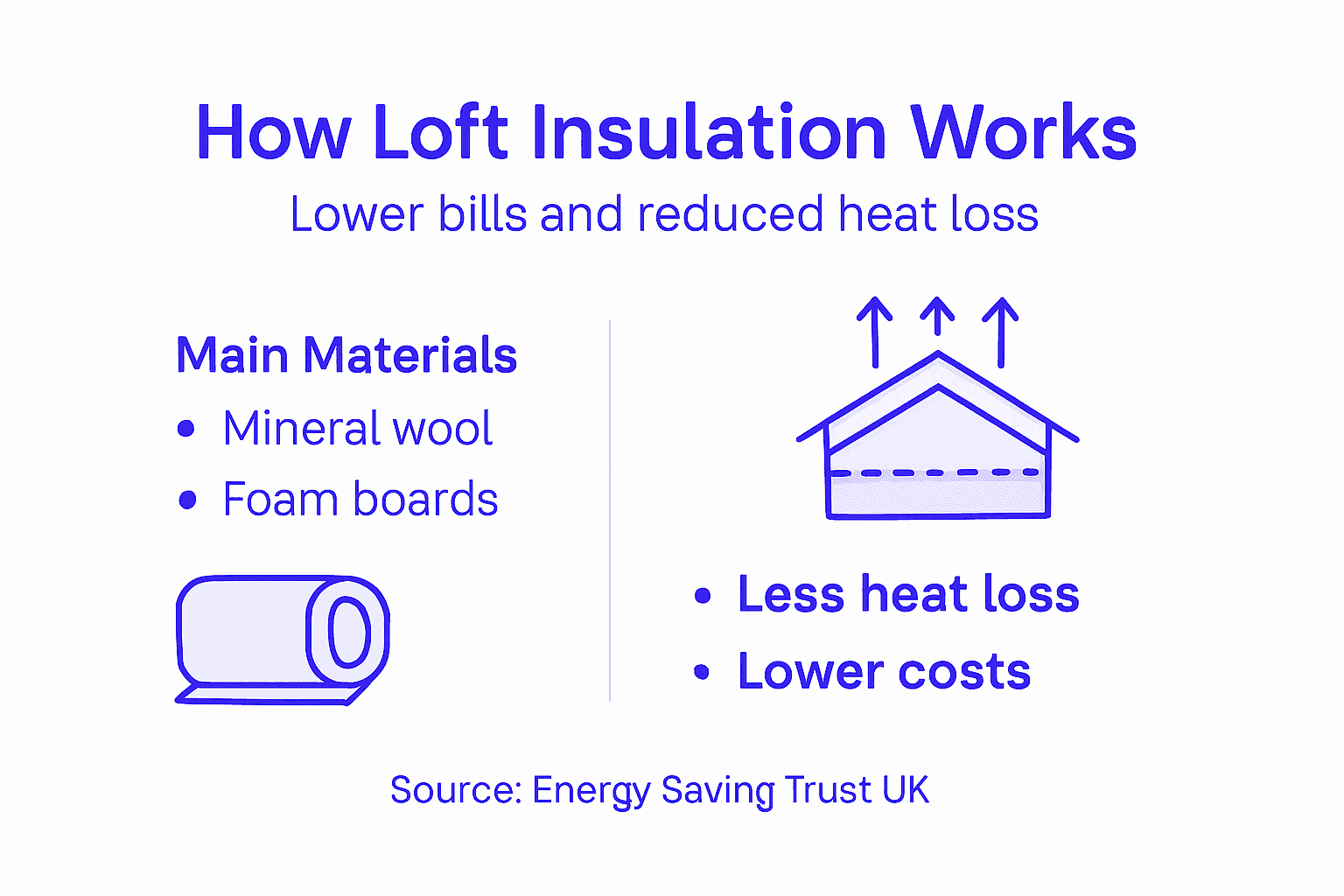
The thicker your insulation, the better the thermal resistance. Most homes benefit from insulation depths that vary depending on the material type and your current setup.
Beyond comfort, loft insulation offers several key advantages:
- Reduces heating bills significantly
- Keeps homes warmer without increasing energy consumption
- Lowers your carbon footprint and emissions
- Improves overall home comfort and warmth
- Typically lasts around 40 years with proper care
- Works year-round (helps keep heat in during winter, reflects heat in summer)
The Financial and Environmental Impact
For London landlords, loft insulation represents a cost-effective investment. The initial outlay is relatively modest compared to other home improvements, yet the returns come quickly through lower energy bills and improved property value.
Loft insulation helps reduce heating bills whilst maintaining comfort. Tenants benefit from warmer homes and lower utility costs, which improves satisfaction and reduces tenant turnover.
From an environmental perspective, reducing energy consumption cuts carbon emissions. This aligns with growing tenant expectations for sustainable properties and supports London’s climate goals.
Loft insulation prevents around 25% of heat loss in uninsulated homes—making it one of the most cost-effective energy efficiency upgrades available.
Installation and Maintenance Considerations
Proper installation is crucial for effectiveness. Your loft must be in good condition and dry before insulation is added, as moisture or existing damp will compromise performance and potentially lead to mould issues.
Once installed correctly, loft insulation requires minimal maintenance. The material simply needs to remain undisturbed and dry to perform effectively for decades.
Pro tip: Get a professional survey of your loft before installing insulation to identify any existing damp, ventilation issues, or structural problems that need addressing first—this prevents costly problems down the line.
Comparison of Loft Insulation Types
Not all loft insulation is created equal. Different materials and installation methods suit different property types, budgets, and space constraints. Understanding your options helps you make the right choice for your London rental property.
Each insulation type offers distinct advantages and trade-offs. Your decision depends on your loft’s condition, available space, budget, and long-term goals for the property.
Main Insulation Types
Several types of loft insulation are available across the UK market, each with specific strengths and applications.
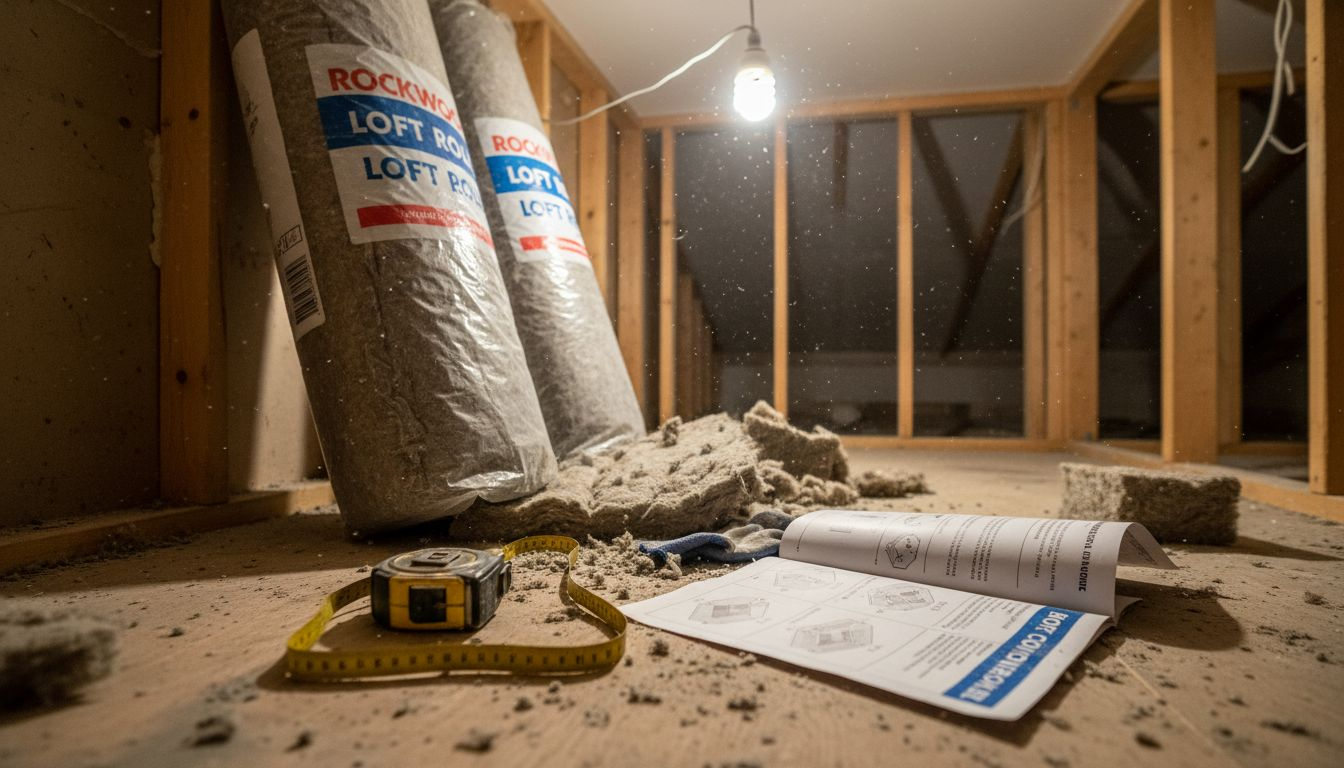
Blanket insulation is the most common choice for London properties. Made from mineral wool or fibreglass, it comes in rolls that unfold across your loft floor. Installation is straightforward, making it affordable and accessible for most landlords.
Loose-fill insulation works well for topping up existing insulation or filling irregular spaces. Materials like cellulose or mineral wool are blown into place, adapting to awkward corners and cavities that blanket insulation cannot reach.
Rigid foam boards offer superior thermal resistance in minimal thickness, making them ideal for loft conversions where headroom matters. They provide excellent insulation value without consuming valuable space.
Spray foam creates a complete airtight seal, preventing heat loss through gaps and cracks. However, it requires specialist installation and raises ventilation concerns, so it is less commonly used in residential properties.
Multifoil insulation reflects radiant heat effectively and suits tight spaces or conversion projects. It works particularly well alongside other insulation types for enhanced performance.
Here is a concise comparison of the main types of loft insulation suitable for London rental properties:
| Insulation Type | Best For | Main Advantage | Typical Limitation |
|---|---|---|---|
| Blanket (Mineral Wool) | General lofts and easy access | Cost-effective, easy to fit | Needs more depth for high performance |
| Loose-Fill | Irregular or complex spaces | Fills gaps and corners easily | Can settle over time |
| Rigid Foam Boards | Loft conversions, headroom issues | High insulation in thin layer | Higher initial cost |
| Spray Foam | Complete air seals needed | Airtight, excellent fit | Specialist installation, ventilation required |
| Multifoil | Space-constrained conversions | Reflects radiant heat well | Suits as a secondary layer |
Choosing the Right Type for Your Property
Consider these factors when selecting insulation:
- Current loft condition and existing insulation depth
- Available space and headroom requirements
- Budget constraints and expected return on investment
- Whether you plan a loft conversion in future
- Installation complexity and professional requirements
- Long-term performance and durability expectations
Blanket insulation remains the most cost-effective and practical choice for most London rental properties, offering excellent value without specialist installation costs.
Performance and Durability
Blanket and loose-fill insulation typically last 40+ years with proper maintenance. Foam boards and spray foam offer similar longevity but at higher initial cost. Multifoil insulation performs well in specific applications but works best as part of a layered approach.
Thermal resistance varies significantly between types. Spray foam and rigid boards provide superior performance per centimetre of thickness, whilst blanket insulation requires greater depth for equivalent results.
Pro tip: For most London rental properties, start with blanket mineral wool insulation to 200mm depth—it offers the best balance of cost, performance, and ease of installation, with professional fitting available at competitive rates.
How Loft Insulation Improves Efficiency
Loft insulation tackles one of the biggest energy efficiency problems in residential properties. By creating a thermal barrier between your heated living spaces and the cold roof void, it prevents valuable warmth from escaping and reduces the workload on your heating system.
The mechanics are straightforward but powerful. Heat naturally rises and seeks escape routes, so reducing heat loss through the roof directly reduces the energy your boiler must produce to maintain comfortable temperatures.
The Impact on Energy Consumption
Proper loft insulation delivers measurable reductions in energy demand. Well-insulated lofts can reduce overall heat loss by up to 25-30%, which means your heating system works less frequently and consumes significantly less fuel.
This translates directly to lower bills. A typical London household spends hundreds of pounds annually on heating that escapes through an uninsulated roof. Insulation captures this wasted energy and keeps it where it matters—inside your home.
Your heating system also benefits. With less demand, your boiler experiences reduced strain and longer equipment lifespan, potentially delaying replacement costs.
Temperature Control and Comfort
Consistent indoor temperatures become easier to maintain with proper insulation. Rather than fighting a losing battle against heat loss, your heating system can maintain desired warmth with minimal additional fuel consumption.
Draughts and cold spots disappear. These uncomfortable features are often caused by heat escaping through uninsulated roof spaces. Insulation eliminates this issue entirely.
Tenants notice the difference immediately. Warmer homes, fewer draughts, and stable temperatures throughout the property create a more pleasant living environment, directly improving tenant satisfaction and retention.
Key efficiency improvements include:
- Reduced heating system demand and fuel consumption
- Maintained indoor temperatures with less energy input
- Elimination of cold spots and draughts
- Extended boiler lifespan through reduced strain
- Year-round comfort without increased running costs
- Enhanced thermal performance during both heating and cooling seasons
Long-Term Financial and Environmental Benefits
The financial case is compelling. Insulation pays for itself through reduced energy bills within a reasonable timeframe, then continues delivering savings for decades. Property value increases alongside these efficiency improvements.
Environmentally, lower energy consumption directly reduces carbon emissions. Your property becomes more sustainable, aligning with London’s climate objectives and meeting growing tenant expectations for eco-friendly homes.
Properly installed loft insulation reduces heat loss by up to 25-30%, cutting heating costs substantially whilst maintaining superior comfort year-round.
Pro tip: Calculate your potential savings by checking your current energy bills—properties with uninsulated lofts typically spend 15-20% more on heating than comparable insulated properties, so insulation often repays its cost in just 3-5 years.
EPC Rules and Landlord Duties in the UK
As a London landlord, you operate within a strict regulatory framework governing energy efficiency. These rules exist to protect tenants, reduce carbon emissions, and ensure rental properties meet minimum standards for comfort and sustainability.
The central requirement revolves around your Energy Performance Certificate (EPC). This document rates your property’s energy efficiency on a scale from A (most efficient) to G (least efficient), and it directly influences your legal obligations.
Understanding Your Legal Obligations
Landlords must ensure rental properties comply with minimum energy efficiency standards. Landlords have legal duties to meet minimum EPC standards, particularly through insulation improvements like loft upgrades.
Your property cannot legally be let to tenants if it falls below certain energy efficiency thresholds. Failure to meet these requirements can result in substantial penalties and legal action.
Loft insulation is often the most practical way to improve your EPC rating and meet these obligations. It directly addresses heat loss and contributes measurably to energy efficiency improvements.
EPC Ratings and Minimum Standards
Properties with an EPC rating below C may require insulation improvements under current regulations. Buildings below rating C may require insulation upgrades to meet energy efficiency standards.
Your current EPC rating determines what actions you must take. If your property rates poorly, loft insulation becomes a priority investment rather than optional improvement.
Key regulatory requirements include:
- Minimum EPC rating compliance for rental properties
- Loft insulation to specified depths where applicable
- Regular EPC updates reflecting property condition
- Documentation of energy efficiency improvements
- Compliance with Energy Efficiency Regulations for private rental properties
- Avoidance of unlettable status through non-compliance
Penalties and Non-Compliance Risks
Non-compliance carries serious consequences. Local authorities can issue penalty notices, and repeated breaches may result in prosecution and substantial fines. Your property may become unlettable entirely.
Proactive compliance is far cheaper than reactive penalties. Investing in loft insulation now avoids future regulatory problems and demonstrates responsible property management to authorities and tenants.
Landlords in England and Wales must ensure rental properties meet minimum energy efficiency standards or face penalties—loft insulation is often the most cost-effective compliance solution.
Your Next Steps
Start by obtaining or reviewing your current EPC. This document clearly states what improvements your property requires and which are recommended. Loft insulation typically appears as a priority recommendation for energy efficiency gains.
If your EPC rating is below C, prioritise loft insulation immediately. If rated C or above, loft insulation remains valuable for tenant satisfaction and long-term property value.
Pro tip: Get a professional EPC assessment before planning insulation work—assessors can advise on which improvements offer the best return on investment and fastest path to compliance, saving you time and money on unnecessary upgrades.
Costs, Savings, and Mistakes to Avoid
Loft insulation represents one of the most affordable energy efficiency investments available to landlords. The upfront cost is modest compared to other property improvements, yet the financial returns are substantial and reliable over decades.
Understanding both the costs and savings helps you make informed decisions and avoid costly installation errors that undermine performance.
Installation Costs
Typical loft insulation costs range between £400 and £850 depending on material type and property size. This relatively small investment makes insulation accessible for nearly all London landlords, regardless of portfolio size.
Mineral wool blanket insulation sits at the lower end of this range. Specialist materials like spray foam or rigid boards cost more but suit specific scenarios like loft conversions.
The actual cost depends on several factors:
- Loft size and accessibility
- Existing insulation depth to be topped up
- Material type selected
- Professional installation requirements
- Local labour rates in London
- Any preparatory work needed before installation
Annual Savings and Payback
Proper loft insulation delivers genuine savings. Annual heating bill reductions range between £200 and £400 depending on current insulation levels and property size. Some properties with poor initial insulation see even higher savings.
This means your investment typically repays itself within 2-4 years through energy savings alone. After that point, savings accumulate indefinitely—loft insulation lasts approximately 40 years with proper care.
Loft insulation can save £200 to £400 annually on energy bills, making it a genuinely profitable investment.
Beyond direct energy savings, improved EPC ratings increase property value and appeal to tenants, creating additional financial benefits.
To understand return on investment, here is a summary of key cost and saving benchmarks for loft insulation:
| Cost/Saving Aspect | Typical Value (London) | Comment |
|---|---|---|
| Installation Cost | £400 – £850 | Depends on material and loft size |
| Annual Savings | £200 – £400 | Direct reduction on heating bills |
| Payback Period | 2 – 4 years | Savings soon outweigh outlay |
| Lifespan of Material | Up to 40 years | Minimal maintenance required |
Critical Installation Mistakes
Saving money on installation can backfire spectacularly. Common errors seriously reduce effectiveness and create problems that cost far more to fix later.
Avoid these costly mistakes:
- Insufficient depth: Installing below government-recommended depths wastes money and misses savings targets
- Poor ventilation: Blocking loft ventilation causes moisture accumulation, damp, and mould problems
- Compression: Squashing insulation reduces its thermal resistance and effectiveness
- Gaps and bridges: Incomplete coverage allows heat to escape around insulation edges
- Inappropriate materials: Using unsuitable materials wastes money and underperforms
- Skipped preparation: Failing to address existing damp or structural issues before installing
- Safety negligence: Unsafe installation practices risk injury and property damage
Avoiding installation mistakes like insufficient depth and poor ventilation is critical—mistakes can cost more to fix than the original installation.
Professional Installation Benefits
Professional installers understand these pitfalls and avoid them. They ensure insulation reaches recommended depths, maintain proper ventilation, handle safety correctly, and prepare the loft appropriately.
Whilst professional installation costs more upfront, it guarantees effectiveness and eliminates costly mistakes. The small premium you pay provides insurance against installation failures.
Pro tip: Always request a written installation specification showing insulation depth, material type, and ventilation strategy before work begins—this prevents disputes and ensures the installer meets all requirements rather than cutting corners.
Make Your London Property Energy Efficient with Expert EPC Guidance
The challenge to reduce heat loss and lower energy costs in London homes starts with understanding your property’s energy performance and compliance obligations. Loft insulation is a critical step to keep heat in and bills down but navigating the legal requirements for minimum EPC ratings can be complex for landlords and homeowners alike. If you want to ensure your property meets these standards and optimises energy efficiency, expert advice is essential.
At Complete EPC, we specialise in delivering accurate, professional Energy Performance Certificates tailored to both domestic and commercial properties across London. Our qualified assessors provide detailed reports and clear recommendations like loft insulation improvements that help you save money on heating, increase property value and comply with current regulations. Act now to unlock the full benefits of effective loft insulation and secure your property’s energy future. Start by obtaining your reliable EPC with Complete EPC and gain peace of mind knowing your property meets legal standards while reducing energy costs and supporting sustainability.
Frequently Asked Questions
What is loft insulation and why is it important?
Loft insulation is an extra layer of material added to the roof space to reduce heat loss. It is important because it helps to trap warm air inside the home, reducing heating costs and improving comfort, as around 25% of heat loss in uninsulated homes occurs through the roof.
How does loft insulation improve energy efficiency?
Loft insulation improves energy efficiency by slowing down the movement of heat, creating a thermal barrier that prevents warm air from escaping through the roof. This reduces the demand on heating systems, which in turn lowers energy consumption and heating bills.
What are the different types of loft insulation available?
The main types of loft insulation include blanket insulation (usually mineral wool), loose-fill insulation, rigid foam boards, spray foam, and multifoil insulation. Each type has specific advantages and limitations, making it important to choose the right one based on your loft’s condition and your budget.
How much can loft insulation save on energy bills?
Proper loft insulation can save households between £200 and £400 annually on heating bills, depending on the existing insulation levels and property size. This makes it a cost-effective investment with a payback period of typically 2 to 4 years.