

Top priority for most properties: top up loft insulation to 270mm, fit heating controls and TRVs, and swap to LED lighting. If the boiler is old, consider replacement or a heat pump, since heating is usually the limiting factor. Landlords must also check MEES compliance and the £3,500 cost cap before committing to works, and the property’s own EPC recommendation report should set the final order.
TL;DR:
- The most cost-effective early measures are swapping to LED lighting, topping up loft insulation to 270mm, and installing heating controls and TRVs.
- Replacing an old boiler with a condensing model or heat pump can significantly boost the EPC rating, often more than any other single measure.
- Fixing legal compliance by reaching at least EPC band E takes precedence over optimization, with a £3,500 cost cap on works for exemptions.
- External wall insulation and double glazing are larger projects that provide substantial improvements but require careful planning and may involve regulatory considerations.
- Prioritize small, quick fixes first and plan larger works around tenancy turnovers to minimize disruption and maximize cost-effectiveness.
Table of Contents
- Recommendations for EPC rating: your top actions ranked
- How should landlords prioritise MEES compliance and costs?
- What does each EPC recommendation actually involve?
- What do EPC improvements cost, and what’s the payback?
- How do you turn EPC recommendations into finished work?
- Why trust Completeepc’s guidance on EPC improvements?
- What the standard advice on EPC improvements gets wrong
- Book your next EPC with Completeepc
- Sources
- FAQ
Recommendations for EPC rating: your top actions ranked
Not every improvement moves the needle equally, and cost rarely tracks impact in a straight line. Some measures cost next to nothing and pay back within months; others need serious capital and years to break even. Here is the order Completeepc’s assessors typically see that delivers the best results, from quickest to most involved.
- LED lighting swap. Cheapest fix on the list, immediate energy savings, and it nudges the score up without any disruption to occupants.
- Loft insulation to 270mm. If the loft has thin or patchy insulation, topping it up is one of the most reliable low-cost wins available, according to Energy Saving Trust guidance.
- Heating controls and TRVs. Thermostatic radiator valves and a programmable thermostat let occupants heat only the rooms they use, cutting waste without touching the boiler itself.
- Condensing boiler or heat pump upgrade. Often the single biggest jump on the certificate. Replacing an old, inefficient boiler can lift the rating by a significant margin where the existing system is the main weak point.
- Cavity or solid wall insulation. Bigger job, bigger disruption, but wall insulation tackles heat loss that lighting and controls can never touch.
- Double glazing. Worthwhile where single glazing remains, though period and listed properties often need a different approach.
- Solar PV. A meaningful rating boost, but the highest capital outlay on this list and best planned as part of a wider package rather than a standalone fix.
- Draught-proofing. Inexpensive and quick, and it makes every other measure work slightly better by stopping warm air escaping through gaps.
Fabric measures like loft and wall insulation accumulate gradually. A single boiler or heat pump swap tends to cause the largest single jump in rating band, which is why assessors often flag heating first when a property sits at E or F. Low-cost fixes make sense to do immediately regardless of your longer-term plans. Bigger fabric or heating work is worth bundling into a planned retrofit, particularly if you’re weighing several properties in a portfolio at once.
How should landlords prioritise MEES compliance and costs?
Legal obligation has to come before optimisation. Since 1 April 2018, landlords have not been able to grant new tenancies on domestic private rented properties rated F or G under the Minimum Energy Efficiency Standard. If your property sits below E, addressing that gap is required. Where a landlord genuinely cannot reach E cost-effectively, an exemption may apply. A cost cap applies on “relevant energy efficiency improvements” used to support an exemption claim. In practice, that means:
- You only need to spend up to £3,500 on qualifying measures before you can register a valid “high cost” exemption if the property still can’t reach E.
- Exemptions typically last five years and need to be re-registered, so treat them as a temporary shield, not a permanent fix.
- All works and costs need proper documentation to support the exemption record.
A sensible decision framework looks like this: confirm whether MEES applies to the tenancy, run the cheapest compliant fixes first, then fold medium-term work into your normal maintenance cycle rather than treating it as a separate project.
Pro Tip: Time bigger works around tenancy turnover. Scaffolding for external wall insulation or a boiler swap during a void period causes far less disruption than trying to schedule contractors around a sitting tenant.
What does each EPC recommendation actually involve?
The recommendation list on your EPC report reads like a menu, but each item carries different costs, disruption levels, and realistic outcomes. Here’s what sits behind the common wording.
Loft insulation
Assessors generally look for insulation depth around a recommended level. Anything significantly below that is flagged as an opportunity, and topping up existing insulation rather than starting from scratch is usually straightforward, cheap, and non-disruptive. It’s one of the few measures that can be done in a single day with no impact on occupants.

Wall insulation
Cavity walls are far easier and cheaper to insulate than solid ones. Cavity wall insulation means injecting material into the existing gap between two masonry leaves, usually completed in a few hours per property. Solid walls need either internal insulation (losing a little room space, disruptive to redecorate) or external insulation (rendering the outside, which needs planning consideration on many properties and can affect a building’s appearance). External work costs more but avoids disturbing tenants inside.
Heating systems
This is often where the biggest single rating jump happens. Replacing an old, inefficient boiler with a modern condensing model can, in some modelled scenarios, increase a rating by up to around 40 points depending on the starting condition of the property. Air-source heat pumps are worth considering too, particularly in well-insulated properties, though running costs and suitability depend heavily on the existing heat distribution system and how well the fabric retains heat.
Heating controls
TRVs and smart thermostats are inexpensive to fit and deliver savings by preventing rooms being heated when nobody needs them warm, as explained in smart climate control tips for UAE homes. For commercial buildings, a building management system (BMS) does the same job at scale, automating heating, cooling, and ventilation schedules across multiple zones.
Glazing and doors
Moving from single to double glazing (or double to triple) reduces heat loss through windows, one of the more visible weak points in an older building. Listed or period properties often face restrictions here, so check with the local authority before committing to a spec, since secondary glazing or slim-profile double glazing is sometimes the only permitted route.
LED lighting
The cheapest item on any recommendation list. Swapping incandescent or halogen bulbs for LEDs costs very little and starts saving energy immediately, which is why it almost always tops the payback-ordered list.
Solar PV
Panels can shift a rating noticeably, but the capital cost is the highest of any single measure discussed here. Solar tends to make most sense as part of a broader package rather than a first move, particularly where the roof also needs other attention.
Draught-proofing
Sealing gaps around doors, windows, and floorboards is cheap and quick, and it supports the effectiveness of every other measure by stopping the warm air those improvements generate from simply leaking away.
Every “potential” rating on your certificate is modelled, not guaranteed. It assumes competent installation and reflects the property’s characteristics as assessed on the day. Poor workmanship, incomplete works, or a property with unusual construction details can all mean the real-world result falls short of what the model predicts.
What do EPC improvements cost, and what’s the payback?
Budgets vary hugely between measures, and matching cost against likely saving is how most owners actually decide what to do first. Indicative figures published by government and Energy Saving Trust sources give a useful starting point, though actual costs depend on property size, region, and existing condition.
Loft insulation typically costs £100 to £350 with a modest annual saving, making it a short payback measure, generally under three years. Cavity wall insulation runs from roughly £500 to £1,500, saving around £179 a year in typical cases, again landing in the short-to-medium payback bracket. A condensing boiler replacement costs considerably more, often £2,200 to £3,000, but the annual saving is correspondingly larger, closer to £339 a year. Double glazing sits at the top end, from £3,300 up to £6,500 depending on the number of windows, with savings that vary by property and existing glazing standard.
The average EPC band across UK housing stock sits around D, roughly the midpoint of the scale. If your property currently sits at E or below, even modest, low-cost measures can shift it meaningfully closer to the national average, without needing the full package of works.
EPC software generates both a current rating (how the property performs today) and a potential rating (what it could achieve once recommended measures are installed). The potential figure is cumulative and assumes measures go in the order the report lists them, which is why sequencing matters more than most owners realise. It’s a modelled projection, not a promise, so treat it as a planning tool rather than a guarantee.
How do you turn EPC recommendations into finished work?
For straightforward fixes, loft top-ups, LED swaps, basic controls, the EPC recommendation list is enough to brief a contractor. For anything more complex, such as external wall insulation or a full heating system change, a proper retrofit or technical survey is worth commissioning first, since generic EPC recommendations aren’t a statutory obligation and can’t account for every quirk of your property.
Check whether building regulations apply before starting. Replacement windows, external insulation, and new heating systems often trigger notification requirements, so confirm with your local authority or a competent-person scheme installer beforehand.
When choosing installers:
- Confirm relevant certification (Gas Safe for heating work, appropriate schemes for insulation and glazing).
- Ask for warranties in writing, not just verbal assurance.
- Request product spec sheets and completion certificates as you go, not after the fact.
Keep every invoice, certificate, and product datasheet. Your assessor will need this evidence to reflect the improvements accurately when you book a follow-up EPC.
Why trust Completeepc’s guidance on EPC improvements?
Some energy consultancy providers produce domestic and commercial EPCs, SAP calculations, and landlord compliance support using accredited assessors experienced with recommendation reports. That frontline exposure means practical, evidence-based advice, particularly useful when you need solid documentation to support an exemption claim or want a post-works reassessment done properly the first time.
What the standard advice on EPC improvements gets wrong
Most EPC guidance treats every recommendation as equally urgent, which isn’t how landlords actually operate. The research is clear that recommendations are ordered by cost-effectiveness, not by compliance risk, and that distinction matters more than most articles admit. A landlord sitting at band F has a legal problem before they have an efficiency problem, and the MEES threshold should override any generic “quick wins first” advice if the property can’t legally be let.
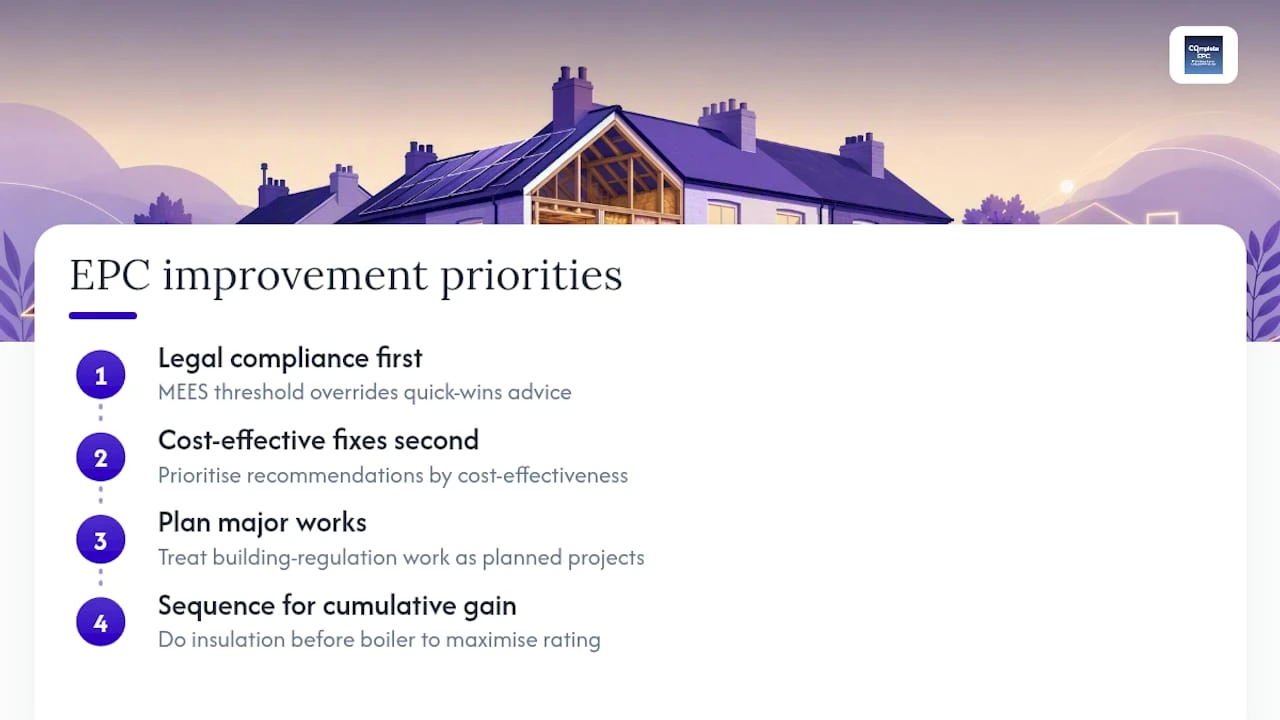
Where conventional advice also falls short is sequencing. Cumulative modelling means the order measures go in affects the final potential rating, yet most guidance lists options as if they’re interchangeable. They aren’t. A boiler replacement fitted before insulation work can undersell the eventual outcome compared to doing it the other way round.
If you take one thing from this, prioritise legal compliance first, cheap fixes second, and treat anything involving building regulations or significant capital as a planned project tied to your maintenance calendar, not a reaction to an expiring certificate.
— Danny
Book your next EPC with Completeepc
Reading a recommendation list is one thing; getting an accurate certificate and evidence trail is another. Certain service providers offer landlords a faster route to EPC certificates and evidence, with accredited assessors familiar with MEES documentation requirements and exemption evidence processes. Whether you’re managing a single rental or a commercial portfolio, book a domestic EPC for residential lets or arrange a commercial EPC for business premises, and get a certificate that comes with clear, property-specific recommendations rather than generic guesswork. If you’re already partway through improvement works, a follow-up assessment can confirm the new rating and give you the paperwork needed for compliance records or exemption applications.
Sources
- How to improve your EPC rating
- Domestic private rented property: minimum energy efficiency standard – landlord guidance
- A guide to energy performance certificates for the construction, sale and let of non-dwellings (example recommendation report)
FAQ
How can I improve my EPC rating from E to C?
Start with loft insulation to 270mm, heating controls, and LED lighting, then address the heating system itself since a boiler or heat pump upgrade typically delivers the largest single jump toward band C. Wall insulation and glazing often close the remaining gap, but check your property’s own recommendation report for the exact order.
What is the ideal EPC rating?
There’s no single “ideal” figure, but band C is the widely referenced target for future compliance planning, while the current average across UK housing sits around band D. For landlords, band E is the immediate legal minimum under MEES.
Do landlords have to improve the EPC rating?
Landlords must reach at least band E for domestic private rented tenancies under MEES, unless a valid exemption applies. Beyond that legal floor, further improvements are not statutory, though they support rental appeal and lower running costs for tenants.
How to reduce your EPC rating?
You wouldn’t deliberately reduce it, but ratings can drop if insulation degrades, an inefficient heating system replaces an efficient one, or the certificate simply expires and reflects an older, less efficient assessment. Regular maintenance and monitoring keep the certificate aligned with the property’s actual performance.