
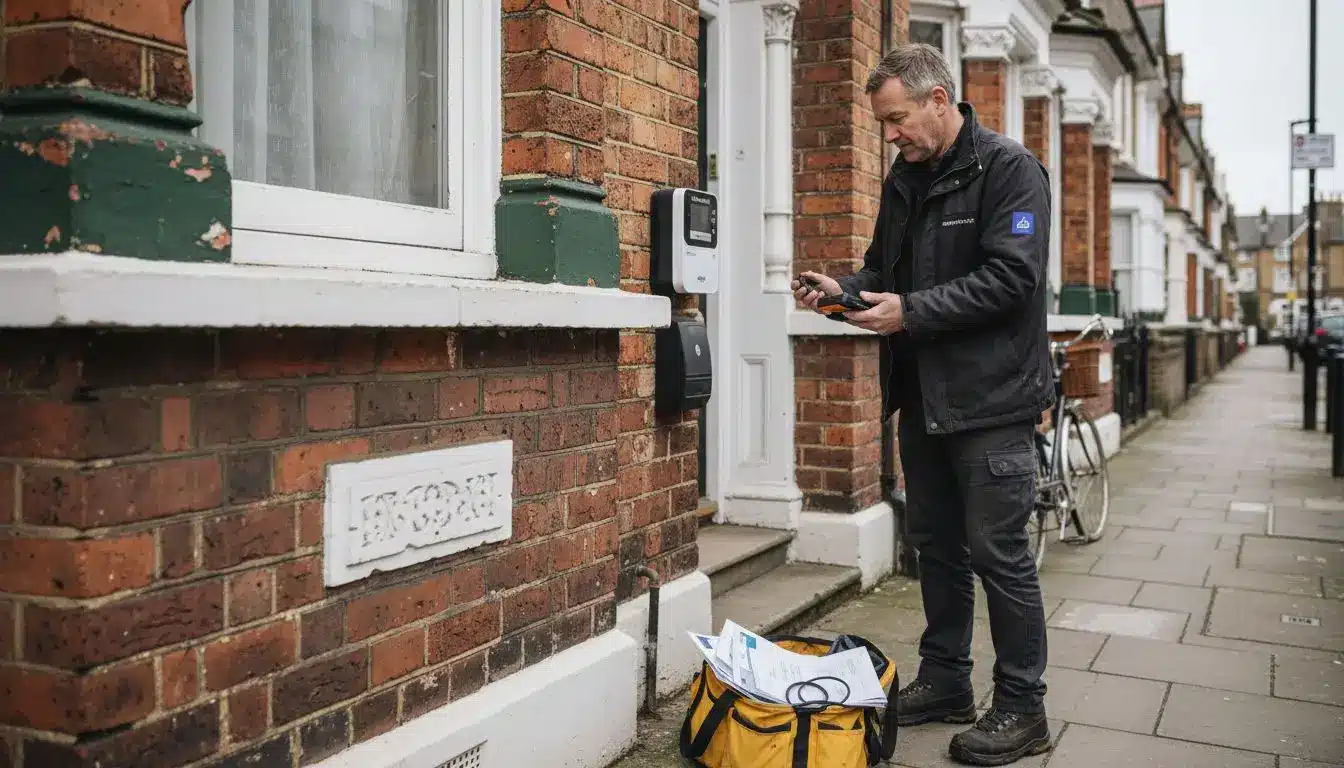
Managing energy usage across Greater London properties can feel like chasing moving targets—costs fluctuate, regulations evolve and accurate information is essential for compliance. For landlords and property owners, understanding how smart metering works is now crucial, especially as more than 70% of British homes use these devices for real-time, accurate energy monitoring. Discover how smart meters can simplify energy management, strengthen your legal footing and help raise your property’s Energy Performance Certificate score.
Table of Contents
- Smart Metering Defined for UK Properties
- Main Types and How Smart Meters Work
- Step-by-Step Smart Meter Installation Process
- Legal Duties and Data Privacy Considerations
- Benefits for Energy Efficiency and EPC Compliance
- Potential Issues and How to Avoid Them
Key Takeaways
| Point | Details |
|---|---|
| Smart Meters Improve Energy Management | Smart meters provide real-time tracking of energy consumption, helping consumers make informed decisions about usage. |
| Free Installation Available | Consumers can request a free installation from their energy supplier, which typically takes less than an hour. |
| Legal Obligations Protect Consumers | Energy suppliers must comply with strict regulations ensuring data security and transparent billing practices. |
| Significant Impact on Energy Efficiency | Smart meters help identify energy consumption patterns, supporting compliance with Energy Performance Certificate standards and potential cost savings. |
Smart Metering Defined for UK Properties
Smart meters represent a cutting-edge technological solution transforming energy management across United Kingdom residential and commercial properties. These advanced digital devices automatically record electricity and gas consumption, sending real-time data directly to energy suppliers without manual intervention.
Key features of smart meters include:
- Automatic meter reading transmission
- Real-time energy consumption tracking
- Elimination of estimated billing
- Precise energy usage monitoring
The smart meter rollout has been substantial, with over 70% of British homes now equipped with these intelligent monitoring systems. Unlike traditional meters, smart meters provide granular insights into energy consumption patterns, enabling property owners to make informed decisions about their energy usage.
The installation process is straightforward, with most energy suppliers offering free smart meter upgrades. Consumers can track their actual energy consumption through an intuitive in-home display, empowering them to understand and potentially reduce their energy expenditure.
Pro tip: Request a free smart meter installation from your energy supplier to gain immediate insights into your property’s energy consumption patterns.
Main Types and How Smart Meters Work
Smart meters represent sophisticated technological solutions with distinct communication infrastructures designed to transform energy monitoring across UK properties. Smart metering technologies interface directly between electricity grids and end-users, enabling precise consumption tracking and management.
Two primary types of smart meters exist in the UK market:
- Automated Meter Reading (AMR) meters
- Transmit readings when a collector passes nearby
- Suitable for areas with limited wireless coverage
- Advanced Metering Infrastructure (AMI) meters
- Send readings automatically in near real-time
- Provide comprehensive online usage monitoring
- Enable immediate consumption tracking
The communication technologies powering these meters include:
- Wireless networks
- Power line communication (PLC)
- Mesh networks
- Wide area network connections
Smart meters fundamentally transform how property owners understand and manage their energy consumption, providing unprecedented visibility into real-time usage patterns.
The selection of communication technology depends on several critical factors, including urban density, infrastructure complexity, and technical requirements. Wireless and wired communication methods enable these meters to transmit data securely and efficiently, helping consumers make informed energy management decisions.

Here is a comparison of the two main smart meter types available for UK properties:
| Meter Type | Data Transmission Method | Best Suited For | Online Usage Monitoring |
|---|---|---|---|
| AMR (Automated Meter Reading) | Collector passes nearby | Rural or low-signal areas | Not typically available |
| AMI (Advanced Metering Infrastructure) | Near real-time automated upload | Urban areas with strong networks | Detailed online dashboard |
Pro tip: Consider consulting your energy supplier about the most suitable smart meter type for your specific property’s location and energy consumption profile.
Step-by-Step Smart Meter Installation Process
Installing a smart meter in your London property is a straightforward process designed to modernise your energy management. Smart meter installation typically begins with your energy supplier contacting you to schedule a convenient appointment.
The comprehensive installation process involves several critical steps:
- Initial Contact and Scheduling
- Energy supplier reaches out to arrange installation
- Mutually agreeable time slot selected
- Pre-Installation Preparation
- Confirm home accessibility
- Ensure clear access to existing meter
- Installation Procedure
- Qualified engineer arrives
- Existing meter is safely removed
- New smart meter carefully installed
- In-Home Display Setup
- Digital display configured
- Energy consumption tracking activated
Consumers are entitled to a free installation that typically takes less than one hour, transforming their energy monitoring capabilities.
Ofgem-enforced standards ensure that the installation process meets rigorous quality requirements. These regulations mandate that smart meters must function correctly from the moment of installation, providing consumers with reliable and accurate energy tracking.
Additional key considerations during installation include:
- Verifying wireless communication capabilities
- Demonstrating display functionality
- Explaining meter reading and usage tracking
- Addressing any consumer questions or concerns
Pro tip: Prepare a list of recent energy bills and have your current meter serial number ready to expedite the installation process.
Legal Duties and Data Privacy Considerations
Smart meter implementation in the United Kingdom is governed by a comprehensive legal framework designed to protect consumer interests and ensure data privacy. Heat Network regulations establish clear guidelines for energy suppliers regarding meter installation, billing transparency, and data protection.
Key legal obligations for energy providers include:
- Transparent billing practices
- Secure data transmission
- Consumer data protection
- Clear communication of usage rights
- Compliance with General Data Protection Regulation (GDPR)
The regulatory landscape encompasses multiple critical aspects:
- Data Security Requirements
- Consumer Rights Protection
- Billing Transparency
- Energy Efficiency Standards
Energy suppliers must maintain rigorous standards of data protection, ensuring that personal consumption information remains confidential and secure.
Government guidelines for heat networks mandate comprehensive consumer protection mechanisms. These regulations require energy providers to implement robust security protocols that safeguard personal information while providing clear, accessible information about data usage and consumer rights.
Additional privacy considerations include:
The summary below outlines legal duties and privacy measures affecting smart meter installations in the UK:
| Legal Duty | Consumer Benefit | Regulatory Focus |
|---|---|---|
| Transparent billing | Clear, fair energy costs | Billing accuracy |
| Secure data transmission | Protected personal data | Data security requirements |
| GDPR compliance | Control over information | Data handling and consent |
| Clear usage communication | Awareness of rights | Supplier-consumer transparency |
- Explicit consent for data collection
- Limited data retention periods
- Right to access personal consumption data
- Mechanisms for data correction and deletion
Pro tip: Request a written explanation of how your energy supplier handles and protects your smart meter data before installation.
Benefits for Energy Efficiency and EPC Compliance
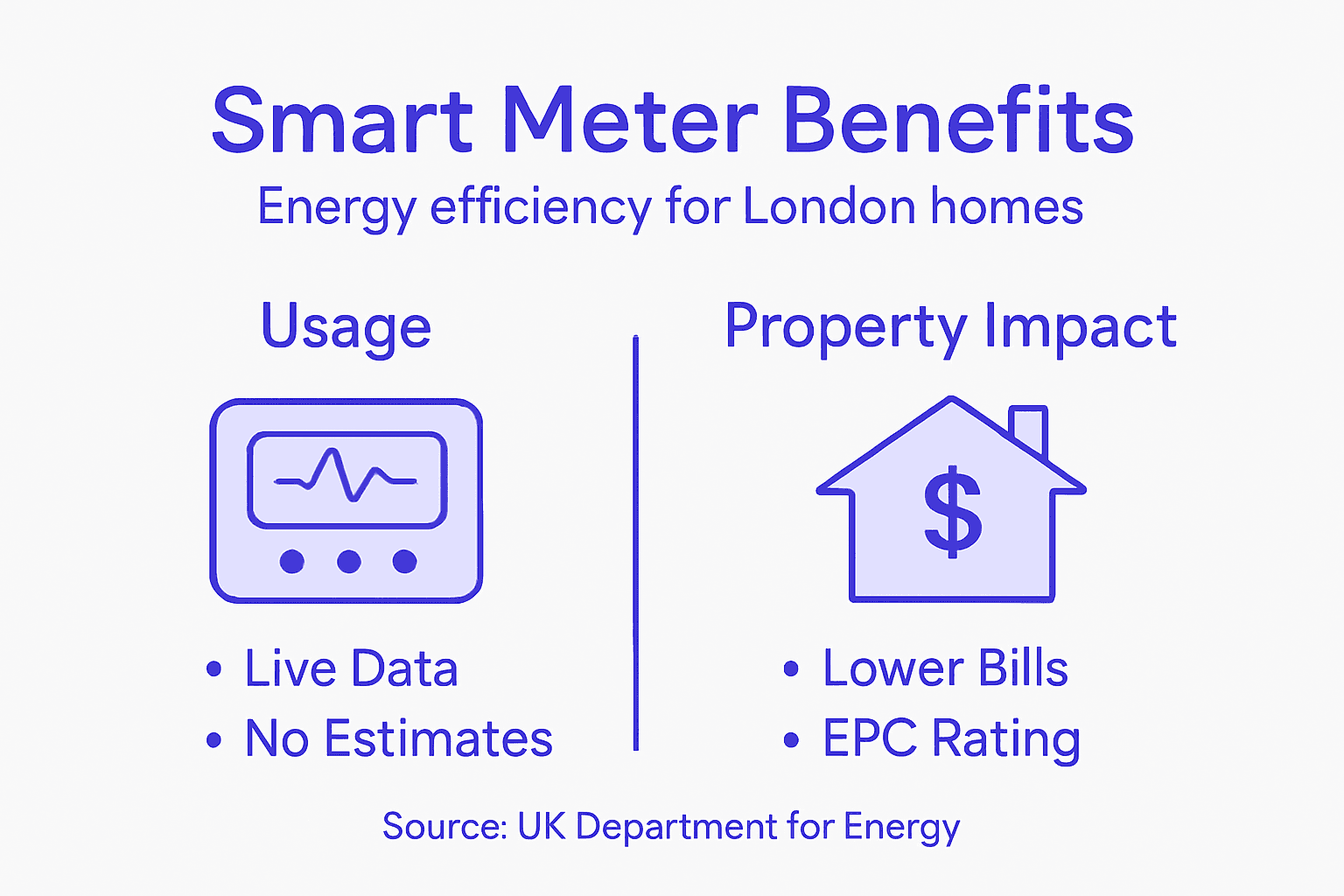
Smart meters play a pivotal role in enhancing energy efficiency and supporting Energy Performance Certificate (EPC) compliance for London properties. Smart metering supports energy efficiency improvements by providing precise, real-time data that enables property owners to make informed decisions about their energy consumption.
Key benefits of smart meters for energy efficiency include:
- Accurate real-time energy consumption tracking
- Identification of high-energy consumption areas
- Support for retrofit decision-making
- Demonstration of energy performance improvements
- Potential reduction in energy costs
Smart meters transform how property owners understand and manage their energy usage, offering unprecedented insights into consumption patterns.
Minimum Energy Efficiency Standards (MEES) require landlords to achieve specific energy performance levels, and smart meters provide critical evidence of compliance. These devices enable property owners to:
- Monitor energy consumption precisely
- Track improvements in energy efficiency
- Generate detailed energy performance data
- Demonstrate compliance with regulatory standards
Additional advantages for London property owners include:
- Enhanced property market value
- Reduced carbon footprint
- Improved tenant attraction
- Potential eligibility for energy efficiency incentives
Pro tip: Use your smart meter’s consumption data to develop targeted energy efficiency strategies and improve your property’s EPC rating.
Potential Issues and How to Avoid Them
Smart meter installations can occasionally encounter technical challenges that property owners should anticipate and proactively address. Ofgem has introduced tougher rules to mitigate common installation and operational issues, ensuring consumers receive reliable service and potential compensation for significant disruptions.
Common smart meter challenges include:
- Delayed installation appointments
- Technical functionality problems
- Inaccurate meter readings
- Signal connectivity issues
- Unexpected system interruptions
Proactive communication with your energy supplier is the most effective strategy for resolving potential smart meter complications.
Consumer guidance recommends several strategies for addressing potential smart meter issues:
- Document all communication with your supplier
- Request written confirmation of installation details
- Understand your right to disable advanced functionalities
- Know the compensation mechanisms for service failures
Preventative measures to minimise potential problems include:
- Checking your property’s wireless signal strength
- Ensuring clear access for installation engineers
- Verifying your meter’s compatibility with local infrastructure
- Maintaining open communication channels with your energy provider
Pro tip: Always request a comprehensive walkthrough of your smart meter’s functionalities during installation and keep the engineer’s contact information for potential future troubleshooting.
Enhance Your London Property’s Energy Efficiency with Expert EPC Services
Navigating the complexities of smart metering and energy management for London properties can be challenging. With issues like ensuring accurate energy consumption data from your smart meter and meeting evolving legal requirements such as Energy Performance Certificate (EPC) compliance it is essential to partner with a trusted expert. At Complete EPC we understand the frustrations of maintaining seamless energy monitoring and want to help you transform your property’s energy performance with professional guidance and precise assessments.
By choosing Complete EPC you gain access to qualified assessors who deliver detailed EPC reports tailored to your property’s unique energy consumption patterns. We support landlords, estate agents, and property owners in unlocking benefits like reduced energy costs improved EPC ratings and full regulatory compliance. Do not delay improving your property’s energy profile or risk inefficiencies. Visit our site now to secure reliable EPC certification and empower your smart metering efforts with expert advice and competitive pricing.
Frequently Asked Questions
What are the main benefits of using a smart meter in my home?
Smart meters provide several benefits, including accurate real-time tracking of energy consumption, elimination of estimated billing, and precise monitoring of energy usage patterns. These features empower property owners to make informed decisions to potentially reduce energy costs.
How does the installation process for a smart meter work?
The installation of a smart meter typically begins with your energy supplier contacting you to schedule an appointment. A qualified engineer will then replace your existing meter and set up an in-home display. The entire process usually takes less than one hour and is generally free of charge.
What types of smart meters are available, and how do they differ?
There are two primary types of smart meters: Automated Meter Reading (AMR) meters, which require a collector to manually read the meter, and Advanced Metering Infrastructure (AMI) meters, which automatically transmit readings in near real-time. AMI meters generally provide better online usage monitoring and are suited for urban areas with strong wireless networks.
How do smart meters ensure data privacy and security?
Smart meter data privacy is protected by regulations such as the General Data Protection Regulation (GDPR). Energy providers must adhere to strict guidelines regarding data transmission, consumer rights, and secure handling of personal consumption information, ensuring that your data remains confidential and secure.
Recommended
- The Key to Managing Utility Costs in London Homes – Complete EPC
- Energy Bills for London Landlords – Impacts and Solutions
- Energy Efficiency Steps for London Properties Made Simple
- Energy Efficiency Barriers – Overcoming Obstacles in London
- Water Management Blog | LeakSense
- Top 10 Properties To Let London 2025: Best Rental Listings – Guestly Homes
- Saving Money on Utilities: Step-By-Step Guide for 2025 | ReVroom