

Sustainable energy systems for buildings means on-site measures that cut fuel demand and emissions: fabric upgrades, efficient heating, controls and renewables. For property owners, landlords, agents and solicitors, the fastest way to act is to pull the existing EPC, check its recommendations, and commission an accredited assessor before spending a penny. Fabric and heating efficiency drive SAP scores hardest; renewables and controls follow.
TL;DR:
- Fabric upgrades like insulation significantly improve SAP scores more than renewables or controls, especially in older, leaky properties.
- Replacing or upgrading heating systems should follow fabric improvements, as heating efficiency has a higher impact on energy performance calculations.
- Costs for measures range from low-cost insulation to high-cost heat pumps and solar PV, with funding options like ECO4 and the Boiler Upgrade Scheme influencing payback times.
- Accurate assessments and certificates are essential for legal transactions, requiring proper data collection, approval of software, and re-assessment after material upgrades.
- Prioritizing fabric improvements before heating upgrades maximizes cost-effectiveness and SAP points, and always verify existing EPC recommendations before proceeding.
Table of Contents
- What sustainable energy measures will you encounter on a property?
- How do SAP and EPC actually relate to each other?
- Which upgrades move the score most?
- What do these measures cost, and what funding exists in 2026?
- What’s the compliance checklist before, during and after works?
- How Completeepc supports each of these steps
- A practical view on where to start
- Book your EPC or SAP calculation with Completeepc
- Where to check the official guidance
- Sources
- FAQ
What sustainable energy measures will you encounter on a property?
Most EPC recommendation reports draw from the same shortlist of measures. Recognising them on a certificate, a contractor’s quote, or a completion invoice saves time when you’re advising a client or checking whether claimed works actually happened.
- Fabric upgrades: loft, cavity, solid wall and floor insulation, plus airtightness sealing around windows and doors.
- Heating systems: modern condensing boilers, air source and ground source heat pumps, and hybrid setups combining both.
- Renewables: solar PV panels, battery storage, and solar thermal panels for hot water.
- Controls and small measures: smart thermostats, thermostatic radiator valves (TRVs), scheduling systems, and LED lighting.
- Ancillary systems: mechanical ventilation with heat recovery (MVHR), hot water cylinder insulation, and heat interface units on communal heat networks.
Each category behaves differently in SAP modelling, which is why grouping them by cost and impact matters more than treating them as a single “green upgrade” bundle.
How do SAP and EPC actually relate to each other?
SAP is the methodology behind every domestic EPC. It calculates energy performance from fabric heat loss (U-values), heating system efficiency, ventilation, and on-site renewables, producing a rating that typically runs from 1 to 100, though renewables can push a property above 100. Existing dwellings use a reduced version called RdSAP, built for site surveys where full construction data isn’t available. Non-domestic buildings use a different route entirely: the National Calculation Methodology, implemented through SBEM or dynamic simulation modelling (DSM) for more complex buildings.
None of this is optional guesswork. SAP governs how energy performance is calculated for Part L compliance on new builds and for every EPC issued at sale or letting. The methodology itself has moved on recently, too.
The current authority is SAP 10.3. A notice of approval dated 24 March 2026 confirmed SAP 10.3 and the 2026 National Calculation Methodology as the approved routes for demonstrating Building Regulations compliance in England, alongside approved software tools and DSM packages. Assessors don’t calculate by hand; they enter surveyed data (insulation levels, heating efficiency, glazing, renewables) into validated software that applies these methodologies automatically. If your assessor or SAP consultant isn’t using approved software, the output isn’t compliant.
Calculations become mandatory in two clear situations: whenever a property is marketed for sale or rent (a domestic or commercial EPC is a legal requirement), and whenever new-build or major renovation work must demonstrate Part L compliance before completion.
Which upgrades move the score most?
Not every improvement earns equal credit. SAP weights heating efficiency and fabric heat loss far more heavily than lighting or small controls, so sequencing matters as much as the spend.
- Fabric first. Loft, cavity and floor insulation reduce heat demand for every heating system that follows, so they’re always the starting point, not an afterthought.
- Heating efficiency second. Replace a very old boiler, or consider a heat pump, only once the fabric work is done. A heat pump sized for a poorly insulated home performs worse and costs more to run.
- Controls and distribution third. Smart thermostats, TRVs and balanced distribution lock in the gains from the first two steps rather than letting them leak away.
- Renewables and storage last. Solar PV and battery storage improve the emissions metric, and sometimes the running-cost metric, but they work best layered on top of a fabric-first retrofit, not as a substitute for one.
A poorly insulated Victorian terrace typically sees a bigger point jump from cavity or solid wall insulation than from adding PV to an already-leaky roof. A well-insulated 1990s semi, by contrast, often gets more value from a heat pump swap than from further fabric work.
Pro Tip: Ask any contractor proposing a heat pump quote for the property’s current fabric measures first. If loft or wall insulation is missing, that’s the conversation to have before signing anything.
What do these measures cost, and what funding exists in 2026?
Costs vary by property type and installer, but indicative ranges give a useful starting point for budgeting conversations with clients.
- Loft insulation top-up: relatively low cost, often one of the fastest paybacks available.
- Cavity wall insulation: moderate cost, strong point gains on suitable properties.
- Solid wall insulation: significantly higher cost, reflecting the more invasive work involved.
- Condensing boiler replacement: mid-range cost, meaningful gains on properties with older non-condensing units.
- Air source heat pump: a substantial outlay, though gains depend heavily on the fabric standard already in place.
- Solar PV and battery storage: costs have fallen over recent years, and the emissions and running-cost benefit is now easier to justify on many roof types.
These figures are illustrative rather than fixed quotes, and EPC recommendation lists themselves rely on national modelling assumptions rather than a bespoke assessment of one household’s behaviour. Several funding routes can shift the payback maths in 2026, including the Boiler Upgrade Scheme, the Great British Insulation Scheme, and ECO4/ECO+ obligations run through energy suppliers, alongside some regional Sustainable Warmth funds. Eligibility and application routes vary by scheme, so check current criteria before assuming a client qualifies. When advising on any package of works, weigh three things together: the payback period, the EPC point or band uplift, and the effect on sale or rental value.
What’s the compliance checklist before, during and after works?
Getting the paperwork right matters as much as getting the installation right, particularly if a transaction is riding on the outcome.
- Pull the current EPC first. Note its recommended measures and check whether any listed certificates already exist for prior work.
- Commission a SAP calculation where relevant. New builds, extensions and conversions affecting Part L compliance need a proper SAP assessment, not an estimate.
- Demand installer certification. FENSA for windows and doors, MCS for heat pumps and solar PV, and signed commissioning certificates for heating systems. Keep every document; an assessor needs evidence, not a verbal assurance.
- Book a reassessment once works complete. An EPC only reflects what was true at the time of the survey, and certificates stay valid for 10 years unless material improvements happen sooner, at which point a new assessment is needed to capture the uplift.
- Solicitors should request these documents at exchange or completion. An informal claim that “the boiler was replaced last year” is worthless without the certificate to back it.
How Completeepc supports each of these steps
Completeepc provides domestic and commercial EPC assessments and SAP calculations across London, carried out by qualified assessors who record the fabric, heating and renewable inputs that actually determine your rating.
- Full coverage: Domestic Energy Performance Certificate assessments for homeowners and landlords, and Commercial EPC reports for offices, retail and mixed-use buildings.
- Detailed reporting: every assessment comes with a written report listing improvement recommendations in priority order, not just a bare certificate.
- Documentation support: solicitors and agents receive the certificate plus a clear installer document checklist, so evidence gaps get flagged before exchange rather than after.
- Competitive pricing: rates are kept sharp against the wider London market, with turnaround built around transaction deadlines.
A practical view on where to start
If you take one thing from this, it’s this: don’t spend before you’ve read the existing EPC properly. Most landlords jump straight to a heat pump quote when a loft top-up or missing cavity fill would move the score further for less money. Document every installation as it happens, because an assessor can only credit what’s certified, not what a tradesperson tells you happened. And whatever the salesperson says, fabric comes before heating, every time.
— Danny
Book your EPC or SAP calculation with Completeepc
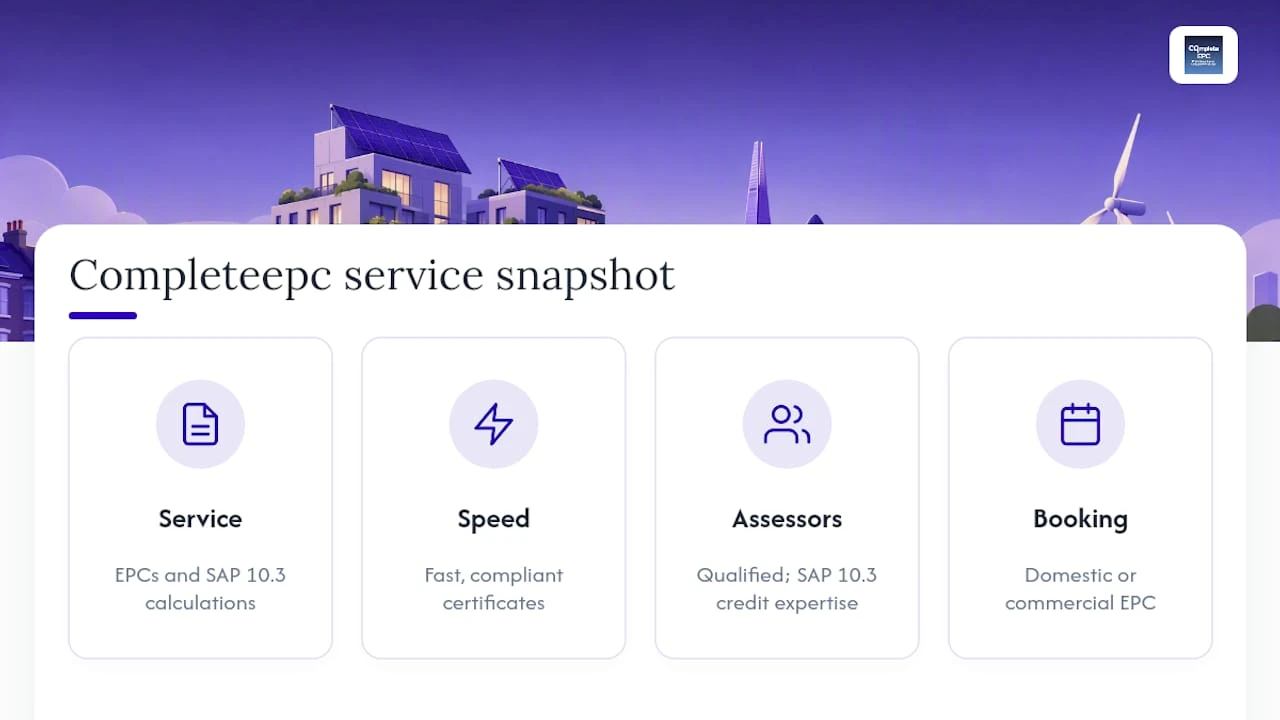
Completeepc delivers fast, compliant EPCs and SAP calculations across London, backed by qualified assessors who know exactly how SAP 10.3 credits fabric, heating and renewable measures. Whether you’re a landlord facing a letting deadline, an agent managing a sale, or a solicitor needing documentation at exchange, you get a certificate and report built to survive scrutiny, not just tick a box. Start with a domestic EPC or commercial EPC booking, or read the assessment process guide first if you want to know exactly what to expect and when the certificate will land.
Where to check the official guidance
For anyone wanting to verify the detail directly rather than take a summary on trust, these are the primary references behind this article:
- Gov, covering the methodology’s inputs and scope.
- The 24 March 2026 notice of approval confirming SAP 10.3 and the 2026 NCM.
- The BRE’s SAP 10.3 full specification for the technical calculation detail.
- Energy Saving Trust’s practical improvement guide for cost-effective measure ordering.
Sources
- Gov
- Gov
- Tips to improve the EPC rating of your home – Energy Saving Trust
- How to improve your EPC rating: a practical guide – WattScore
FAQ
What counts as a sustainable energy system in a property EPC?
It means the on-site measures SAP models: insulation and airtightness, heating system efficiency, ventilation, and renewables such as solar PV or battery storage.
Does SAP 10.3 change how heat pumps and solar PV are scored?
Yes. SAP 10.3’s updates improve accuracy for renewables, battery storage and heat pump inputs, changing how those measures get credited compared with earlier SAP versions.
Do I need a new EPC after installing insulation or a heat pump?
Yes, if you want the certificate to reflect the improvement. An EPC stays valid for 10 years, but a reassessment is needed after material works to update the rating.
Should I insulate first or replace the boiler first?
Insulate first. SAP weights fabric heat loss and heating efficiency most heavily, and a heating system sized for an insulated home performs better and costs less to run.
Who can carry out an EPC or SAP calculation in London?
An accredited domestic energy assessor handles EPCs, while SAP calculations for new builds or extensions need a qualified SAP consultant. Completeepc provides both through its domestic EPC and commercial EPC services.