

TL;DR:
- Your EPC rating in London determines your legal ability to rent your property and influences its market value and tenant appeal. It measures predicted energy performance based on building features, with ratings from A to G indicating efficiency and running costs. Proper documentation and understanding assessment methodology can significantly impact your score and compliance efforts.
If you own or let property in London, your EPC rating is not just a bureaucratic formality. It directly determines whether you can legally rent your home, influences what tenants are willing to pay, and shapes your property’s long-term market value. Yet despite its importance, many landlords remain genuinely uncertain about what the grades mean, how the score is calculated, and what to do when the rating falls short. This guide cuts through the confusion and gives you a clear, practical understanding of EPC ratings, from the grading system itself to the steps you can take to protect your investment and stay compliant.
Table of Contents
- What an EPC rating really measures
- Decoding the EPC bands and scores
- How is an EPC calculated? The methods and what affects your rating
- Legal requirements for London landlords: EPC and compliance
- How to use your EPC: Boosting property value and compliance
- What most EPC guides overlook: Why methodology details matter
- Get expert guidance and improve your EPC confidence
- Frequently asked questions
Key Takeaways
| Point | Details |
|---|---|
| EPC defines energy efficiency | Your EPC rating summarises energy costs and CO2 emissions for your property using a simple A–G letter band. |
| Legal consequences apply | Letting in London with a rating below E is generally prohibited unless you have a registered exemption. |
| Documentation boosts ratings | Providing proof for upgrades can increase your EPC band, while missing evidence may reduce your score. |
| Improve property and compliance | EPC recommendations help you raise both property value and tenant appeal with targeted energy improvements. |
What an EPC rating really measures
With the stakes established, let’s clarify what the numbers and grades on your EPC certificate actually represent.
An EPC rating is not simply a measure of how new or well-maintained your property is. It reflects predicted energy performance based on the building’s fabric and systems: insulation levels, window glazing, heating type, hot water provision, and ventilation. A newly renovated Victorian terrace could still score poorly if it retains single glazing and an old boiler, whilst a modest flat with modern insulation and a heat pump might score very well indeed.
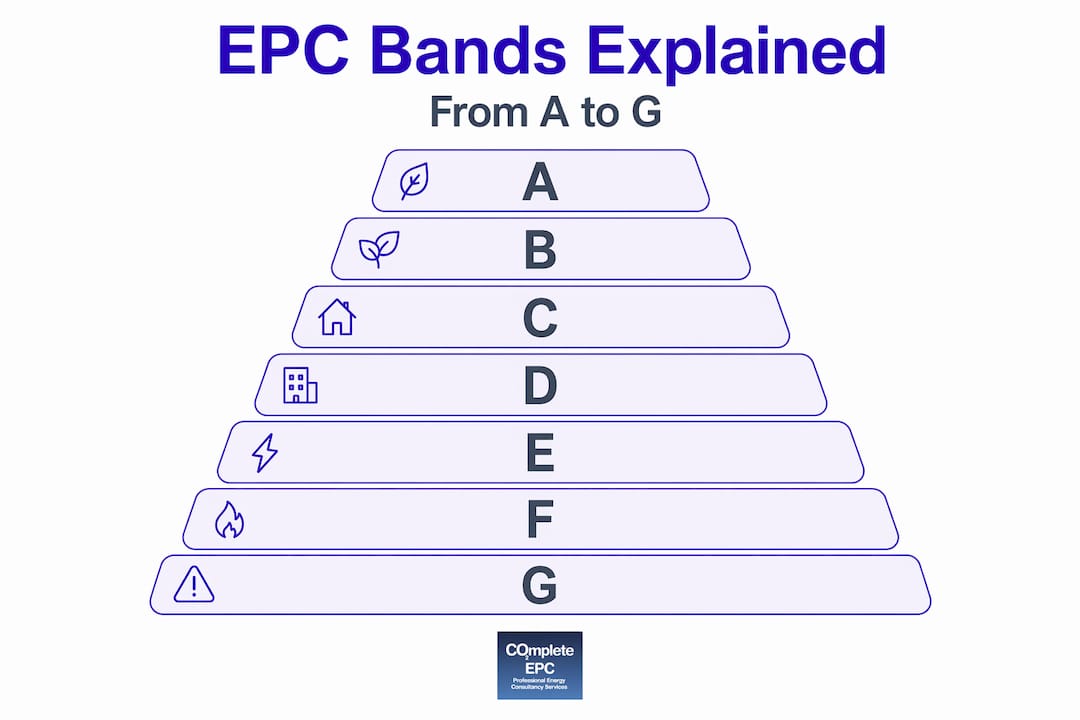
The headline EPC rating is expressed as a single numerical figure, converted into letter bands A through G. This is often called the Energy Efficiency Rating (EER) or SAP rating. The letter grade is what most people focus on, but the underlying number tells a more precise story about where your property sits relative to others.
The rating covers two core dimensions:
- Energy cost: How much it is predicted to cost to heat and light the property under standard occupancy conditions
- Carbon emissions: The estimated CO2 output associated with that energy use
Both dimensions matter for compliance and for informing tenants about likely running costs. A property with a low EPC rating will generally cost tenants more to heat, which increasingly affects letting appeal in London’s competitive rental market. For a broader EPC advice overview, the Energy Saving Trust provides useful guidance on what the certificate covers.
“An EPC is not a measure of how comfortable a home feels today. It is a standardised prediction of how energy-efficient the building is as a structure, independent of individual occupant behaviour.”
Decoding the EPC bands and scores
Having defined the grading basics, let’s break down what each EPC band means for your property in London.
The A to G letter grades each correspond to a numerical score range on a 1 to 100 scale. The higher the score, the more energy-efficient the property is rated to be. Here is how the bands break down:
| EPC band | Score range | Typical description |
|---|---|---|
| A | 92–100 | Highly efficient, very low running costs |
| B | 81–91 | Very good efficiency, low running costs |
| C | 69–80 | Good efficiency, moderate running costs |
| D | 55–68 | Average efficiency, average running costs |
| E | 39–54 | Below average, higher running costs |
| F | 21–38 | Poor efficiency, high running costs |
| G | 1–20 | Very poor efficiency, very high running costs |
Most existing London properties sit in the D or E band. This is partly because London’s housing stock is older than the national average, with a high proportion of Victorian and Edwardian terraces, period conversions, and older flat blocks that were built long before energy efficiency standards existed. Solid brick walls, for instance, are notoriously difficult to insulate cost-effectively, which pulls scores down even when other improvements have been made.

The practical difference between bands is significant. A property moving from an E to a C rating can see a substantial reduction in predicted energy costs and emissions, making it more attractive to tenants who are increasingly aware of energy bills. Some London tenants now actively filter their property search by EPC band, particularly since energy prices rose sharply in recent years.
Key points to keep in mind about the banding system:
- Band D is the most common for London residential properties, not band C
- Band C is increasingly the target for policy proposals, with the government signalling that minimum standards may be raised in coming years
- Bands F and G are unlawful for most lets, not just undesirable
- Every point on the 1 to 100 scale matters because it determines which side of a band threshold you land on
A score of 68 and a score of 69 look nearly identical in practice, but one sits in band D and the other in band C. That single point can affect marketability, compliance, and in future, legal letting eligibility.
How is an EPC calculated? The methods and what affects your rating
Knowing your EPC grade is one thing; understanding how it’s worked out is another. Here’s how the assessment happens behind the scenes.
The calculation method for domestic properties is called SAP, which stands for Standard Assessment Procedure. For most existing homes, assessors use a simplified version called RdSAP (Reduced data SAP), which requires less on-site data and uses standardised assumptions where full information is not available. New builds use the full SAP methodology, which incorporates more detailed design data.
During an RdSAP assessment, your assessor will typically examine and record:
- Wall construction type and insulation (cavity, solid, or timber frame)
- Roof and floor insulation levels
- Window glazing type (single, double, or triple glazed)
- Heating system type, age, and fuel (gas boiler, heat pump, storage heaters, etc.)
- Hot water system
- Any renewable energy installations such as solar panels
- Property age, size, and floor area
Where certain information is not available or cannot be verified with evidence, the assessor applies methodology rules to determine which default values to use. These defaults are often conservative, meaning they assume a less efficient scenario than may actually exist.
“If your assessor cannot confirm that cavity wall insulation has been installed, they may be required by convention to assume an uninsulated cavity. That single assumption can reduce your score by several points.”
Pro Tip: Gather any invoices, installation certificates, or guarantee documents for energy-related work before your assessment. Cavity wall insulation certificates, boiler installation records, and double glazing warranties all help your assessor use accurate rather than default values, which can meaningfully improve your final rating.
For technical details for EPC assessors, the conventions and data requirements are governed by detailed rules that shape how each element of your property is scored. Understanding this process helps you prepare properly rather than leaving your rating to chance.
Legal requirements for London landlords: EPC and compliance
Appreciating your EPC number is vital, but what happens if you fail to meet the legal standard when renting in London?
The key legislation governing this area is the Minimum Energy Efficiency Standards, commonly known as MEES. Under current MEES rules, private landlords in England and Wales, including London, must not let a domestic property with an EPC rating below band E. Properties rated F or G cannot be legally let unless a valid exemption has been registered on the national PRS Exemptions Register.
Here is what you need to do to stay legally compliant as a London landlord:
- Obtain a valid EPC before marketing a property for let. EPCs are valid for ten years, but if significant changes have been made to the property, obtaining an updated certificate is advisable.
- Check your current EPC band. If it is F or G, you are not permitted to let the property without an exemption.
- Commission improvements to bring the property to at least band E before letting, if you are below the threshold.
- Register an exemption on the official PRS Exemptions Register if you believe you qualify. Valid exemption reasons include situations where all cost-effective improvements have been made but the property still cannot reach E, or where consent from a third party (such as a freeholder) has been refused.
- Keep records of all improvements, costs, and exemption registrations in case of a local authority check.
Pro Tip: Local authorities in London have powers to check compliance and issue civil penalties of up to £30,000 for serious or repeated breaches of MEES. This is not a fine that sits comfortably on a spreadsheet. Staying compliant is far cheaper than the alternative.
It is also worth noting that the government has repeatedly signalled its intention to raise the minimum standard to band C for new tenancies, with various timelines having been proposed. Whilst the exact dates have shifted, the direction of travel is clear. Landlords who invest now in reaching band C will be ahead of any future regulatory change, not scrambling to catch up.
How to use your EPC: Boosting property value and compliance
Once you have your EPC and know your legal obligations, here’s how to use the rating as a tool rather than a hurdle.
Your EPC report does not just grade your property. It includes a list of recommended improvements, ranked by cost-effectiveness, which tells you precisely what changes would have the greatest positive impact on your score. This is genuinely useful information, and many landlords overlook it entirely.
The Energy Saving Trust notes that an EPC indicates a building’s predicted efficiency in terms of heating and lighting costs as well as CO2 impact. Improving those factors benefits both your tenants and your long-term rental income.
Practical measures that commonly improve EPC ratings for London properties include:
- Loft insulation: One of the cheapest and most impactful improvements, particularly in older terraces with accessible loft spaces
- Cavity wall insulation: Relevant for properties built between roughly 1920 and 1990 with unfilled cavities
- Boiler replacement: Upgrading from an older G-rated boiler to an A-rated condensing boiler can move a property up by a full band in many cases
- Double or triple glazing: Replacing single-glazed windows reduces heat loss and improves the score
- Smart heating controls: Adding a programmer and thermostatic radiator valves is relatively low-cost and can contribute to a rating improvement
- Solar photovoltaic panels: A significant investment but one that can push a property from mid-D to C or higher
A property that moves from band D to band C typically becomes more attractive to tenants and can command a modest rental premium. In a city like London, where tenants increasingly compare energy costs as part of their decision-making, a good EPC rating is a genuine competitive advantage.
What most EPC guides overlook: Why methodology details matter
Most EPC guidance focuses on compliance thresholds and improvement measures. That is useful, but it misses something that we believe is equally important: the way the assessment methodology itself can quietly shape your outcome, sometimes in ways that feel arbitrary but are actually structured and predictable.
The RdSAP methodology operates with a detailed set of conventions that govern precisely when an assessor can use actual data and when they must apply a default. As the detailed RdSAP conventions make clear, the rules about default U-values and documentary evidence requirements are not minor technical footnotes. They directly affect the number that appears on your certificate.
Here is the situation we see repeatedly: a landlord invests in cavity wall insulation five years ago, pays for the work, benefits from warmer tenants and lower complaints, but then at the next EPC assessment the assessor cannot confirm the insulation is present because the paperwork has been lost. The default assumption kicks in. The rating comes out lower than it should. The landlord is frustrated but unclear why.
The fix is straightforward once you understand the system. Retain all documentation for any energy-related work. Installation certificates, guarantee documents, and supplier invoices all serve as qualifying evidence under the conventions. Providing these to your assessor is not pushing boundaries; it is simply ensuring the methodology is applied accurately to your actual property rather than a theoretical worst-case version of it.
This matters most when your property sits close to a band threshold. The difference between a score of 54 and 55 is the difference between band E and band D. The difference between 68 and 69 is between band D and band C. At those margins, having documentary evidence for a recent boiler upgrade or insulation installation can be the deciding factor. This is not a niche concern. It is something every informed London landlord should understand before booking their next assessment.
Get expert guidance and improve your EPC confidence
Understanding your EPC rating is the first step. Acting on it with confidence is where genuine compliance and property value gains are made. At Complete EPC, we provide professional EPC assessments for both domestic and commercial properties across London, carried out by qualified and experienced assessors who understand how to apply the methodology accurately and to your advantage. Whether you need a certificate for a new letting, are facing a compliance question about an F or G rated property, or want clear recommendations on how to improve your score ahead of a tenancy renewal, we can help. Our assessments are competitively priced, our reports are detailed and actionable, and our team is ready to support you from the first booking to the final certificate.
Frequently asked questions
Do I need an EPC to sell my house in London?
Yes, all properties being sold or let in London must have a valid EPC, and the report must be made available to prospective buyers or tenants before completion.
What is considered a good EPC rating in London?
A rating of C or above is considered good. Bands A to C represent higher efficiency, and government proposals increasingly point to band C as the expected standard for residential lets in the near future.
What happens if my property has an F or G EPC rating?
You generally cannot legally let a property in London with an F or G rating. Landlords must not let below band E without registering a valid exemption on the official PRS Exemptions Register.
Why does my EPC rating seem low despite recent improvements?
If improvements lack documentary evidence, assessors may be required to apply conservative default values under the EPC conventions. The structured methodology conventions mean that unverified upgrades may not be credited in full, even if the work has genuinely been completed.